300 words your child should know for the 11+
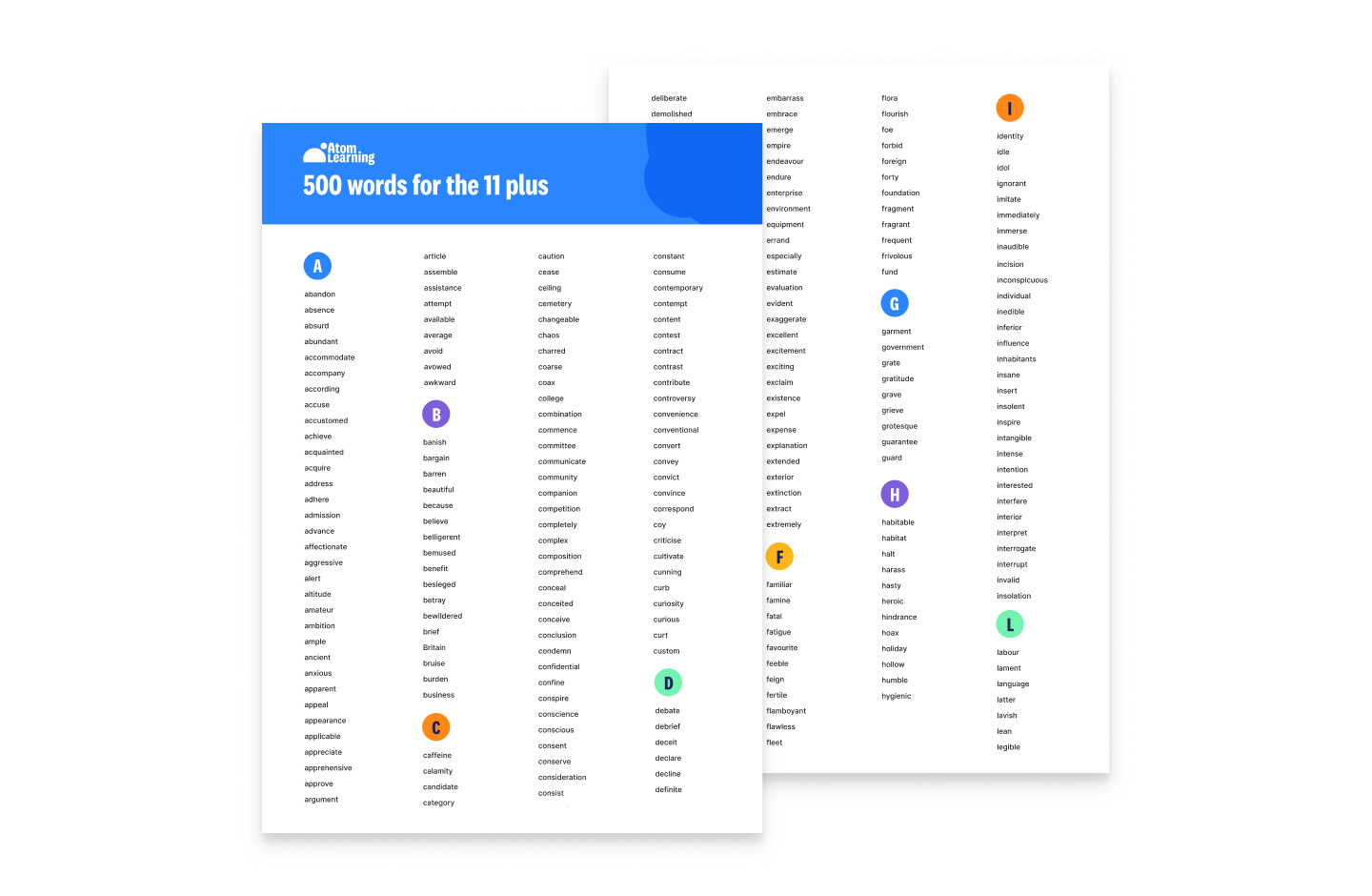
See the full list of 300 words we recommend for 11+ success below. Want to support your child’s learning even further? Download the printable version! Just fill in a short form and we’ll send you the complete vocabulary resource.
- Words grouped by helpful themes (like emotions, actions, and settings)
- Clear definitions your child can understand
- Example sentences to show each word in context
- Handy tips throughout to help your child remember and use new vocabulary
- Amused
- Empathetic
- Expressive
- Exultant
- Resolute
- Anxious
- Desolate
- Dismayed
- Irritable
- Sullen
- Astute
- Diligent
- Generous
- Taciturn
- Tenacious
- Champion
- Courage
- Guardian
- Persevere
- Selfless
- Discern
- Ingenious
- Resourceful
- Scholar
- Visionary
- Bustling
- Haphazardly
- Metropolis
- Opulent
- Overcrowding
- Canopy
- Majestic
- Serene
- Thrive
- Verdant
- Briny
- Drift
- Foamy
- Surge
- Tempestuous
- Breeze
- Chilly
- Drizzle
- Scorching
- Tempest
- Ascend
- Creep
- Dip
- Glint
- Glow
- Bolt
- Dart
- Lunge
- Scurry
- Zoom
- Glide
- Linger
- Stroll
- Trudge
- Wander
- Endure
- Propel
- Robust
- Strain
- Tense
- Stagger
- Stumble
- Tentative
- Unsteadiness
- Waver
- Shrug
- Nod
- Wince
- Fidget
- Clench
- Factual
- Gentle
- Menacing
- Sharp
- Warm
- Murmur
- Mutter
- Proclaim
- Ramble
- Snarl
- Acknowledge
- Align
- Dissent
- Oppose
- Support
- Appeal
- Convince
- Emphasise
- Exaggerate
- Persuade
- Discourage
- Dismiss
- Challenge
- Contradict
- Criticise
- Endurance
- Expedition
- Harsh
- Inhabit
- Navigate
- Defeat
- Precision
- Resilient
- Rivalry
- Strive
- Conceal
- Elusive
- Obscure
- Revelation
- Unravel
- Breakthrough
- Observation
- Pioneer
- Revolutionary
- Theory
- Inquisitive
- Logical
- Observant
- Practical
- Tireless
- Artificial
- Device
- Groundbreaking
- Innovate
- Sustainable
- Adaptation
- Biodiversity
- Ecosystem
- Erosion
- Substance
- Fatigue
- Recover
- Rejuvenate
- Vital
- Wellness
- Ancestral
- Custom
- Folklore
- Festivity
- Heritage
- Close-knit
- Diverse
- Isolated
- Multicultural
- Urbanisation
- Belonging
- Collectively
- Embrace
- Inclusive
- Roots
- Civilisation
- Dynasty
- Era
- Monarchy
- Revolution
- Commemorate
- Factor
- Outcome
- Repercussion
- Trigger
- Alliance
- Diplomatic
- Negotiate
- Treaty
- Truce
- Campaign
- Equality
- Protest
- Reform
- Transformative
- Compost
- Conservation
- Eco-friendly
- Preserve
- Renewable
- Articulate
- Bias
- Counterargument
- Evidence
- Justify
- Collapse
- Devastation
- Escalate
- Perish
- Wreckage
- Headline
- Misinformation
- Source
- Transparent
- Verify
- Authoritative
- Charismatic
- Decisive
- Delegate
- Steadfast
- Commanding
- Driven
- Influential
- Mentor
- Sway
- Awareness
- Defiance
- Dissent
- Disobedient
- Empower
- Impartial
- Integrity
- Just
- Lawful
- Righteous
- Conceal
- Deceit
- Disloyal
- Manipulation
- Traitor
- Dread
- Hesitantly
- Intimidate
- Timid
- Petrified
- Assured
- Bold
- Confide
- Poise
- Triumphantly
- Apprehensive
- Jittery
- Restlessness
- Tremble
- Uneasy
- Fearless
- Determined
- Perseverance
- Persist
- Relentless
- Comfort
- Compassion
- Considerate
- Impactful
- Thoughtful
- Abstract
- Balance
- Depict
- Symmetry
- Texture
- Echo
- Harmony
- Melody
- Resonate
- Rhythm
- Foreshadow
- Imagery
- Opposition
- Plot
- Tone
- Dramatic
- Improvisation
- Monologue
- Portrayal
- Underlying
- Contrast
- Imaginative
- Inventive
- Resulting
- Whimsical
- Affluent
- Asset
- Boom
- Flourish
- Prosperity
- Absent-minded
- Apprentice
- Occupation
- Skilful
- Workforce
- Affordable
- Consumer
- Investment
- Supply
- Transaction
- Consistent
- Finding
- Insight
- Pattern
- Trend
- Beneficial
- Decline
- Irreversible
- Reliable
- Rewarding
- Emphasise
- Forecast
- Reflect
- Reinforce
- Ultimately
5 tips for expanding your child’s 11 plus vocabulary
1. Read often and widely
Plenty of studies have shown that children who read many books (and a range of genres) learn new words faster and have much wider vocabularies than children who seldom read. This is because written language uses many more words than we use in spoken language.
Looking to inspire your child with new reading material? Atom's recommended reading list includes a wide variety of books from different genres for children aged 7–11.
2. Play word games
Games such as Scrabble, Boggle, word searches and crosswords can be really useful to help your child discover new words and consolidate their meanings. Playing word games together can make the process of vocabulary learning fun for your child, helping them stay engaged and motivated while aiding retention.
3. Look for word roots
Many English words have the same Greek or Latin roots which provide an indication of their meaning. If your child comes across a word they don’t understand, ask them to break the word down into parts and think about where they might have heard something similar before. Here are some common root words used in everyday language:
- Aud: referring to hearing, e.g. audio, audible, audience
- Bio: referring to life, e.g. biography, biology, biodegradable
- Chrono: relating to time, e.g. chronological, synchronise
- Geo: referring to the earth, e.g. geography, geology
- Sens: relating to feeling, e.g. sensitive, resent
- Sub: referring to something under or inferior, e.g. submissive, subterranean
4. Story writing
Story writing is a great exercise for your child to try out their newly learnt words in a relevant context. Encourage your child to write stories in different genres, trying out their vocabulary for different stylistic effects.
Creative writing is also assessed in many 11 plus exams. Find out which grammar schools include creative writing papers and get free resources to support your child's writing in our 11 plus creative writing guide.
5. Visualise new words
If your child is a visual learner, they may find it easier to recall difficult words if they can associate them with an image. Encourage your child to draw a visual interpretation of a word they find difficult – for instance, the word ‘economical’ may be associated with a picture of money, while ‘bewildered’ could be symbolised by a person looking confused.