
Back to blog

What's tested on 11+ English comprehension exams?

By
Atom
|
November 21, 2025

Reading comprehension plays an important role in most 11+ and independent school entrance exams, and is a key focus in the English paper.

So, what exactly is tested and how can you help your child prepare with confidence?

In this guide, we’ll explain:

  • What does reading comprehension mean in the context of the 11+?
  • The types of questions your child might see
  • How do different exams approach comprehension?
  • Practical ways to build your child’s skills at home

What is reading comprehension?

Reading comprehension means being able to read a text and understand it. It’s not just about reading the words - it’s about understanding what they mean, connecting ideas, and thinking about what’s being said.

In exams, children are tested on how well they can find information, read between the lines, and understand the meaning of a text.

Types of reading comprehension questions

Not all comprehension questions are the same. Helping your child get familiar with the different types can make a big difference in how they approach their exams.

1. Vocabulary questions

These questions test a child’s understanding of specific words in the text. They might be asked to define a word or choose a synonym (a word with the same meaning) from multiple options.

How to prepare: Encourage your child to read widely and explore our free 11+ vocabulary lists. Each word comes with a clear definition and an example sentence to help build your child’s vocabulary.

2. Retrieval questions

These questions ask your child to find specific details in the text. Rather than finding answers that are stated directly in the text, they need to use clues to work out what’s implied.

How to prepare: Teach your child to scan texts to find key information quickly. Try practising with short extracts and simple tasks to build confidence and accuracy.

3. Inference questions

Inference questions require children to read between the lines. Instead of directly stated answers, they have to use clues from the text to understand what’s implied.

How to prepare: Discuss books and passages with your child. Ask open-ended questions like, “Why do you think the character felt that way?” to encourage deeper thinking.

4. Summary questions

These questions assess how well your child can pick out the main ideas and sum up information clearly from a passage.

How to prepare: Ask your child to practise summarising short paragraphs in their own words, focusing on the key points and leaving out extra details.

5. Author’s intent and literary techniques

Some questions focus on why the author wrote the text the way they did. Your child might be asked about tone or purpose, as well as about techniques such as metaphors and similes.

How to prepare: Read a variety of texts together. As you read, point out features like descriptive language, persuasive phrases, or storytelling techniques. Talk about why the author might have used them.

Is your child ready for the 11+?

See where they stand in minutes. Atom’s free 11+ baseline tests give you an instant breakdown of their strengths and gaps. Know exactly what to focus on next and start preparing with direction, not uncertainty. 

Take the free test

What format are reading comprehension exams?

GL Assessment 11+ comprehension

Most grammar schools use GL Assessment for their 11+ entrance exams. The English paper format can vary between schools, but most papers include:

  • A reading comprehension task
  • Questions on spelling, punctuation, and grammar

The comprehension section includes a passage, which could be fiction, non-fiction, or poetry, and either a traditional or contemporary text.

Your child will be tested on how well they:

  • Understand the text
  • Read between the lines (infer and deduce information)
  • Understand vocabulary in context

The most common format is multiple-choice, but some schools may ask for short written answers instead.

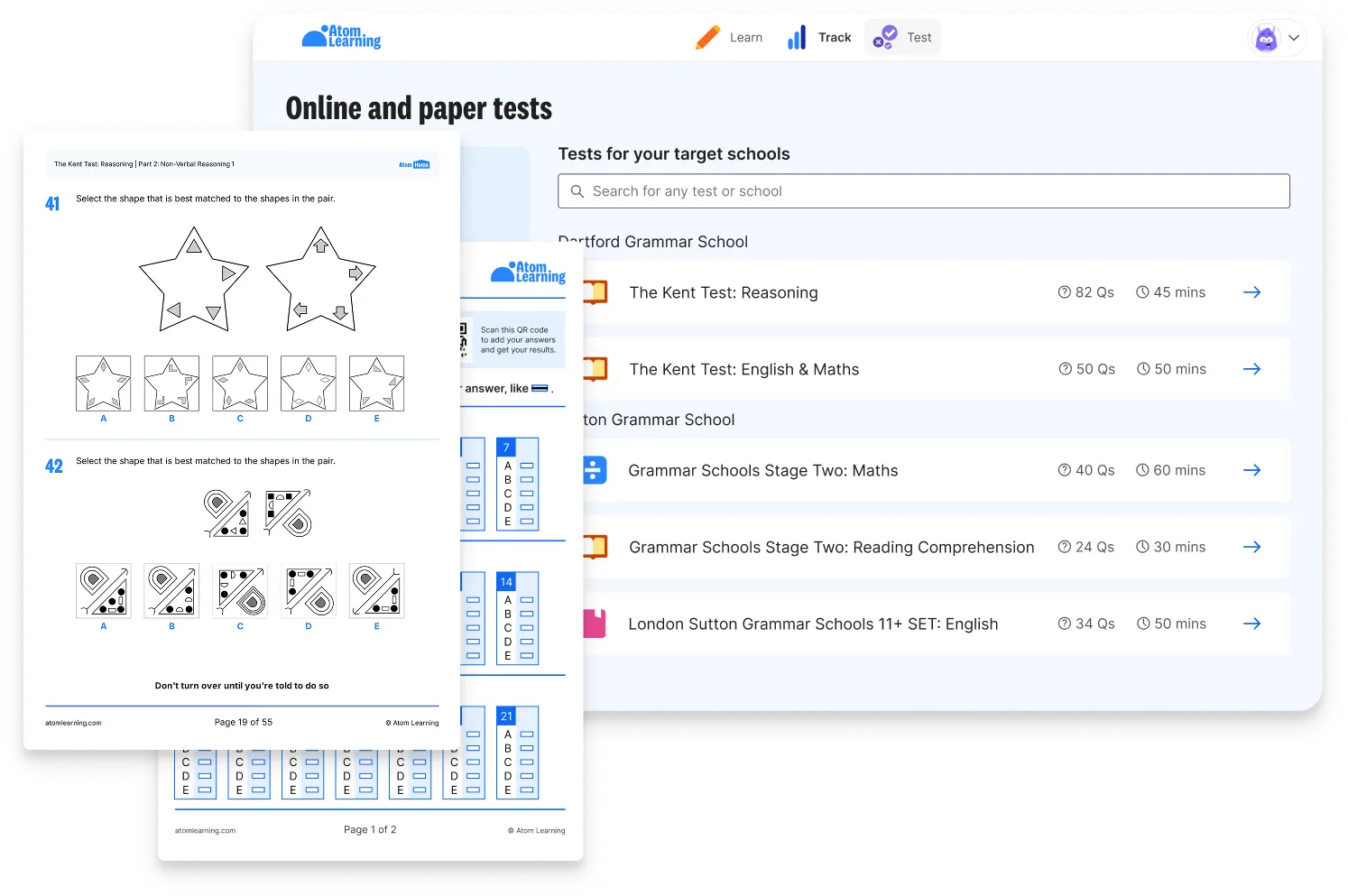
The picture below shows the format of a downloadable GL Assessment 11+ English comprehension practice test, available with an Atom Home subscription. You’ll also find online practice tests included with your Atom subscription.
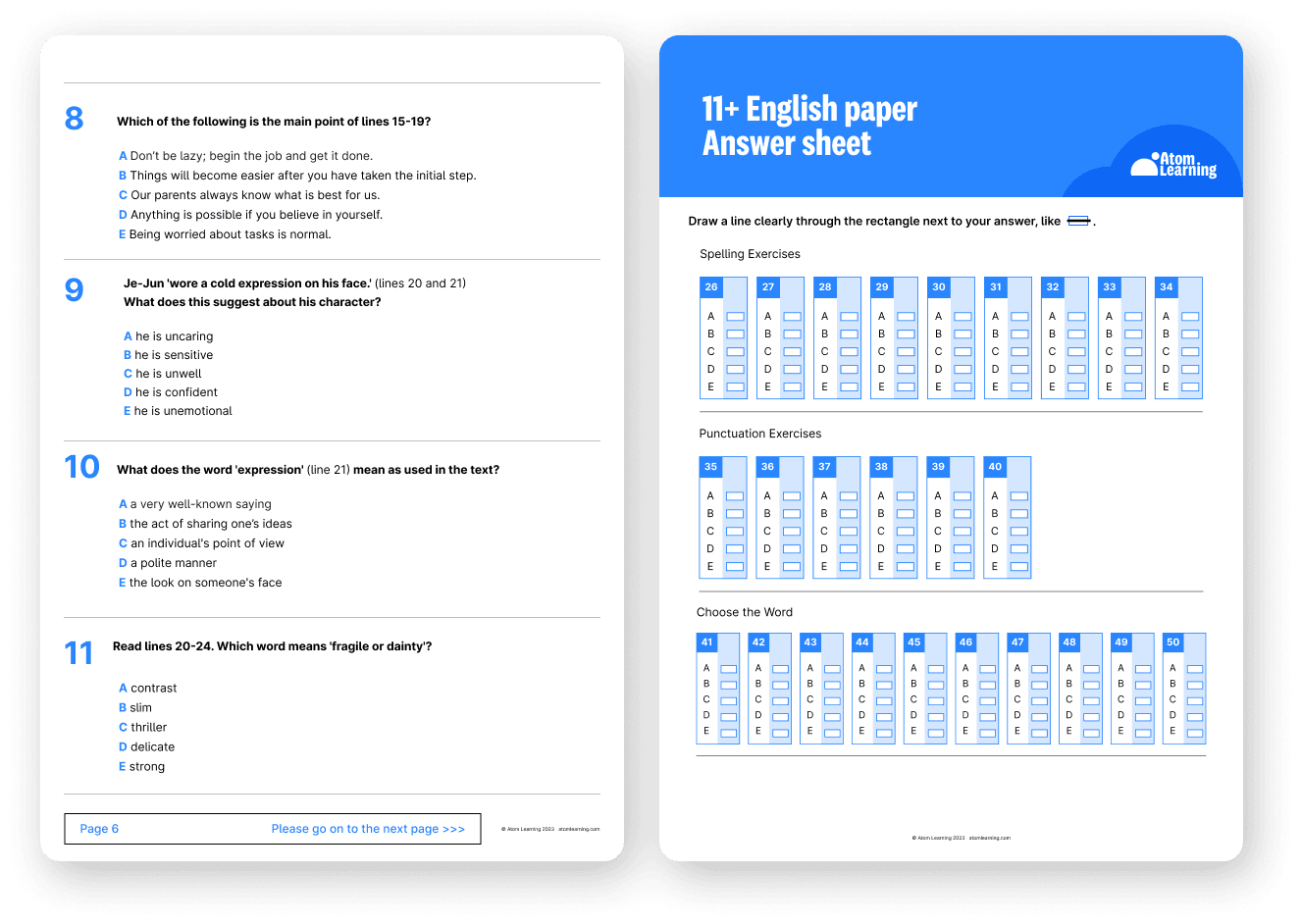
Reading comprehension questions and a separate answer sheet downloaded from Atom Home

ISEB English

The ISEB Common Pre-Test includes an English test, with two sections:

  • Reading comprehension
  • SPaG (spelling, punctuation and grammar).

The questions are adaptive, so if your child answers questions correctly, they become more challenging.

Your child will read a series of short passages (about 300–500 words each). These can be fiction, non-fiction, or poetry, and may come from different time periods. The test is taken on a computer, and your child can scroll through the text as they read.

All the questions are multiple choice.

Take a look at the format of an ISEB English test, as shown on Atom.
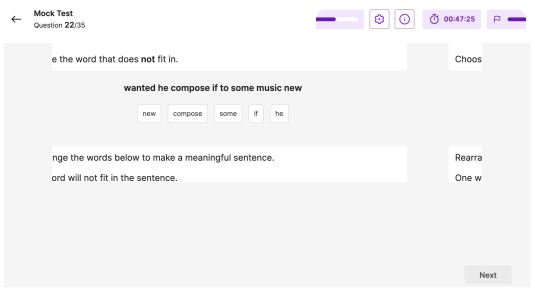
Example jumbled sentences question in an Atom ISEB English mock test

Year 6 SATs reading

The Year 6 SATs reading paper has a time limit of 60 minutes (including time for reading). It’s worth 50 marks and follows the Key Stage 2 national curriculum.

Your child will read three texts, each followed by a set of questions. These texts can be different genres, such as fiction, non-fiction, or poetry.

Some questions include a page reference, showing your child exactly where to look for the answer. They should read one text, answer the questions, then move on to the next text.

The space provided for each answer gives a clue about how detailed the response should be.

Year 6 SATs practice tests are available on Atom. The reading tests look like this:
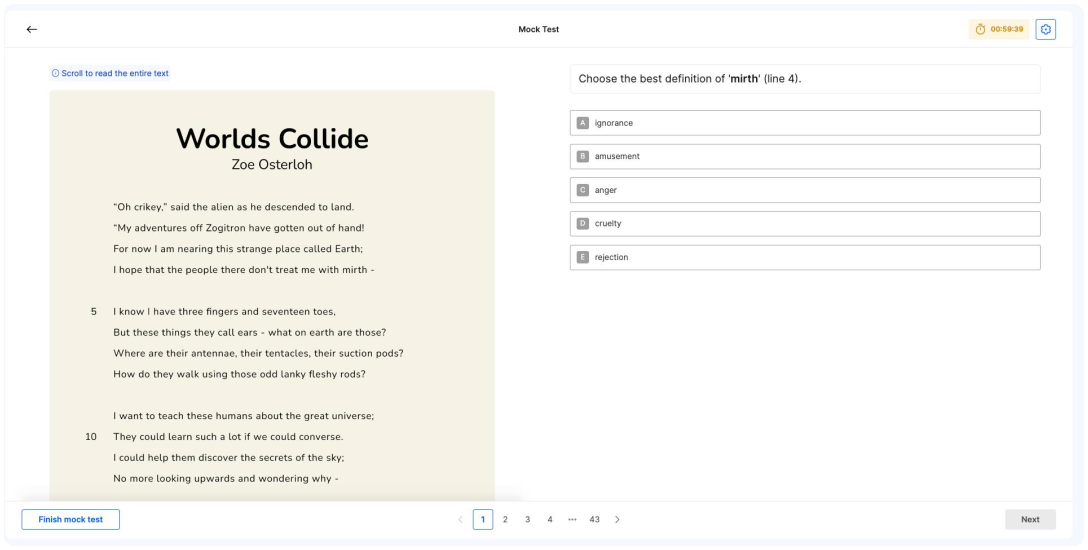
Example reading comprehension question on an Atom Year 6 SATs English test

Cambridge Select Insight comprehension

Comprehension is one of the longest sections on the Cambridge Select Insight test (previously known as CEM Select). It is included in the verbal reasoning section, as there is no separate English paper.

Like ISEB, it’s taken on a computer. Your child will see a scrollable passage of fiction or non-fiction on the left side of the screen, with questions appearing on the right.

Here's an example comprehension question in a Cambridge Select Insight test on Atom.
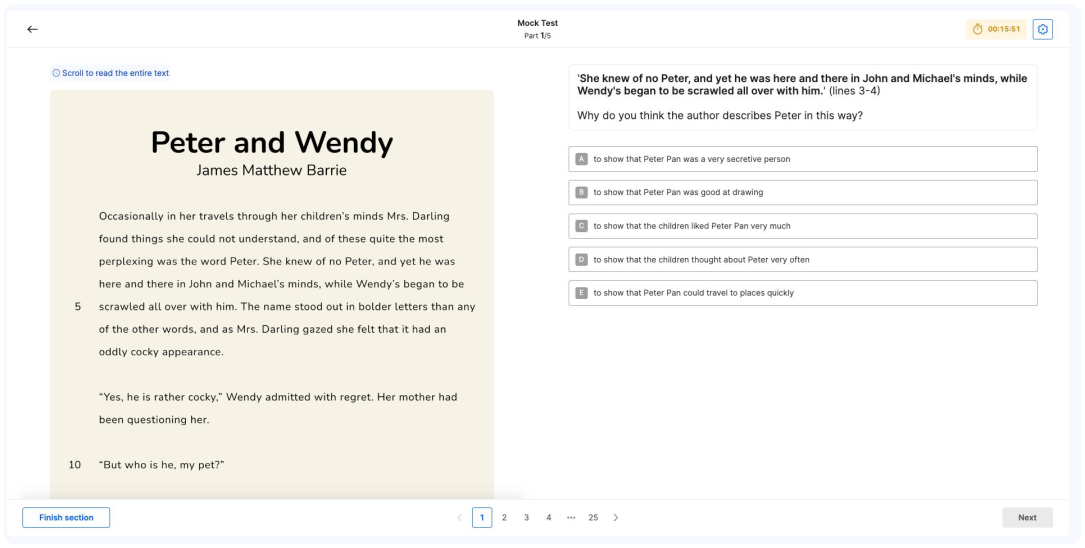
Reading comprehension question on an Atom Cambridge Select Insight mock test

FSCE 11+ English

A few grammar schools in England use 11+ exams set by FSCE.

In the English paper, your child will read a short passage, either fiction or non-fiction, and answer questions that test how well they’ve understood it.

The example below shows a question from a Reading School 11+ practice test on Atom. Reading School uses FSCE for its entrance exam.
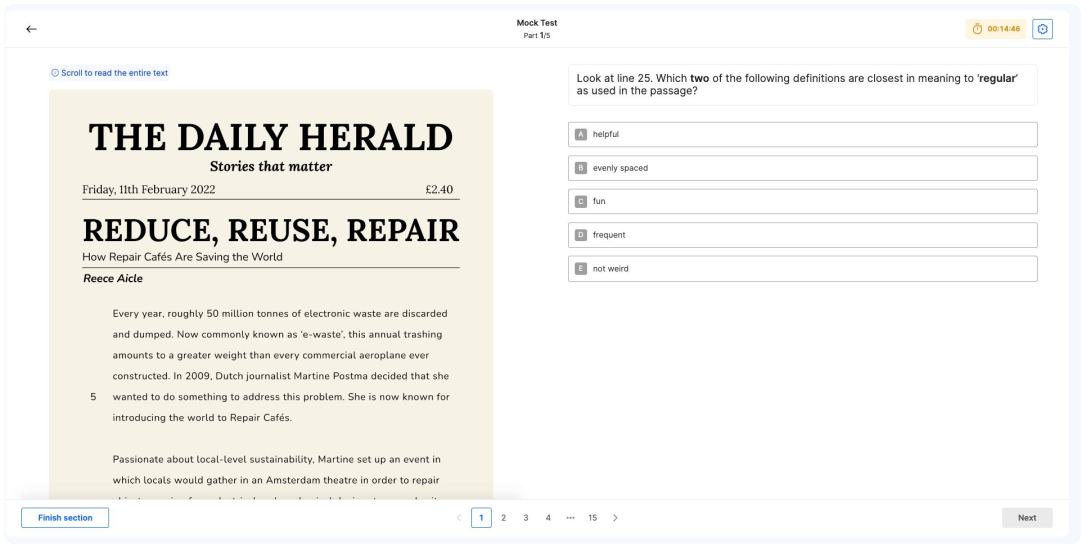
Example from an English mock test for Reading School on Atom

How to develop your child's comprehension skills

There are lots of ways you can help develop your child's comprehension skills at home. Here are a few tips to get you started.

Read widely

The best way to strengthen comprehension is to read often and to read a variety of texts. Fiction, non-fiction, poetry, newspapers - it all helps.

You can also encourage your child by modelling reading habits. Showing your child that reading is an activity you do for entertainment or relaxation can influence them.

Try reinforcing this with positive comments, such as "I'm going to relax with my book now", or "My book is so good, I can't put it down!"
No items found.

Ask questions while reading together

If you’re reading with your child, try asking questions to help them think more deeply about the text.

For example:

  • What do you think will happen next?
  • How would you describe this character?
  • How might the story change from another character’s point of view?
  • Can you summarise what’s just happened?

Develop exam technique

Good exam technique can help your child stay calm and tackle tricky questions with confidence. Here's our strategy for approaching comprehension questions:

  1. Read the passage more than once.
  2. Read the question carefully. Look out for keywords like “in your own words”. If your child is doing a paper test, they can underline command words (e.g. who, what, why, how). If the question mentions a specific part of the text (e.g. lines 36–38), make sure they reread that section.
  3. Check how many marks are available for the question. The number of marks gives a clue to how detailed the answer should be. Aim to make one clear point for each mark, and always write in full sentences. For multiple-choice questions, encourage your child to rule out the incorrect answers first before choosing the best one.
  4. Take a deep breath before moving on to the next section. Remind your child to focus on their own test and not compare themselves to others in the exam room!
No items found.
No items found.
No items found.

Take control of your child’s 11+ preparation.

Not sure if your child is on track for the grammar school 11+? You don’t need to guess what to cover or whether they’re ready. Atom shows you exactly what to practise each week and how they’re performing, so you can stay ahead of the process without the stress.

Endorsed by grammar schools, trusted by families.

Start your free trial and help your child feel fully prepared for the 11+.

Try Atom for free