
Biology is one of the most content-heavy GCSE subjects, but with a clear plan, it’s also one of the most rewarding. From cells and genetics to ecosystems and evolution, GCSE Biology gives students a deeper understanding of the living world and how it works.
What this post covers:
- The full list of GCSE Biology topics (AQA, Edexcel and OCR)
- Key learning objectives for each topic
- Sample questions to test and build confidence
Why Biology matters for GCSE success
GCSE Biology is assessed through knowledge recall, application, and analysis. It’s not just about memorising facts; it’s about understanding systems, recognising patterns, and solving problems under exam pressure. A strong grasp of the curriculum is the first step to high exam performance.
Exam boards and specification overview
GCSE Biology is assessed either as part of Combined Science or as a separate GCSE (Triple Science). All major exam boards, AQA, Edexcel and OCR offer both routes, and the core content is broadly similar. However, there are key differences in depth, assessment, and grading.
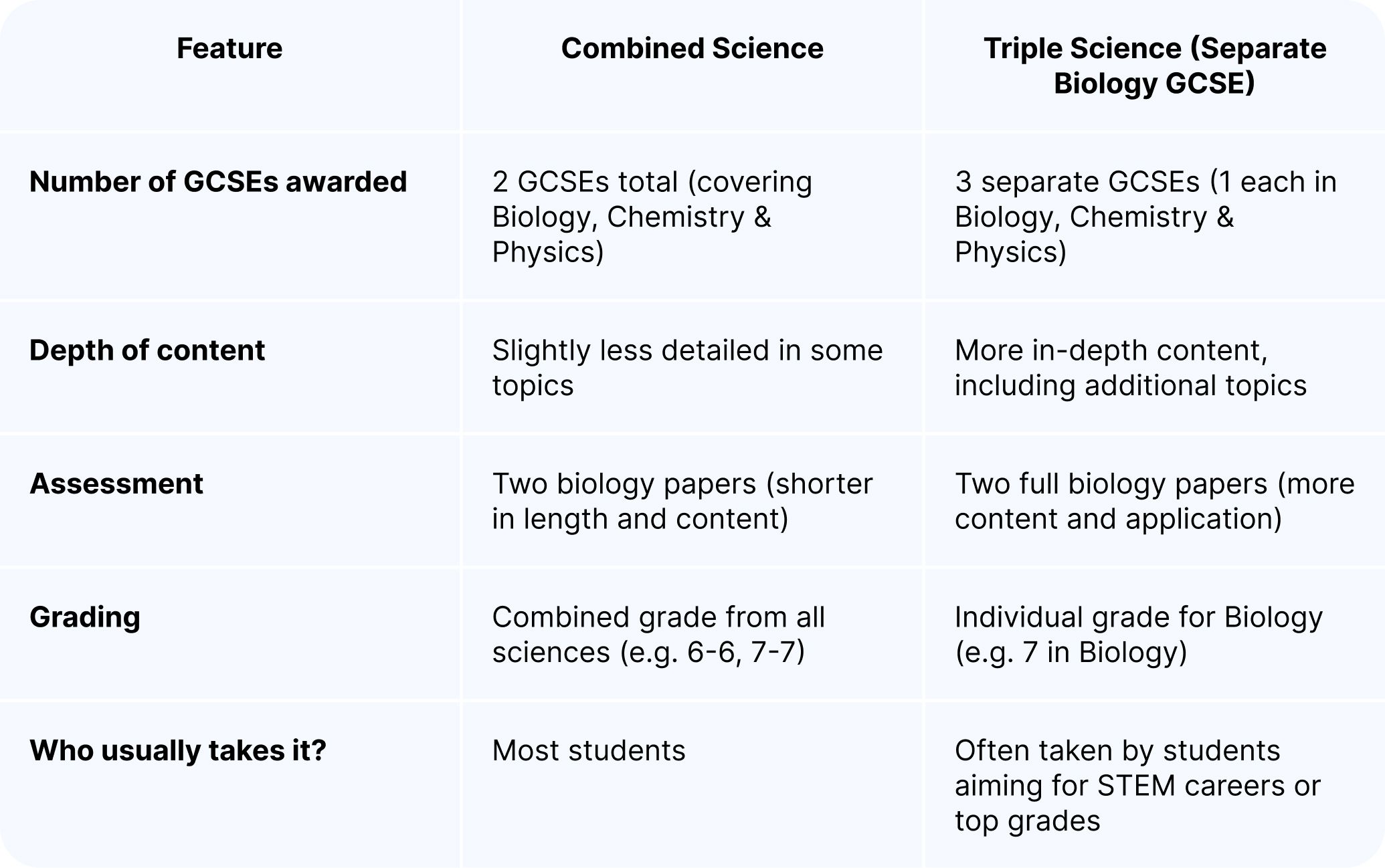
Combined Science students still study all the key Biology topics, but with fewer examples and slightly reduced complexity.
Triple Science students may encounter more complex processes (e.g. the structure of the eye or detailed biotechnology techniques) and will have more questions requiring high-level application and analysis.
Exam board overview
While the themes are consistent, each exam board organises the content slightly differently:
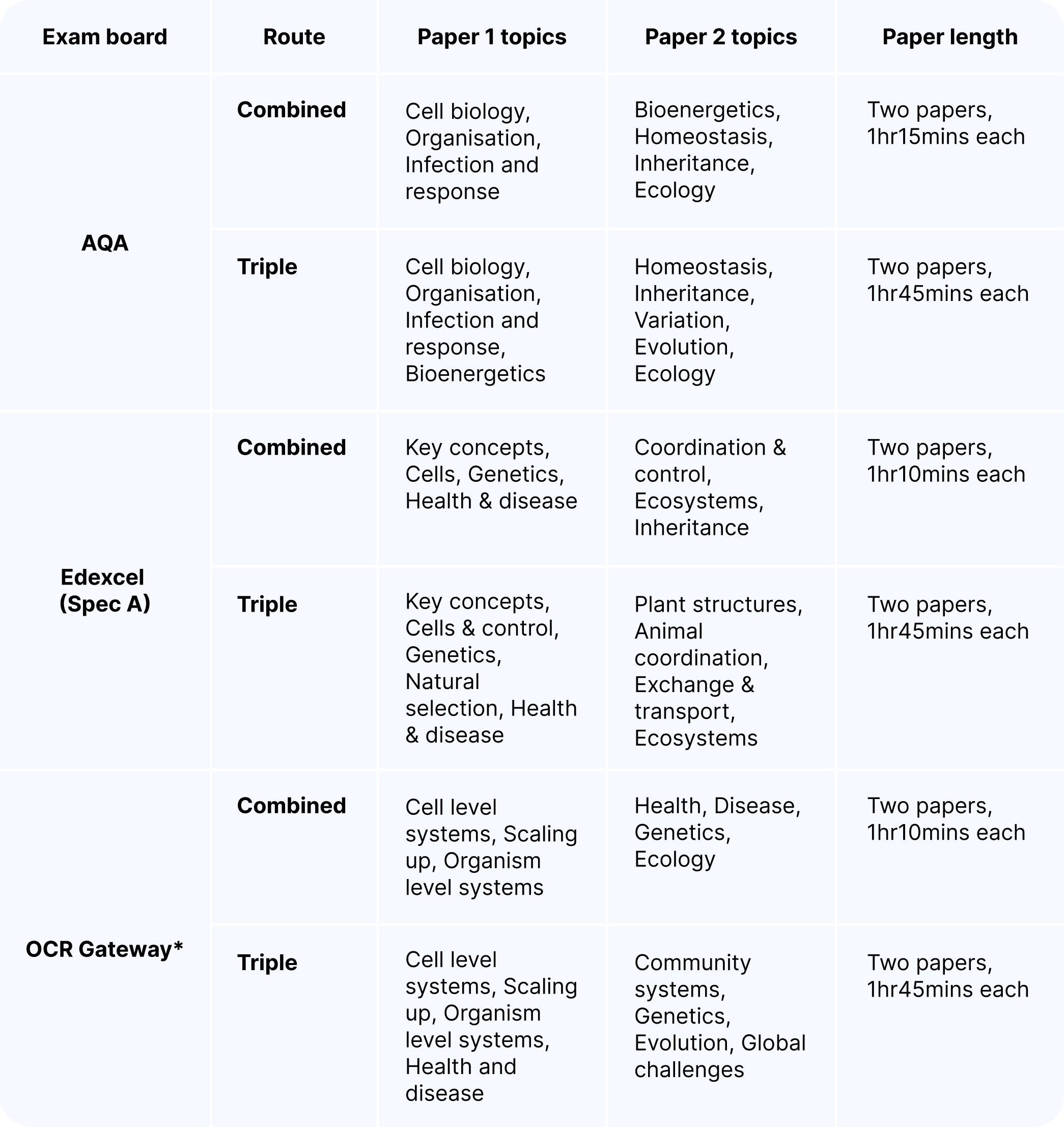
*OCR offers more than one pathway (e.g. Biology A: Gateway Science and Biology B: Twenty-First Century Science). The core content is very similar, but topics may be grouped differently and assessed in slightly different ways. Make sure to check with your teacher which pathway your school is using.
Each route assesses the same core concepts, but Triple Science includes more detailed subtopics and extended exam questions. The separate grading also provides greater clarity on individual science performance.