Atom Learning is partnered with Ermysted's Grammar School. You can read more about our partnership here.
Thinking about applying to Ermysted's Grammar School? Find out everything you need to know about admissions in 2025–2026 and how to prepare your child for success in the 11 plus entrance exam.
Key information for Ermysted's Grammar School
- Address: Ermysted’s Grammar School, Gargrave Rd, Skipton, North Yorkshire, BD23 1PL
- Number of pupils: 800+
- Admissions contact: [email protected]
- Number of places in Year 7: 128
- 11+ exam: GL Assessment 11 plus
- Catchment area: yes
Dates for your diary
- Tuesday 22nd April 2025: 11+ registration opens for Ermysted's Grammar School
- Tuesday 1st July 2025: Ermysted's Grammar School open evening
- Monday 1st September 2025: 11+ registration closes for Ermysted's Grammar School
- Saturday 27th September 2025: entrance exam day at Ermstyed's Grammar School
- Week of 13th October 2025: parents receive exam results
- Friday 31st October 2025: national deadline to apply for secondary school places
- Monday 2nd March 2026: national secondary school offers day
About Ermysted's Grammar School
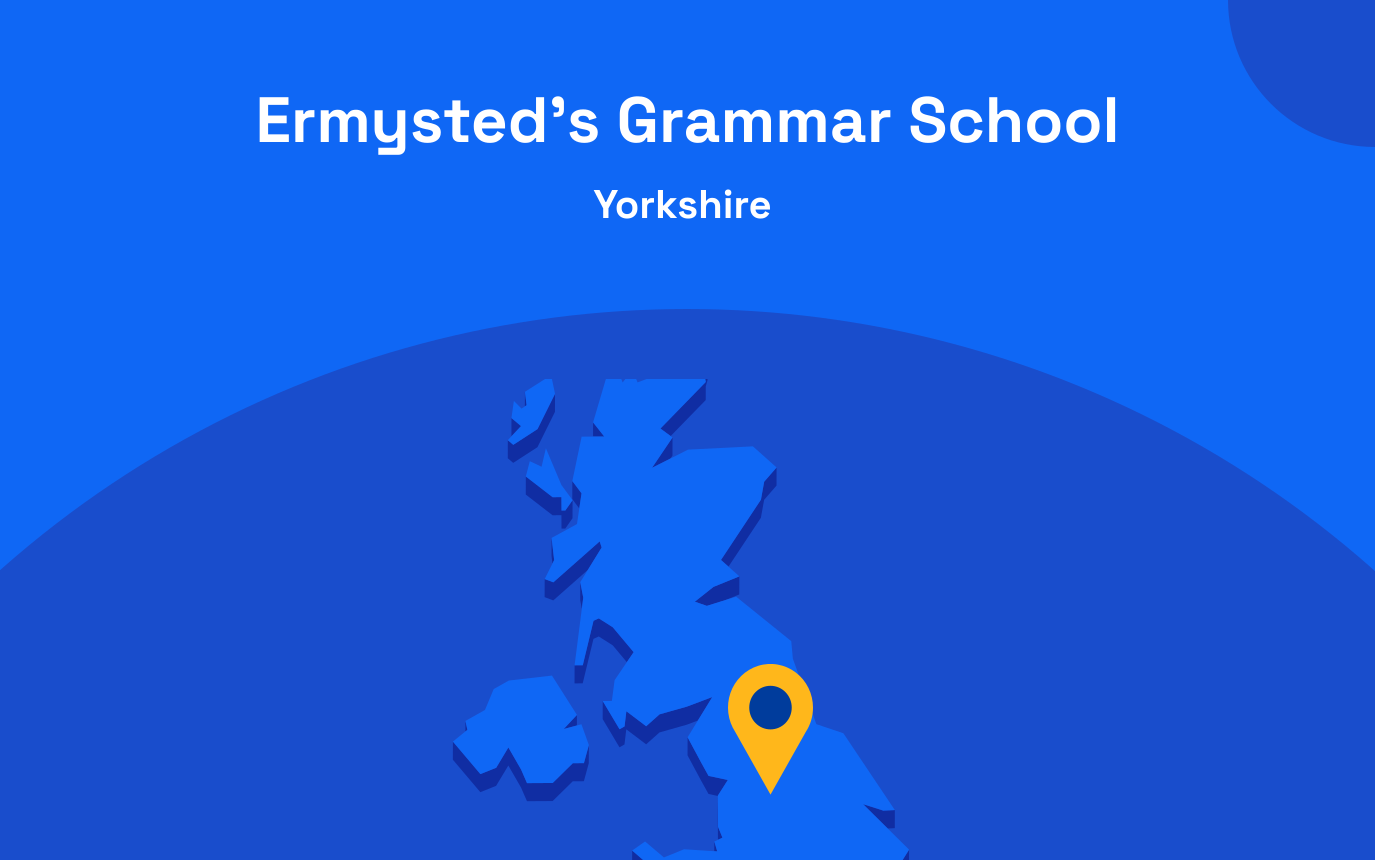
Ermysted’s Grammar School is a boys' grammar school in Skipton, North Yorkshire. It was founded around 1492, making it one of the oldest state schools in the country. The school holds an annual Founders' Day every autumn to celebrate its long history.
Students at Ermysted's Grammar School have access to a wide range of extracurricular activities. This includes nearly 60 clubs each week, as well as sports, music and debating. The school's newspaper, 'The Reason', has won national awards.
How to apply to Ermysted's Grammar School
Ermysted's Grammar School is a selective state school. This means that your child will need to take the 11 plus exam to be eligible for a place in Year 7.
Registration for the Ermysted's Grammar School 11 plus opens on the school website on Tuesday 22nd April 2025 and closes on Monday 1st September. Your child will take the exam on Saturday 27th September 2025 and you’ll receive their results by mid-October.
To apply to Ermysted's Grammar School, you’ll need to name the school as one of your preferred schools on the secondary school common application form. This will be available on your home council website from early September and must be submitted by 31st October 2025.
Remember – passing the 11 plus doesn’t guarantee that your child will be allocated a place at your preferred school. Many grammar schools are often oversubscribed with qualified children. Schools and their admissions authorities work through admissions criteria to prioritise children for places.
If you would like your child to be considered for a place under one of the school’s oversubscription criteria, you’ll need to complete a Supplementary Information Form (SIF). This is available to download from the school website and must be returned by 28th November 2025. We’ve included more information about the oversubscription criteria for Ermysted’s Grammar School below.
What subjects are on the 11 plus?
Ermysted's Grammar School uses 11 plus papers supplied by GL Assessment. This is one of the leading 11 plus providers in England.
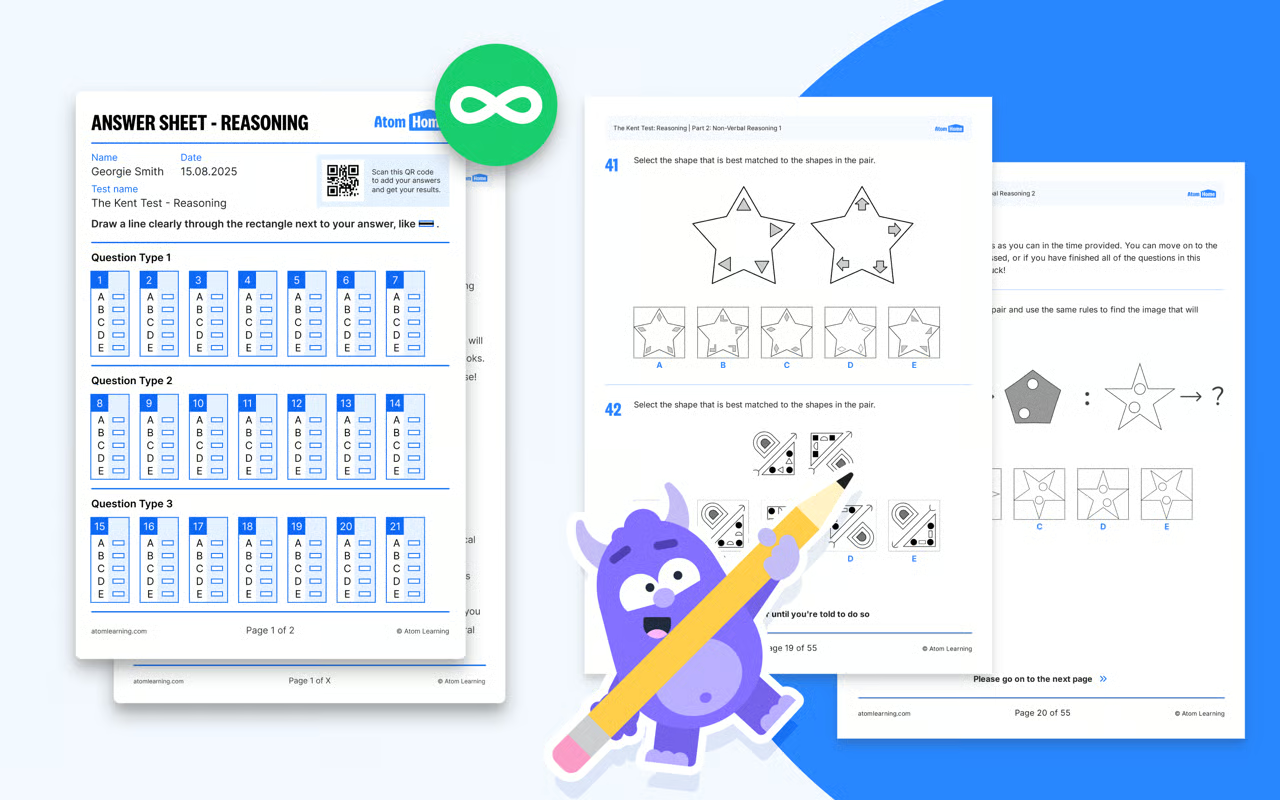
All GL Assessment papers are multiple-choice. Your child will have separate answer sheets which they will use to mark their answers. These are marked electronically.
Children applying to Ermysted’s Grammar School will take two 11 plus papers in September 2025. Each paper lasts around 50 minutes. There are individually-timed sections in each paper, so your child will need to follow the invigilator’s instructions carefully.
One paper contains a mix of questions in English and verbal reasoning. The English questions will test Key Stage 2 concepts, such as reading comprehension, grammar, spelling and punctuation. Verbal reasoning isn’t taught at school, but assesses your child’s ability to use logic and reasoning to solve problems with written information.
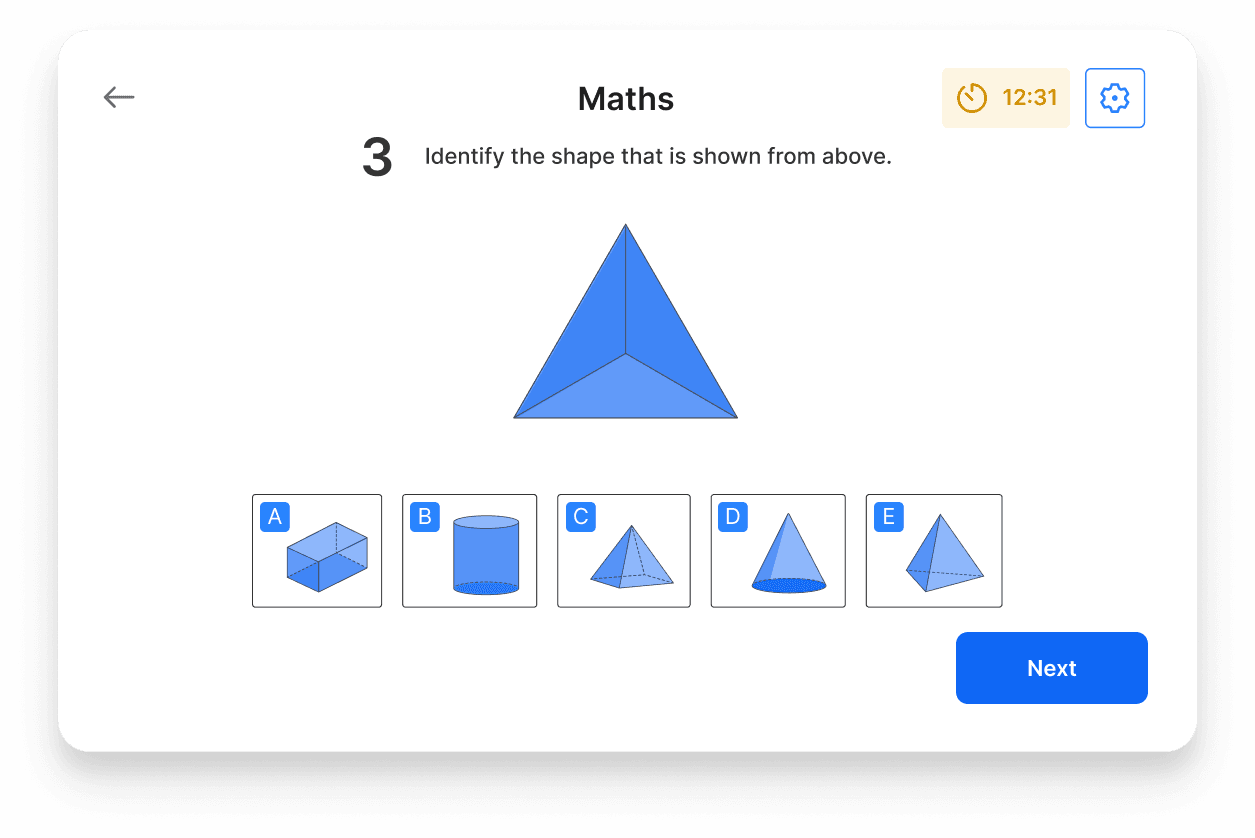
The other paper contains a mix of questions in maths and non-verbal reasoning. Maths questions assess Key Stage 2 concepts such as number, measurement, geometry and statistics. Like verbal reasoning, non-verbal reasoning isn’t taught on the national curriculum. This tests how well your child can use logic and reasoning to solve problems with visual information.