
Struggling to make sense of all the content in GCSE History? This guide breaks it down into clear topic areas, key learning objectives, and example questions to help students revise with confidence.
What this post covers:
- An overview of common GCSE History topics (AQA, Edexcel, OCR)
- What students are expected to know and do for each topic
- Sample exam-style questions to guide revision
- Tips for tackling source-based and essay questions
Why History matters for GSCE success
GCSE History is more than names and dates; it’s about understanding cause and consequence, evaluating evidence, and forming structured arguments. These core academic skills build exam confidence and prepare students for A-level and beyond.
Through exploring causes, consequences, and interpretations, learners build confidence in analysis and argumentation. These skills are especially useful in A-level English, politics, and religious studies. They are also highly valued in future law, journalism, education, and public policy careers.
Key topics in GCSE History
Different exam boards structure their GCSE History specifications slightly differently, but all aim to build historical understanding through breadth and depth. Here’s a breakdown of the topic types students will encounter:
AQA:
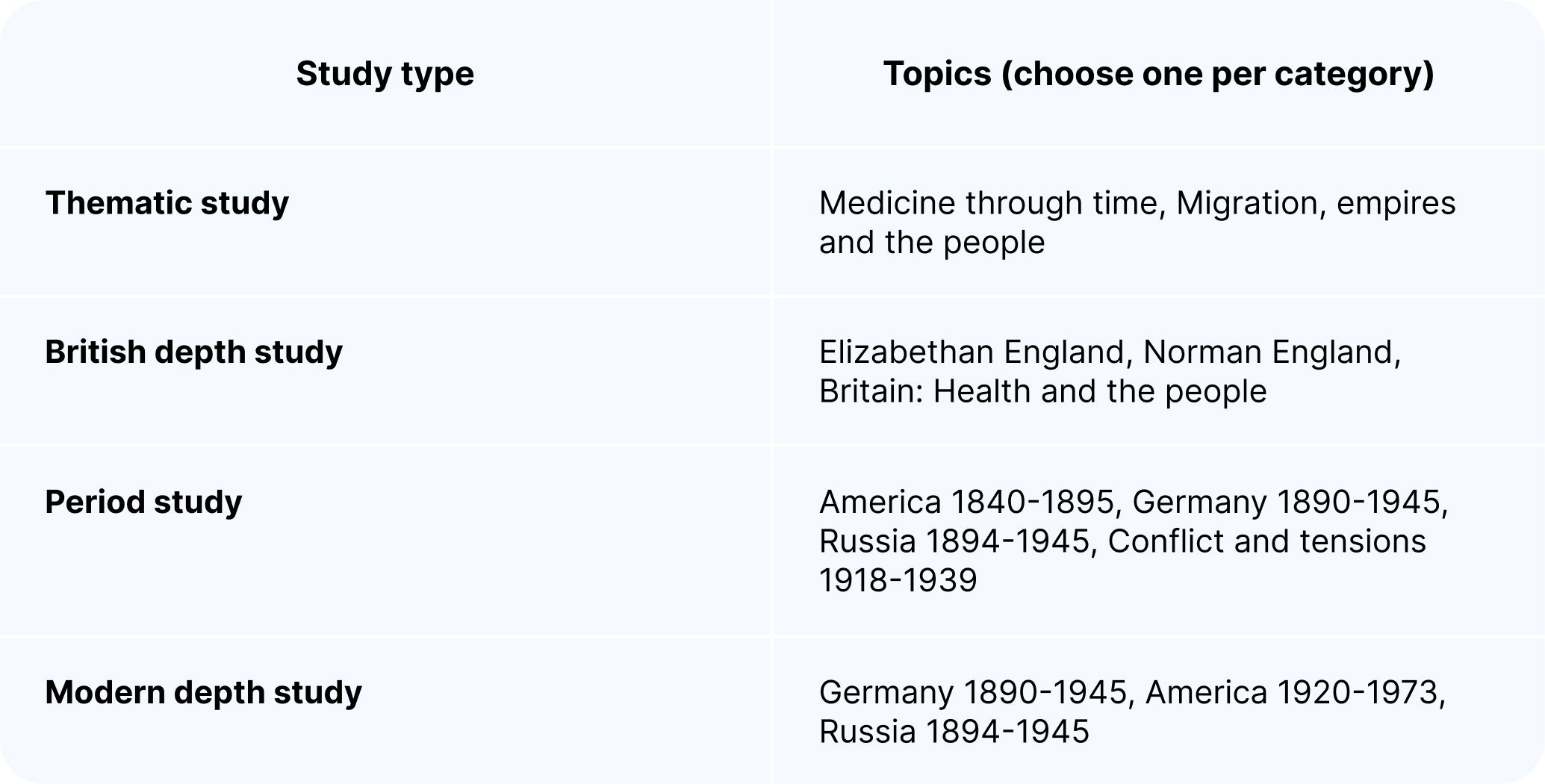
Students study 4 units: 1 thematic, 1 British depth, 1 period, and 1 modern depth.
Edxecel (Pearson):
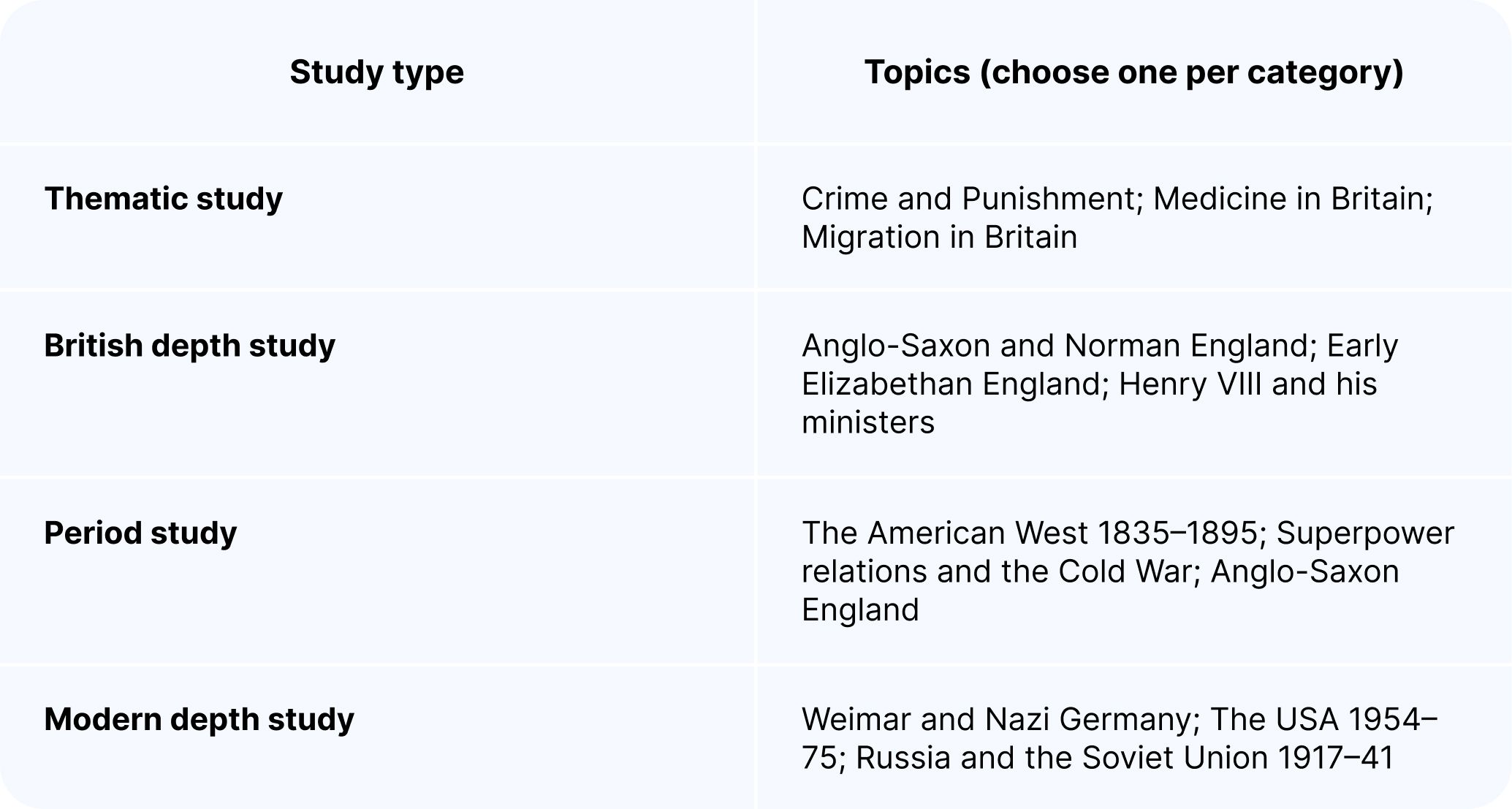
Students study a Thematic Study with Historic Environment, a British Depth Study, a Period Study, and a Modern Depth Study.
OCR A (Explaining the Modern World):
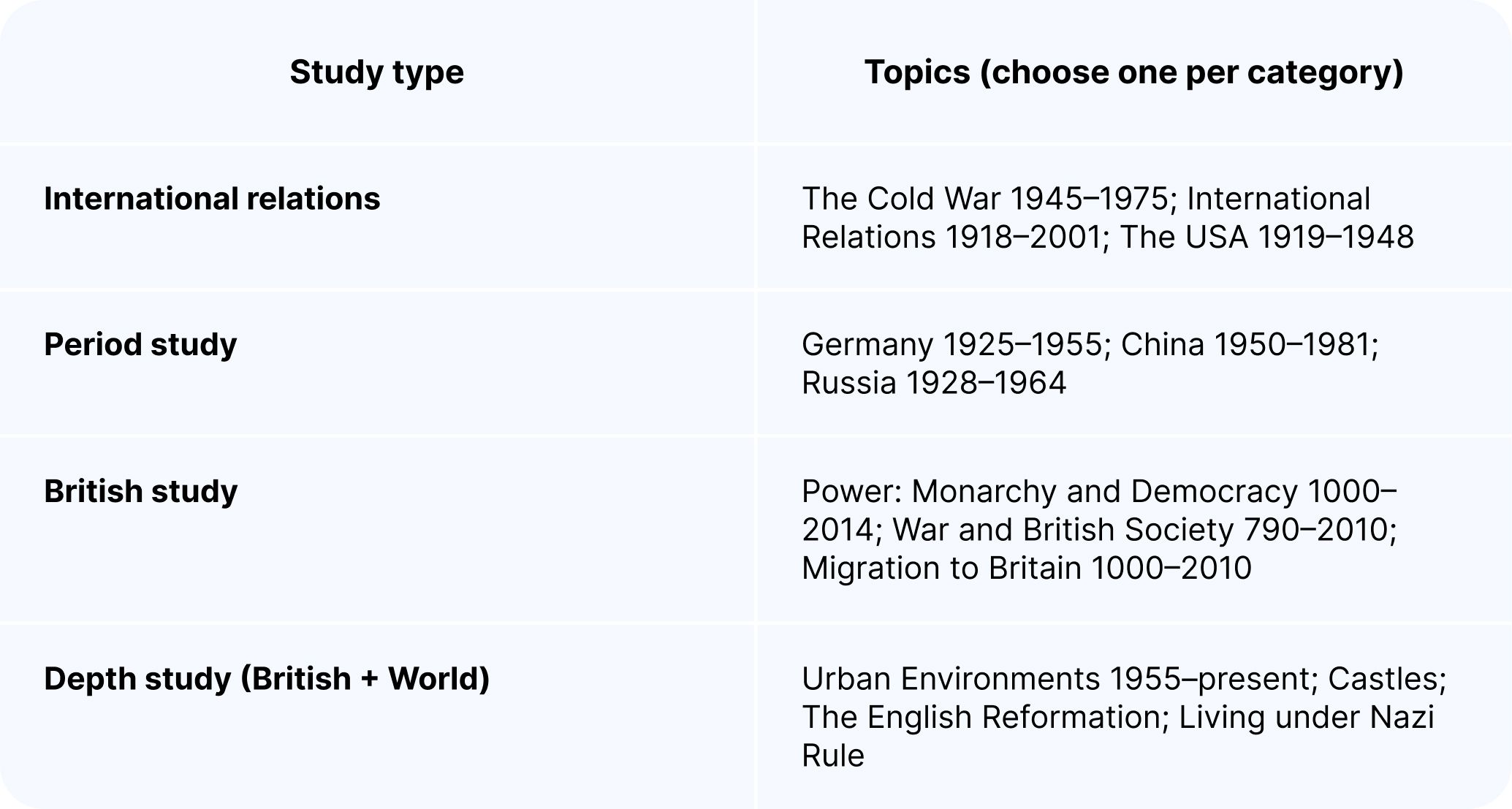
Students study one International Relations, one Period Study, one British Thematic study and one British or World Depth Study.
OCR B (Schools History Project):
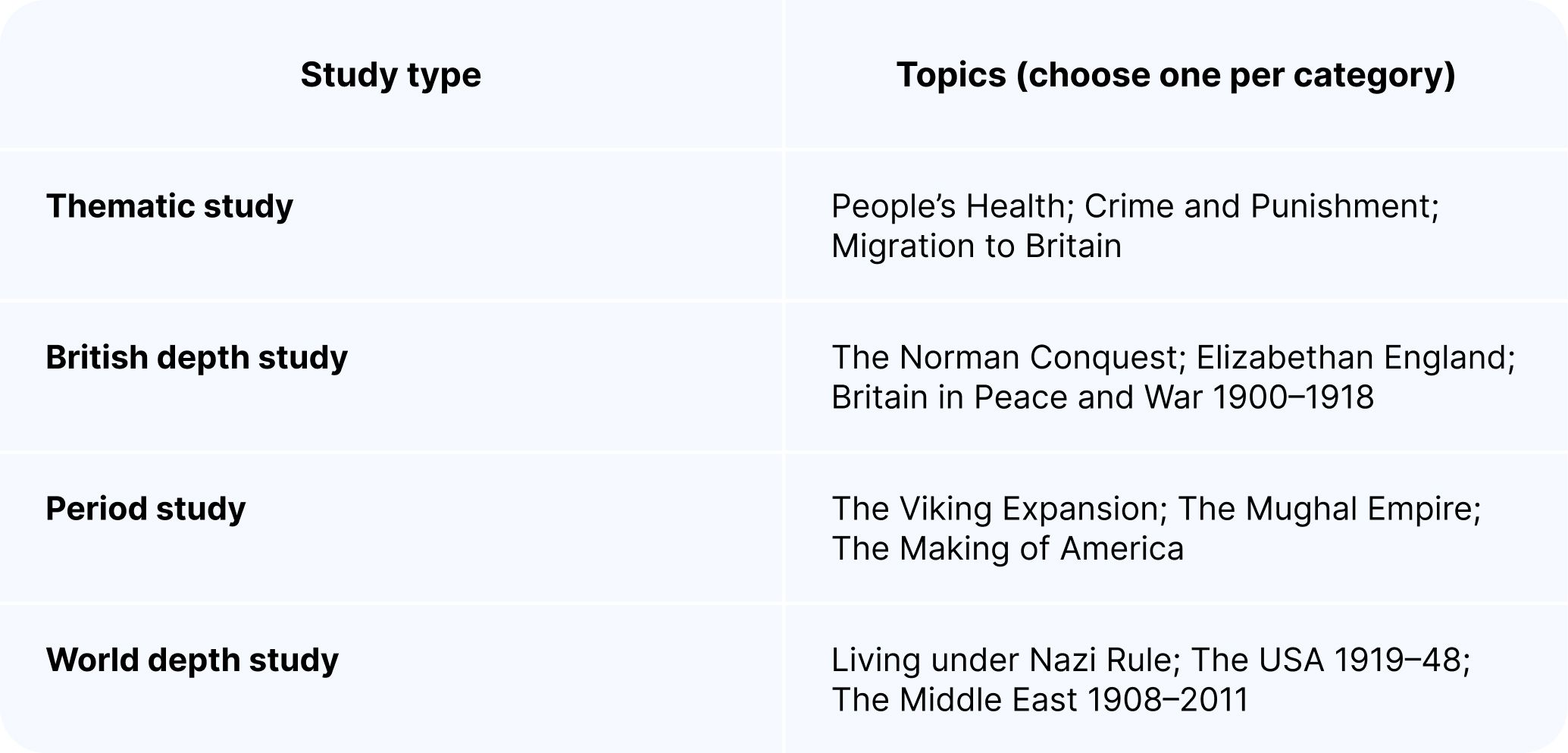
OCR B allows for a wider global focus and is structured around depth, period and thematic studies.
What students need to learn
Each topic comes with clear assessment objectives. Students must be able to:
- AO1: Demonstrate knowledge and understanding of the key features of the periods studied
- AO2: Explain and analyse historical events and periods using second-order concepts (e.g. cause, consequence, change, significance)
- AO3: Analyse, evaluate and use sources
- AO4: Analyse and evaluate interpretations of the past
Tip: Build revision around these AOs to stay focused and exam-ready.