Choosing GCSE subjects is one of the most important steps in a student’s education journey. Many parents and students wonder how many GCSEs are needed, and the good news is that there is a clear and manageable answer.
This guide explains the typical number of GCSEs, why it matters, and how students can make the best choices for their future.
What this post covers:
- The typical number of GCSEs students take
- Why GCSE subject choices matter
- Which GCSEs are compulsory
- How optional subjects work
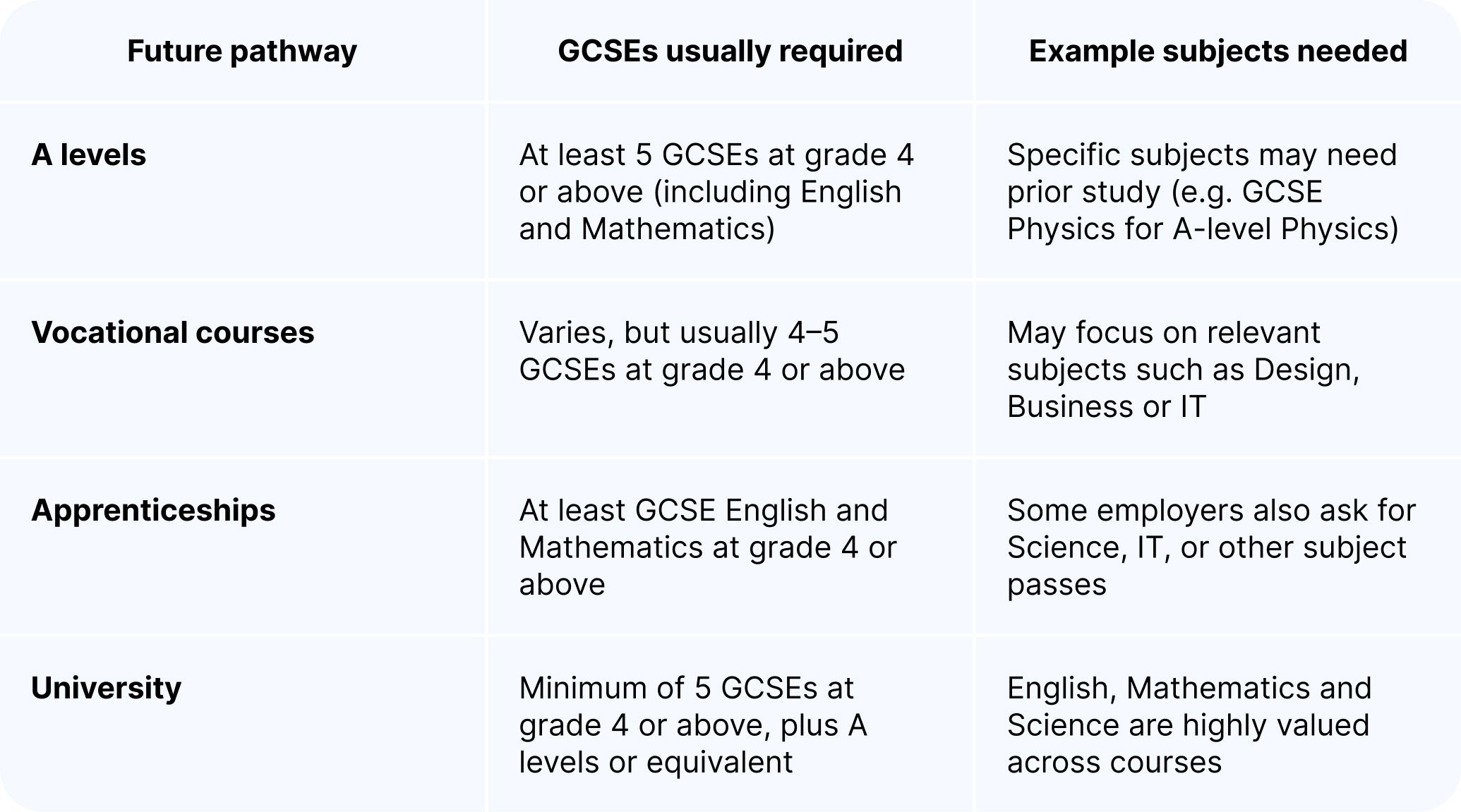
- How GCSE choices impact future study and careers
What is the typical number of GCSEs?
Most students in England take between 8 and 10 GCSEs. Some take as many as 11 or 12, while others take fewer, depending on their school, personal circumstances or additional needs.
- Average number: 9 subjects
- Lower range: 7–8 subjects
- Upper range: 11–12 subjects
The upper range is usually suited to students who are academically strong, highly motivated, and capable of managing a larger workload.
Schools that timetable additional subjects such as a second foreign language, Further Mathematics, or an extra humanities subject may also offer this opportunity. These extra qualifications can be valuable for students aiming for competitive sixth forms or universities, but are not essential for success.
Students don’t need to make this decision alone. Schools provide structured support through:
- Options evenings or information sessions for students and parents to explore available subjects
- Conversations with teachers and subject leaders to help match choices to a student’s strengths and interests
- Support from tutors or careers advisers who can ensure decisions align with long-term goals, such as A levels, apprenticeships or specific career paths
- Clear advice on balance, often reminding students that achieving strong grades across a manageable number of subjects is more valuable than spreading themselves too thin
This guidance ensures that students feel supported, reassured, and confident that their final subject list is right for them.