General revision strategies
A strong revision plan balances content knowledge with skills practice.
Here are evidence-based approaches that make a real difference for Edexcel GCSE exams:
1. Break down the specification
Edexcel specifications are highly detailed. Turning them into a topic-by-topic checklist makes revision structured and achievable. Colour-coding progress can help track what’s been covered and highlight areas that need more focus.
2. Use practice papers effectively
Practice papers are invaluable for building familiarity with the exam format. Start by attempting them without time pressure, then progress to timed conditions. Always mark against the official mark schemes to see how examiners award credit.
3. Mix active recall with spaced practice
Instead of re-reading notes, test memory with flashcards, quizzes, and summary sheets. Go back to topics often over several weeks. This "little and often" method helps your long-term memory more than one big study session.
4. Apply knowledge to questions
Many Edexcel exams test students' ability to apply knowledge in new contexts. Practising exam-style questions that use different skills, like maths or science, helps build confidence in learning.
5. Balance revision sessions
Short, focused bursts of revision (25–30 minutes) with breaks are more effective than marathon sessions. This method, often called the Pomodoro technique, keeps focus sharp and reduces mental fatigue.
6. Review regularly, don’t cram
A steady approach of revisiting material across weeks or months is far more effective than last-minute cramming. Even just 20–30 minutes of focused revision daily in the early months can build confidence and mastery.
7. Look after wellbeing
Good sleep, balanced nutrition, hydration, and exercise greatly affect memory and concentration. Taking regular breaks and having downtime is not a waste of time. It helps the brain process new information better.
Subject-specific Edexcel revision tips
English
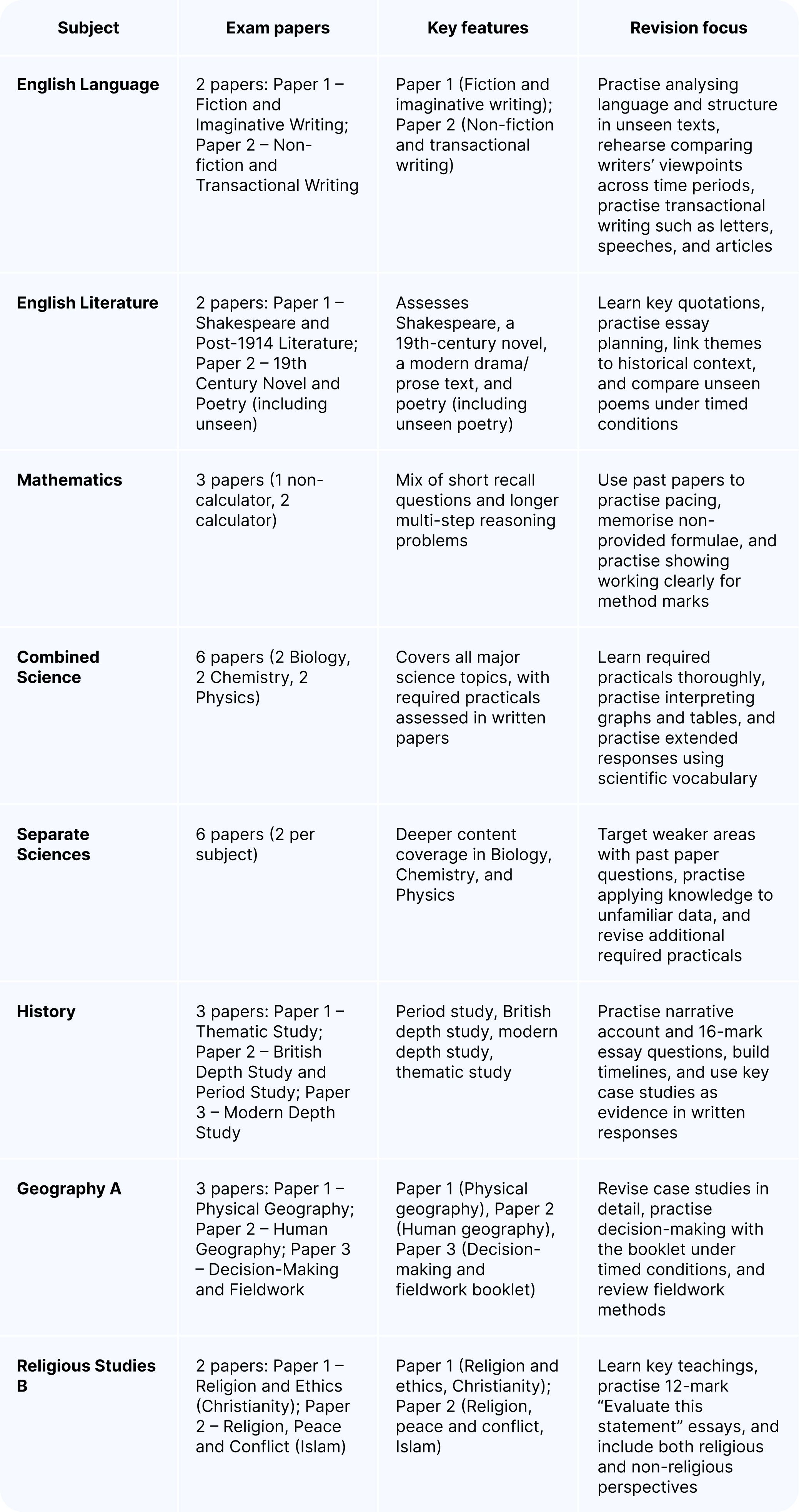
- Practise analysing unseen extracts for both language and structure, as these are assessed separately.
- In English Literature, plan essays that link quotations to historical and social context; this is specifically rewarded.
- Rehearse transactional writing tasks (e.g. writing a letter, article, or speech) with a clear audience and purpose.
Sciences (Biology, Chemistry, Physics)
- Revise the required practicals thoroughly, including equipment, method, and sources of error; these are frequently tested.
- Practise interpreting graphs, tables, and experimental results, as Edexcel papers strongly emphasise data handling.
- Work on extended six-mark questions that require a clear structure and correct use of scientific terms.
Arts and practical subjects
- Stay on top of coursework deadlines, as NEA components carry significant weight.
- For subjects like Music and Drama, rehearse set works and performances using subject-specific vocabulary in evaluations.
- In Art and Design, keep sketchbooks organised with evidence of experimentation, annotation, and reflection.
Humanities (History, Geography, Religious Studies)
- In History, practice narrative account and “explain why” questions, ensuring answers are concise and chronological.
- In Geography Paper 3, work with decision-making booklets under timed conditions to build confidence in interpreting resources.
- In Religious Studies, practice evaluation questions by structuring essays with clear arguments for and against, supported by religious teachings and alternative views.
Effective exam technique
- Read questions with precision - Edexcel papers often use tiered questions (2, 4, 6, or 12+ marks) with increasing demand. Pay attention to how many marks are available and adapt answers accordingly.
- Plan extended answers carefully - Spend a few minutes planning for English essays or History 16-mark questions. Edexcel examiners reward structured arguments with a clear line of reasoning, not just lists of points.
- Manage time across multiple shorter questions - In Maths and Science, papers mix short recall items with longer reasoning tasks. Don’t overinvest in low-mark questions; move on quickly and return if time allows.
- Use source material and case studies - Edexcel Geography and History papers expect students to integrate the provided sources or case study material into their answers. Marks are lost if these are ignored.
- Check numerical and structured responses - Calculations and units are always rechecked in Math and Science. Arguments are fully developed in English and the Humanities. These small checks can convert near misses into secure marks.
Final advice for parents and students
The run-up to Edexcel GCSE exams can feel intense, but success comes from steady preparation and the right support.
For parents, the most important role is to create an environment that encourages learning without adding pressure, offering reassurance, showing interest in progress, and making sure there’s space for rest and revision.
For students, consistency is key: starting early, revisiting topics regularly, and using practice papers to familiarise themselves with Edexcel’s exam style all help build confidence. Just as crucial is remembering that well-being matters, too; good sleep, balanced meals, and time to relax are not distractions but part of performing well. With a calm approach, supportive routines, and steady effort, students can enter their Edexcel GCSE exams feeling confident and prepared.