When is the 2025 SATs maths exam?
There are three maths papers on the Year 6 SATs. These take place over two days.
Wednesday 14th May 2025
- Paper 1: arithmetic test – 30 minutes, worth 40 marks
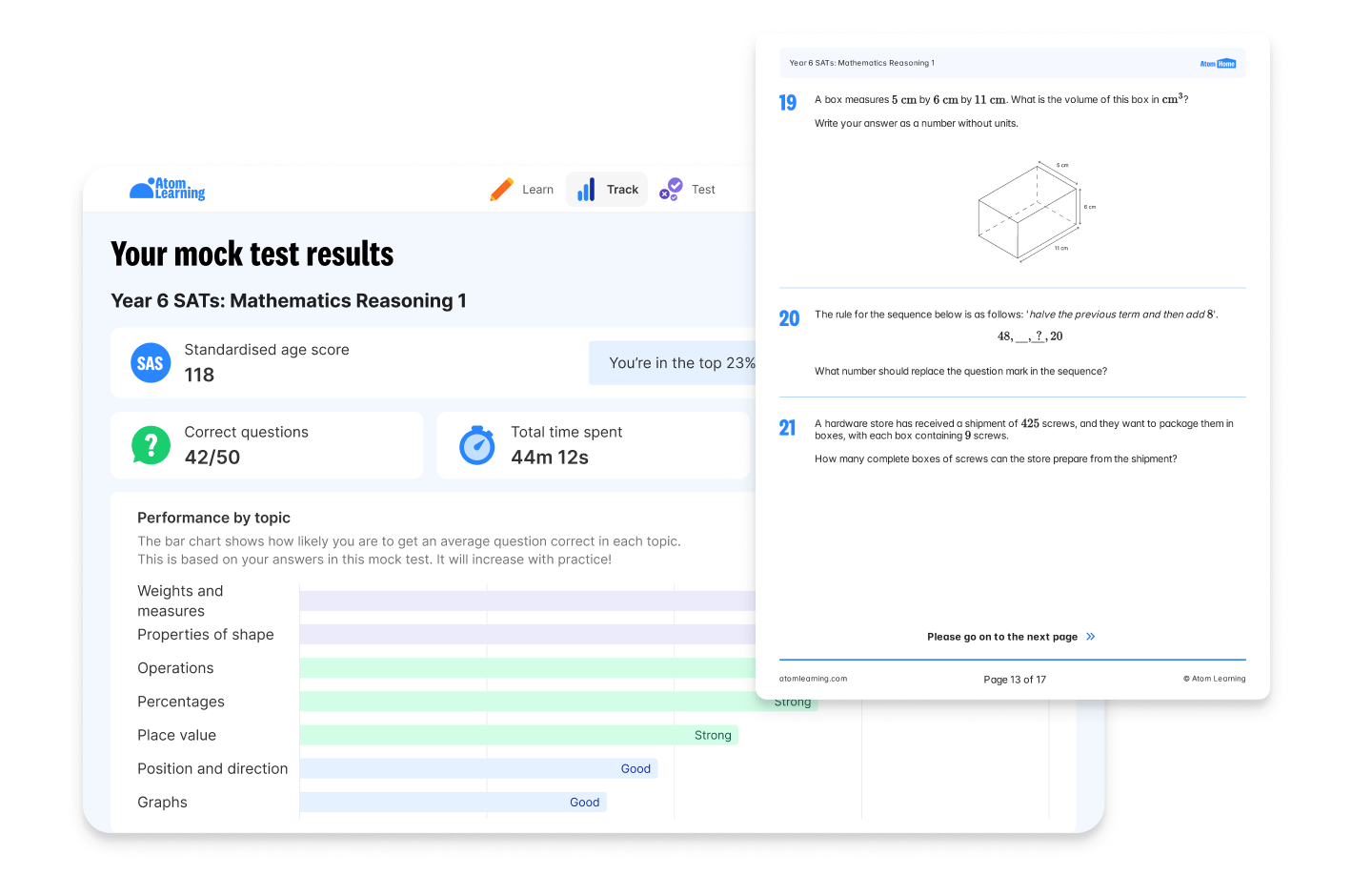
- Paper 2: reasoning test (1) – 40 minutes, worth 35 marks
Thursday 15th May 2025
- Paper 3: reasoning test (2) – 40 minutes, worth 35 marks
What format are the KS2 SATs maths papers?
There are different question formats in the Year 6 SATs maths papers.
In the arithmetic paper, your child will need to write their answers in free-form. They will have space for working out.
In both reasoning papers, your child might need to complete a grid/graph, write free-form answers, or choose the correct answer(s) from multiple-choice options. They will have plenty of space to write their workings.
How is the maths SATs exam marked?
There are 110 marks available across the three maths papers. Partial marks will be awarded for correct working where the final answer is wrong, but the pupil has used the formal method of working.
Your child’s raw score (out of 110) will be converted into a scaled score. This makes sure all pupils in the year group are tested on a consistent scale. The scaled score is adjusted for any differences in the difficulty of the test year on year.
Learn more about how the SATs are marked.
Tips for successful SATs maths revision
Is your child taking their SATs maths test this year? Here are our top tips to support them.
1. Keep it bitesize
Studying little and often is key. Short, focused practice sessions (20–30 minutes) a few times a week will help build confidence without overwhelming them.
2. Identify weak spots
Use online learning resources to spot areas where they need extra support. Whether it’s fractions, word problems, or reasoning questions, targeted revision will be more effective than covering everything at once.
3. Make maths part of daily life
Bring maths into everyday conversations, like estimating shopping totals, dividing up pizza, or calculating journey times. Real-world maths makes concepts feel more natural.
4. Focus on problem-solving and reasoning
The reasoning papers can trip children up. Encourage them to explain their thinking out loud to build deeper understanding. Why did they choose that method? What’s the next logical step?
5. Encourage a growth mindset
Mistakes are part of learning! Praise their effort and problem-solving skills rather than just getting the right answer.
6. Keep it positive and stress-free
Remind them that SATs are just one part of their learning journey. A good night’s sleep, regular breaks, and plenty of encouragement will help them feel prepared and confident.