Geography brings the world into the classroom, helping students understand everything from tectonic plates to urbanisation and climate change. However, with a wide range of topics and case studies, knowing where to begin with GCSE Geography revision can be hard.
In this article, we’ll summarise the key topics across physical and human geography, what students are expected to know, and how to prepare with sample questions.
What this post covers:
- Overview of the GCSE Geography specification
- Key physical and human geography topics
- Core learning objectives
- Sample exam questions with tips for success
Why Geography matters for GCSE success
GCSE Geography develops far more than subject knowledge. It strengthens analytical and problem-solving skills by asking students to interpret data, evaluate evidence, and construct clear arguments. These abilities are valuable not just in exams, but across the wider curriculum and in everyday decision-making.
Geography also encourages a deeper awareness of global issues such as climate change, resource use, and urban growth. Understanding these themes helps students connect classroom learning to the real world, making the subject both practical and engaging.
A strong grade in GCSE Geography can also open doors for the future. It provides a solid foundation for A-level subjects like Geography, Sociology, Politics and Environmental Science, while also supporting career pathways in areas such as urban planning, sustainability, international relations, and business.
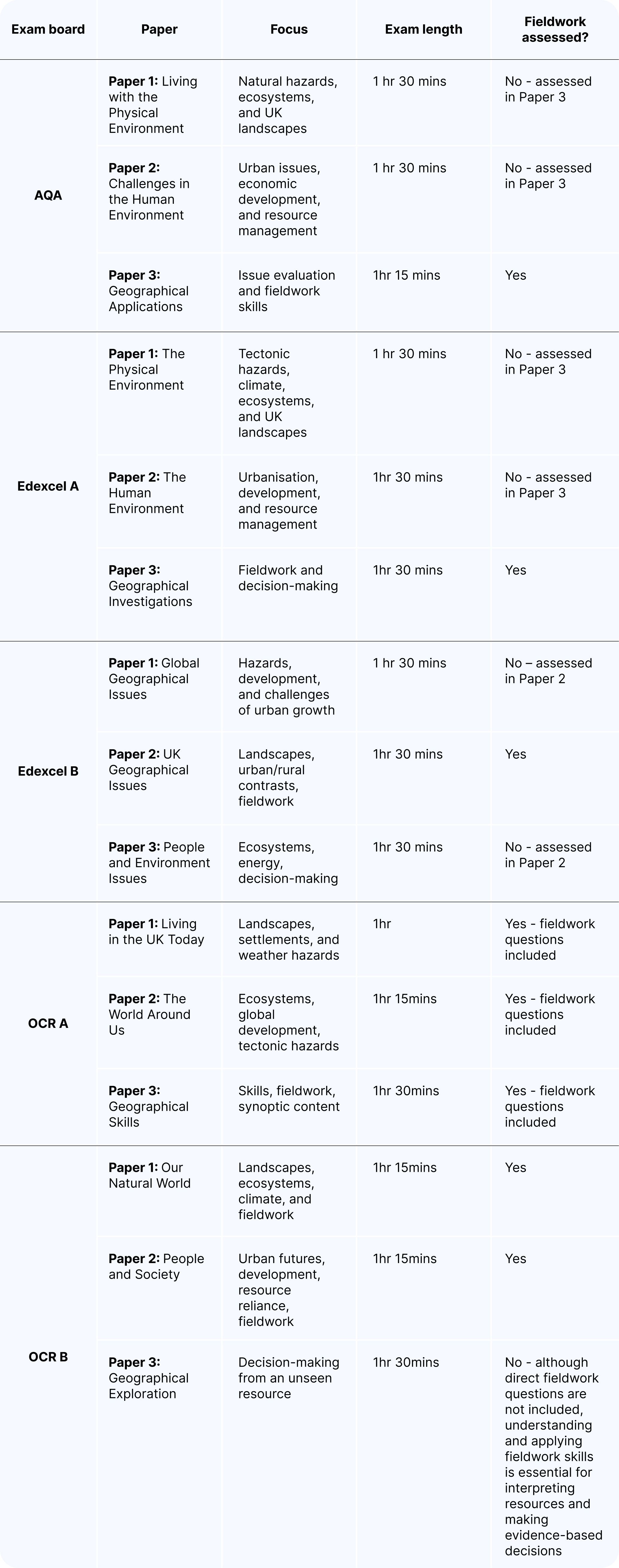
Exam boards and specification overview