GL Assessment provides 11+ exams for over 80% of grammar schools in England and some selective independent schools. If your child is taking a GL Assessment 11+ exam, it’s important to understand what’s involved and how to prepare.
We've got all the information you need to know, including free resources to help your child prepare.
What is GL Assessment?
GL Assessment is a test provider that creates 11 plus exams. Their exams are used by most UK grammar schools, and some independent schools, to decide which children will be offered a place.
The GL Assessment 11+ exams used by grammar schools are paper-based and non-adaptive. This means that all students are given the same questions, and the difficulty doesn’t change depending on the answers your child gives.
Online, adaptive exams are also now available and may be used for selective independent schools. Below we focus on what the grammar school paper test will be like.
The 11+ is meant to be challenging. It identifies children in the top 25% of the year group. Find out more in our guide to the 11 plus here.
What subjects are on GL Assessment 11+ papers?
GL 11+ papers cover four subjects:
GL Assessment 11+ exams differ from other providers. The test uses four separate papers for the different subjects, covers a wide range of skills, and includes a mix of question types. Questions are drawn from a large question bank, so it's a good idea to practice lots of different question styles.
Not all schools and regions use every subject. They can combine any of the papers with their own test content.
The English and maths papers are based on the Key Stage 2 curriculum, including some Year 6 content your child may not have learnt yet.
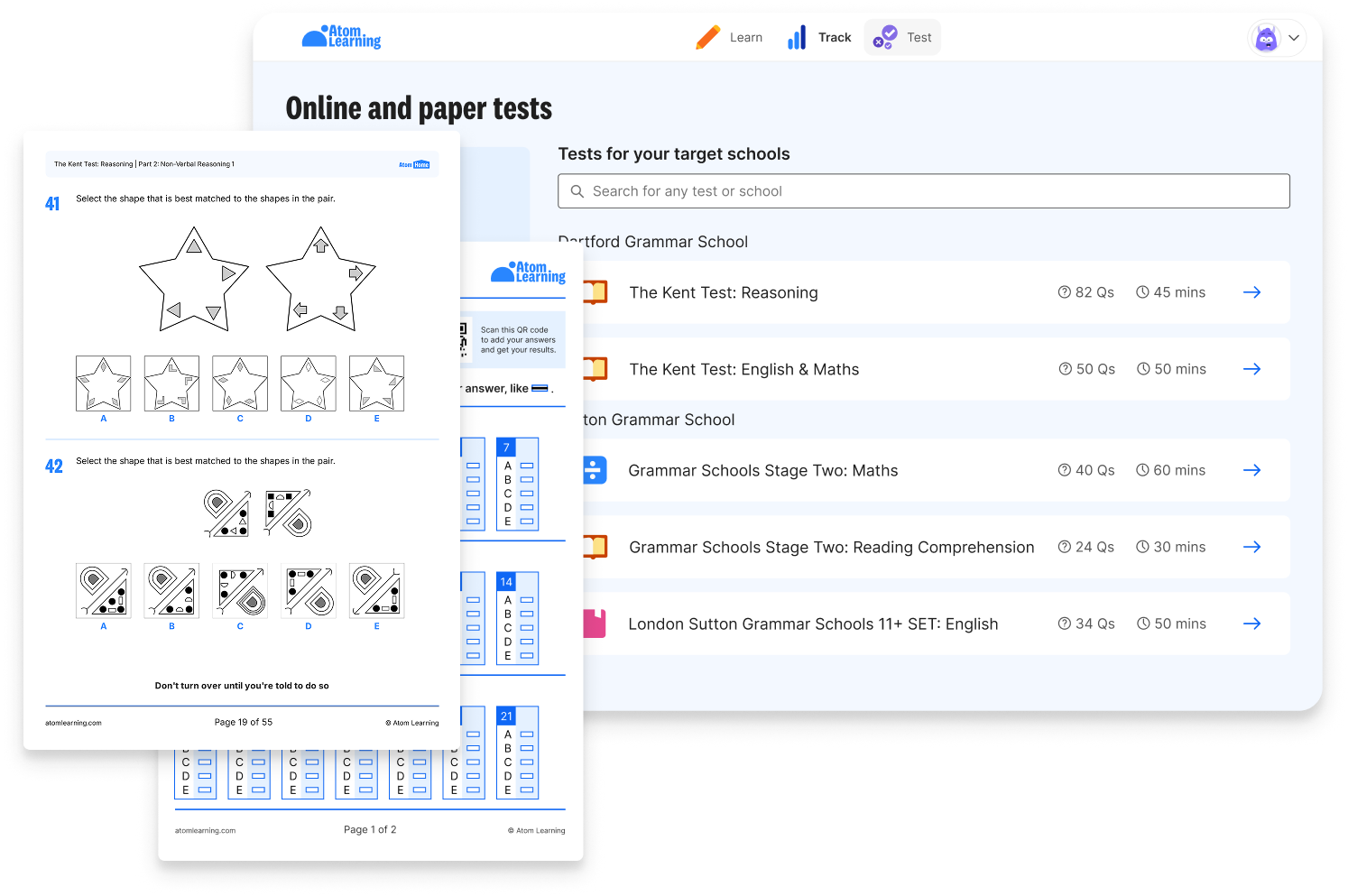
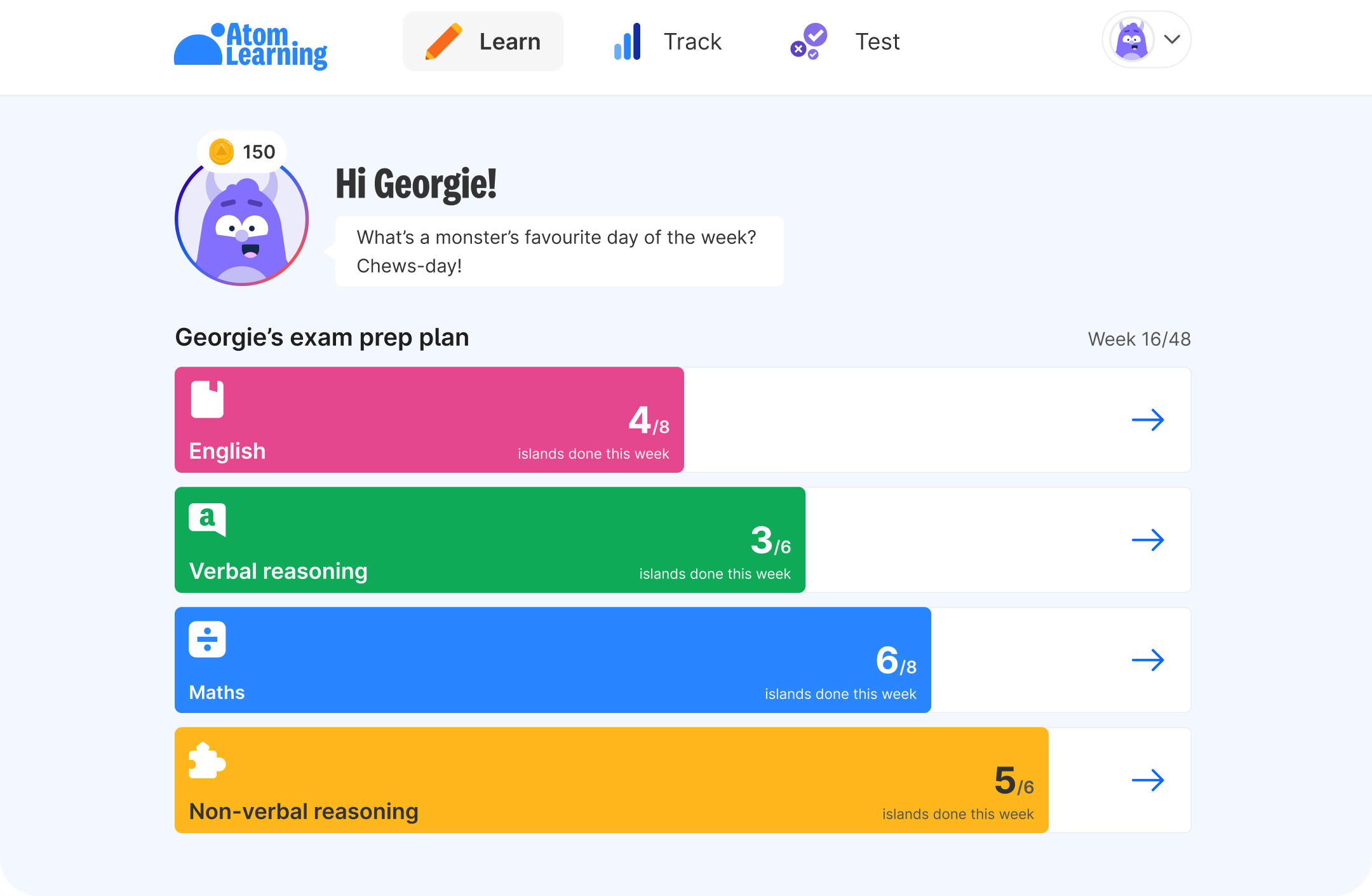
Try GL Assessment practice papers and mock tests with Atom Home.
English
The GL Assessment English paper structure varies, but the most common format is:
- A reading comprehension text with 25 questions
- Three spelling, punctuation and grammar sections with 8–10 questions each
Reading comprehension
In the reading comprehension section, your child will read a text about two pages long. They’ll then answer questions to show their understanding of the passage.
The questions test skills like inference, deduction, and understanding of vocabulary. The text could be fiction, non-fiction, or poetry, traditional or contemporary, so familiarity with vocabulary across different genres is helpful.
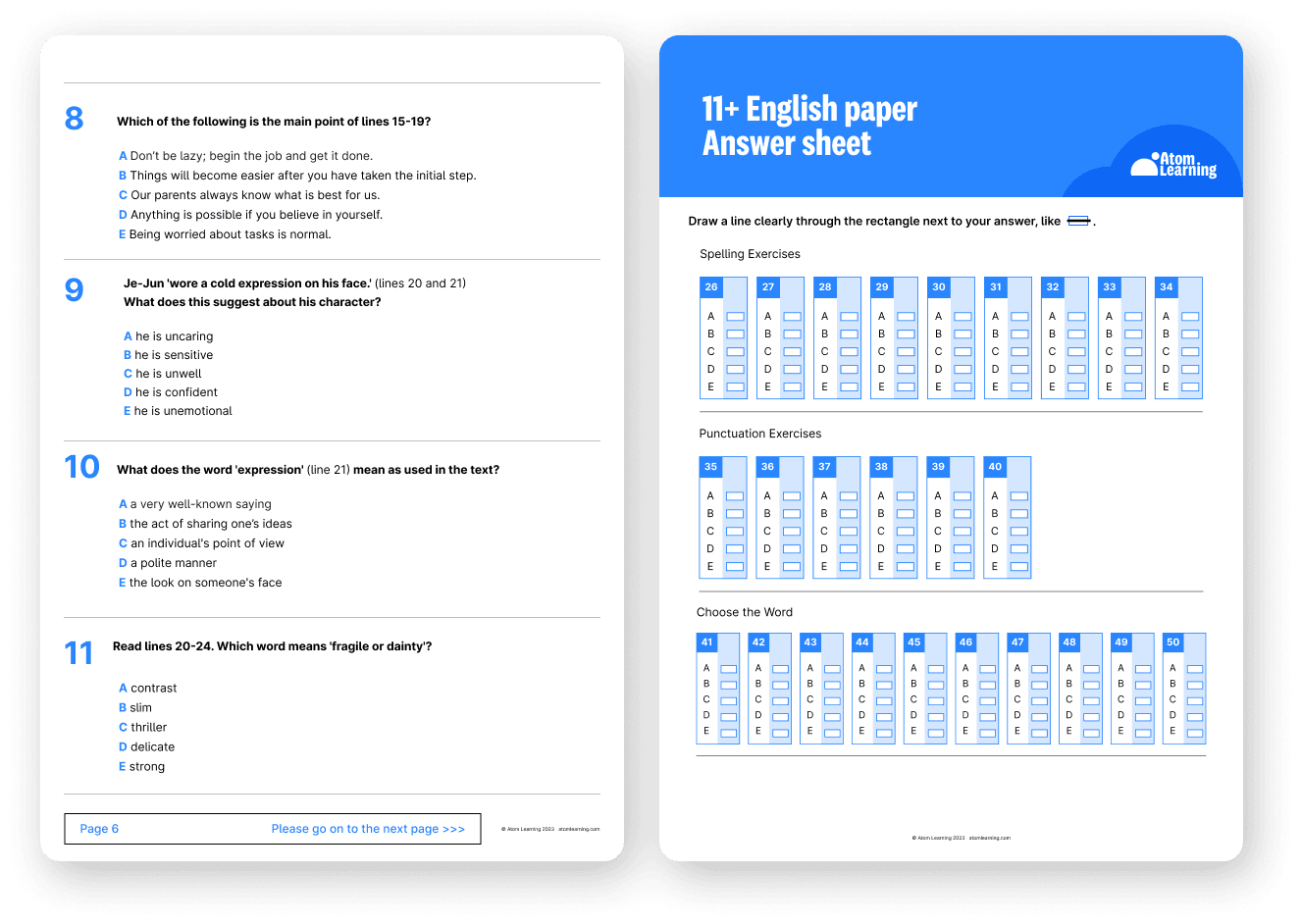
All example questions shown in this article are from GL Assessment 11+ practice papers on Atom. They show the level of challenge and common question formats.
Spelling, punctuation and grammar
There are different types of spelling, punctuation and grammar questions on the GL test. These include:
- Complete the sentence - your child chooses the correct word or phrase to fill a gap so the sentence is grammatically accurate.
- Spot the mistake - a sentence is given with an error in spelling, punctuation, or grammar, and your child must find or correct it.
Maths
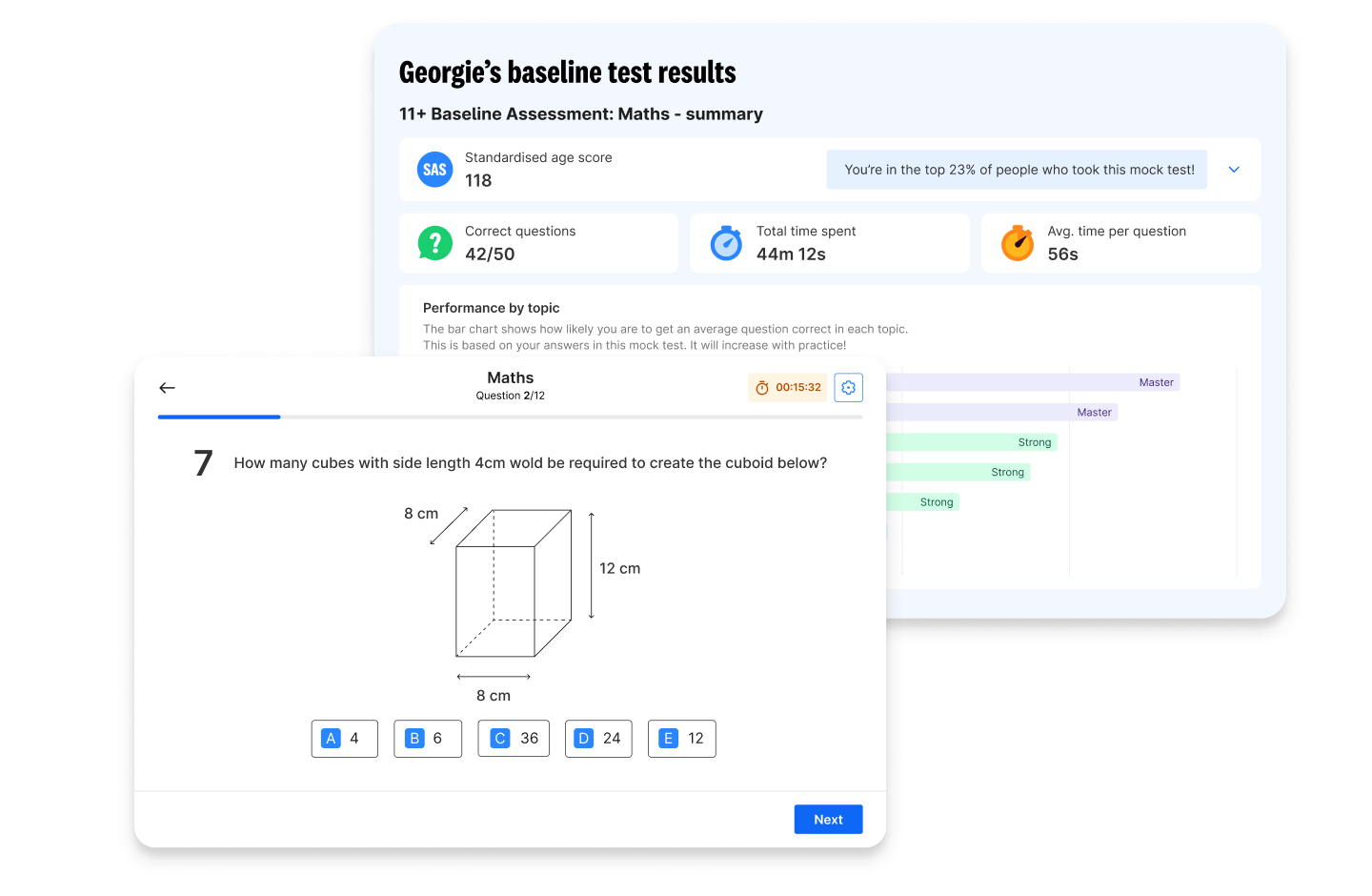
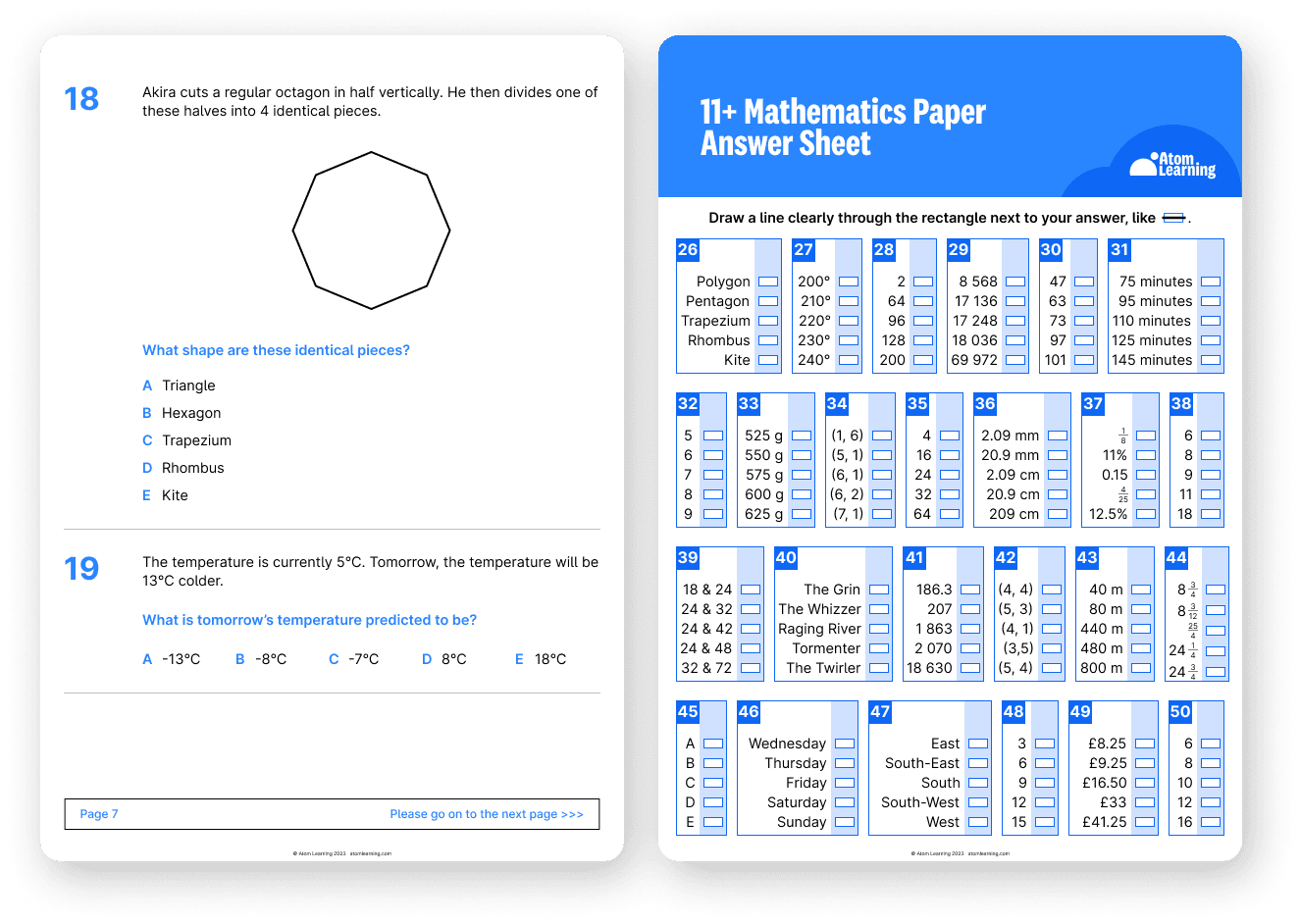
Most GL 11+ tests include a maths paper with 50 questions to answer in 50 minutes. It helps if your child can work with numbers quickly and confidently. Learn how to prepare for 11 plus maths here.
The questions follow the Key Stage 2 curriculum and cover:
- Number
- Measurement
- Data
- Algebra
- Geometry
The ‘number’ questions come up most often – there are usually five times more number questions than any other type.
All questions are multiple choice. For more information on how to fill in 11+ answer sheets correctly, read our step-by-step guide for parents.
Verbal reasoning
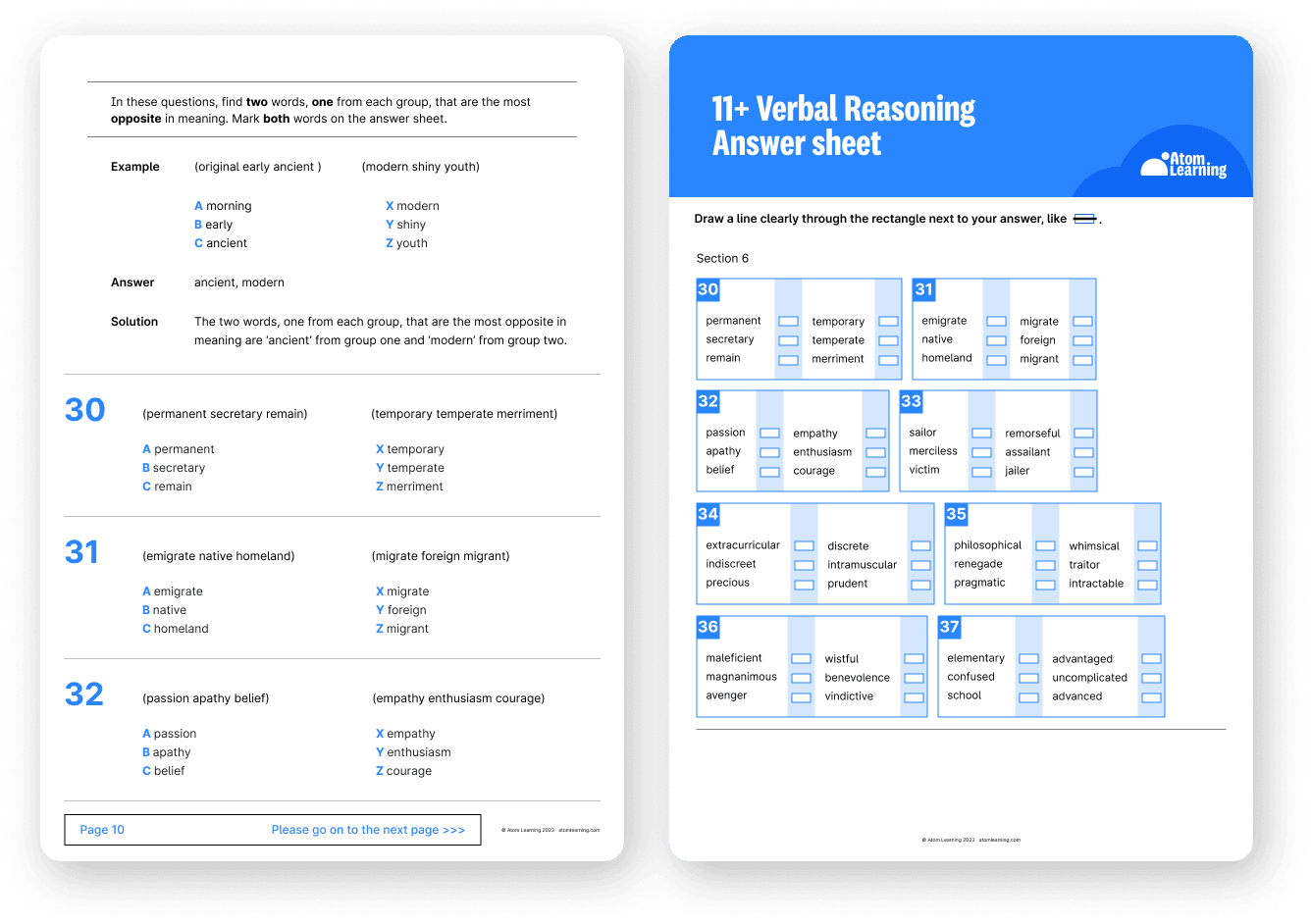
The verbal reasoning paper tests how well your child can spot patterns and work with words. There are usually around 80 questions.
To do well, your child needs a wide vocabulary and confidence using words in different situations. This section often suits children who enjoy reading, writing, or subjects like English and history.
Some question types can feel tricky at first. It’s a good idea to familiarise your child with the different types of verbal reasoning questions early on.
Top tip: Knowing synonyms (words that mean the same) and antonyms (opposites) can really help; find free worksheets to support this here.
Non-verbal reasoning
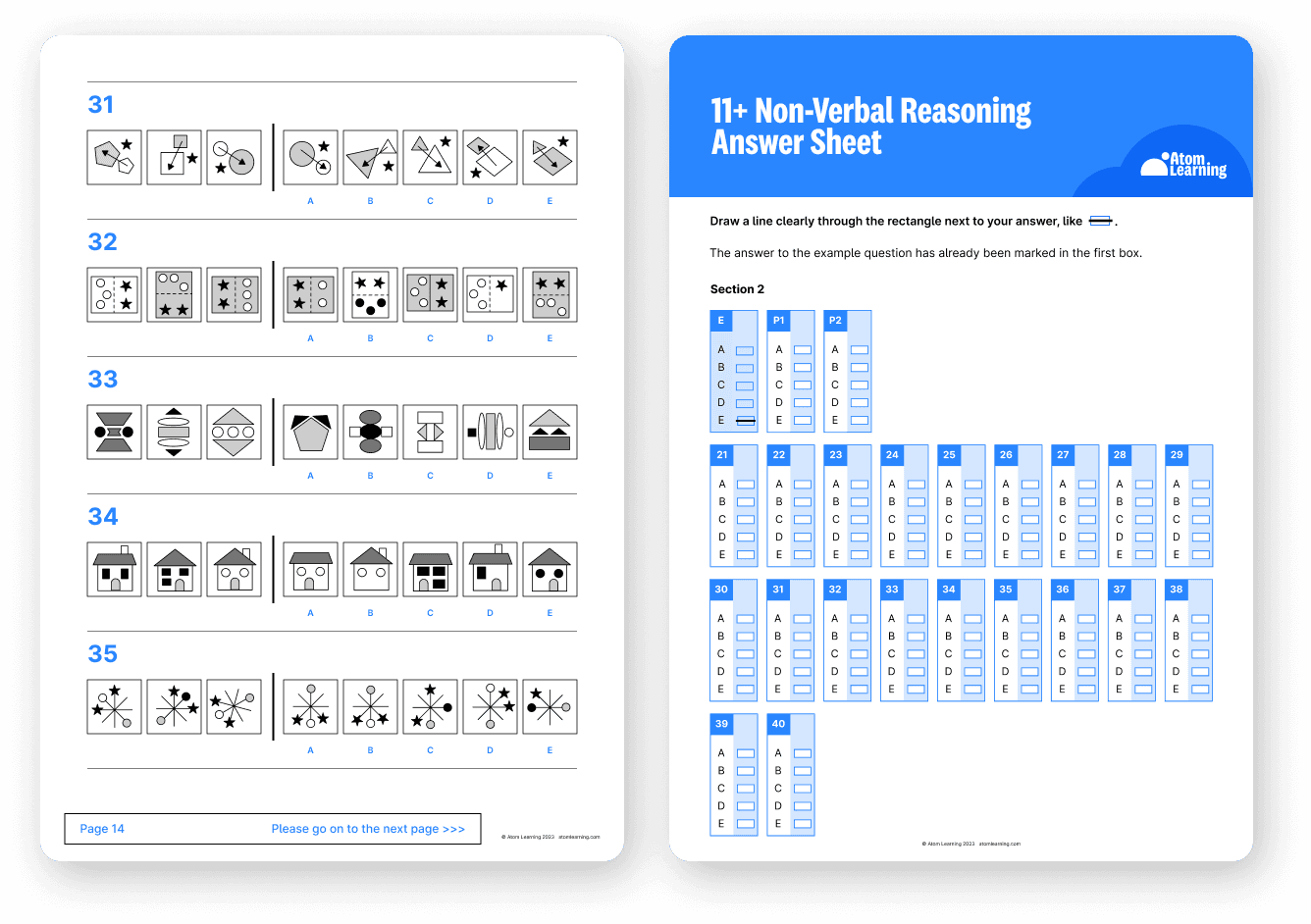
Non-verbal reasoning tests how well your child can solve problems using pictures and patterns. They’ll need to spot rules, work out sequences, and think logically.
GL’s non-verbal reasoning paper usually has 80 questions, split into four sections of 20. Each section is timed separately, and all children move on to the next section at the same time.
Get top tips for non-verbal reasoning here.