
Modern Foreign Languages (MFL) at GCSE open doors to cultural insight, cognitive development, and future academic and career opportunities. When thinking about French, German, Spanish, or another language, it helps to know each one’s structure and assessment. This knowledge gives students and parents the power to make confident and informed choices about subjects.
What this guide covers: This guide gives a clear and practical overview of the Modern Foreign Languages GCSE. Including:
- An explanation of why learning a modern foreign language is valuable for academic and personal growth.
- A breakdown of the exam boards, subject options, and assessment formats.
- Key topics and learning objectives for each language studied at GCSE level.
- Sample questions to illustrate typical exam expectations.
- Proven tips for effective revision and exam preparation in listening, speaking, reading, and writing.
Why Modern Languages matter for GCSE success
Choosing a modern foreign language at GCSE is an investment that pays off far beyond exam results. It strengthens memory, problem-solving, and adaptability, skills that can boost performance across all subjects. It also opens doors to exciting chances in A-levels, university, and future jobs. These include international business, travel, science, technology, and the arts.
In today’s connected world, being able to communicate in more than one language is a real advantage. It helps students stand out and build meaningful connections with people from different cultures. Importantly, it fosters confidence, empathy, and resilience, qualities that will serve them well in education and life.
Exam boards and specification overview
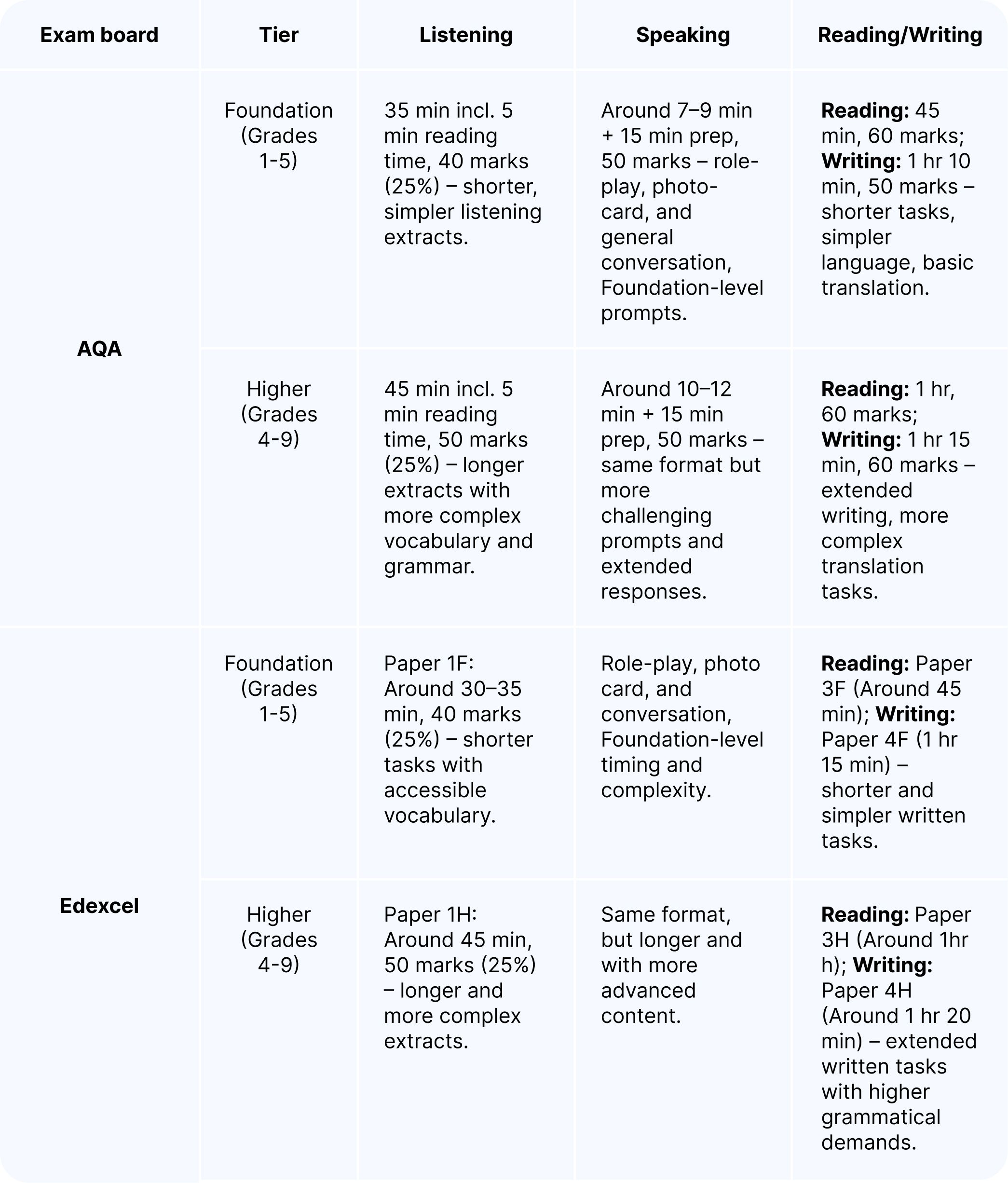
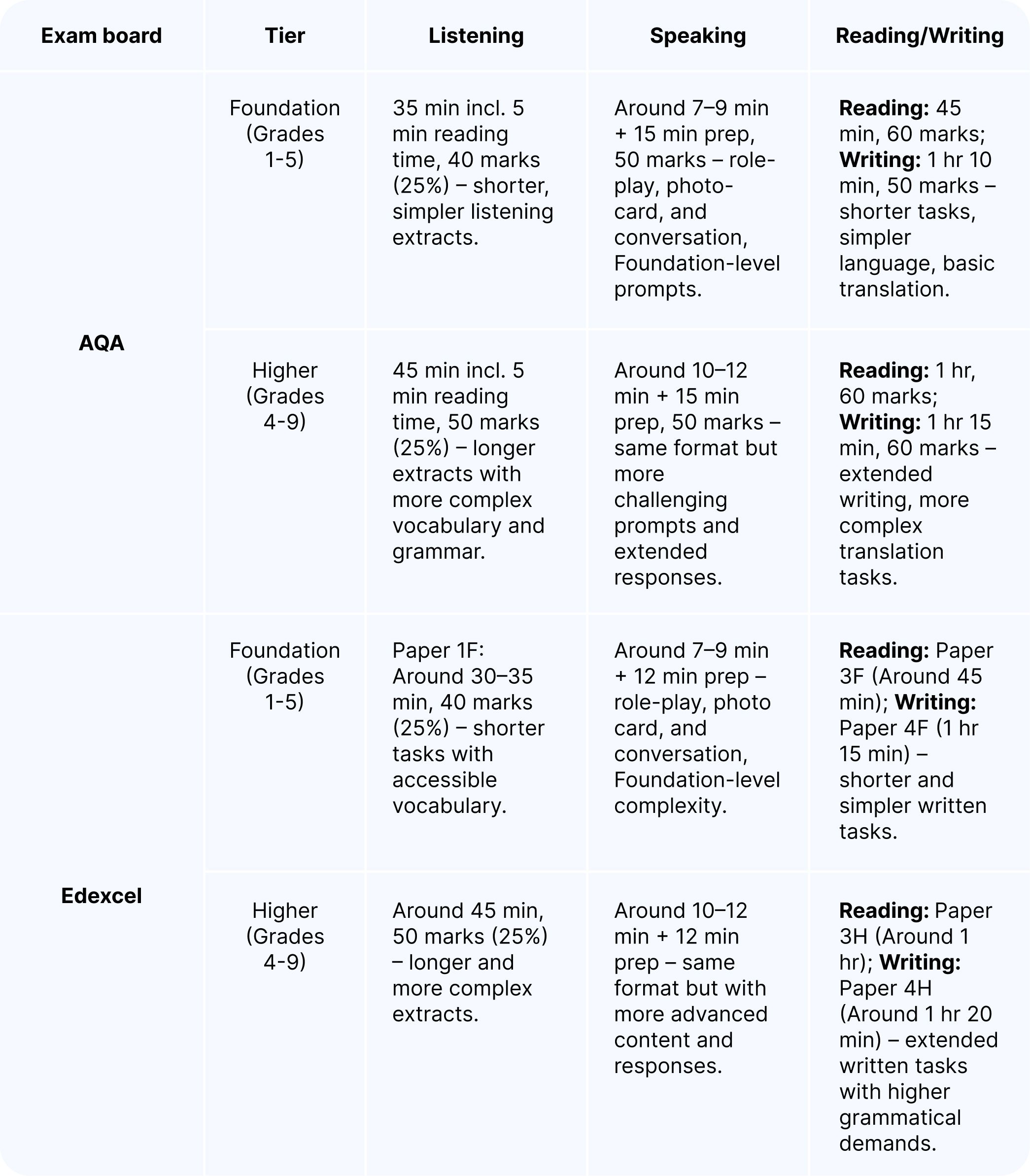
Here’s a comparative table summarising available GCSE Modern Foreign Languages options across major exam boards (e.g., AQA and Edexcel/Pearson) and their examination formats:
French
Spanish
German
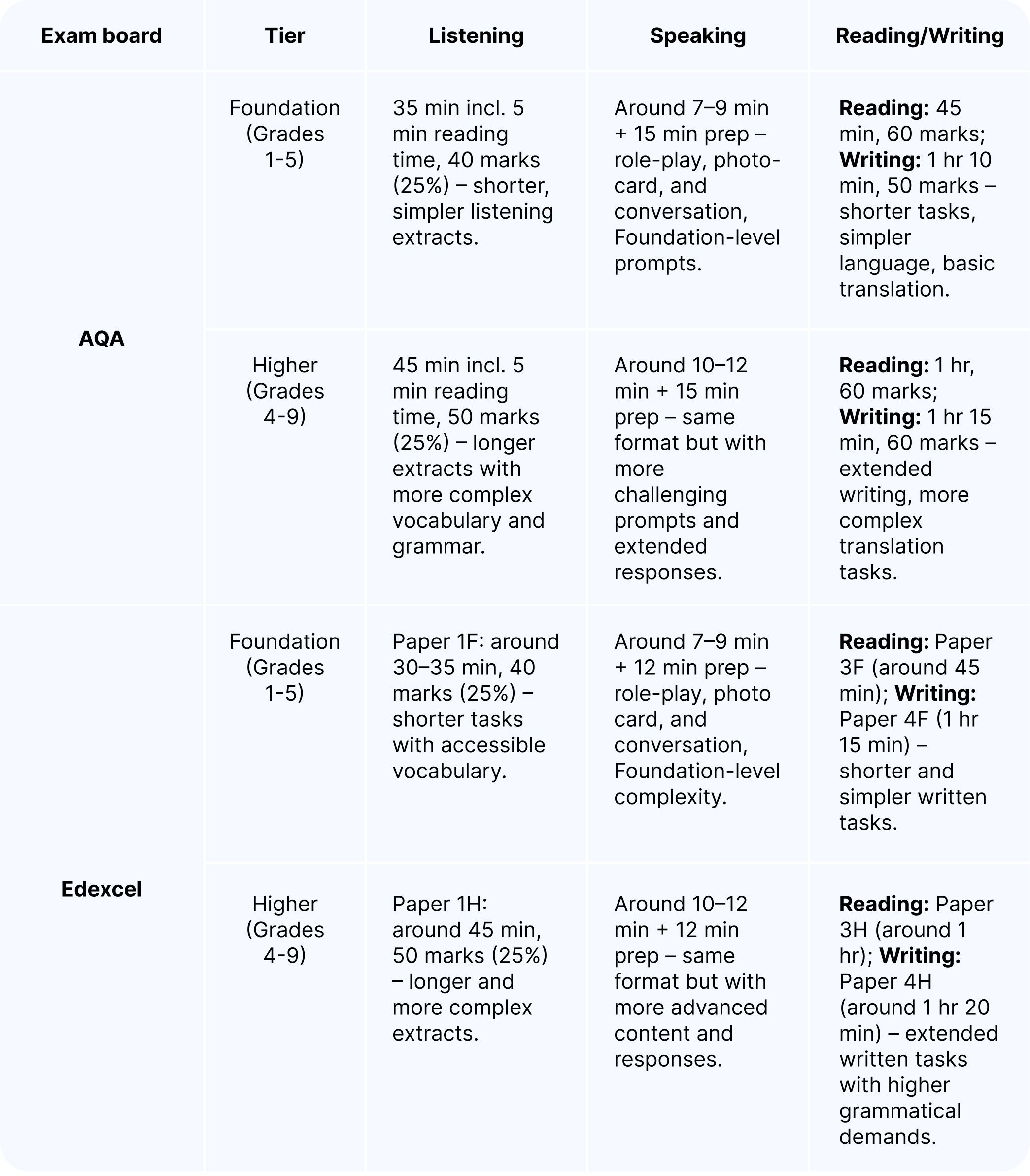
Note: The above percentages represent typical weightings across major boards. Exact details may vary slightly by specification; always consult the specific board’s documentation for current, precise details.