Back to blog

How to revise for OCR GCSE exams

By
Atom
|
December 16, 2025

Preparing for OCR GCSE exams can seem like a daunting task, but with the right strategies, revision can become structured and effective. This guide covers practical approaches, subject-specific tips, and exam techniques to help students feel confident on exam day.

What this post covers:

  • Why OCR GCSE exam preparation matters
  • Key features of OCR GCSE assessments
  • Subject-by-subject exam structure and revision focus
  • General revision strategies
  • Subject-specific OCR revision tips
  • Effective exam technique
  • Final advice for parents and students

Why OCR GCSE exam preparation matters

OCR (Oxford, Cambridge, and RSA) is one of the main exam boards in the UK. Its specifications test knowledge and skills such as analysis, evaluation, and application in real-world contexts.

OCR often includes structured, source-based, and extended response questions, so careful planning helps students manage time, thoroughly cover the syllabus, and confidently approach each paper.

Key features of OCR GCSE exams

  • Range of exam papers: Most subjects are split across two or three papers with different focuses.
  • Assessment objectives (AOs): OCR exams are carefully weighted to assess knowledge recall, explanation, analysis, and evaluation.
  • Practical and coursework elements (NEA): In subjects like Art, Design and Technology, and Sciences, non-exam assessment (NEA) is an important part of final grades.
  • Source-based questions: Humanities subjects often use sources or case studies to test students’ ability to analyse and evaluate information.
  • Tiered questions: Many papers increase in demand with higher-mark questions requiring extended, structured answers.

Subject-by-subject exam structure and revision focus

Each OCR GCSE subject has its own exam format and priorities. Understanding how the papers are structured and what examiners look for makes it easier to target revision effectively.

The table below highlights the key features of each subject and where to focus your preparation.
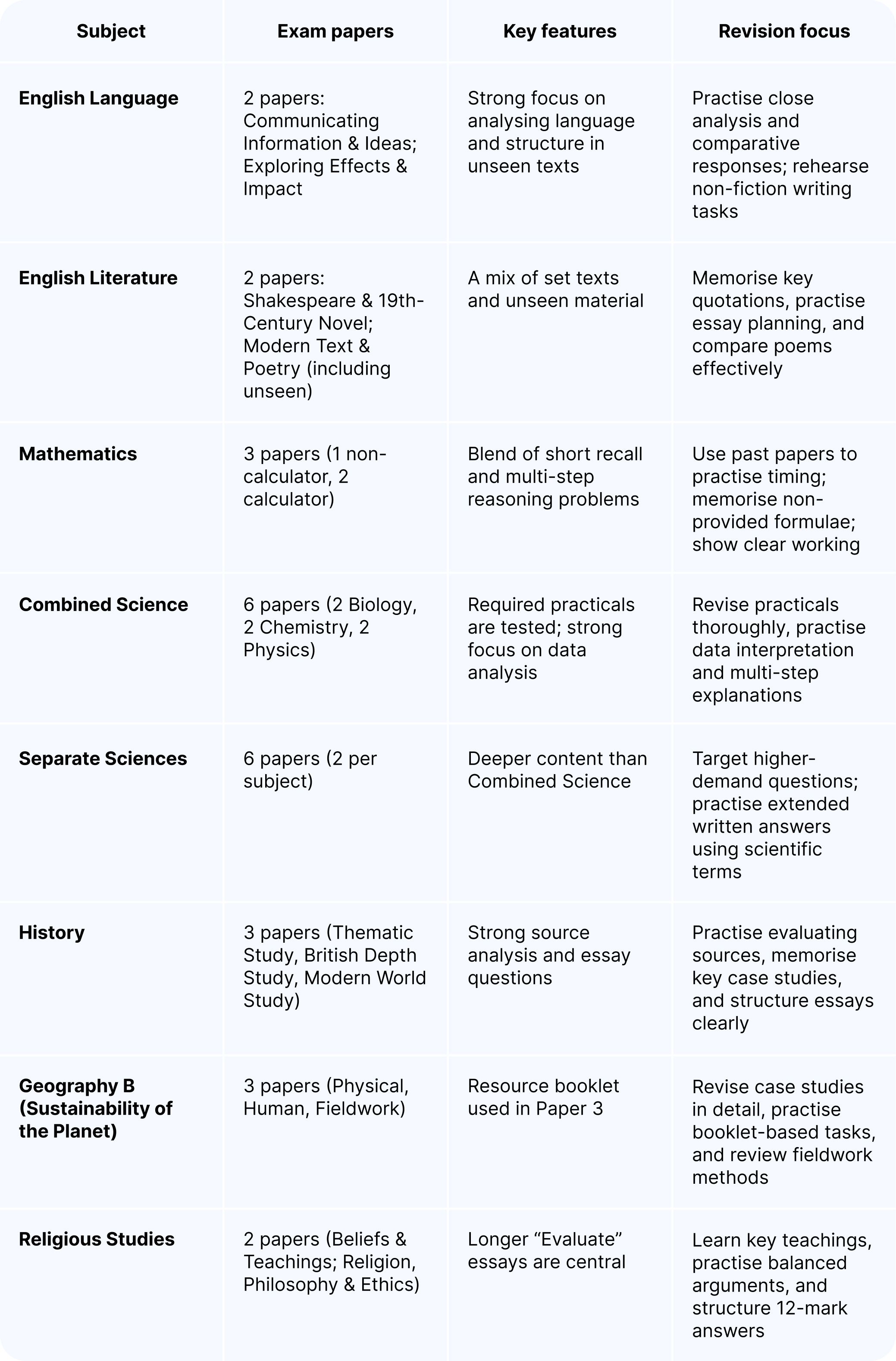
A table that highlights the number of exam papers, key features and how to focus revision for each subject

Don’t miss Atom’s GCSE giveaway!

Six months. Six epic prizes. Still up for grabs: tickets to Reading Festival 2026 and the latest Apple tech, including an iPad Air, Vision Pro and more.

Enter for free

General revision strategies

A good revision plan for OCR GCSE exams should combine learning the content with practising using it in different situations. Because OCR exams often ask you to analyse sources, write extended answers, and explain your thinking, your revision should prepare you for those challenges.

Here are some strategies that can really help:

1. Use the assessment objectives as a guide

OCR assessment objectives explain exactly what skills each subject tests, such as recalling facts, explaining processes, or evaluating ideas.

Think of these as a checklist: can you explain a topic clearly? Can you weigh up how important it is? This helps ensure you’re practising the right skills, not just memorising.

2. Practise with sources and data

In subjects like History, Geography, and Science, OCR often gives you a source or data to analyse. To get ready, try quick daily exercises, for example, look at a graph and explain what it shows, or read a short source and say whether it’s reliable. Small steps like this make the exam tasks feel easier.

3. Use practice papers and examiner reports

OCR past papers are great for getting used to the exam style.

Use alongside OCR’s examiner reports that explain what students often get wrong and what examiners look for in good answers. Reading these tips can help you avoid common mistakes.

4. Get used to timed writing

Many OCR subjects, like History and Religious Studies, include longer essay-style questions. Practising planning and writing under a 10–15 minute timer can help you better organise your thoughts and write clearly.

To help you prepare for writing essays, read our blog on How to use the PEEL technique to write an effective essay, which includes some great tips to help you get started!

5. Balance coursework (NEA) with revision

In some subjects, like Art, Drama, or Design and Technology, coursework (non-exam assessment, or NEA) counts for a big part of your grade. Make sure you leave time for both, don’t spend so much time on revision that your coursework suffers, and don’t forget your exams while finishing your projects.

6. Connect theory to practice

No items found.
No items found.
No items found.
No items found.
No items found.

Contents