


How Atom’s 11+ baseline tests can help – for free!
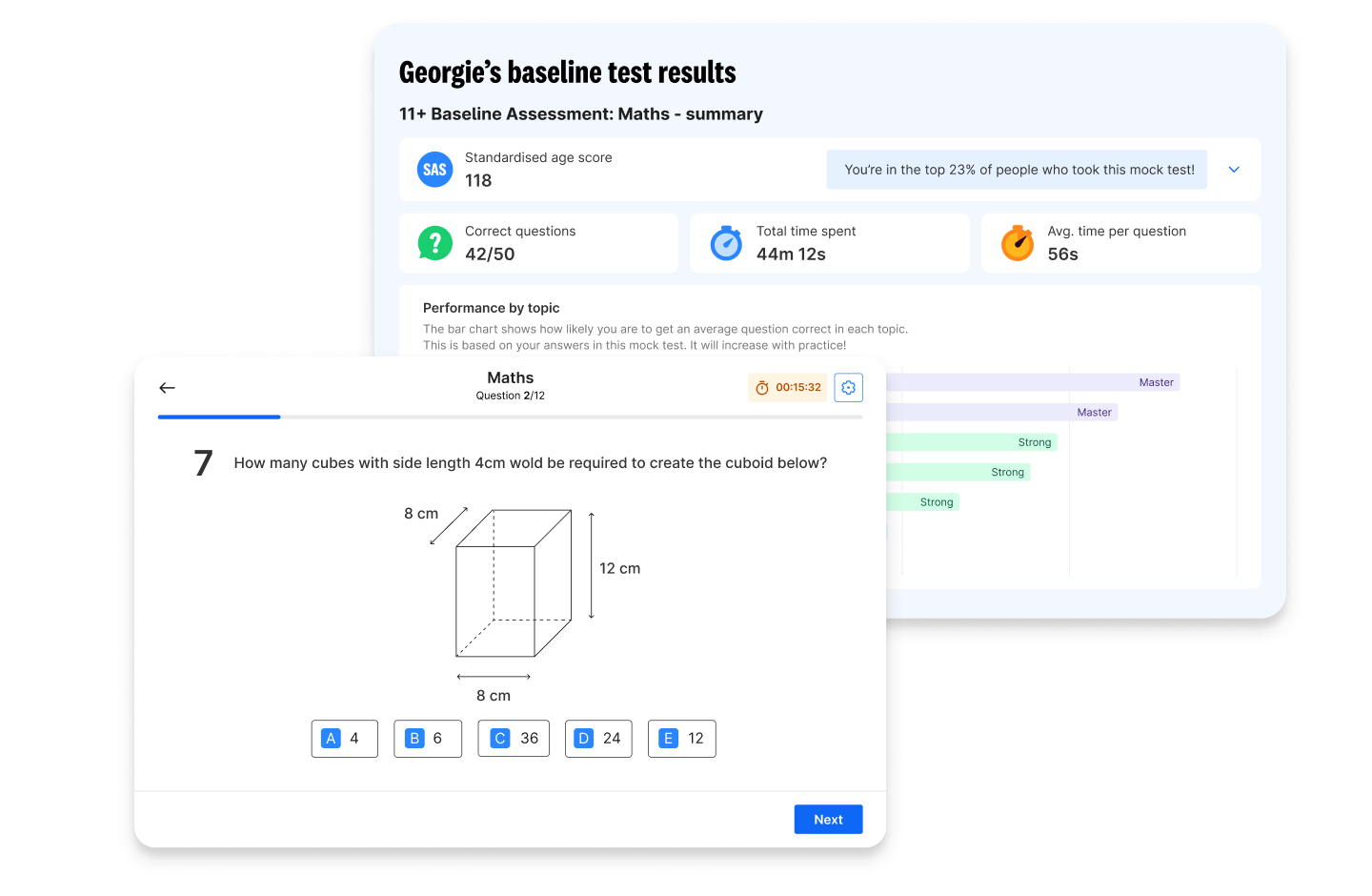
Many 11+ exam prep providers charge for baseline tests or require a paid subscription to access assessments. At Atom Learning, we believe every family should have access to high-quality 11+ preparation – which is why our baseline tests are completely free.
What do you get with Atom’s free baseline tests?
- Covers all key subjects: English, maths, verbal & non-verbal reasoning
- Instant results: See exactly where your child stands
- Standardised age score: see how your child compares to others of the same age, with the same type of score used in real 11+ exams
- Breakdown by topic: Understand strengths and areas to improve
With no payment or commitment required, Atom’s baseline tests give you the most accurate starting point for your child’s 11+ preparation.
Take a free 11+ baseline test now and get a clear picture of your child’s 11+ readiness!
What happens after the test?
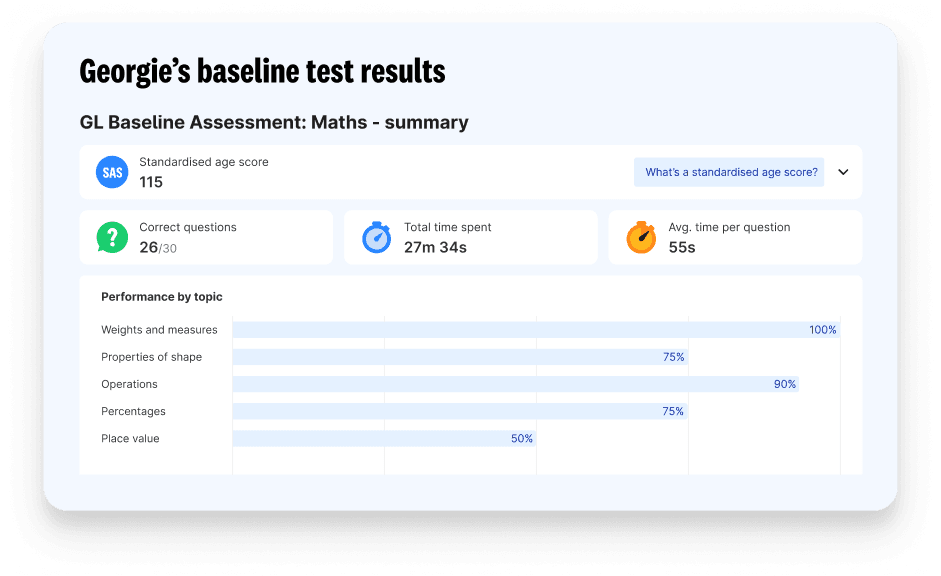
Once your child has taken a baseline test, you’ll receive an email with a detailed breakdown of their performance. This insight helps you:
- Plan their revision effectively
- Fill in knowledge gaps with targeted practice
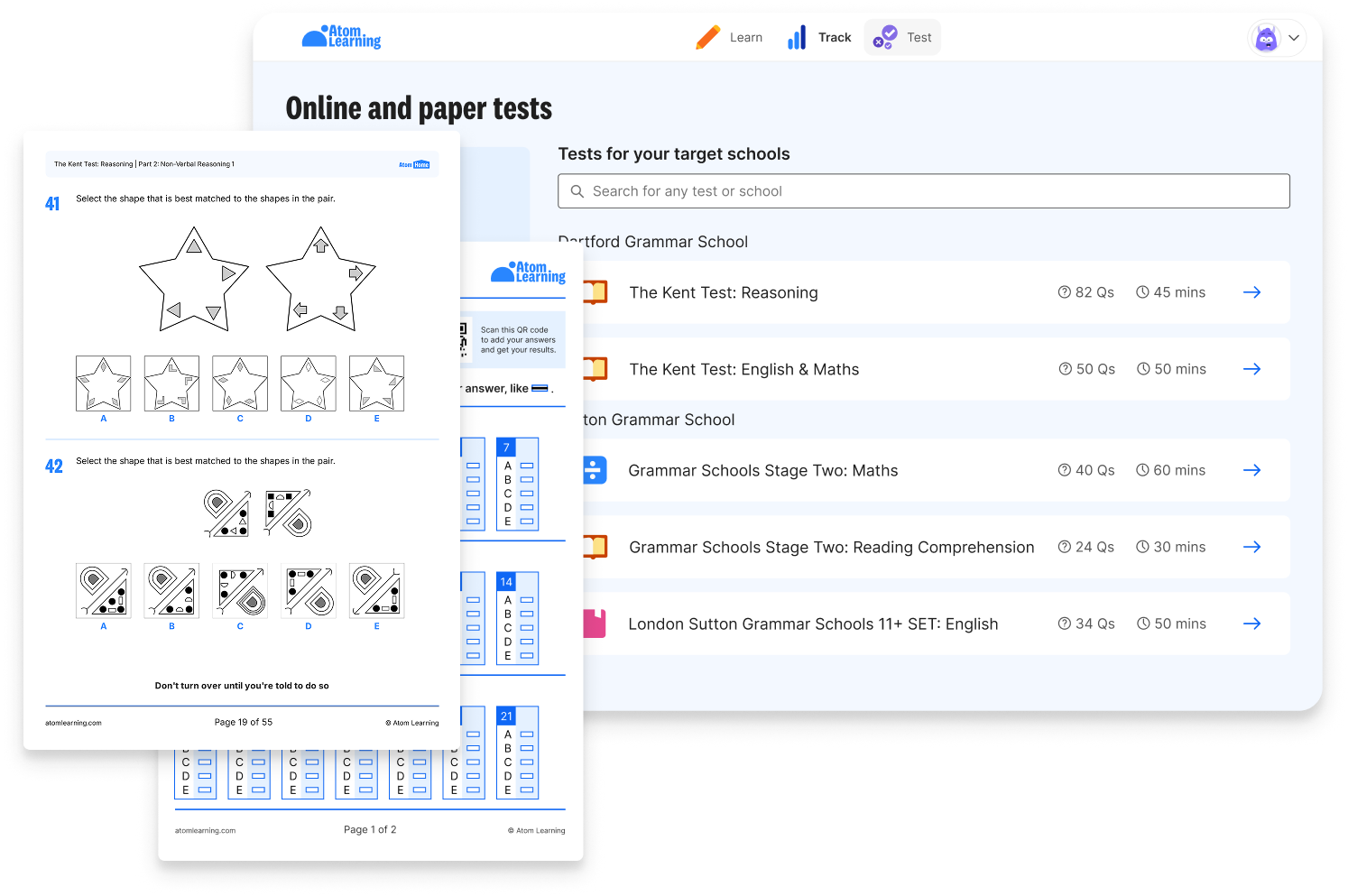
- Track progress with additional practice tests
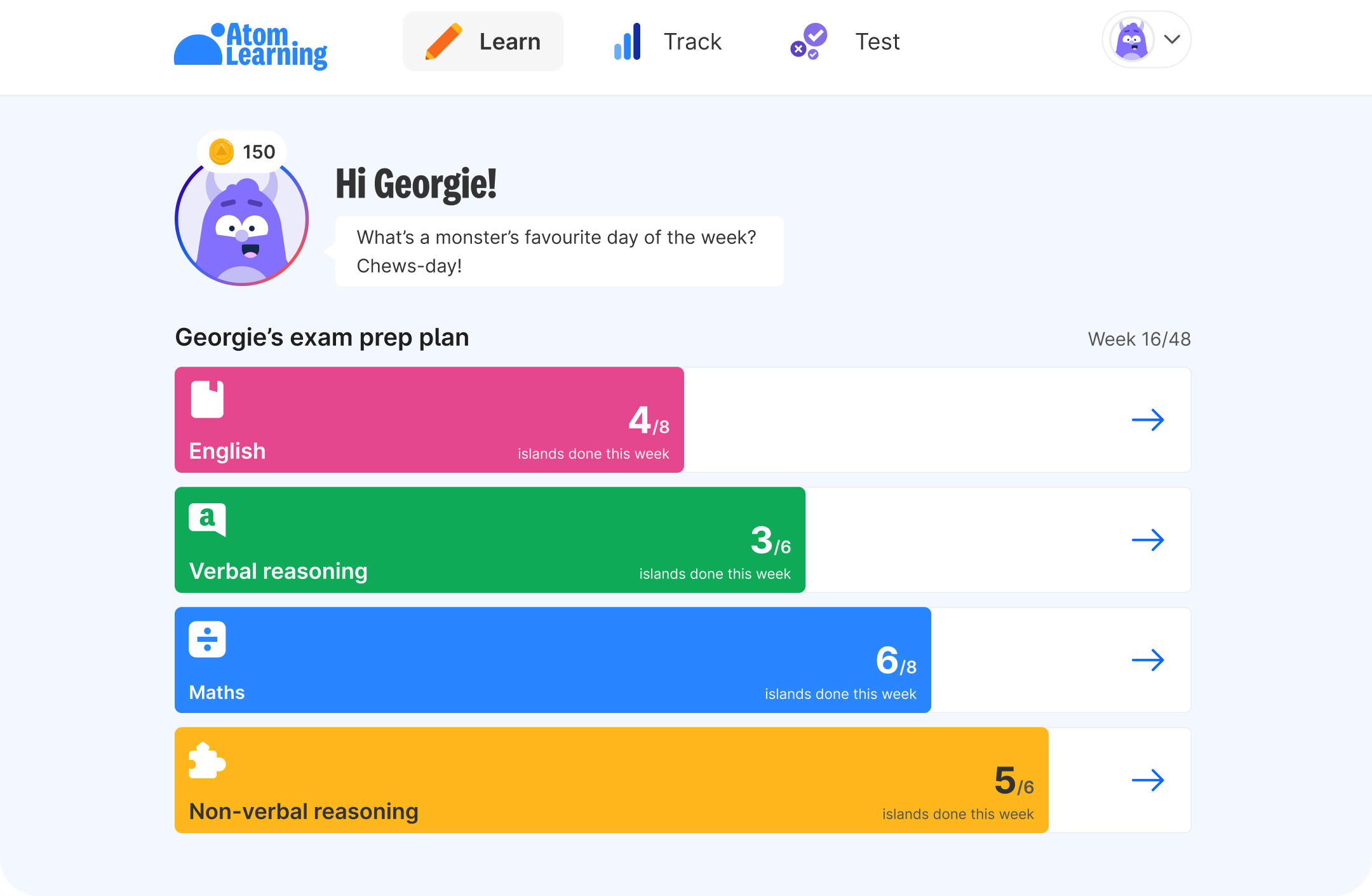
For ongoing support, Atom Home offers adaptive learning, unlimited practice questions, and full-length mock tests to help your child feel confident on exam day.
Take the guesswork out of 11+ preparation. Start with a free baseline test today!
How to use baseline tests and mock tests together
1. Start with a baseline test
- Take an initial baseline test at the beginning of 11+ preparation to assess your child’s starting point.
- Use the results to identify strengths and weaknesses and tailor their study plan.
2. Build knowledge and skills
- Focus practice on weaker areas using targeted 11+ learning and exam-style questions.
- Encourage a balanced approach across all subjects to ensure well-rounded preparation.
3. Take mock tests to develop exam technique
- Once your child has built confidence in key subjects, introduce full-length mock tests.
- Mock exams simulate real test conditions, helping your child practise timing, stamina, and working under pressure.
- Compare mock exam results with baseline test scores to measure overall progress.
4. Continue with regular mock exams to refine performance
- In the final months before the exam, focus on taking and reviewing mock exams rather than baseline tests.
- Use mock tests to fine-tune exam technique, helping your child manage timing, accuracy, and working under pressure.
- After each mock exam, review mistakes and adjust revision to address weaker areas.
By combining baseline tests for knowledge assessment early on with mock exams for exam practice, you’ll help your child feel fully prepared and confident for the 11+.
.avif)