

What’s the difference between Papers 1 and 2 for AQA History?
The two papers are the same percentage of your overall grade, but they test different parts of the History course and different historical skills.
Paper 1: Understanding the modern world
This paper focuses on modern history (from around 1700 to the present day) and examines how events unfolded in Britain and the wider world.
The paper is split into two parts:
- Period study
You’ll answer questions following key developments in a specific time period (for example, Germany or Russia in the late 19th and 20th centuries). - Wider world depth study
You’ll answer questions on an international topic, often linked to conflict and tension, studied in more detail (such as the First World War or the Cold War).
In this paper, you’ll be asked to:
- Answer a range of short and longer questions
- Analyse historical sources
- Explain causes, consequences, and significance of events
Examiners are looking for clear explanations of what happened and why, backed up with strong evidence.
Paper 2: Shaping the nation
This paper focuses on British history across time, helping you understand how Britain changed and why those changes matter. It includes both long-term themes and an in-depth study of a specific period, with the historic environment linked to that period. 
You’ll answer questions in two main parts:
- Thematic study
You’ll answer questions on how one theme (such as health, power, or migration) changed over hundreds of years. - British depth study (including the historic environment)
You’ll answer questions about a specific period of British history and a historic site associated with it.
In this paper, you’ll be assessed on:
- Explaining change and continuity (what changed and what stayed the same over time)
- Analysing historical interpretations
- Writing clear, structured, extended answers that use evidence and explain historical ideas
Overall, it assesses how well you can link historical ideas over time and explain them in depth. 
What are examiners looking for?
AQA History examiners assess your work using clear assessment objectives. In simple terms, they want to see that you can:
- AO1: Show accurate knowledge and understanding of historical events, people, and periods
- AO2: Explain and analyse historical concepts such as cause, consequence, similarity, difference, and significance
- AO3: Analyse and evaluate sources and historical interpretations
To reach the top grades, you’ll need to:
- Use specific factual detail
Examiners want to see that you really know the topic. This means naming key people, dates, laws, events, and places rather than writing in vague terms. Precise facts help prove your understanding and push your answer into the higher mark bands.
- Answer the question directly
Always focus on exactly what the question is asking. Read it carefully, underline key words, and keep referring back to them in your answer. Avoid writing everything you know; only include information that helps answer that specific question.
- Structure your answers clearly
Well-structured answers are much easier for examiners to reward. A clear way to do this is to use the PEEL structure (Point, Evidence, Explain, Link), which helps you stay focused and fully develop your ideas.
You can learn how to use this effectively in our guide: How to use the PEEL technique to write an effective essay.
- Explain why events happened, not just what happened
Top answers go beyond describing events. You need to explain the reasons behind them and, where relevant, their effects or importance.
Ask yourself: Why did this happen? What did it lead to? Why does it matter?
What are the grade boundaries for AQA History?
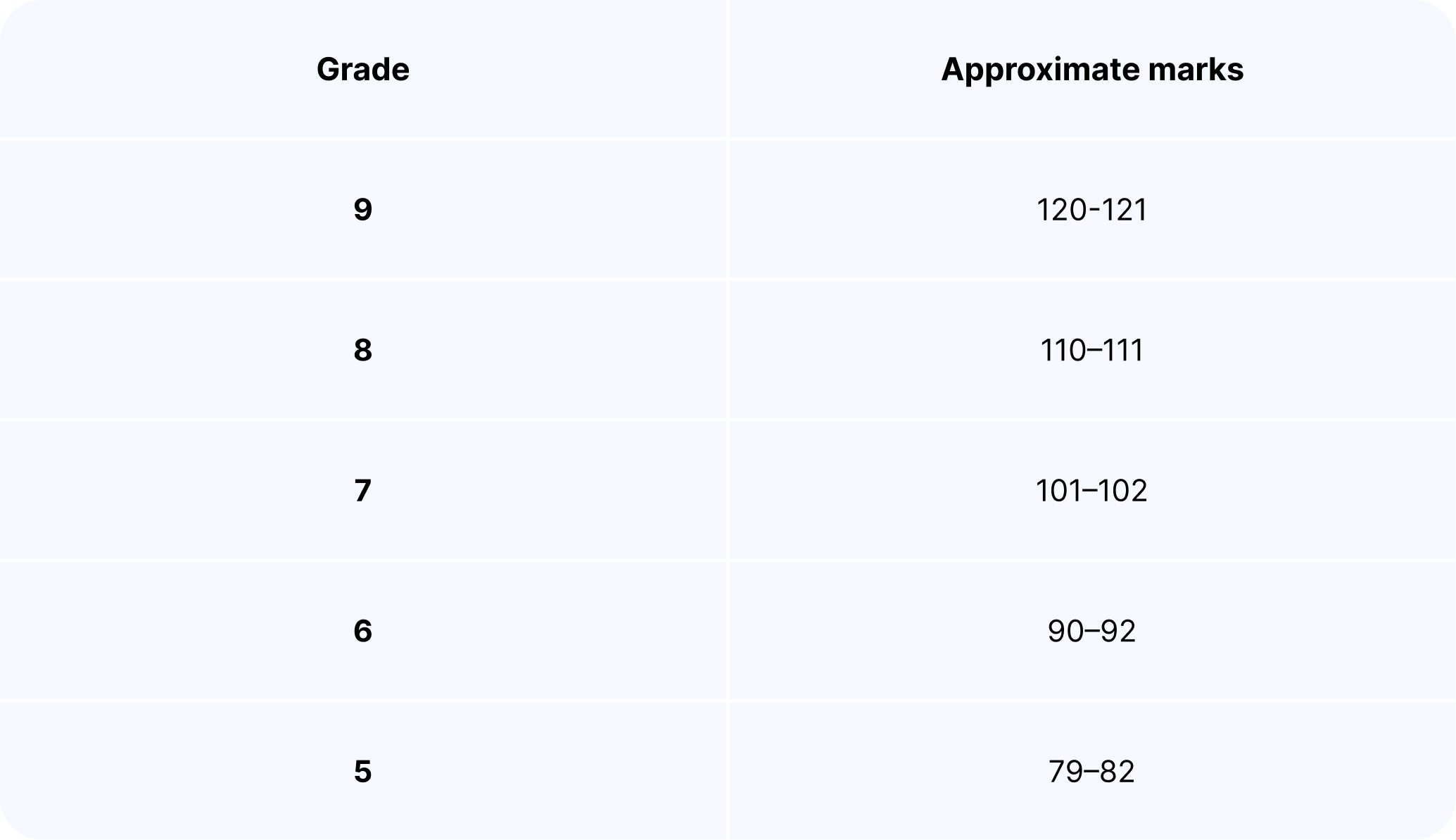
It’s important to remember that the exact grade boundaries for your GCSE exams will change every year. Exam boards adjust grade boundaries after an exam, depending on the exam's difficulty and how the cohort performed.
This is so students don’t have an advantage or disadvantage because of the year they took the paper. For example, if your paper were harder, grade boundaries would be lowered so that a grade 5 reflects the same level of knowledge as in previous years.
To give a sense of what to expect, here are the grade boundaries for AQA History GCSE from the last year: