

What are examiners looking for?
Edexcel Spanish uses three assessment objectives, shared across all four papers:
- AO1 (35%) – Understand and respond to spoken language
- AO2 (45%) – Understand and respond to written language
- AO3 (20%) – Apply grammar and vocabulary accurately
To reach the top grades, examiners want to see that you can:
Use a wide range of vocabulary
Avoid repeating the same basic words. Using more precise or varied vocabulary shows confidence and helps you access higher marks.
Apply grammar accurately
Tense choice, adjective agreement, word order, and verb endings really matter, especially at Higher tier.
Develop your ideas
In speaking and writing, longer answers score better when you include opinions, reasons, and extra detail, not just short statements.
Answer the question clearly
Focused answers that stick closely to the task always score higher than long responses that drift off topic.
What are the grade boundaries for Edexcel Spanish GCSE?
It’s important to remember that the exact grade boundaries for your GCSE exams will change every year. Exam boards adjust grade boundaries after an exam, depending on the exam's difficulty and how the cohort performed.
This is so students don’t have an advantage or disadvantage because of the year they took the paper. For example, if your paper were harder, grade boundaries would be lowered so that a grade 5 reflects the same level of knowledge as in previous years.
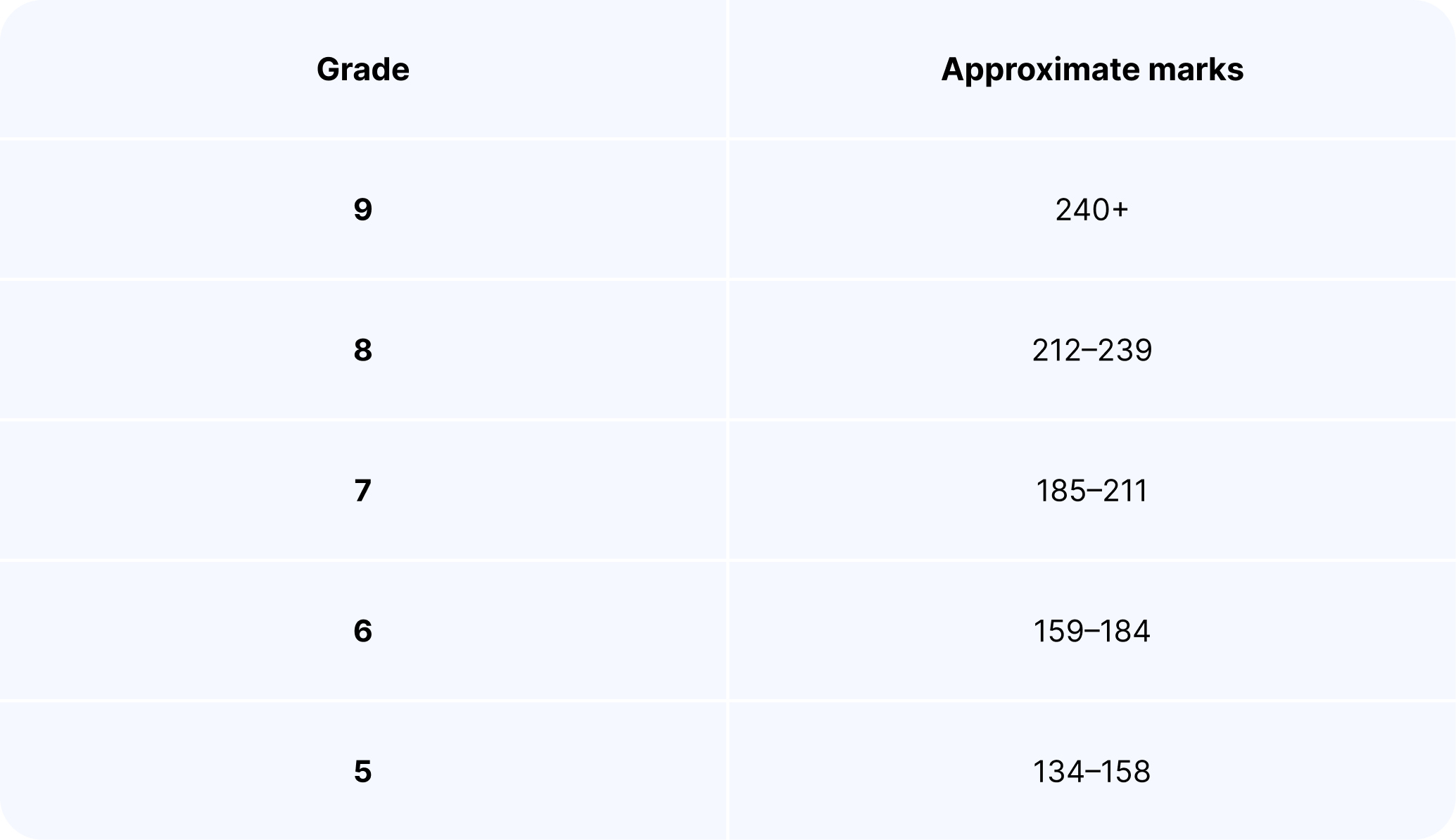
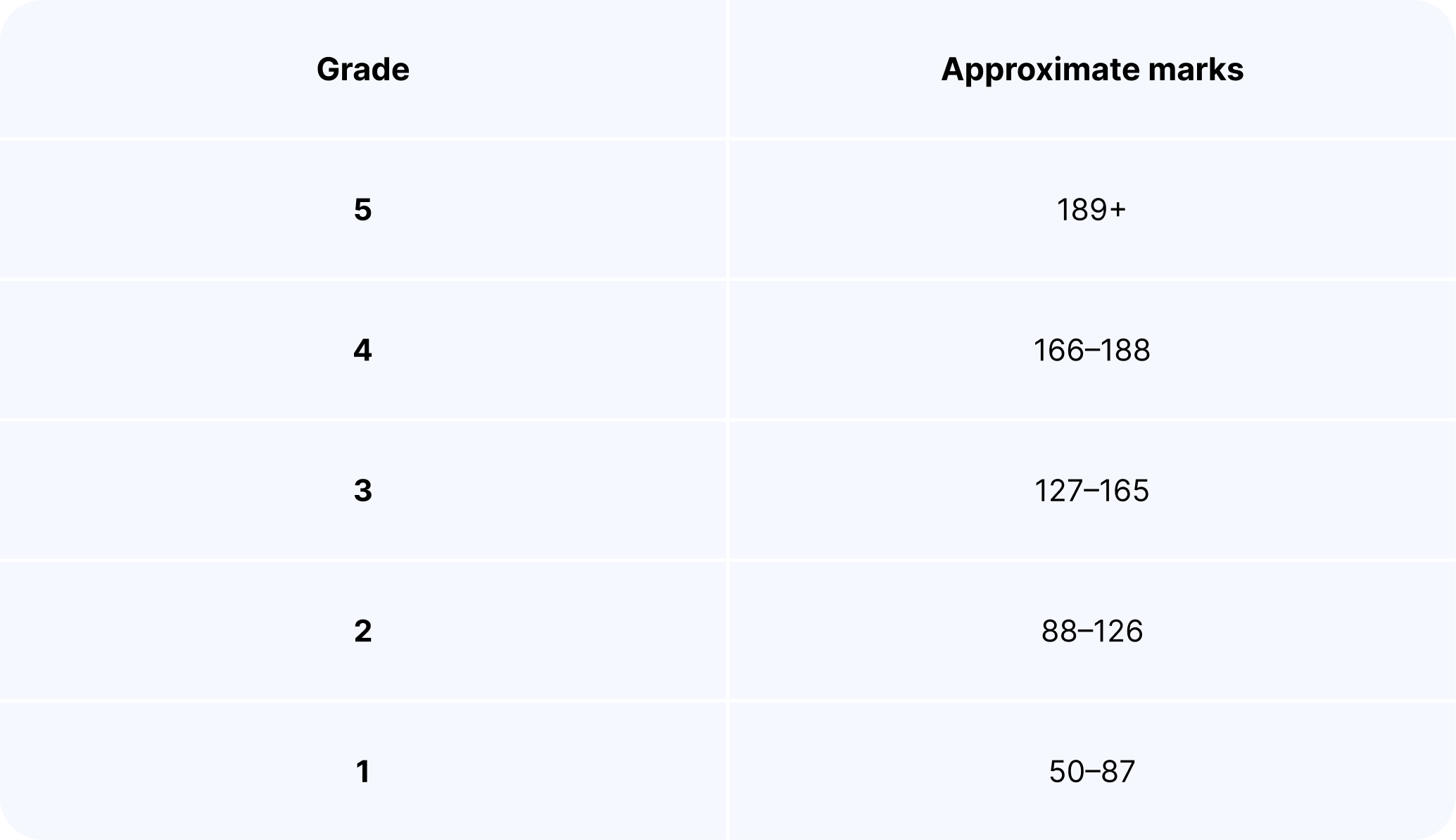
To give a sense of what to expect, here are the grade boundaries for Spanish Edexcel GCSE from the last year:
Higher Spanish:
Foundation Spanish:
What key topics do I need to know for Edexcel Spanish GCSE?
Edexcel Spanish is built around six broad thematic contexts:
- My personal world
- Lifestyle and wellbeing
- My neighbourhood
- Media and technology
- Studying and my future
- Travel and tourism
Across these themes, you’ll use the vocabulary and grammar set out in the Edexcel Spanish vocabulary list.
That includes:
- Around 1,200 core words at both tiers
- An additional 500 higher-tier words
- A clearly defined grammar list, including tenses, agreements, and sentence structures
All exam questions are designed so that full marks can be achieved using the vocabulary from the specification.
Where can I find past papers and mark schemes?
Practising with past papers and mark schemes is one of the most effective ways to prepare for GCSE Spanish.
Past papers help you understand question styles, see how marks are awarded, and build confidence with real exam timing and structure.
Head to the Edexcel website to find past papers and mark schemes from previous GCSE Spanish exams.
How can I prepare for Edexcel Spanish GCSE?
Feeling confident in Edexcel Spanish comes from clear, manageable revision and regular practice, not from doing everything at once.
When you understand what you’re working on and why it matters, progress starts to feel much more achievable.
Here’s what that looks like in practice:
1. Build secure vocabulary knowledge
Vocabulary supports every exam paper: listening, reading, speaking, and writing, which is why it’s such a good place to start.
- Learn words in short phrases or sentences, so you see how they’re actually used
- Revisit key vocabulary regularly, especially common verbs, opinions, and time phrases
- Notice simple changes like gender, plurals, and verb endings; you don’t need to memorise rules perfectly, just recognise patterns
Secure vocabulary makes everything else, grammar, comprehension, and fluency, much easier.
Make a start and download the Edexcel Spanish vocabulary list.
2. Practise grammar in context
Grammar is important, but it works best when it’s learned through use, not in isolation.
- Practise grammar through short writing or speaking tasks
- Get comfortable using past, present, and future time frames, even in simple sentences
- Take your time checking agreements (for example, adjectives and articles matching the noun: masculine/feminine and singular/plural)
The goal isn’t to use complex grammar all the time; it’s to use the right grammar accurately.
3. Practise all four skills regularly
Each paper is worth 25% of the final grade; uneven preparation can significantly hold back marks.
- Rotate between listening, reading, speaking, and writing in your revision
- Don’t avoid weaker skills; improving them will have the biggest impact on your overall grade
- Use timed practice so exam conditions feel familiar and manageable
Balanced practice builds confidence and prevents surprises on exam day.
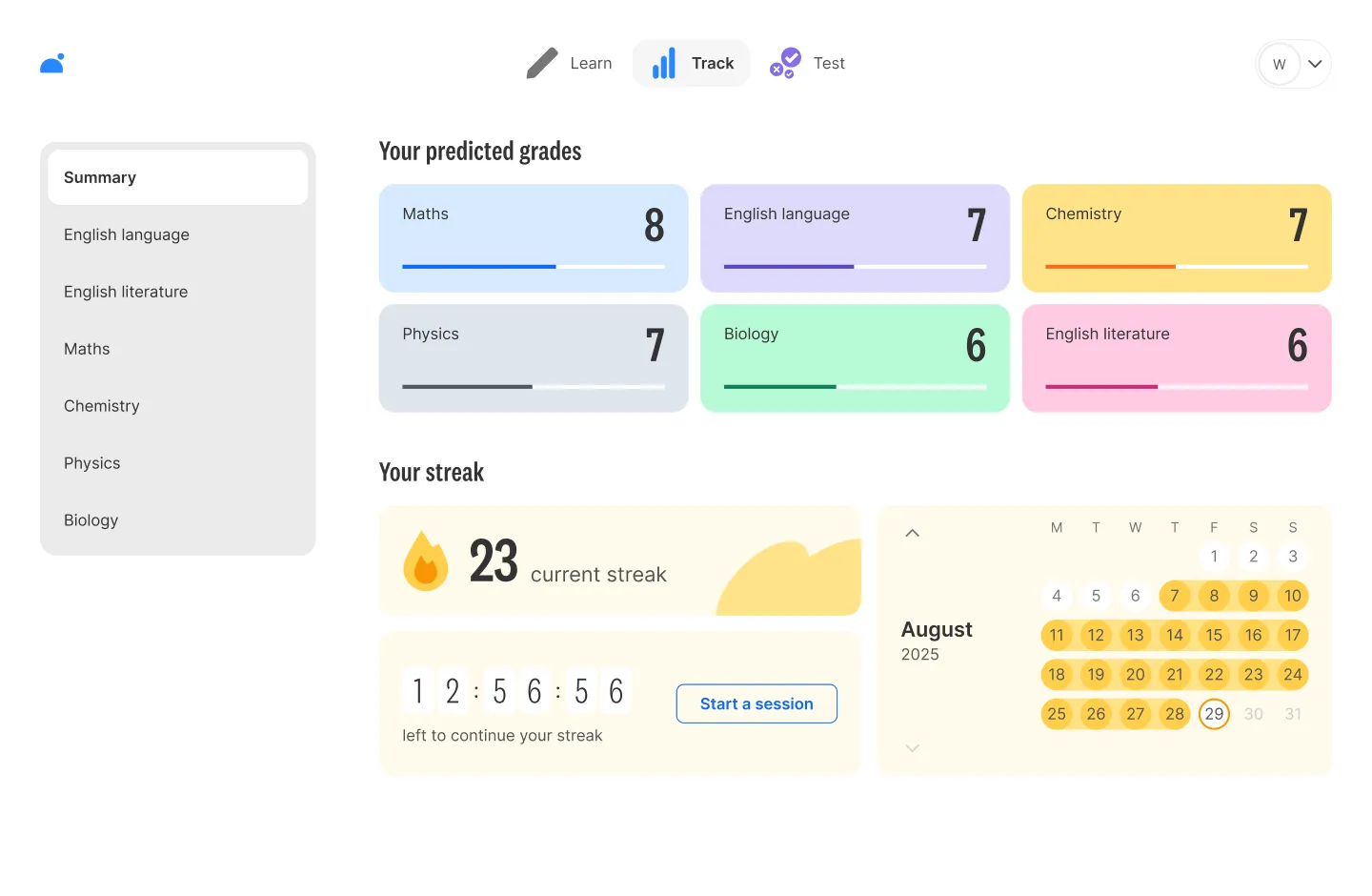
Atom's progress tracking shows you how you're doing across listening, reading, speaking, and writing, so it's easy to spot which skill needs the most attention.
4. Use exam-style questions early
Edexcel Spanish has a very predictable structure, and exam technique matters.
- Use Edexcel-style questions alongside your revision so formats feel familiar
- Learn what common command words mean, so you know how to approach each task
- Get comfortable with translation tasks, which appear in both Reading and Writing
The more familiar the question formats feel, the easier it is to focus on your Spanish.
Atom's practice papers are based on our team's predictions for Edexcel's exam style, so you can get used to the format well before exam day.
5. Learn from feedback, not just scores
Improvement comes from understanding why marks were gained or lost.
- Look closely at feedback to see where accuracy, detail, or development is missing
- Identify patterns: is it verbs, tenses, or vocabulary range that’s holding you back?
- Apply that feedback immediately in your next answer
This turns revision into steady, visible progress, not guesswork.
The best revision feels structured, targeted, and manageable. You always know what to work on next, and why it matters.
With a clear plan and regular, focused practice, Edexcel Spanish is a course you can feel confident mastering.