

What’s the difference between Triple Science: Higher and Foundation?
Edexcel Triple Science is split into Higher and Foundation tiers, depending on your level.
Foundation tier Triple Science Edexcel:
- Covers the core topics you need to know and excludes more complex or demanding areas.
- In Foundation Triple Science, you can achieve a maximum grade of 5.
Higher tier Triple Science Edexcel:
- The higher tier covers both core and more advanced topics across the curriculum.
- For Higher tier Triple Science, you can achieve a maximum grade of 9 - the highest possible grade.
- The lowest grade you can get is a 4.
Your school will place you in the correct tier based on your performance in Year 9. Sometimes, students may be moved up or down a tier during Year 10 or 11.
You can take Edexcel Triple Science exams at different levels. For example, Physics Foundation and Chemistry and Biology Higher.
Is there an equations sheet for Triple Science Edexcel?
Yes! It’s been confirmed that equation sheets will continue to be provided for Edexcel Triple Science.
The sheet will cover key formulas used for Physics. The formula sheet includes key equations needed for both the Foundation and Higher tiers.
Take a look at the 2024 equation sheet here.
What are the grade boundaries for Triple Science GCSE?
It’s important to remember that the exact grade boundaries for your GCSE exams will change every year.
Exam boards adjust the grade boundaries after an exam has happened, depending on how advanced the exam content was and how the cohort performed.
This is so students don’t have an advantage or disadvantage because of the year they took the paper. For example, if your paper were harder, grade boundaries would be lowered so that a grade 5 reflects the same level of knowledge as in previous years.
Let’s take a look at the grade boundaries for Edexcel Triple Science from 2024 to get a sense of how grades are awarded:
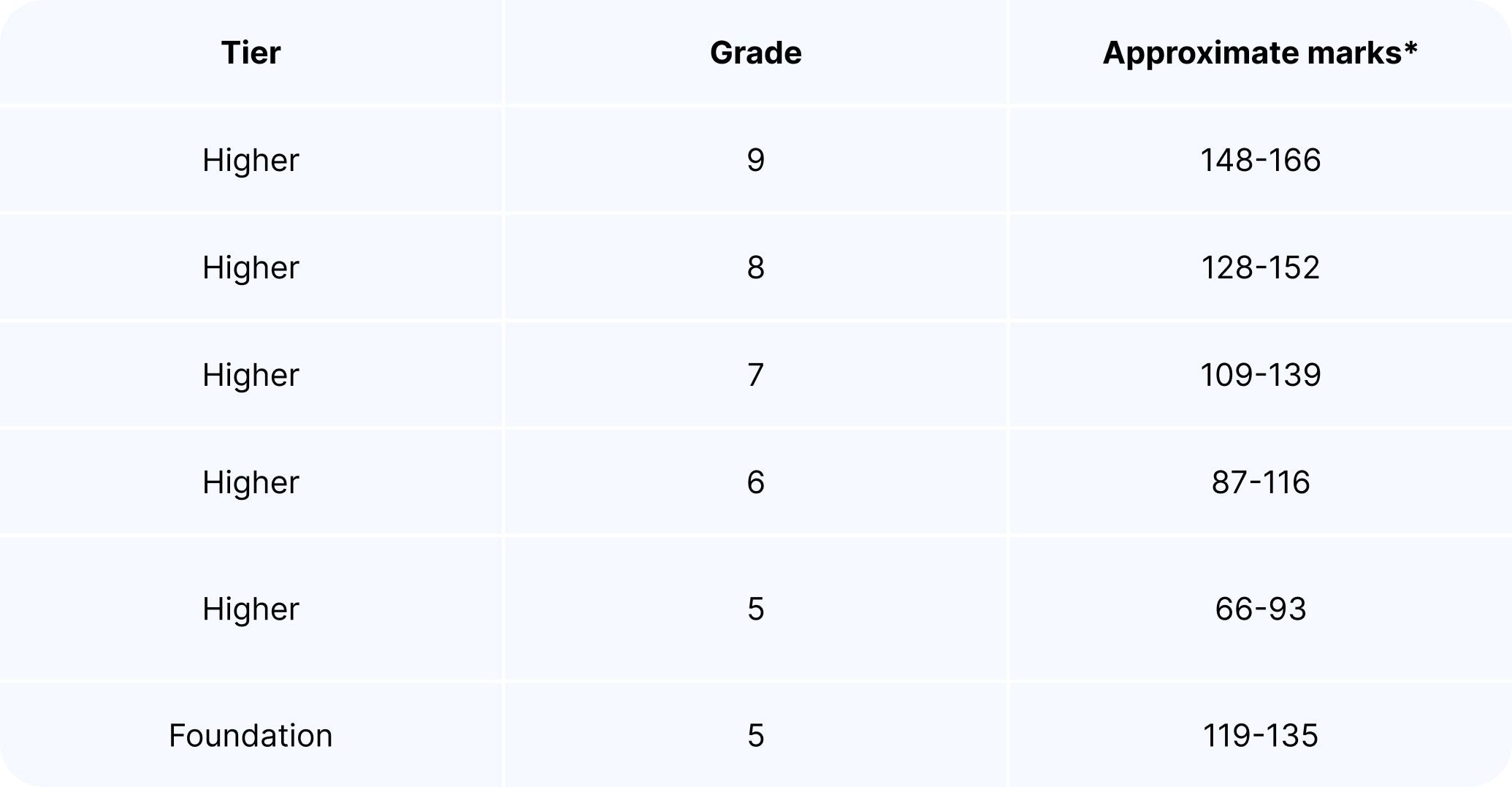
Remember, these won’t be the exact grade boundaries, but should give you a sense of how many marks to aim for to hit your target grades.
Learn more: take a look at our blog on how GCSE exams are graded.
*Looking at all three Sciences together. Check out the Edexcel grade boundaries in more detail for information on each individual subject.
Where can I find past papers and mark schemes?
Practising with past papers and mark schemes is one of the most effective ways to prepare for GCSE Triple Science.
Past papers help you understand question styles, see how marks are awarded, and build confidence with real exam timing and structure.
Head to the Edexcel website to find past papers and mark schemes from previous GCSE Triple Science exams.
What key topics do I need to know for Edexcel Triple Science GCSE?
Edexcel Triple Science papers cover a range of topics. You’ll need a thorough understanding of each to achieve top marks, so make sure you revise any areas you find tricky ahead of the exams.
The main topics for Triple Science are:
Biology topics
- Key Concepts in Biology (e.g., classification, experimental design, cells)
- Cells and Control (cell structure, mitosis, cell communication)
- Genetics (DNA, inheritance, variation, genetic engineering)
- Natural Selection & Genetic Modification (evolution, selective breeding, GM)
- Health, Disease & the Development of Medicines (pathogens, immune system, antibiotics, lifestyle)
- Plant Structures and their Functions (photosynthesis, transport in plants)
- Animal Coordination, Control and Homeostasis (nervous and hormonal systems, homeostasis)
- Exchange and Transport in Animals (gas exchange, circulatory system)
- Ecosystems & Material Cycles (ecology, nutrient cycles, human impact)
Chemistry topics
- Key Concepts in Chemistry (atoms, elements, compounds, calculations)
- States of Matter and Mixtures (pure substances, separation techniques)
- Chemical Changes (acids & bases, reactivity, redox)
- Extracting Metals and Equilibria (metal extraction, reversible reactions)
- Separate Chemistry 1 (transition metals, alloys, quantitative analysis)
- Groups in the Periodic Table (Group 1, Group 7, trends)
- Rates of Reaction & Energy Changes (collision theory, catalysts, enthalpy)
- Fuels and Earth Science (hydrocarbons, renewable energy, resource sustainability)
- Separate Chemistry 2 (advanced content, including more organic chemistry)
Physics topics
- Key Concepts of Physics (units, measurement, variables)
- Motion and Forces (speed, velocity, acceleration, Newton’s laws)
- Conservation of Energy (energy transfers, closed systems, efficiency)
- Waves (wave properties, sound, EM spectrum)
- Light and the Electromagnetic Spectrum (refraction, lens, EM uses & risks)
- Radioactivity (atoms, isotopes, decay, half‑life, nuclear)
- Astronomy (cosmology, universe, solar system)
- Energy – Forces Doing Work (work, power, energy transfers)
- Forces and their Effects (motion, stopping distance, momentum)
- Electricity and Circuits (current, voltage, resistance, circuits)
- Static Electricity
- Magnetism and the Motor Effect
- Electromagnetic Induction
- Particle Model (particles, pressure, density)
- Forces and Matter (elasticity, stress‑strain, material properties)
What are examiners looking for?
The assessment objectives for GCSE Triple Science are set by Ofqual, the exams regulator, and are consistent across exam boards.
Examiners are looking for the following in your exam papers:
- AO1: Demonstrate knowledge and understanding of scientific ideas; scientific techniques and procedures
- AO2: Apply knowledge and understanding of scientific ideas; scientific enquiry, techniques and procedures
- AO3: Analyse information and ideas to interpret and evaluate; make judgments and draw conclusions; develop and improve experimental procedures
How can I prepare for Edexcel Triple Science GCSE?
To prepare for Triple Science exams, you’ll need to start revising early to make sure you’re confident covering all the key topics.
5 top tips to prepare for GCSE Triple Science:
1. Understand key vocabulary, definitions and units
Don’t miss out on marks for questions asking you to state or define terms. Make sure you get your head around the key vocab, definitions and units. You can use flashcards to help you memorise key terms and quiz yourself.
2. Use practice papers and mark schemes
The best way to prepare? Practise like it’s test day. Practising exam questions from past papers and checking your answers will help you get used to the question format and understand how to get top marks. You can also take a whole test and practise under timed conditions too, to build confidence for the real thing.
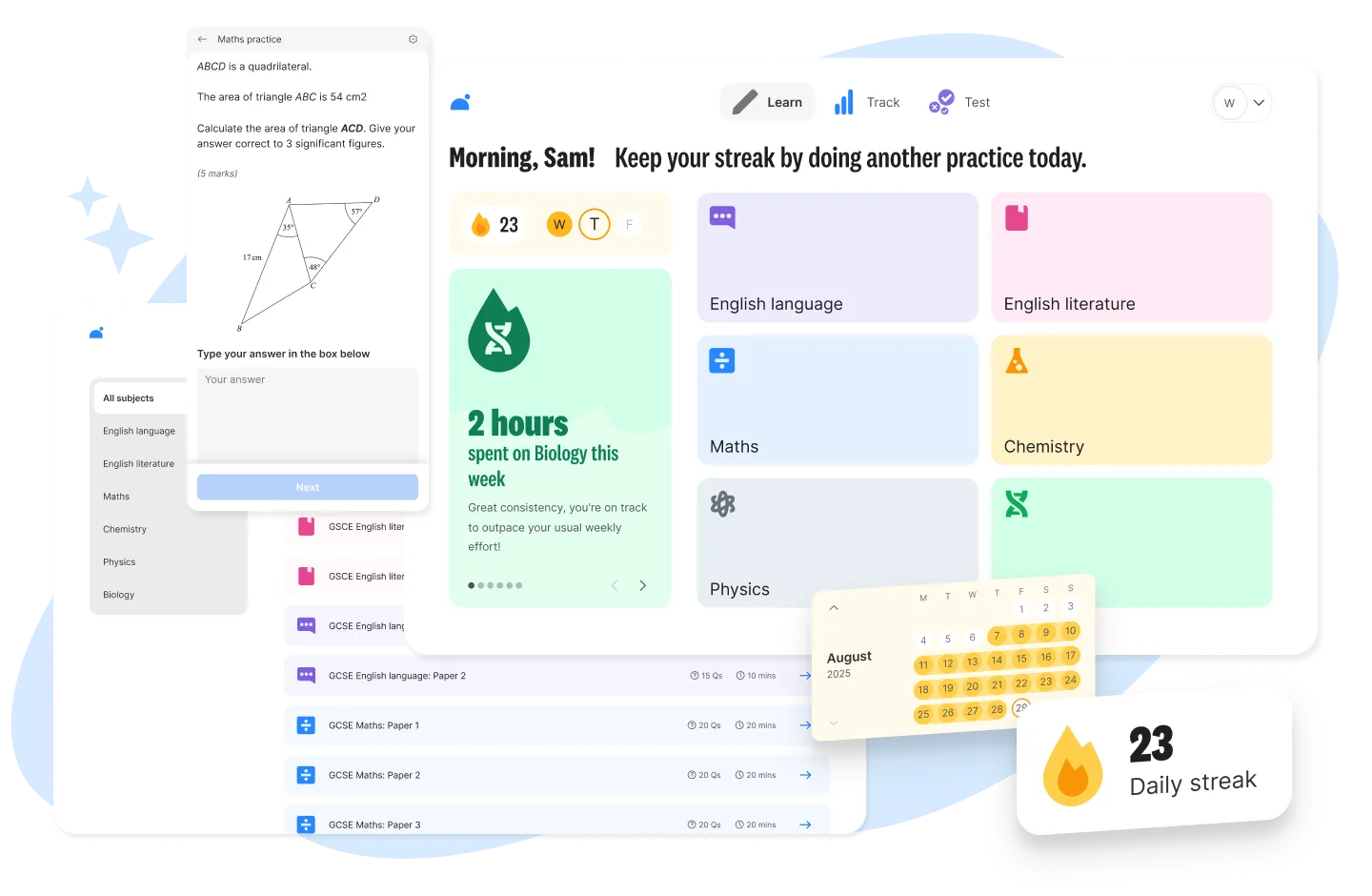
Atom gives you practice papers based on our team's predictions for the next GCSE year, along with instant, examiner-style feedback, so you get the same practise-and-check approach without having to mark everything yourself.
3. Mix up your revision techniques
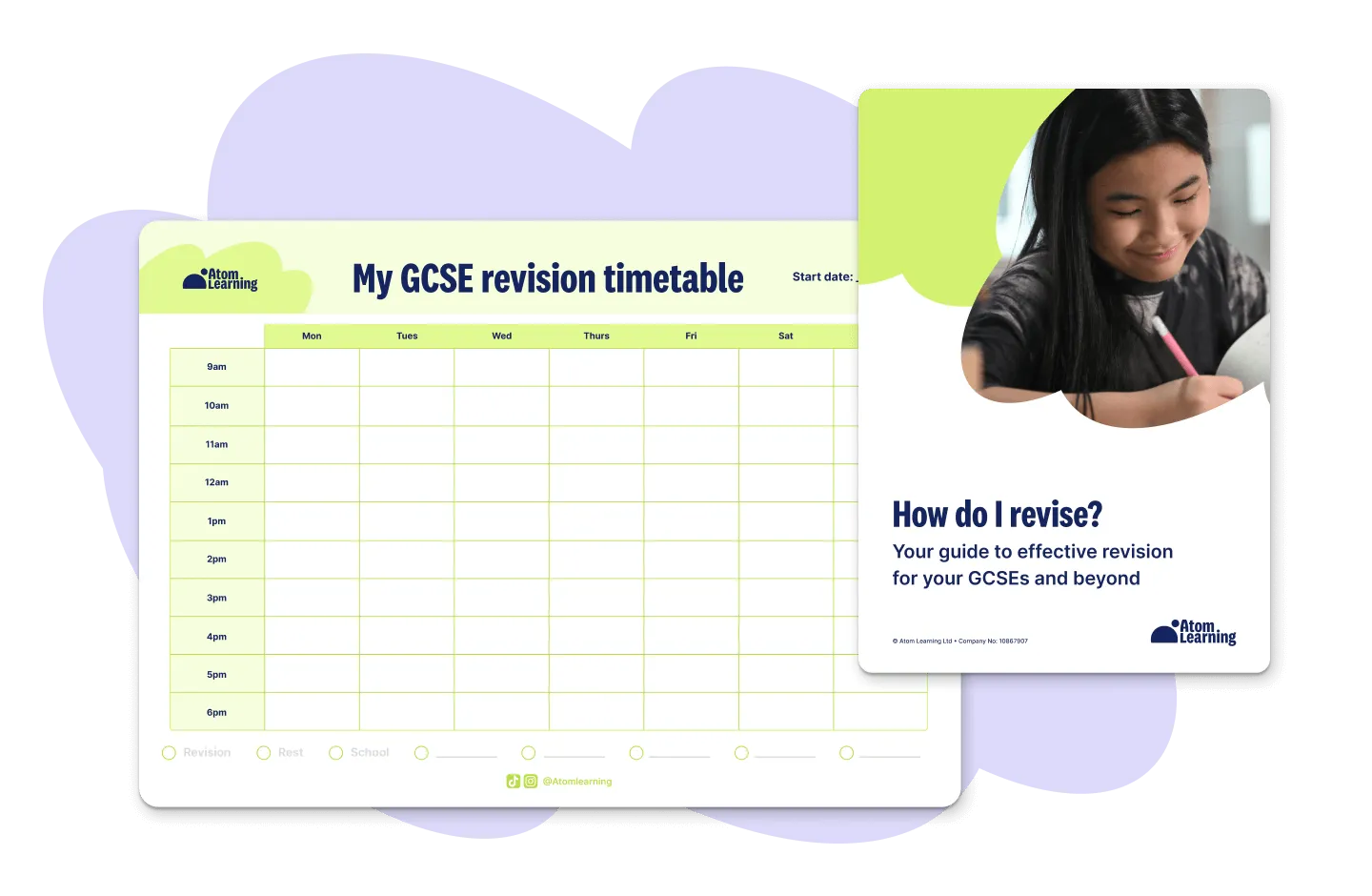
It’s a good idea to try a mix of revision tactics. From flashcards to teaching others, a mix will help learning to stick. Studying little and often will also help you avoid fatigue and burnout.
4. Practise applying and analysing knowledge and ideas
Assessment objectives 2 and 3 are asking you to apply what you know to analyse and draw conclusions. When you learn a new concept, try asking yourself: how can I apply this in a different scenario? Or what assumptions or errors might affect this conclusion?
Atom's examiner-style feedback tells you whether your reasoning and application hit the mark, so you can see exactly where your analysis needs to go further.
5. Plan, review, and adapt your revision
After each mock or practice paper you take, identify the topics or question types you struggle with, then prioritise those in your next revision cycle. Over time, your weak areas will shrink and your confidence will grow!
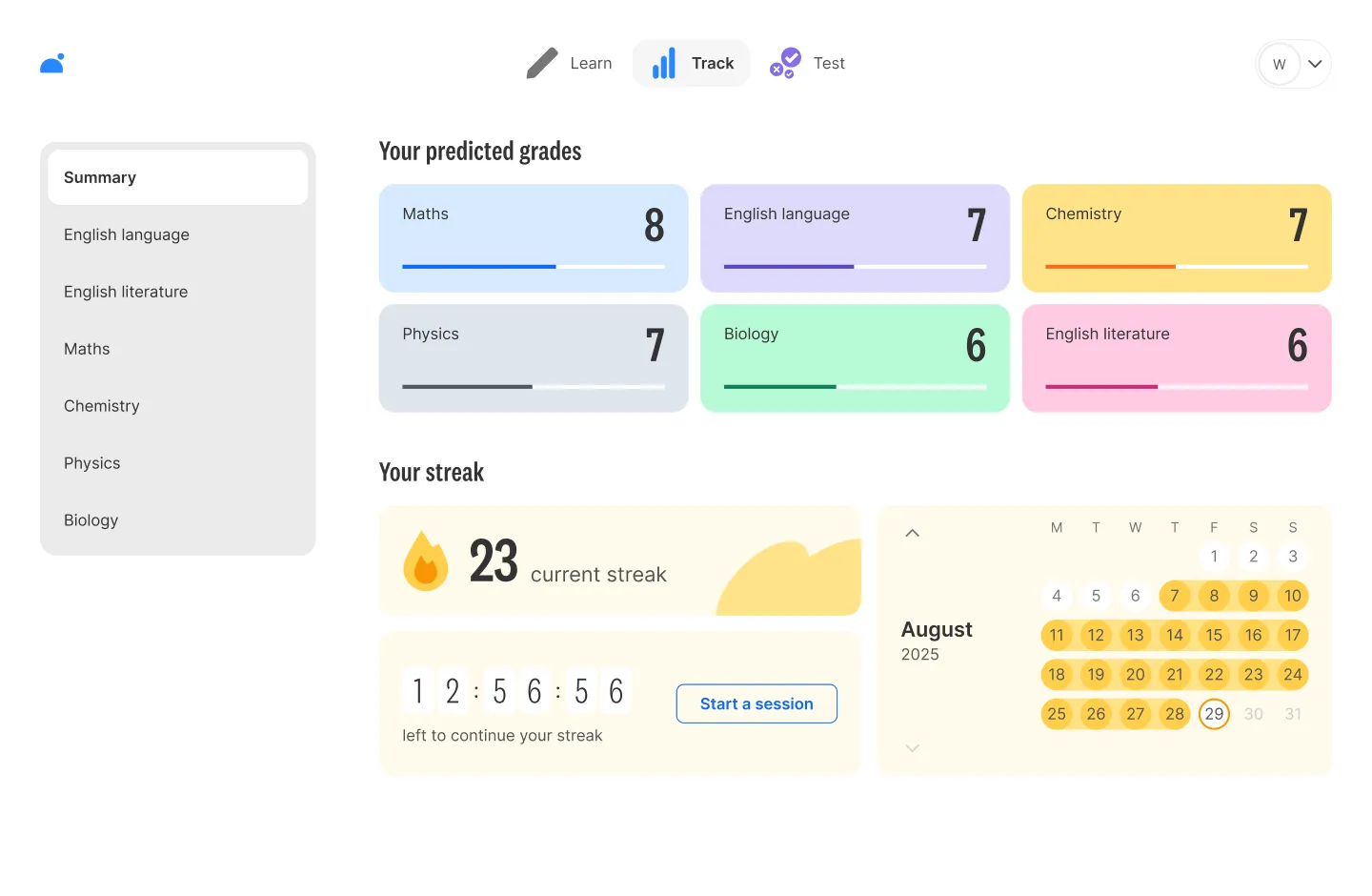
Atom tracks your performance across topics automatically, so it's easy to see which areas to prioritise in your next revision session.
If you’re taking GCSE Triple Science, understanding what’s on the exam will help you prepare. With solid revision and preparation, you’re sure to feel calm and confident when exam day comes around. Don’t forget to bookmark this blog to refer back to. Good luck!