

What are the different exam papers for OCR Geography GCSE?
Once you know whether you’re taking Geography A or Geography B, the next step is understanding what each exam paper actually tests.
While both courses cover physical and human geography, the focus of each paper is different.
OCR Geography A
Paper 1: Living in the UK Today
This paper focuses on geography in the UK.
You’ll answer questions on:
- UK landscapes (including rivers and coasts)
- Urban change and challenges (city growth, regeneration projects, housing, transport, and inequality)
- How people and environments interact in the UK
Questions ask you to:
- Use case study examples
- Interpret maps, graphs, and data
- Explain geographical processes and impacts
Paper 2: The World Around Us
This paper looks at geography beyond the UK, focusing on global issues and environments.
You’ll answer questions on:
- Global hazards (earthquakes, volcanoes, tropical storms, and extreme weather)
- Climate change (causes of climate change, impacts on different regions, and ways to manage risk)
- Ecosystems and biodiversity (tropical rainforests, polar environments, food webs, and conservation)
Questions often require you to:
- Explain causes and effects
- Apply knowledge to unfamiliar examples
- Link physical and human geography
Paper 3: Geographical Skills
This paper tests the skills you use across the whole course, rather than specific topics.
You’ll be assessed on:
- Map and atlas skills
- Data and graph interpretation
- Using fieldwork information
- Making decisions based on evidence
OCR Geography B
Paper 1: Our Natural World
This paper focuses on physical geography and environmental challenges.
You’ll study topics such as:
- Global hazards (earthquakes, volcanic eruptions, tropical storms, and extreme weather)
- Climate change (evidence for climate change, environmental impacts, and how risks are managed)
- Distinctive landscapes (coastal, river, or glacial landscapes and the processes that shape them)
- Sustaining ecosystems (tropical rainforests, polar regions, and balancing use and conservation)
Questions test your understanding of physical processes and your ability to apply them to real-world situations.
Paper 2: People and Society
This paper focuses on human geography and development issues.
You’ll answer questions on:
- Urban futures (rapid urban growth, challenges in cities, and sustainable urban planning)
- Dynamic development (why countries develop at different rates and how development is measured)
- The UK in the 21st century (population change, migration, and economic shifts)
- Resource reliance (global demand for energy, water, and food, and the impacts of overuse)
You’ll often be asked to:
- Use real-world examples
- Interpret data
- Weigh up different viewpoints
Paper 3: Geographical Exploration
This paper brings together knowledge and skills from across the course.
You’ll be given:
- Unseen resources
- Enquiry-style questions
You’ll need to:
- Analyse information
- Apply what you’ve learned
- Make clear, evidence-based judgements
What are examiners looking for?
OCR Geography examiners aren’t trying to catch you out. They’re looking for clear, well-explained answers that show you understand geography and can apply it to real situations.
In simple terms, they want to see what you know, how well you can use it, and how clearly you explain it.
1. Accurate geographical knowledge and understanding
Examiners want to see that you understand the topic you’re writing about.
This means:
- Using key geographical terms correctly
- Explaining human and physical geography processes clearly
- Including case study detail where it’s relevant
Tip: Naming specific places, events, or facts shows secure understanding and helps push answers into higher mark bands.
2. Applying knowledge to real-world situations
Examiners want to see you use geographical knowledge to explain real situations, not just describe a topic.
Examiners look for answers that:
- Use case studies and real examples to explain causes, impacts, and responses
- Adapt case study knowledge to fit the question, even when the example or scenario is unfamiliar
- Apply ideas to the resource or scenario given, not just the example you’ve memorised
- Link every example clearly back to the question
Tip: A strong case study only earns marks if you explain why it’s relevant to the question being asked.
3. Using geographical skills effectively
Geography exams test both skills and knowledge.
Examiners want to see that you can:
- Interpret maps, graphs, photographs, and data
- Spot patterns and trends
- Use evidence from resources to support your answers
Tip: Don’t just describe a graph; use the resource to support an explanation. Quote data or evidence from it and link it directly to the question.
4. Analysing and evaluating issues
For higher-mark questions, examiners want more than one side of the story.
This means:
- Considering different viewpoints
- Weighing up advantages and disadvantages
- Making a reasoned judgement, backed by evidence
Tip: Words like however, on the other hand, and overall help show evaluation.
OCR Geography rewards clear thinking, strong examples, and confident explanation. If you focus on explaining why things happen, not just what happens, you’ll be showing examiners exactly what they’re looking for.
What are the grade boundaries for OCR Geography GCSE?
Grade boundaries for OCR Geography GCSE change every year. This is because exam boards adjust boundaries depending on exam difficulty and how students perform nationally.
That means the number of marks needed for each grade can go up or down slightly each year. A grade 5 or grade 7 is designed to represent the same standard, even if the paper was harder or easier than in previous years.
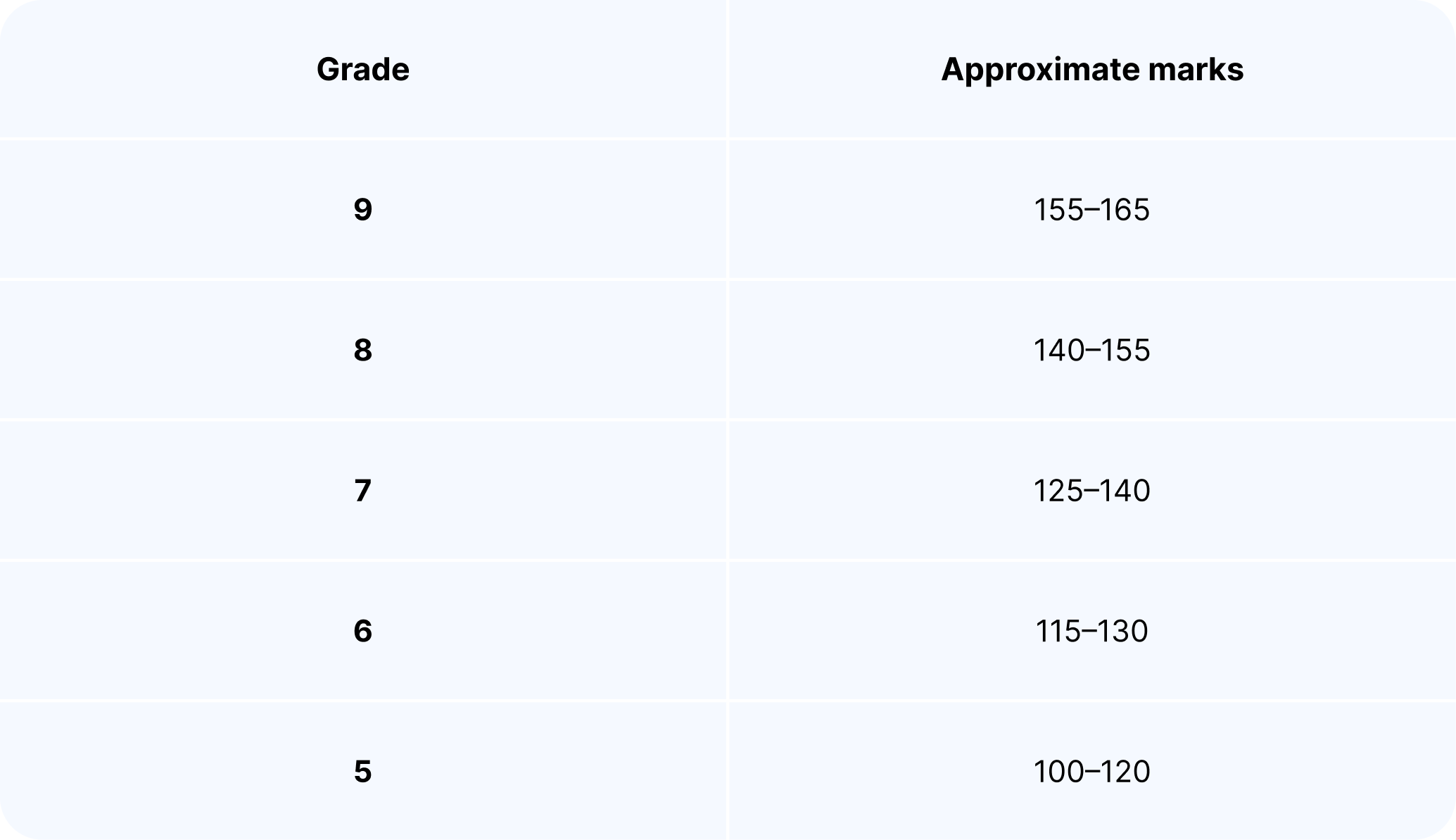
To give a sense of what to expect, here are the grade boundaries for Geography OCR GCSE from the last year.
The table below summarises overall grade boundaries across both Geography A and Geography B, giving a useful guide to how marks typically translate into grades:
What key topics do I need to know for OCR Geography GCSE?
The topics you study depend on two things:
- Whether you’re taking Geography A or Geography B
- The specific topic options your school has chosen
OCR Geography A topics may include:
- Living in the UK today
- Urban change and challenges
- UK physical landscapes
- The world around us
- Global hazards
- Climate change
- Ecosystems
- Geographical skills
- Map skills
- Data interpretation
- Fieldwork techniques
OCR Geography B topics may include:
- Our natural world
- Global hazards
- Climate change
- Physical landscapes
- People and society
- Urban futures
- Dynamic development
- Resource reliance
- Geographical skills and fieldwork
- Understanding data
- Evaluating enquiry questions
Your teacher will tell you exactly which topics you need to revise for your course.
Where can I find past papers and mark schemes?
Practising with past papers and mark schemes is one of the most effective ways to prepare for GCSE Geography.
Past papers help you understand question styles, see how marks are awarded, and build confidence with real exam timing and structure.
Head to the OCR website to find past papers and mark schemes from previous GCSE Geography exams:
Once you've worked through those, Atom gives you a fresh set of practice papers based on our team's predictions for the next GCSE year, plus instant, examiner-style feedback so you always know exactly where marks were gained or lost.
How can I prepare for OCR Geography GCSE?
Here are 5 top tips to help you prepare confidently for OCR Geography exams.
1. Learn case studies properly
Strong case studies are essential in Geography.
- Know the causes, impacts, and responses
- Use specific facts and figures
- Practise linking them directly to exam questions
2. Practise applying knowledge
Geography exams often ask you to apply what you know to unfamiliar contexts.
- Practise explaining processes step by step
- Get comfortable using maps, graphs, and data
Atom's instant, examiner-style feedback tells you whether your explanations hold up in an unfamiliar context, so you can see exactly where your reasoning needs more detail.
3. Structure extended answers
A clear structure helps examiners reward your thinking.
Many students find the PEEL technique helpful for structuring longer Geography answers and staying focused on the question.
If you’re not familiar with it, you can learn how it works in our guide: How to use the PEEL technique to write an effective essay
4. Use past papers effectively
- Practise questions under timed conditions
- Compare your answers to mark schemes
- Identify where you can add detail or improve clarity
Atom tracks your performance topic by topic, so it's easy to spot exactly where you're losing marks and need to add more detail.
5. Make exam practice feel normal
The more familiar the exam feels, the calmer you’ll be on the day.
- Sit full papers without notes
- Reflect on timing and technique
- Focus on steady improvement
Atom's practice papers, based on our team's predictions for the next GCSE year, are a good way to sit a full paper under realistic conditions as part of this routine.
OCR GCSE Geography rewards clear understanding, confident application, and well-chosen examples. Once you know which OCR Geography course you’re studying and practise regularly with exam-style questions, you’ll go into the exam knowing exactly what’s expected and how to show it.
Save this guide and come back to it as you revise. You’ve got this.