

What’s the difference between Papers 1, 2 and 3 for OCR Religious Studies?
OCR GCSE Religious Studies is assessed through three exam papers, each testing different content and skills. While the structure is consistent, the content you’re assessed on varies from paper to paper.
Paper 1: Beliefs, Teachings and Practices – Religion 1 (1 hour)
Paper 1 focuses on one of the two religions studied in the course.
You’ll be assessed on:
- Core beliefs and teachings
- Sources of wisdom and authority
- Religious practices, such as worship, festivals, and rites of passage
- How beliefs influence individuals and communities
In the exam, you’ll answer a mix of shorter knowledge questions and longer responses that require explanation.
This paper rewards accurate knowledge, clear use of religious terminology, and well-developed explanations.
Paper 2: Beliefs, Teachings and Practices – Religion 2 (1 hour)
Paper 2 follows the same structure and question styles as Paper 1, but focuses on the second religion you have studied.
You’ll be assessed on:
- Beliefs and teachings specific to the second religion
- Key practices and forms of worship
- The impact of religious beliefs on daily life and society
The consistent structure across Papers 1 and 2 means you can focus on learning the content, rather than adjusting to a new exam format.
Paper 3: Religion, Philosophy and Ethics in the Modern World (2 hours)
Paper 3 is the largest paper, accounting for 50% of the GCSE. It focuses on applying religious and non-religious ideas to modern ethical and philosophical issues.
You’ll study four themes:
- Relationships and families
- The existence of God, gods, or ultimate reality
- Religion, peace and conflict
- Dialogue between religious and non-religious beliefs
In this paper, examiners are looking for:
- Clear explanation of different viewpoints
- Comparison of religious and non-religious perspectives
- Well-structured evaluation with justified conclusions
To score highly, you need to develop arguments clearly, support them with reasoning, and reach justified conclusions.
What are examiners looking for?
OCR Religious Studies examiners assess your answers using two assessment objectives.
AO1: Knowledge and understanding
Examiners want to see that you can:
- Show accurate knowledge of beliefs, teachings, and practices
- Use correct religious terminology
- Refer to sources of wisdom and authority where relevant
AO2: Analysis and evaluation
To achieve higher marks, you’ll need to:
- Explain different viewpoints clearly
- Analyse religious and non-religious perspectives
- Reach justified conclusions, supported by reasoning
To access the top bands, make sure you:
- Answer the question directly
- Develop points fully rather than listing ideas
- Balance explanation with evaluation
- Structure longer answers so your argument is easy to follow
If you’re not sure how to structure longer answers, our guide to the PEEL technique for GCSE essay writing shows you how to organise paragraphs in a way examiners reward.
What are the grade boundaries for OCR Religious Studies?
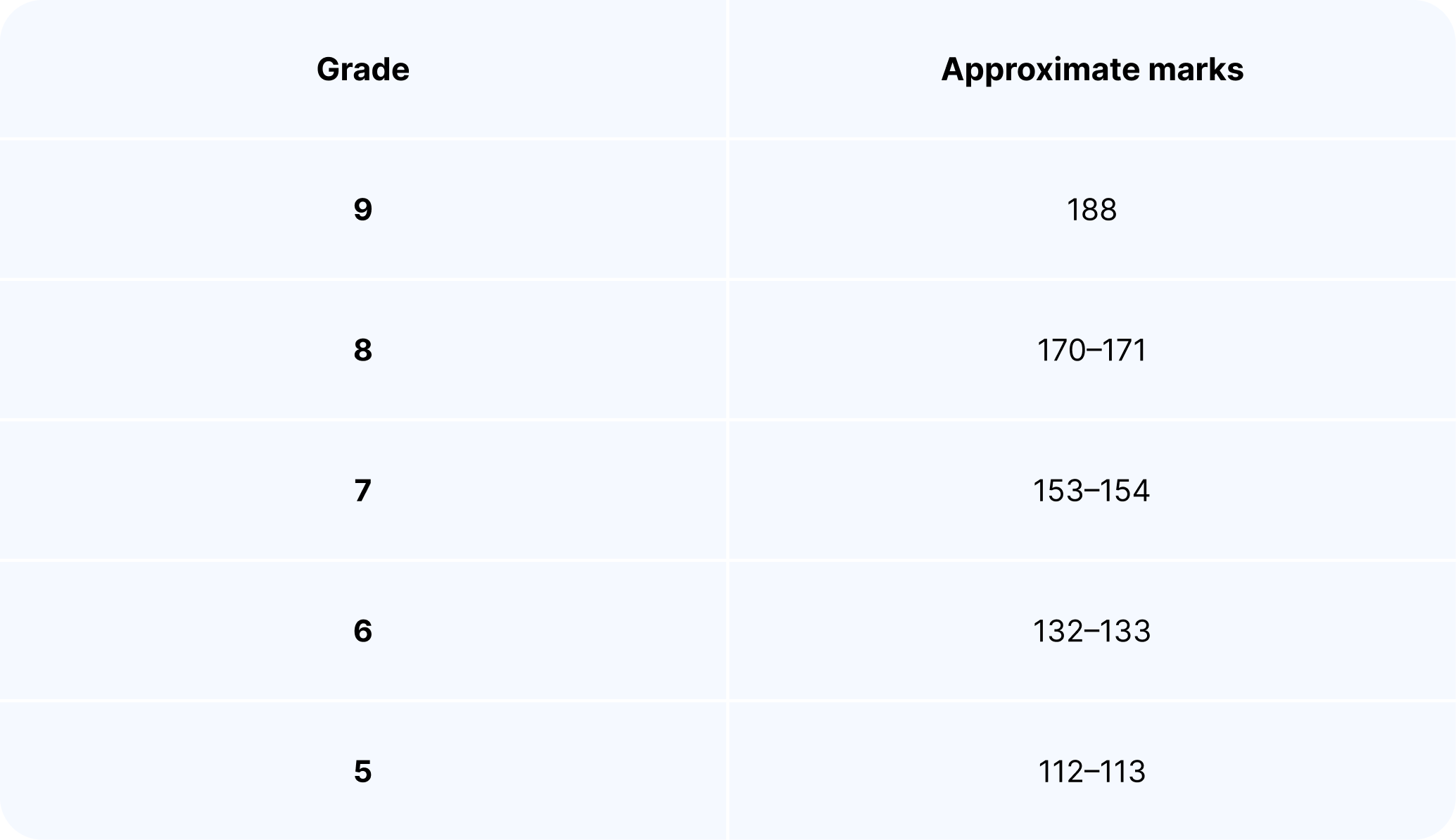
It’s important to remember that the exact grade boundaries for your GCSE exams will change every year. Exam boards adjust grade boundaries after an exam, depending on the exam's difficulty and how the cohort performed.
This is so students don’t have an advantage or disadvantage because of the year they took the paper. For example, if your paper were harder, grade boundaries would be lowered so that a grade 5 reflects the same level of knowledge as in previous years.
To give a sense of what to expect, here are the grade boundaries for OCR Religious Studies GCSE from the last year:
What key topics do I need to know for OCR Religious Studies?
The exact content depends on your school’s choices, but all students study the following areas.
Beliefs, Teachings and Practices
For two religions, you’ll need to know:
- Key beliefs about God, gods, or ultimate reality
- Religious teachings and ethical guidance
- Worship, festivals, and rites of passage
- How beliefs influence behaviour and communities
Religion, Philosophy and Ethics in the Modern World
This paper focuses on four broad themes:
- Relationships and families
- The existence of God, gods, or ultimate reality
- Religion, peace and conflict
- Dialogue between religious and non-religious beliefs
These topics require both secure factual knowledge and the ability to evaluate ethical issues from different perspectives.
Where can I find past papers and mark schemes?
Practising with past papers and mark schemes is one of the most effective ways to prepare for GCSE Religious Studies.
Past papers help you understand question styles, see how marks are awarded, and build confidence with real exam timing and structure.
Head to the OCR website to find past papers and mark schemes from previous GCSE Religious Studies exams. Once you've worked through those, Atom gives you a fresh set of practice papers based on our team's predictions for the next GCSE year, plus instant, examiner-style feedback so you always know exactly where marks were gained or lost.
How can I prepare for OCR Religious Studies?
Here are five practical tips to help you prepare confidently.
1. Know the question structure
Different mark questions require different levels of detail. Higher-mark questions need developed explanations and evaluation.
Our guide, How to answer GCSE questions based on their marks, explains how to tailor your answers to the number of marks available.
2. Balance AO1 and AO2
Strong answers combine accurate knowledge with clear analysis and evaluation.
That means showing a secure understanding of beliefs, teachings, and practices, while also explaining their significance and impact.
Avoid simply listing facts; examiners reward answers that explain ideas clearly and evaluate different viewpoints where required.
3. Practise evaluation regularly
Evaluation questions are where many students lose marks. To do well, you need to explain why viewpoints differ, compare religious and non-religious perspectives, and reach justified conclusions.
Regular practice helps you structure these answers clearly and argue your points with confidence. Atom's instant, examiner-style feedback tells you whether your evaluation reaches a justified conclusion, so you can see exactly where your argument needs more structure.
4. Use past papers and mark schemes
Past papers show you how OCR phrases questions and awards marks. After practising a question, compare your answer to the mark scheme to see what examiners are looking for.
This helps you spot what would move your answer into the next band and improve more quickly. Atom tracks your performance across topics, so it's easy to see which band you're working at and where to focus next to move up.
5. Make exam practice feel normal
The more familiar the exam feels, the calmer you’ll be on the day. Practice full papers under timed conditions and plan your answers before you start writing.
After each practice, reflect on your timing and structure; small changes here can make a big difference.
OCR GCSE Religious Studies is about showing what you understand and explaining your ideas clearly. Once you’re familiar with the exam structure and practise regularly with exam-style questions, you can go into the exam feeling prepared, focused, and confident in your approach.