
Back to blog

GCSE predicted grades: what they are and how to improve yours

By
Atom
|
January 14, 2026

Predicted grades are one of the clearest signs of how your GCSE preparation is going, but they can feel confusing at first.

Understanding how GCSE predicted grades work (and how to improve them) makes your revision feel clearer, more structured, and easier to manage.

Here’s everything you need to know.

Key takeaways

  • GCSE predicted grades show the grades you’re currently on track to achieve.
  • They’re based on classwork, mock exams, and your progress over time.
  • Schools use them for setting targets, support, and sixth form/college applications.
  • Consistent habits and exam-style practice help improve them.

What are GCSE predicted grades?

GCSE predicted grades are teachers’ estimates of the grades students will get at the end of Year 11. They’re based on evidence (including class work and mock exams) and reflect your current performance and potential.

They aren’t final grades – just a snapshot of where you are right now. They can change with consistent effort.

How are GCSE predicted grades worked out?

Schools use a range of evidence to predict grades. This includes:

  • Classwork and ongoing assessments. Teachers look at the quality, consistency, and accuracy of work produced throughout the year.
  • Mock exams. Mocks are the strongest indicator of real exam performance. They show how well you handle timing, pressure, and exam-style questions.
  • Progress over time. Improvement is just as important as attainment. A steady upward trend is a strong sign of potential.
  • Teacher judgement. Teachers use their subject expertise to bring all the evidence together and form a fair, realistic prediction.

How do schools use GCSE predicted grades?

Predicted grades help teachers and schools understand how students are progressing, and what support or guidance they might need. They use predicted grades for:

  • Applying to sixth form or college. Most post-16 providers ask for predicted grades as part of the admissions process.
  • Setting targets and helping students focus their revision.
  • Identifying who needs more guidance or extra challenge.
  • Monitoring whole-cohort progress. Schools use predicted grades to track how whole year groups are performing.

Why are predicted grades important?

  • Planning next steps: sixth forms and colleges use them when offering places.
  • Spotting strengths and gaps: they show which topics you’ve mastered and which need work.
  • Focusing revision: predicted grades highlight where to spend more time revising.
  • Staying motivated: rising grade predictions show your effort is paying off.
No items found.

How can I improve my GCSE predicted grades?

Predicted grades reflect your habits, progress, and understanding of exam expectations. These strategies help you build all three.

1. Build steady habits

Short, regular sessions are more effective than last-minute cramming (teachers notice consistency!). Aim for:

  • Short daily revision sessions (10–15 minutes).
  • Setting one small weekly target (like learning five new quotes or mastering a difficult maths concept).
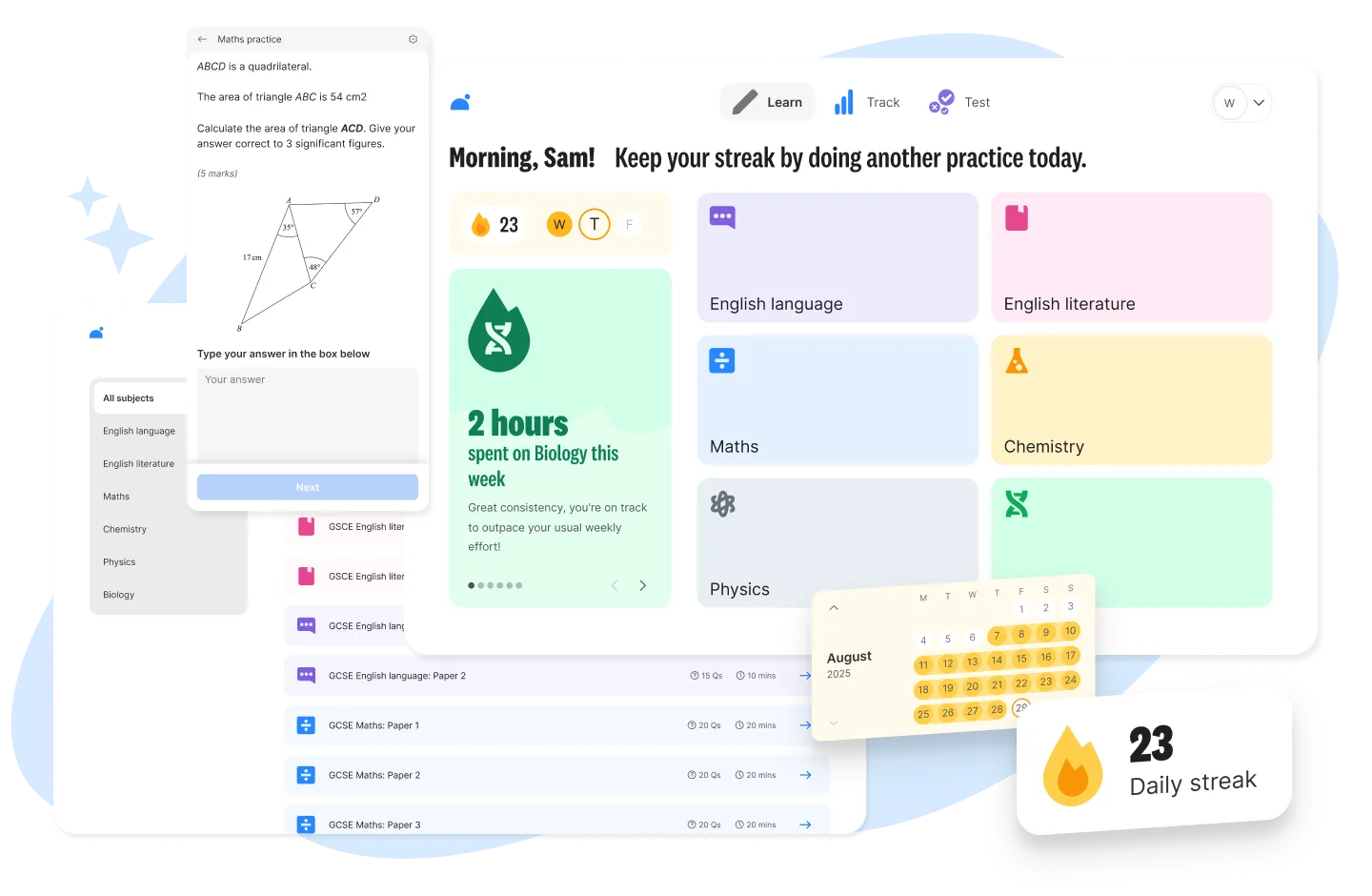
  • Tracking your revision streak to build momentum.

2. Treat class tests as mini-mocks 

Class assessments matter. They give teachers key evidence for predicted grades.

Make the most of them by:

  • Taking them seriously. Treat them like mini-mocks.
  • Reviewing mistakes using the mark scheme.
  • Noting one key thing to improve in each test. 

3. Use real mark schemes 

Examiners award marks for specific ideas, steps, and keywords. Understanding what they look for is a major advantage. Try this: 

  1. Answer a longer exam-style question.
  2. Compare your answer to the mark scheme.
  3. Highlight what you hit and what you missed.
  4. Rewrite it using the missing points.

This makes every practice question count and pushes you closer to the grade you want.

4. Ask for specific feedback

Good feedback tells you exactly what to change. Ask your teacher questions like:

  • “What one thing would lift this answer by a grade?”
  • “What do examiners expect here?”
  • “Which topic should I focus on next?”

This helps you prioritise the changes that actually move your grade.

5. Keep your notes clear

Organised notes help you strengthen your understanding and revise faster. Try: 

  • Highlighting key formulas or ideas in consistent colours.
  • Adding a short summary at the end of each topic.
  • Tidying up messy notes every couple of weeks.

Clear notes make revision faster and easier.

6. Treat mock exams as a rehearsal

Mocks influence predicted grades, but they’re also the best practice for the real thing. Make them count by:

  • Practising timing in advance.
  • Reviewing the paper properly with the mark scheme.
  • Looking for patterns or repeated mistakes.

Improving between mocks is strong evidence of progress.

7. Track your progress

Visible progress builds consistency, and teachers notice it. You can track it manually with a notebook or a notes app.

Track things like:

  • Topics you’ve strengthened
  • A record of your scores increasing over time
  • Mistakes you no longer make
  • Useful mark-scheme language

Atom GCSE is coming!

Guided courses.
Instant feedback.
Built for the 2026 exams.

Join the waitlist now to be the first to get free, early access. 

Sign up now

Not sure where you stand? Get your predicted grades with Atom.

Many students don’t know their predicted grades until mock exams, but this is late in the year to make big changes. 

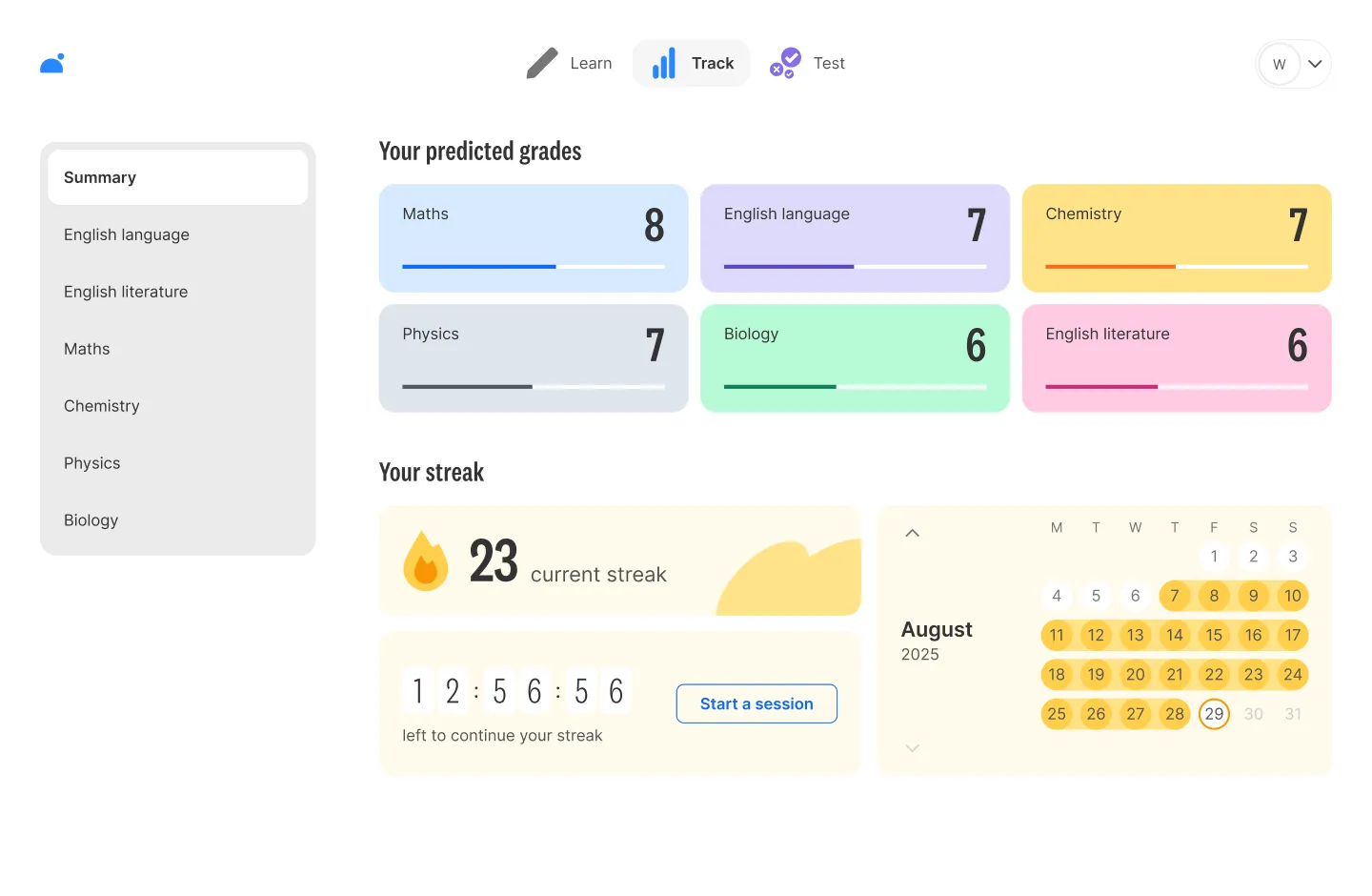
Atom gives you GCSE predicted grades based on your performance.

✔ Accurate predictions 

Atom tracks your scores in predicted papers. You always know where you stand and how close you are to top grades.

✔ Based on exam boards

All practice on Atom is tailored to your subjects and exam boards, so your predictions match the style and difficulty of your real exams.

✔ Instant feedback

Atom’s AI marks your answers using real mark schemes, showing exactly where marks were gained and lost and what to do next time.

✔ Clear progress tracking

Atom turns effort into evidence with topic-by-topic progress tracking and clear grade predictions. No more guessing – just clear guidance that keeps you moving forward.

Atom GCSE is launching in February 2026. Join the waitlist to get free, early access.

No items found.
No items found.
No items found.
No items found.

FAQs

When will I get my GCSE predicted grades?

Many schools share predicted grades in Year 11, usually after mock exams, though some give them earlier in the year.

How accurate are GCSE predicted grades?

They’re generally close, depending on the evidence your school uses.

Can predicted grades go up?

Yes. Stronger classwork, better mock results, and clear evidence of progress can all improve your predicted grades.

Can predicted grades go down?

They can if later assessments show a drop in performance, which is why consistency matters.

Do GCSE predicted grades matter?

Yes. They guide revision, set targets, and are used by sixth forms and colleges when offering places.

Are predicted grades the same as target grades?

No. Target grades show what you’re aiming for, while predicted grades show what you’re on track to achieve.

Do predicted grades affect GCSE results?

No. GCSE exams are marked externally, so predicted grades don’t influence your actual results.

Do universities look at predicted GCSE grades?

Not directly, but sixth form or college offers (which are based on predicted grades) can shape your pathway towards university.

Are predicted grades used for setting or streaming?

In some schools, predicted grades are used to put students into subject sets or pathways.

Contents