

A simple method to decode any GCSE question
When you turn to a new question, pause. Don’t start writing immediately.
Instead:
- Identify the command word
- Underline the topic
- Look for words that narrow the focus (e.g. “in this extract”, “to what extent”, “how far”)
- Ask yourself what a full-mark answer would need
This takes less than a minute, and it can gain you multiple marks.
Example: Breaking down a high-mark question
Let’s take this example:
Analyse how the writer uses language to present fear in this extract.
Here’s what that tells you:
- You must analyse (not describe)
- You must focus on language
- You must link everything to fear
- You must stay within the extract
A strong answer would:
- Select specific language techniques
- Explain their effect
- Link clearly to the idea of fear
- Stay tightly focused on the extract
If you start discussing structure across the whole text, you’ve drifted.
If you identify techniques without analysing their effect, you’ve limited your marks.
Decoding the question prevents that.
Why students lose marks on GCSE questions
Some common mistakes include:
- Writing everything they know instead of answering precisely
- Ignoring key phrases like “to what extent”
- Forgetting to evaluate when evaluation is required
- Drifting beyond the extract or source
Examiners reward relevance. If it doesn’t answer the question, it doesn’t earn marks.
How to practise decoding exam questions
You don’t need to write full essays to improve this skill.
Take five past paper questions and simply break them down. Identify the command word, clarify the topic, and notice the limits.
Then ask yourself: what would a top-band answer need?
Over time, you’ll start spotting patterns in how exam boards phrase questions. In the real exam, you’ll feel calmer because you’ve seen it all before.
How Atom GCSE helps you understand what examiners want
Decoding questions becomes much easier when you understand how marks are actually awarded.
With Atom GCSE, you can:
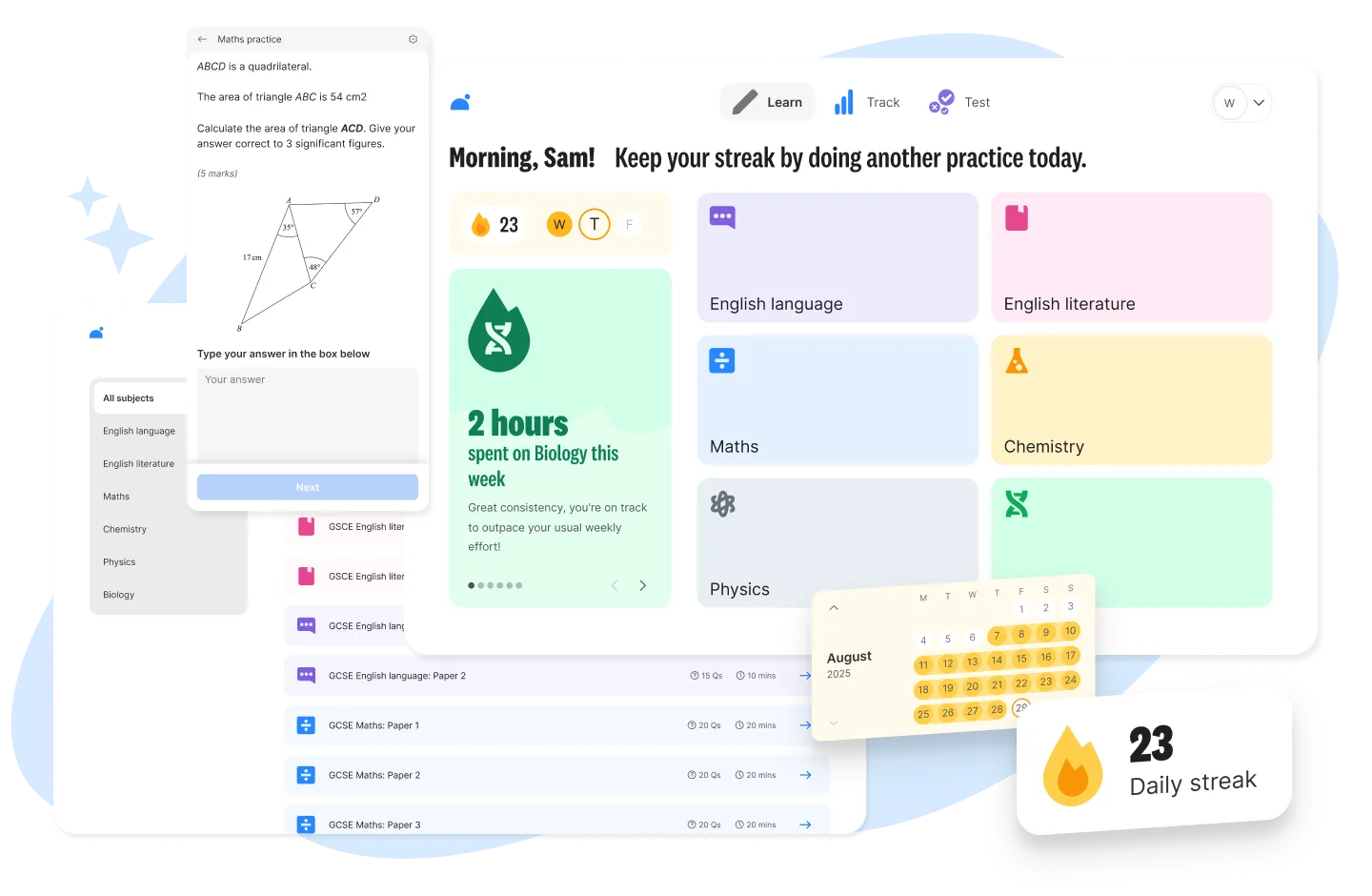
📘 Practise exam-board-specific questions tailored to what you’re studying
🧠 Get feedback based on real mark schemes — not generic advice
🎯 See exactly where you gained and lost marks
✍️ Understand what strong analysis and evaluation really look like
Instead of wondering why you dropped marks, you’ll see:
- What met the criteria
- What was missing
- What would move your answer into the next band
Over time, this builds real exam confidence. You start recognising patterns in mark schemes. You begin writing with the examiner in mind.
Final thoughts: Slow down to speed up
In a GCSE exam, it can feel like you need to start writing immediately.
But taking 30–60 seconds to decode the question properly can make a significant difference to your final grade.
Before you begin your next answer, ask yourself:
- What exactly am I being asked to do?
- What would a full-mark response include?
- Am I answering the question, or just the topic?
The students who consistently achieve top grades aren’t just strong at content; they’re strong at reading the question.
And that’s a skill you can practise, starting today.