
Oxford AQA International GCSE Chemistry: your guide to the exam

Studying Oxford AQA International GCSE Chemistry? Here's a full breakdown of the exam, so you know exactly what to expect.
If your school follows Oxford AQA, you're working towards International GCSE Chemistry (9202). This guide walks you through how the papers are structured, what you'll be tested on, and how to prepare with confidence. Read on to find out more.
Key takeaways:
- Oxford AQA International GCSE Chemistry is graded on the 9 to 1 scale.
- You'll sit two papers, each worth 50% of your final grade, and you'll be given a periodic table in the exam.
- There's no separate practical exam, your practical skills are tested through questions in the written papers.
What's the format of the Oxford AQA International GCSE Chemistry exam?
You'll sit two papers, each 1 hour 30 minutes long and worth 90 marks. There are no Foundation or Higher tiers, and everyone sits the same two papers.
- Paper 1
- 1 hour 30 minutes, worth 90 marks (50%).
- Structured and open-response questions, including calculations, data and graph interpretation, and questions on practical procedures.
- Either paper can cover any part of the specification, across topics like atomic structure, bonding, chemical changes, quantitative chemistry, rates of reaction, energy changes and organic chemistry.
- Paper 2:
- 1 hour 30 minutes, worth 90 marks (50%).
- The same question format as Paper 1, and it can also cover any part of the specification.
You'll be given a periodic table in the exam, along with any maths formulae you need, such as those for concentration and energy changes.
Download our free periodic table to use in your revision, so you get used to reading it before exam day.
What are the grade boundaries for Oxford AQA International GCSE Chemistry?
It's important to remember that the exact grade boundaries for your exams will change every series. Oxford AQA sets them after the exam has been sat, based on how difficult the papers were and how the whole cohort performed.
Your final grade combines two separate papers, so there isn't one simple number to aim for. Oxford AQA publishes the exact boundaries for every paper after each series on its grade boundaries page.
Use last series' boundaries as a general guide to what a strong performance looks like, not as a fixed target. Boundaries can move by several marks either way from one series to the next.
What are examiners looking for?
Oxford AQA marks your answers against four assessment objectives. Examiners want to see that you can:
- Show knowledge and understanding of chemical facts, concepts and processes.
- Apply that knowledge to both familiar and unfamiliar situations.
- Analyse, interpret and evaluate scientific information, including data and graphs.
- Select, describe and evaluate practical procedures, even though there's no separate practical exam.
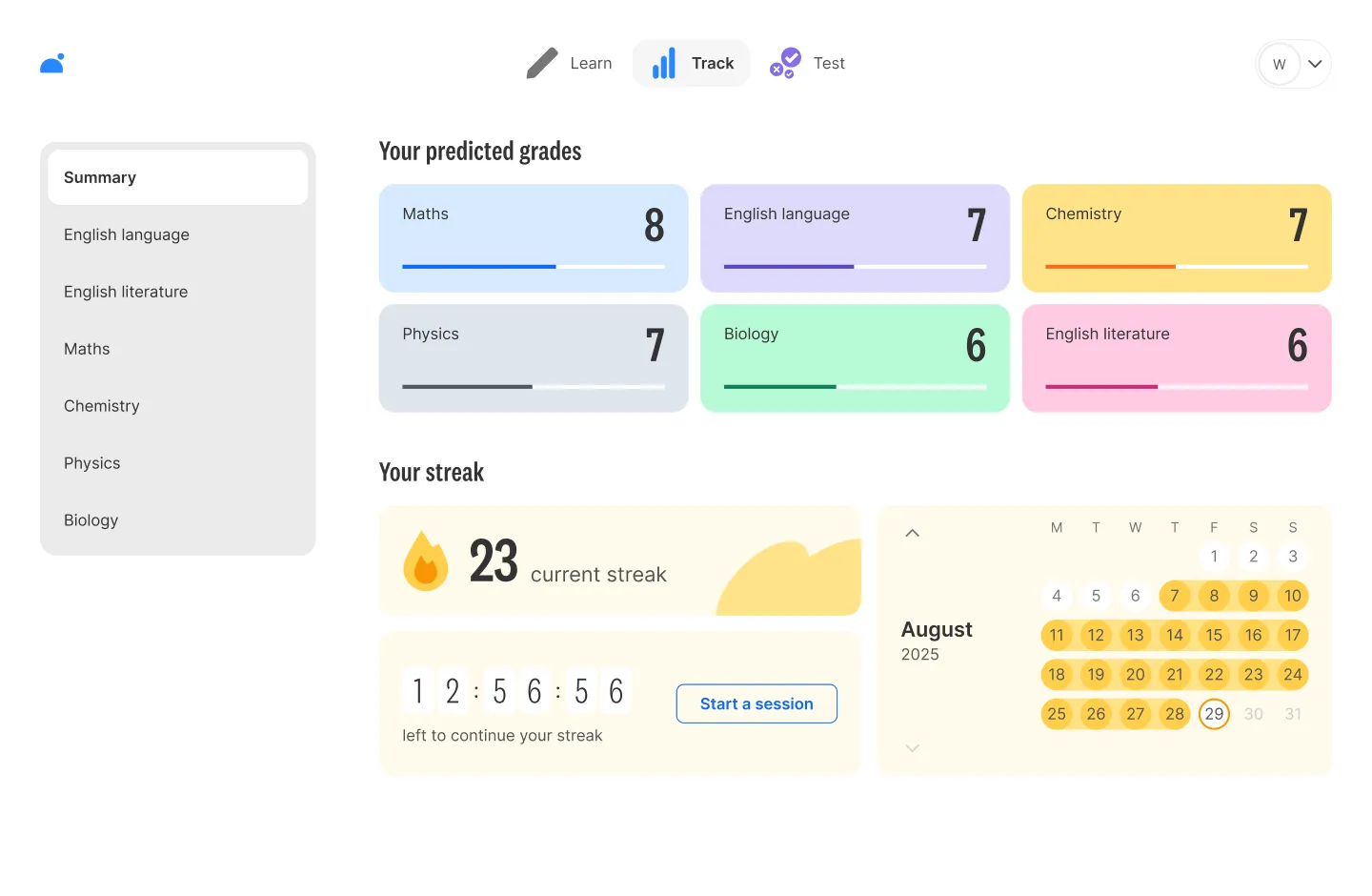
This is exactly what Atom GCSE is designed to support. It tracks your practice against each of these four assessment objectives separately, so you can see exactly where you're hitting the marks examiners are looking for and where you still need to improve.
It then shapes what it gives you to practise next around those gaps, with instant, examiner-style feedback on every answer, so you always know precisely where you're losing marks and what to change next time.
Past papers and resources
Oxford AQA publishes past papers and mark schemes for International GCSE Chemistry via its qualification page and resources area. These are the best way to see exactly how questions are worded and how marks are awarded.
Atom gives you unlimited practice papers and questions, including predicted papers that Atom's team of experts build by analysing exam trends and data for the year ahead. And the best part? You don't have to mark them yourself, Atom's instant feedback lets you know exactly how you've done.
Take a look at our guide on how to get the most out of GCSE past papers to make sure you're getting the most out of both.
Not sure where to start with revision? We've got you.
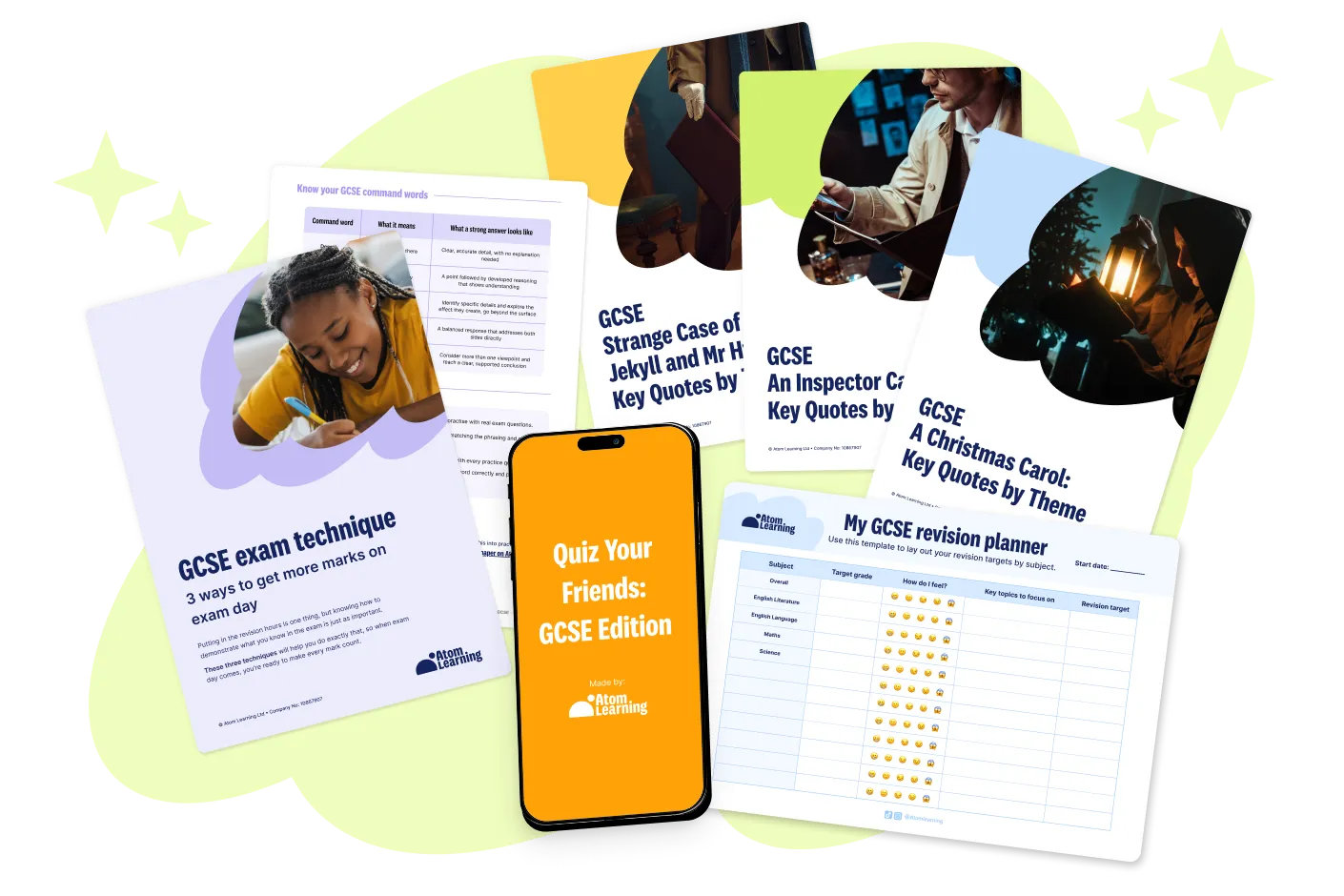
From revision planners to formula sheets, we've got the tools to make revision feel a little less daunting.
All free. All in one place.

How can I prepare for Oxford AQA International GCSE Chemistry?
Here are 5 top tips to help you get ready:
1. Learn the periodic table trends, not just the facts
The periodic table shows patterns, like how reactive elements become as you move down a group. Try to understand why these patterns happen, not just memorise them.
Our free periodic table is a great visual for this: look at how the electron shells change as you move down a group, and try explaining the pattern out loud.
Top tip: Pick one trend and explain it in a single simple sentence, using the word "electrons." If you can do that, you really understand it.
2. Practise balancing equations little and often
Calculation and equation questions can appear on either paper, so being able to balance equations quickly makes a real difference. Try a few equations every week, rather than leaving it all until closer to the exam.
Top tip: Time yourself balancing five equations. Getting a bit faster each time means more time for trickier questions later on.
3. Get comfortable with data and graph questions
Since your practical skills are tested through written questions rather than a lab exam, it helps to feel confident reading data, plotting graphs and spotting anything unusual on paper. Get comfortable with this by looking at past experiment questions regularly, not just reading through notes.
Top tip: If a question asks how to improve an experiment, always give one clear suggestion and explain why it would help.
4. Show your working on every calculation
Chemistry calculations, like moles or percentage yield, often need a few steps to get to the answer. Write out every step clearly, even if you think you could do it in your head, since marks are given for your method too.
Top tip: Always include the units in your final answer, since forgetting them is a really common way to lose an easy mark.
5. Get used to the exam itself, not just the content
Knowing your chemistry well matters, but it helps just as much to know what the exam feels like: how long you have, how questions are worded, and what a good answer looks like. Try to build a bit of practice under exam conditions into your revision regularly.
Top tip: Atom gives you practice questions and predicted papers in the same style as the real exam, with instant feedback so you always know what to work on next.
There you have it, everything you need to know about Oxford AQA International GCSE Chemistry, from how the papers are structured to what examiners are looking for and how to prepare with confidence.
Take control of your GCSE revision

Everything you need for GCSE success, in one place.
Feeling confident about your GCSEs comes from knowing what to revise, how to improve, and where to focus next.
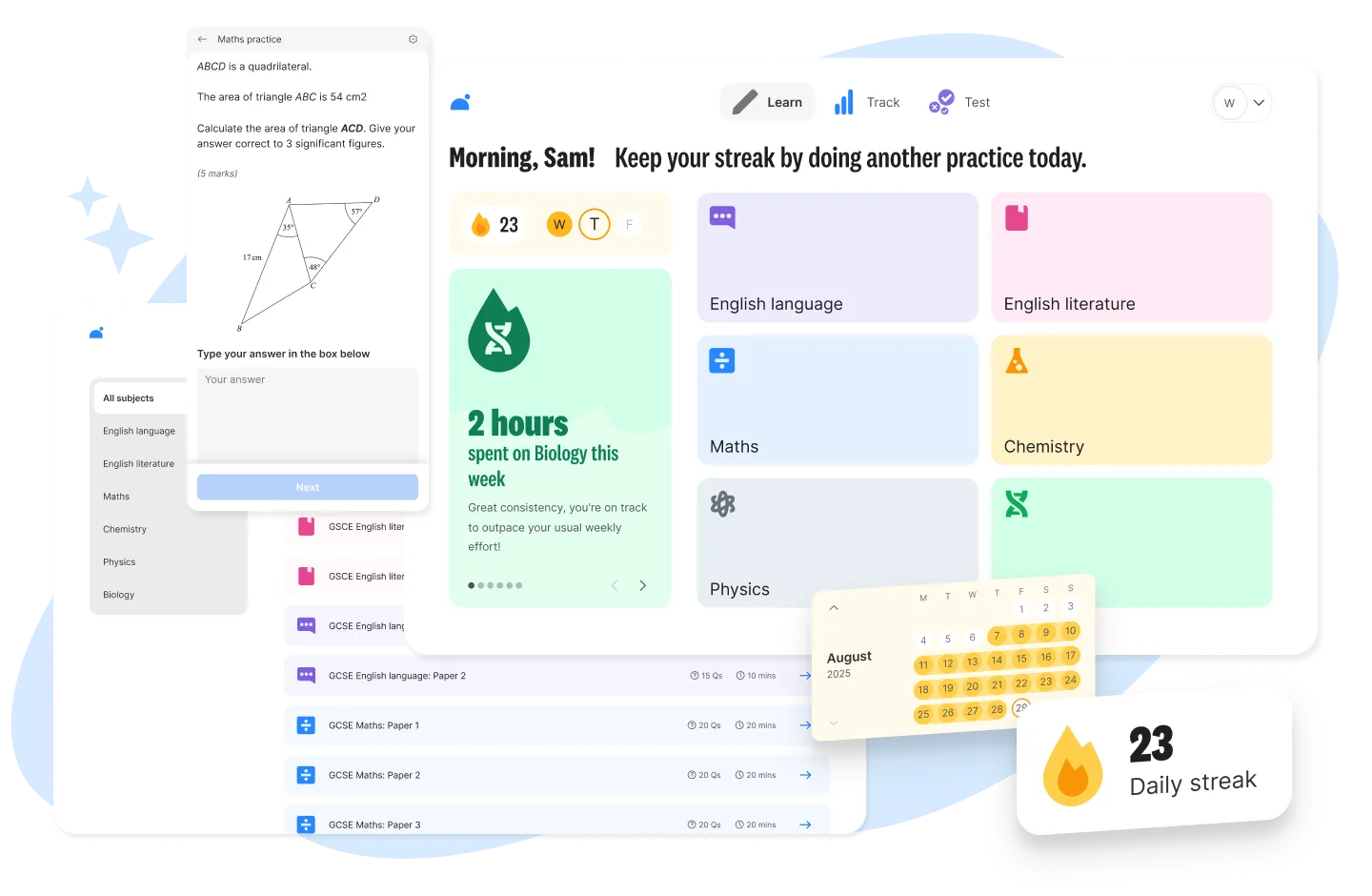
🔮 GCSE practice papers based on our team's 2026 exam predictions
🎓 Guided courses that cover all the topics on your exams
✍️ Instant feedback that tells you where you’ve gained and lost marks
📈 Predicted GCSE grades and topic-by-topic tracking
Create your free account and start making real progress today.