

Practical revision strategies
In Year 11, now is the time when revision needs to ramp up, and students' time should be committed to prioritising planning and revising for GCSEs.
Revision is most effective when active, varied, and carefully planned. Strategies that make a real difference include:
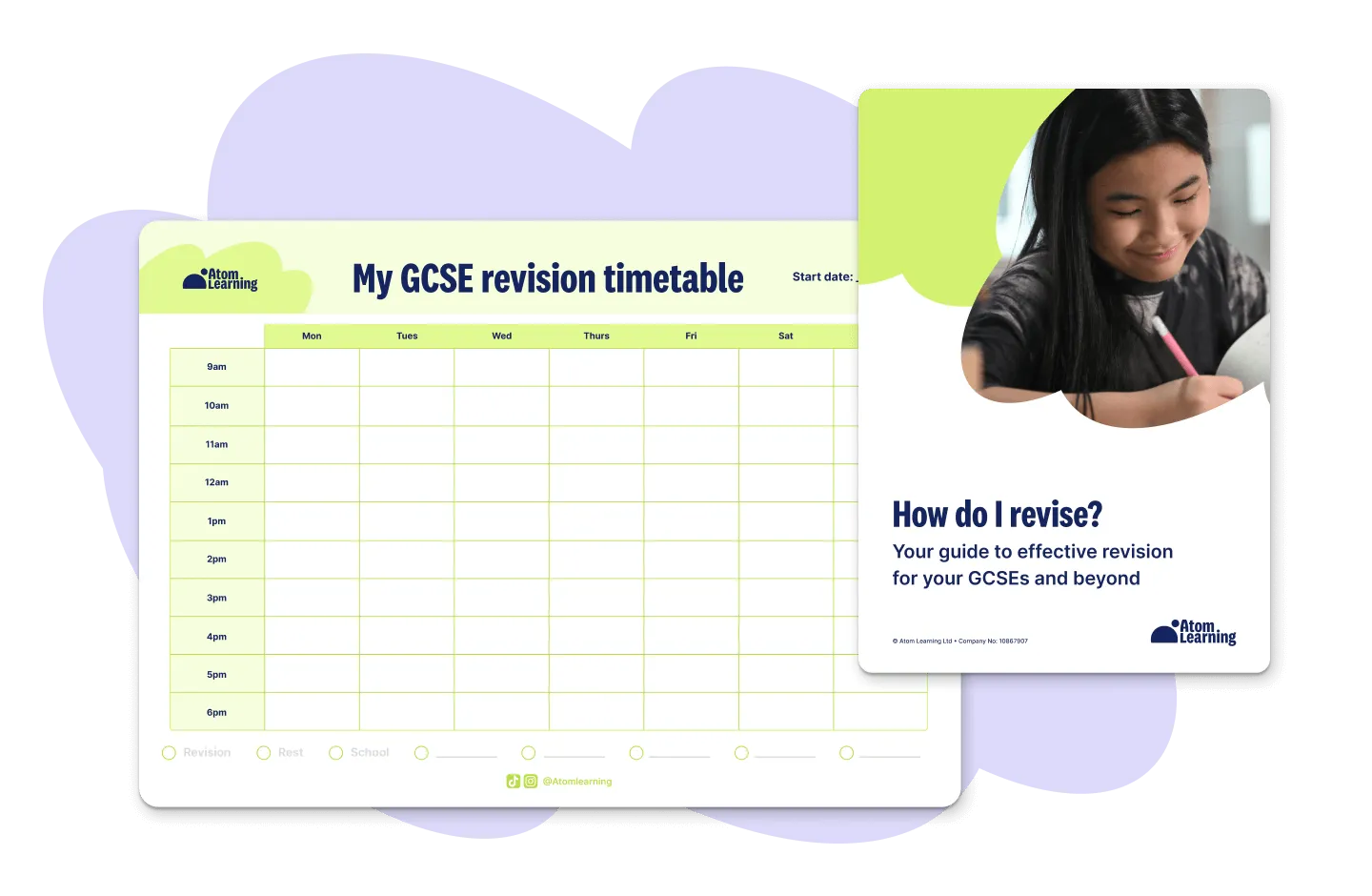
- A structured timetable - scheduling revision by subject and topic - ensures steady syllabus coverage.
- Active recall - testing knowledge, rather than re-reading notes, strengthens memory.
- Past papers and mark schemes - practising under timed conditions builds exam confidence and highlights areas for improvement.
Subject-specific approaches
- English: practising essay plans and using structured techniques such as point, evidence, explanation and link (the PEEL technique).
- Mathematics: solving a wide range of problems, with repeated practice of core methods.
- Science: creating diagrams and flowcharts to explain processes.
- Humanities: using timelines and case studies to strengthen understanding of key events and ideas.
Mixing methods keeps revision engaging and builds a deeper understanding.
Managing exams and mocks
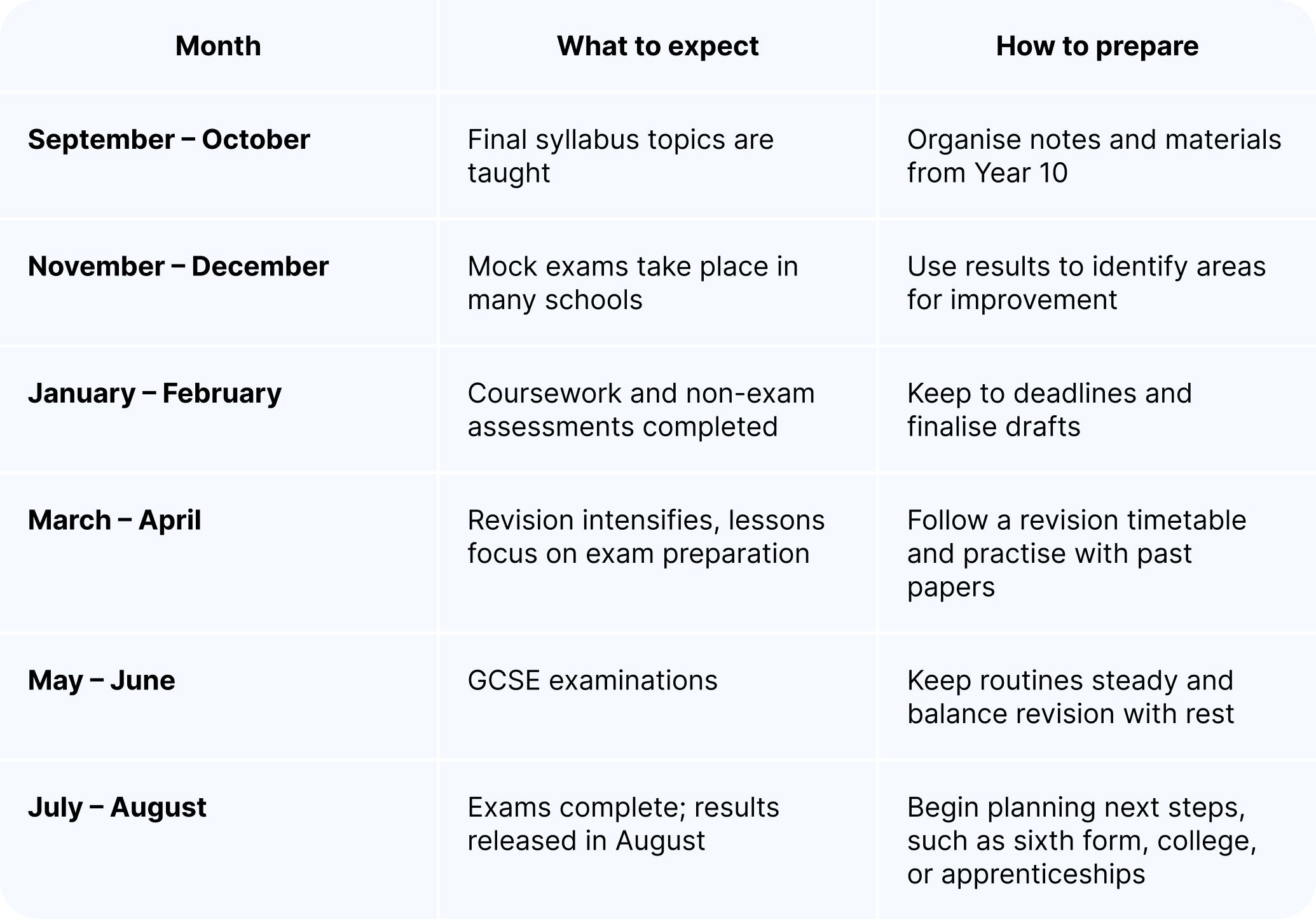
Mock exams are an important part of the GCSE year. They usually occur once or twice in Year 11, often in late autumn (November or December) and sometimes again in spring (February or March).
Schools use them to give students a realistic experience of sitting exams under timed conditions.
Why mocks matter
- They show which topics students clearly understand and which need more revision.
- They give teachers a clear picture of progress and where extra support might be needed.
- They help students get used to the practical side of exams, such as working to time limits, managing nerves, and following exam instructions.
- For many schools, mock exam results are also used to predict final grades or plan extra support in the months before the real exams.
How to prepare for mocks
- Treat them like the real thing – using practice papers and practising under timed conditions helps build familiarity.
- Use revision timetables – plan study sessions in the weeks before mocks to cover all subjects fairly.
- Review mistakes afterwards – the most valuable part of mocks is the feedback. Going through where marks were lost shows exactly what to focus on for improvement.
- Keep perspective – while important, mocks are also a learning opportunity. They are designed to highlight areas for progress, not to define final results.
When the final exams arrive, mocks help students feel more prepared and less anxious, because the process already feels familiar.
How to prepare for the final examinations
- Arrive prepared – bring the right equipment (pens, calculator, rulers) to avoid last-minute stress.
- Read each question carefully – take a moment to understand each question before writing.
- Plan time – note how long is available for each section and stick to it.
- Prioritise your time effectively – if one question seems difficult, move on and return later.
- Keep perspective – one tricky paper does not decide the overall grade; success comes from performance across all exams.
Looking ahead: life after GCSEs
Finishing GCSEs is not just about ending exams; it marks the start of an exciting new stage. Results open doors to different pathways, each offering unique opportunities for growth and exploration.
- Sixth form – Many students choose A levels, which open a wide range of options for university or careers later on. Success at GCSE helps secure places on the most popular courses.
- Further education colleges offer academic and vocational routes, from BTECs to specialist training. A strong set of GCSE results gives students more flexibility in course choice.
- Apprenticeships – For those ready to gain hands-on experience, apprenticeships combine real work with study, earning qualifications along the way. Many require certain GCSE grades, particularly in English and Mathematics.
Doing well in GCSEs keeps more doors open. Strong results make it easier to choose the right path, whether aiming for university, creative industries, science, business, or skilled trades. Year 11 is therefore not only about exams, it’s about building a foundation for future opportunities, independence, and exciting next steps.
Final thoughts
The GCSE year can feel demanding, but it is also a chance for students to grow in independence and resilience. With steady revision, healthy routines, and support from family and teachers, Year 11 becomes not just a year of exams but a year of achievement. GCSEs are an important milestone, but they are also the gateway to many exciting opportunities ahead.