
AQA GCSE Spanish theme 2: customs, festivals and celebrations explained
If you study AQA GCSE Spanish, festivals and celebrations are a topic you need to know well.
They sit within Theme 2: Popular Culture, which means this topic can come up across all four skills: listening, reading, writing, and speaking.
Knowing the key festivals, what happens at them, and the Spanish vocabulary that goes with them could help you pick up marks across your whole exam. Read on to find out more.
Not sure which exam board your school uses? Take a look at our guide to finding out which exam board you're studying.
This blog will cover:
- Semana Santa (Easter Week)
- La Tomatina (the tomato festival)
- Los Sanfermines (the running of the bulls)
- Las Fallas (the fire festival in Valencia)
- El Dia de Muertos (the Day of the Dead)
- Navidad, Nochebuena, and Nochevieja (Christmas and New Year)
- El Dia de Reyes (Three Kings Day)
- 5 top revision tips for AQA GCSE Spanish
Semana Santa (Easter Week)

Semana Santa takes place the week before Easter Sunday and is one of the most important celebrations in Spain. It is celebrated all over the country, but Seville is the most famous city for it.
During Semana Santa, large processions called las procesiones take place through the streets. These are organised by religious groups called la cofradia (a religious brotherhood). Members dress in long robes called el nazareno, with a tall pointed hood called el capirote. They carry large floats called los pasos, which show religious scenes. In some regions, you will also see los fuegos artificiales (fireworks).
Key vocabulary:
- Semana Santa - Easter Week / Holy Week
- El nazareno - the traditional robe worn during processions
- El capirote - the pointed hood
- Los pasos - religious scenes on a float
- La cofradia - a religious brotherhood
- Los fuegos artificiales - fireworks
La Tomatina
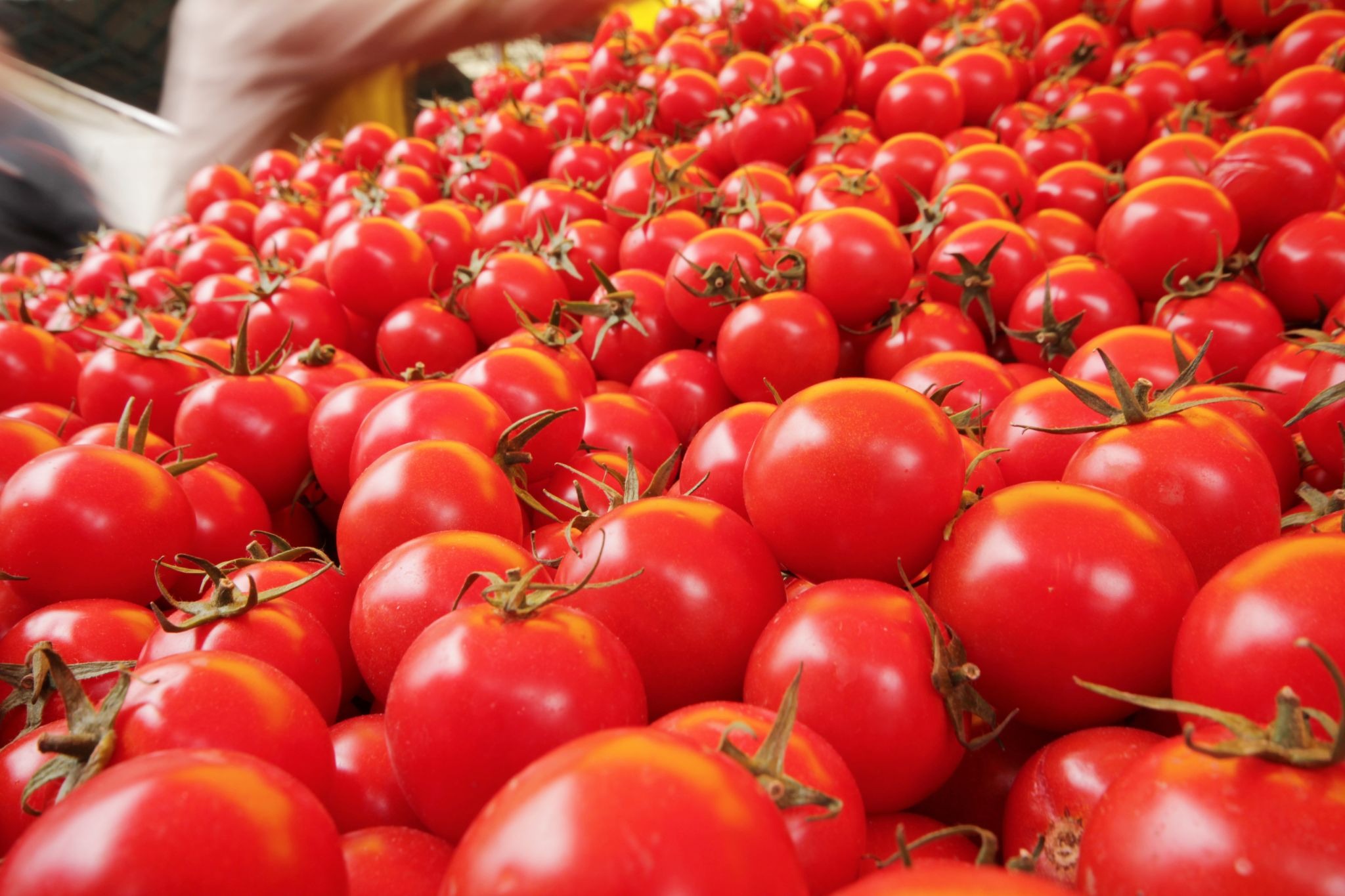
La Tomatina is one of the most unusual festivals in the world. It takes place every year on the last Wednesday of August in Bunol, a small town in Valencia.
The festival started in 1945 when a spontaneous food fight broke out between friends near a vegetable stall. Nobody knows exactly how it started, but it turned into a massive pelea de comida (food fight). The tradition has grown ever since.
Today, thousands of people take to las calles (the streets) to tirar tomates (throw tomatoes) at each other for exactly one hour. It is chaotic and messy, but it is also a great topic for a writing or speaking task because you can give your opinion on whether it is a good costumbre (custom) or not.
Key vocabulary:
- La Tomatina - the tomato festival
- Una fiesta - a festival
- Tirar - to throw
- Los tomates - tomatoes
- La calle - the street
- La costumbre - the custom / tradition
- Agosto - August
Los Sanfermines
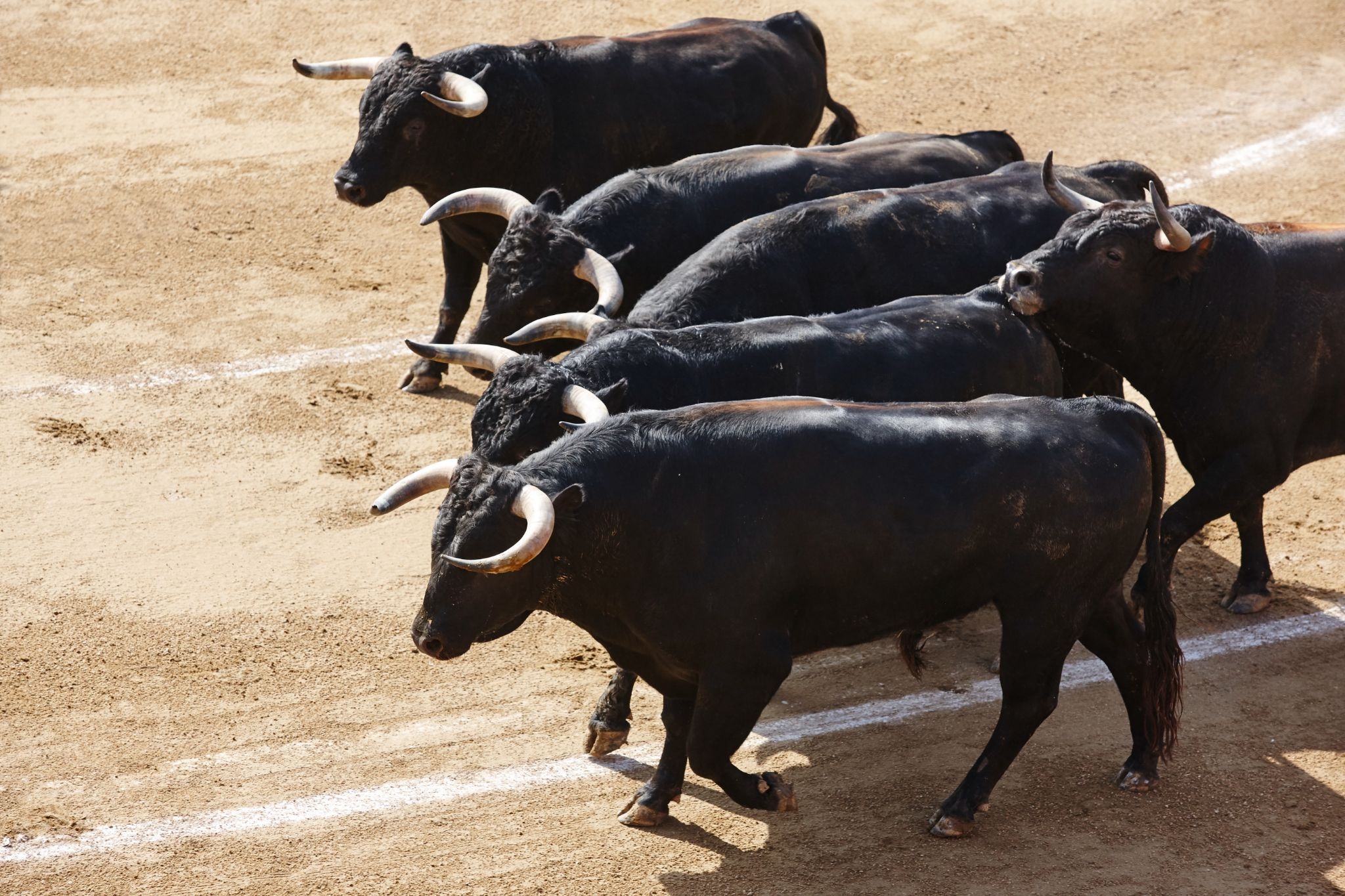
Los Sanfermines is a week-long festival held every July in Pamplona, in the north of Spain. It is most famous for el encierro, which means the running of the bulls.
During el encierro, people run through the streets ahead of los toros (the bulls) that are released behind them. It is considered extremely peligroso (dangerous) and very emocionante (exciting). People who take part traditionally wear all white with a red neckerchief called un panhuelo rojo.
This festival is controversial. You might be asked to give your opinion on it in a speaking or writing task, so think about arguments both for and against it.
Key vocabulary:
- Los Sanfermines - the festival of San Fermin in Pamplona
- El encierro - the running of the bulls
- Los toros - the bulls
- Las calles - the streets
- Peligroso - dangerous
- Emocionante - exciting
- El panhuelo rojo - the red neckerchief
Las Fallas
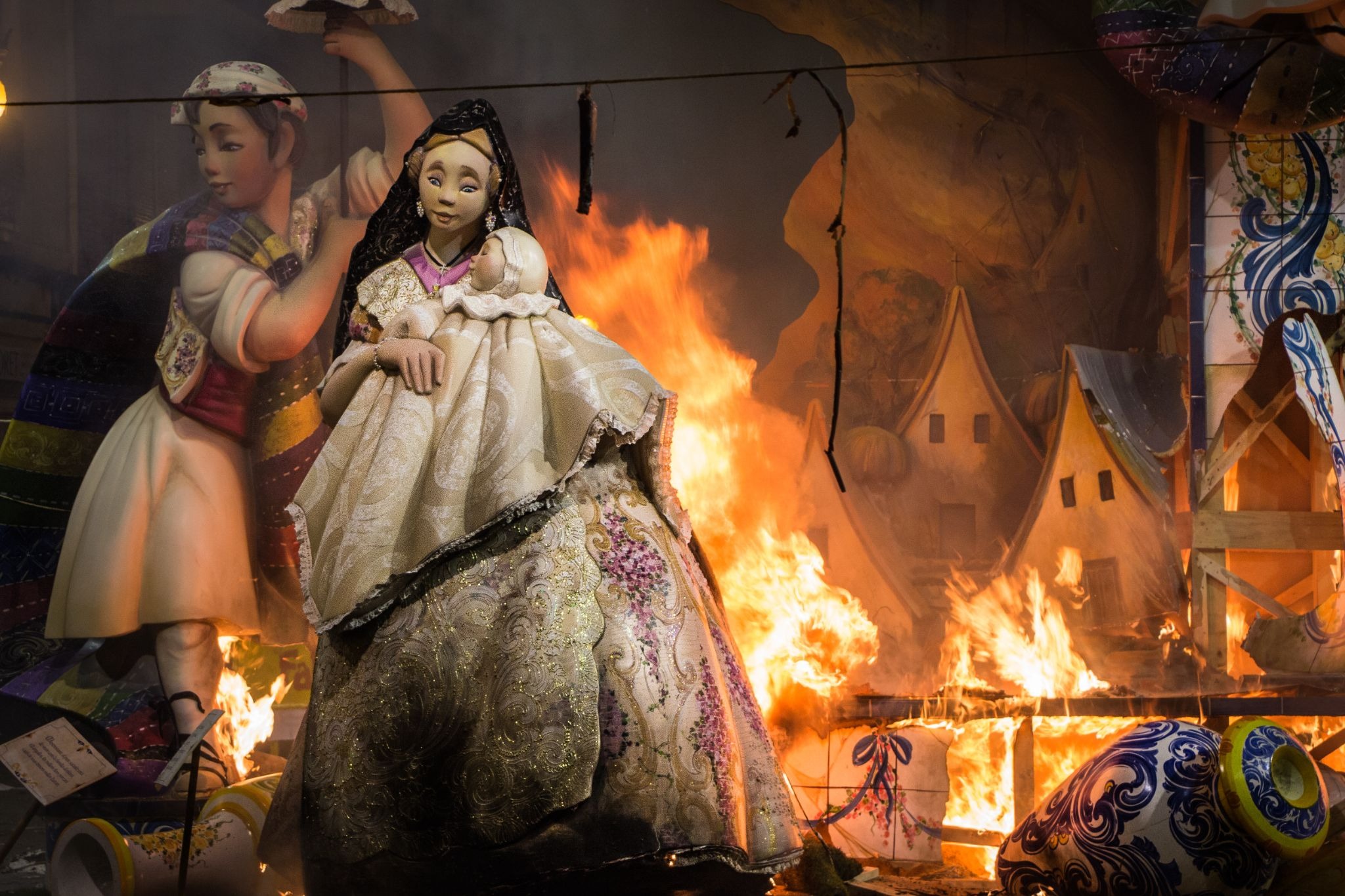
Las Fallas takes place every March in Valencia. For months before the festival, artists and local communities construyen (build) enormous papier-mache sculptures, also called las fallas. These are displayed in the streets for people to admire.
On the final night of the festival, the 19th of March, the sculptures are burned in a dramatic event called la Crema. This is un gran espectaculo (a grand spectacle). Every day at 2pm there is also a loud fireworks event called la mascleta. It focuses more on rhythm and sound than on visual fireworks.
Key vocabulary:
- Las Fallas - the Valencian fire festival / the sculptures
- Marzo - March
- Construir - to build
- Quemar - to burn
- La Crema - the event where las fallas are burned
- La mascleta - the daily percussion firework event
El Dia de Muertos (Day of the Dead)
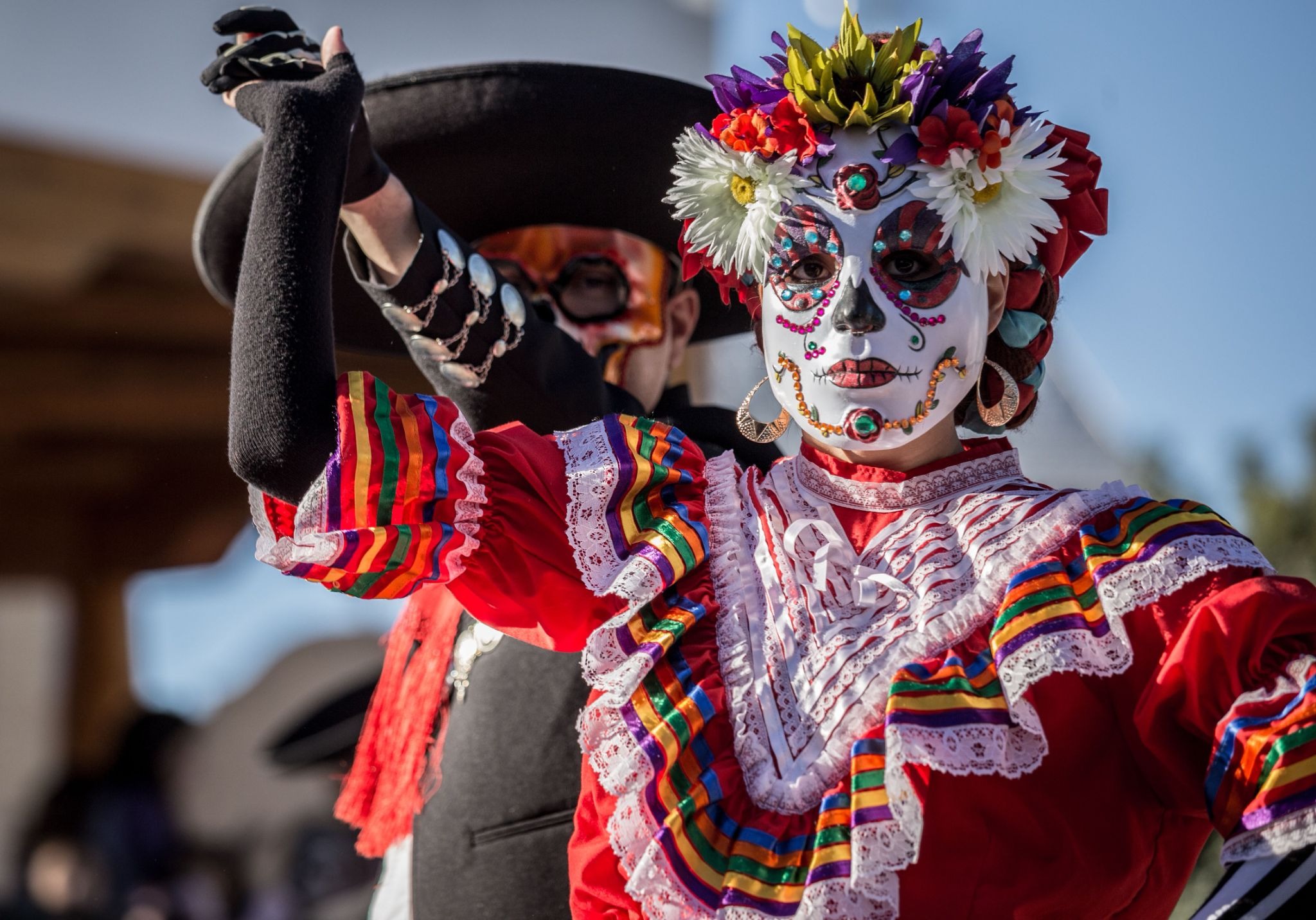
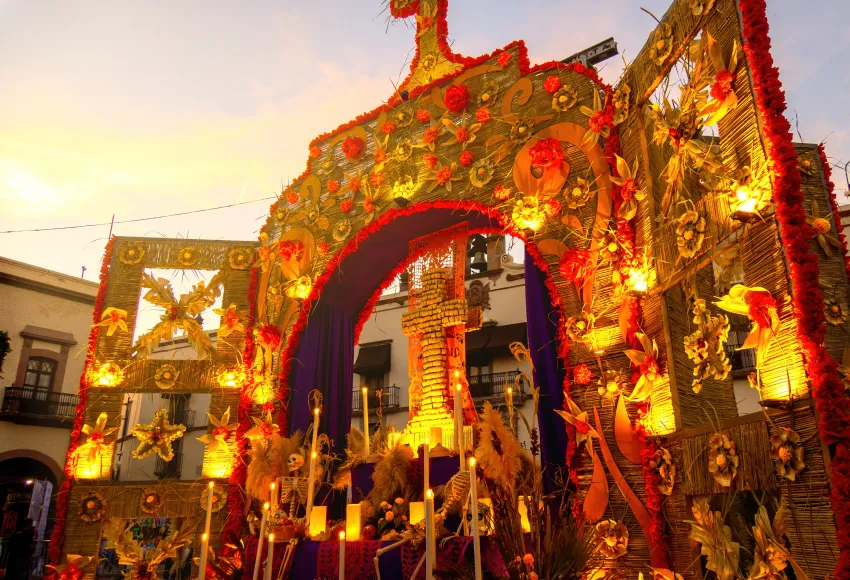
El Dia de Muertos is a Mexican celebracion (celebration) held on the 1st and 2nd of November. It comes from las tradiciones indigenas (indigenous traditions) and has also been influenced by Catholic beliefs.
Families build decorated altars called ofrendas. These are covered with photos of people who have died, along with flores (flowers). Marigolds are especially important. They are known as la flor de muerto (the flower of the dead). You will also see las calaveras, which are decorated skull symbols that are an iconic part of the festival.
Although it may look scary, El Dia de Muertos is a joyful celebration. It is a time to remember and celebrate the lives of people who have died, not to be sad about them.
Key vocabulary:
- El Dia de Muertos - the Day of the Dead
- Una celebracion - a celebration
- Noviembre - November
- Las tradiciones indigenas - indigenous traditions
- Las ofrendas - decorative altars
- Las flores - flowers
- La flor de muerto - marigolds
- Las calaveras - decorative skull motif
Navidad, Nochebuena, and Nochevieja

Christmas in Spain looks a little different to the UK. The 25th of December is Navidad (Christmas Day) and is celebrated, but the most important evening is actually Nochebuena (Christmas Eve, the 24th of December). This is when families come together para cenar (to have dinner).
On Nochevieja (New Year's Eve, the 31st of December), there is a famous Spanish tradicion: eating twelve uvas (grapes) at midnight, one for each strike of the clock. This is done para tener buena suerte (for good luck) in the new year.
Key vocabulary:
- Navidad - Christmas
- Nochebuena - Christmas Eve
- Cenar - to have dinner
- Nochevieja - New Year's Eve
- La tradicion - tradition
- Las uvas - grapes
- Buena suerte - good luck
El Dia de Reyes (Three Kings Day)

El Dia de Reyes falls on the 6th of January and in Spain it is often celebrated even more than Christmas Day itself.
On the evening of the 5th of January, towns and cities hold parades called las cabalgatas de Reyes. During these parades, los Reyes Magos (the Three Kings) travel through the streets on floats, throwing caramelos (sweets) into the crowd. The three kings are called Melchor, Gaspar, and Baltasar.
The story comes from the Bible, which tells of three wise men who followed a star to Bethlehem to visit baby Jesus. They brought three gifts: el oro (gold), el incensio (frankincense), and la mirra (myrrh). Because of this, children in Spain leave their shoes out on the night of the 5th for the kings to fill with regalos (gifts). Families also eat a special cake called Roscon de Reyes. There is a small figurine hidden inside, and whoever finds it in their slice is said to have good luck.
Key vocabulary:
- El Dia de Reyes - Three Kings Day (6th January)
- Enero - January
- Las cabalgatas de Reyes - the Three Kings parades
- Los Reyes Magos - the Three Kings / the Three Wise Men
- Los caramelos - sweets
- Los regalos - gifts / presents
- El oro - gold
- El incensio - frankincense
- La mirra - myrrh
4 top revision tips for AQA GCSE Spanish
1. Learn the vocabulary in context, not just as a list.
It is tempting to simply memorise Spanish words in a list, but examiners want to see you use vocabulary naturally.
Try writing a short paragraph in Spanish about one of the festivals above, using at least five key words in full sentences. This will help you remember the words and practise your writing at the same time.
Top tip: practise writing an opinion about one festival. Opinion phrases like 'en mi opinion' or 'creo que' are useful across the whole paper.
2. Use festivals as a springboard for past tenses.
Describing what happened at a festival is a brilliant way to practise the preterite (past) tense, which is worth marks in your writing and speaking tasks. For example: 'El ano pasado, fui a Pamplona y vi el encierro.' (Last year, I went to Pamplona and saw the running of the bulls.)
Top tip: even if you have never been to Spain, you can write as if you have. Examiners mark your language, not your travel history.
3. Practise describing festivals from different countries.
AQA's Theme 2 includes both Spanish and Latin American cultures. Make sure you can talk about festivals from both. El Dia de Muertos (Mexico) and El Dia de Reyes (Spain) are both strong choices because they have rich vocabulary attached to them.
Top tip: you can compare a Spanish festival to a British one to show off your language skills. For example, compare Christmas in Spain to Christmas in the UK.
4. Use the vocabulary boxes in this post to make flashcards.
Each festival above has a key vocabulary list. Turn each word into a flashcard and test yourself in both directions: Spanish to English and English to Spanish.
Top tip: group your flashcards by festival rather than by alphabet. This helps your brain build memory links between the words and the topic.
Ready to practise? Try Atom GCSE for free
AQA GCSE Spanish is fully covered on Atom, including the festivals and celebrations topic. Everything you need to practise for your exam is in one place:
- Vocabulary: Learn and test the key words for every festival, tailored to the AQA spec.
- Writing: Practise writing about festivals and get instant feedback based on real AQA mark schemes. You will see exactly where you gained and lost marks, and what to do to improve.
- Reading: Work through reading tasks on this topic and build the skills to spot answers quickly in your exam.
Atom also tracks your progress across every topic, shows you your predicted grade, and tells you exactly what to focus on next.
No guesswork, no wasted revision time. Just clear, structured practice built around what AQA actually tests.
Take control of your GCSE revision
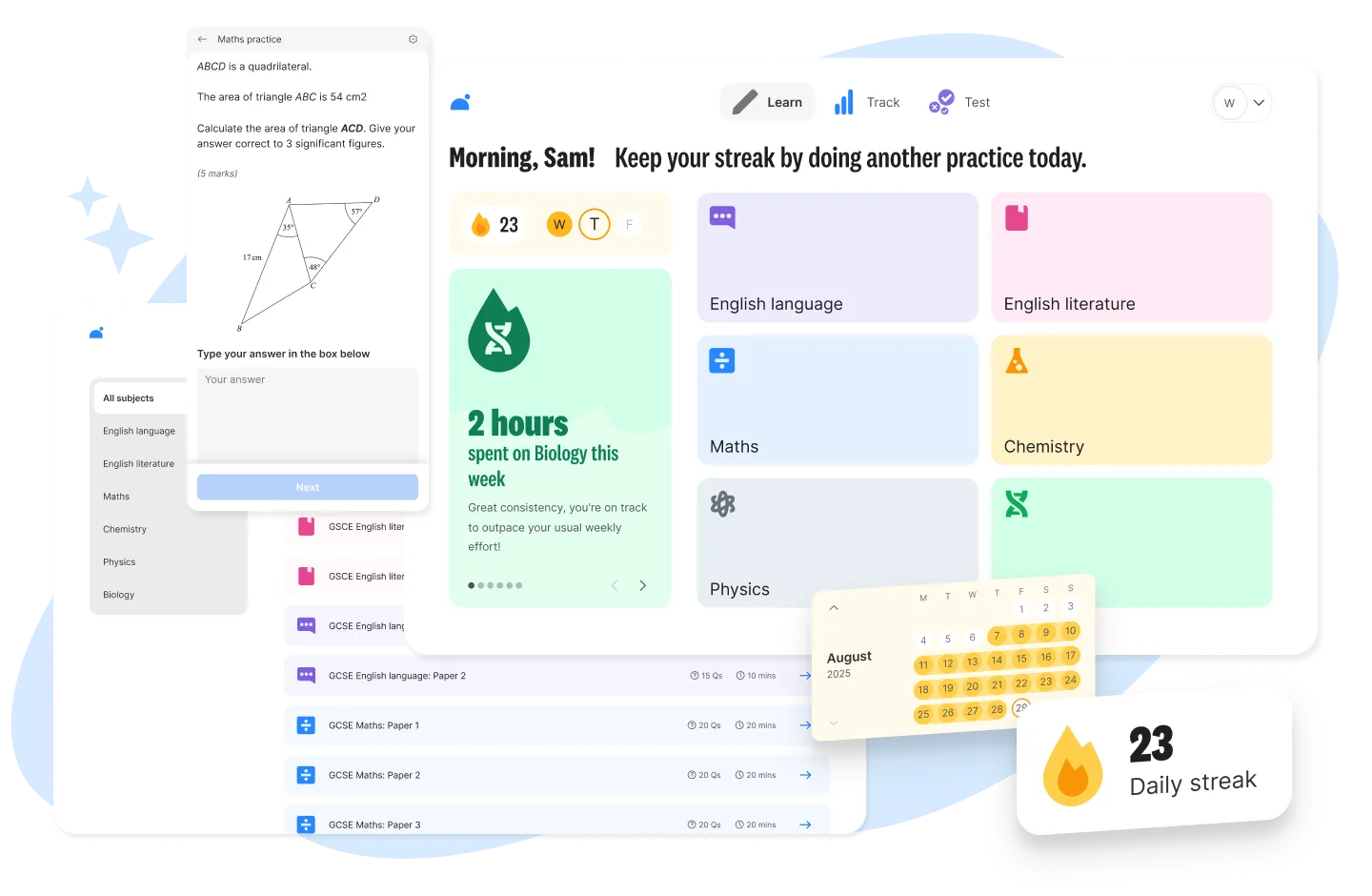
Everything you need for GCSE success, in one place.
Feeling confident about your GCSEs comes from knowing what to revise, how to improve, and where to focus next.
🔮 GCSE practice papers based on our team's 2026 exam predictions
🎓 Guided courses that cover all the topics on your exams
✍️ Instant feedback that tells you where you’ve gained and lost marks
📈 Predicted GCSE grades and topic-by-topic tracking
Create your free account and start making real progress today.