

How are the AQA GCSE French papers assessed?
Each paper tests a different skill, with its own question types, mark focus, and expectations.
Understanding what each paper involves and how expectations differ by tier helps you revise more effectively and avoid surprises in the exam.
Listening
The Listening paper tests how well you can understand spoken French.
In the exam, you’ll:
- Listen to a range of short and longer recordings, which are all played twice
- Answer questions in English and French
- Identify key details, opinions, and attitudes
At Foundation tier, recordings use more familiar vocabulary and clearer language.
At Higher tier, recordings are longer, faster, and include more complex vocabulary and opinions.
Speaking
The Speaking exam assesses how confidently you can communicate in spoken French.
It includes three parts:
- Role play
- Photo card
- General conversation on two themes
At Foundation tier, answers are shorter and more structured, with simpler language expected.
At Higher tier, you’re expected to give longer answers, justify opinions, and use a wider range of vocabulary and tenses.
The exam is conducted by your teacher and recorded for external marking.
Reading
The Reading paper tests how well you can understand written French.
In the exam, you’ll:
- Read a range of texts, from notices to longer passages
- Answer questions in English and French
- Translate a short text from French into English
At Foundation tier, texts are shorter and more straightforward.
At Higher tier, texts are longer, with more complex language and more demanding translation tasks.
Strong vocabulary knowledge is key at both tiers.
Writing
The Writing paper tests how accurately and clearly you can write in French.
Depending on your tier, you’ll be asked to:
- Write short and longer responses
- Describe events, give opinions, and explain reasons
- Translate sentences from English into French
At Foundation tier, writing tasks are more structured and supported.
At Higher tier, you’re expected to write more independently, use different time frames, and show greater accuracy and range.
Examiners reward clear communication and accurate use of the language at both levels.
What are examiners looking for?
AQA French examiners mark your work using clear assessment objectives. In simple terms, they want to see that you can:
- AO1: Understand and respond to spoken and written language
- AO2: Communicate clearly in speech and writing
- AO3: Demonstrate knowledge of grammar and vocabulary
To reach the top grades, you’ll need to:
- Use a wide range of vocabulary
Avoid repeating basic words. More precise language earns higher marks. - Use grammar correctly
Correct verb forms, tenses, and word order matter, especially at Higher tier. - Develop your answers
Longer responses should include opinions, reasons, and extra detail. - Match your language to the question
Respond clearly and directly to what’s being asked, especially in writing and speaking tasks.
What are the grade boundaries for AQA French?
It’s important to remember that the exact grade boundaries for your GCSE exams will change every year. Exam boards adjust grade boundaries after an exam, depending on the exam's difficulty and how the cohort performed.
This is so students don’t have an advantage or disadvantage because of the year they took the paper. For example, if your paper were harder, grade boundaries would be lowered so that a grade 5 reflects the same level of knowledge as in previous years.
To give a sense of what to expect, here are the grade boundaries for AQA French GCSE from the last year:
Higher tier:
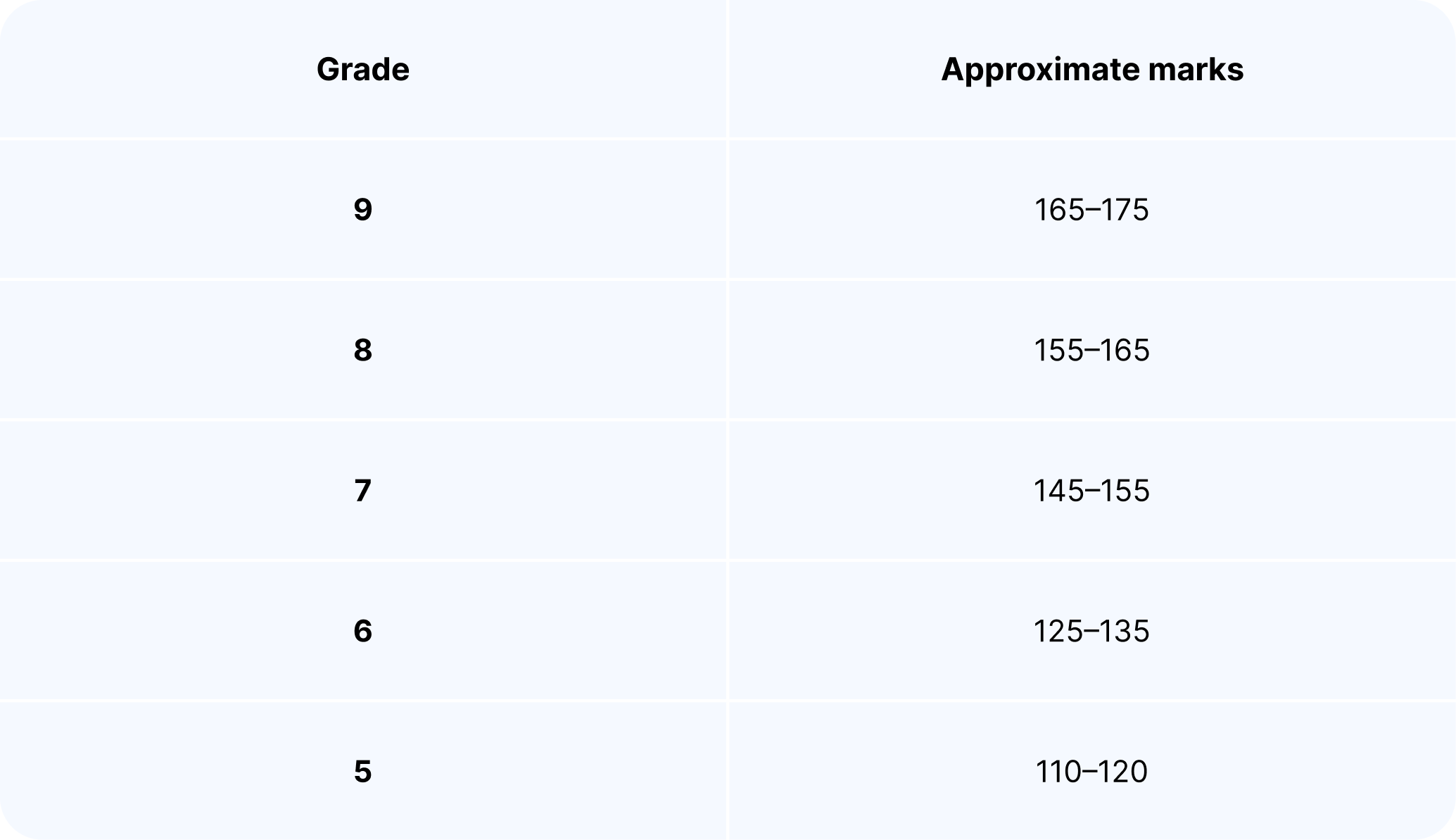
Foundation tier:
.png)
What key topics do I need to know for AQA GCSE French?
All students study the same three broad themes in AQA GCSE French.
Theme 1: Identity and culture
- Me, my family and friends
- Technology in everyday life
- Free-time activities
- Customs and festivals in French-speaking countries
Theme 2: Local, national, international and global areas of interest
- Home, town, neighbourhood and region
- Social issues
- Global issues
- Travel and tourism
Theme 3: Current and future study and employment
- My studies
- Life at school and college
- Education post-16
- Jobs, career choices, and ambitions
These themes appear across all four papers, so revising topics in an integrated way helps reinforce vocabulary and ideas.
Where can I find past papers and mark schemes?
Practising with past papers and mark schemes is one of the most effective ways to prepare for GCSE French.
Past papers help you understand question styles, see how marks are awarded, and build confidence with real exam timing and structure.
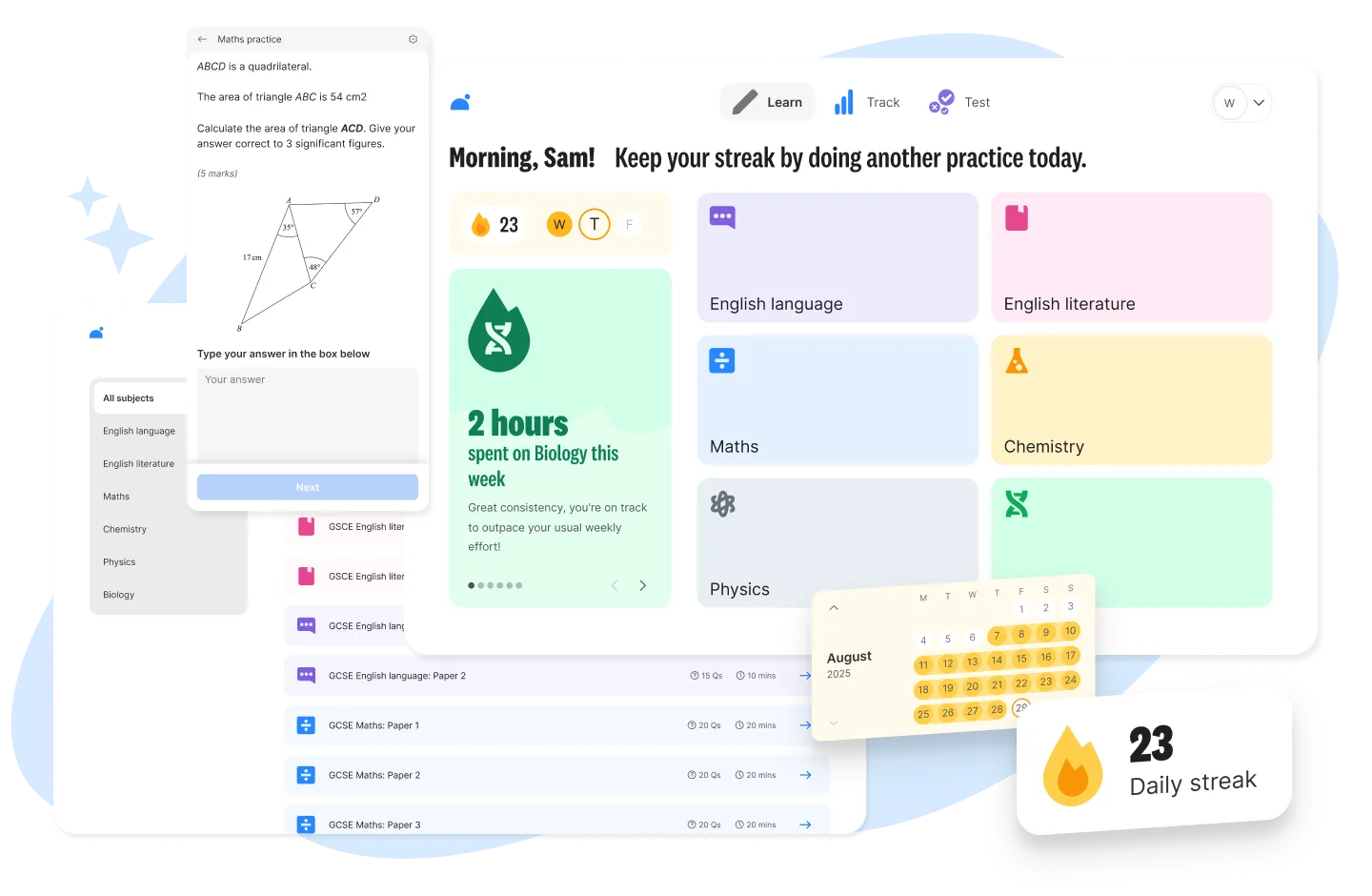
Head to the AQA website to find past papers and mark schemes from previous GCSE French exams. Once you've worked through those, Atom gives you a fresh set of practice papers based on our team's predictions for the next GCSE year, plus instant, examiner-style feedback so you always know exactly where marks were gained or lost.
How can I prepare for AQA GCSE French?
Here are 5 top tips to help you prepare confidently for your AQA GCSE French exams.
1. Build vocabulary a little and often
Vocabulary is the foundation of every paper.
- Learn words by theme, not in isolation
- Practise spelling as well as meaning
- Revisit vocabulary regularly to lock it in
Top tip: Focus on high-frequency verbs and opinion phrases. Words like to be, to have, to like, to want, and phrases such as I think that… or because… appear across all topics and all four papers.
2. Practise each skill separately
Each paper needs a slightly different approach.
- Listening: practise spotting key words and synonyms
- Reading: scan for meaning before translating
- Writing: plan answers and check verb tenses
- Speaking: practise aloud, not just in your head
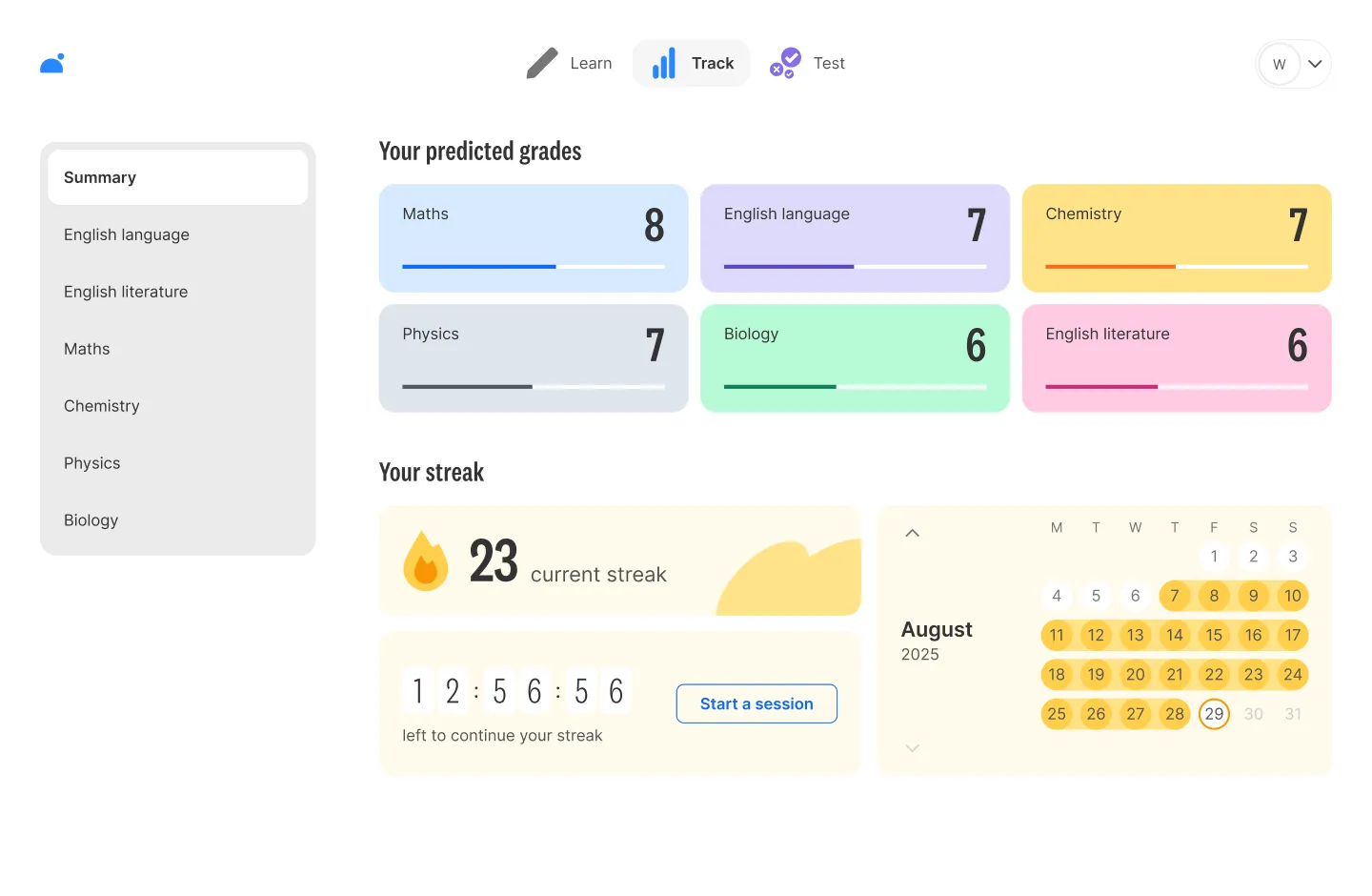
Short, regular practice is far more effective than last-minute cramming. Atom's progress tracking shows you how you're doing across all four skills, so it's easy to see where to put your revision time next.
3. Master core grammar
You don’t need every tense, but you do need the basics secured.
Focus on:
- Present, past, and future tenses
- Adjective agreement
- Key sentence structures
Examiners would rather see clear, correct sentences than ambitious grammar that isn’t accurate.
4. Use past papers and mark schemes
Past papers show you exactly what AQA rewards.
- Look at how answers are structured
- Compare your responses to the mark schemes
- Notice how marks are gained for detail and accuracy
This removes guesswork and builds exam confidence. Atom's instant, examiner-style feedback works the same way, showing you exactly where you gained and lost marks on every question and practice paper, so you always know what to improve.
5. Practise speaking under exam conditions
Speaking can feel intimidating, but preparation makes it manageable.
- Time your answers
- Practise role plays out loud
- Prepare flexible opinion phrases you can adapt
The more familiar the format feels, the calmer you'll be on the day. Speaking practice is often the hardest to fit in on your own, since it's tricky to know how well you're really doing without someone to listen.
Atom lets you practise speaking questions directly on the platform and get instant, examiner-style feedback on your answers, so you can build confidence with this skill just as easily as the others.
AQA GCSE French rewards consistent vocabulary, accurate grammar, and confident exam technique.
With the right preparation and regular practice, you’ll go into the exam knowing exactly what’s expected and how to show it.
Save this guide and come back to it as you revise. Bonne chance! 🇫🇷💪