

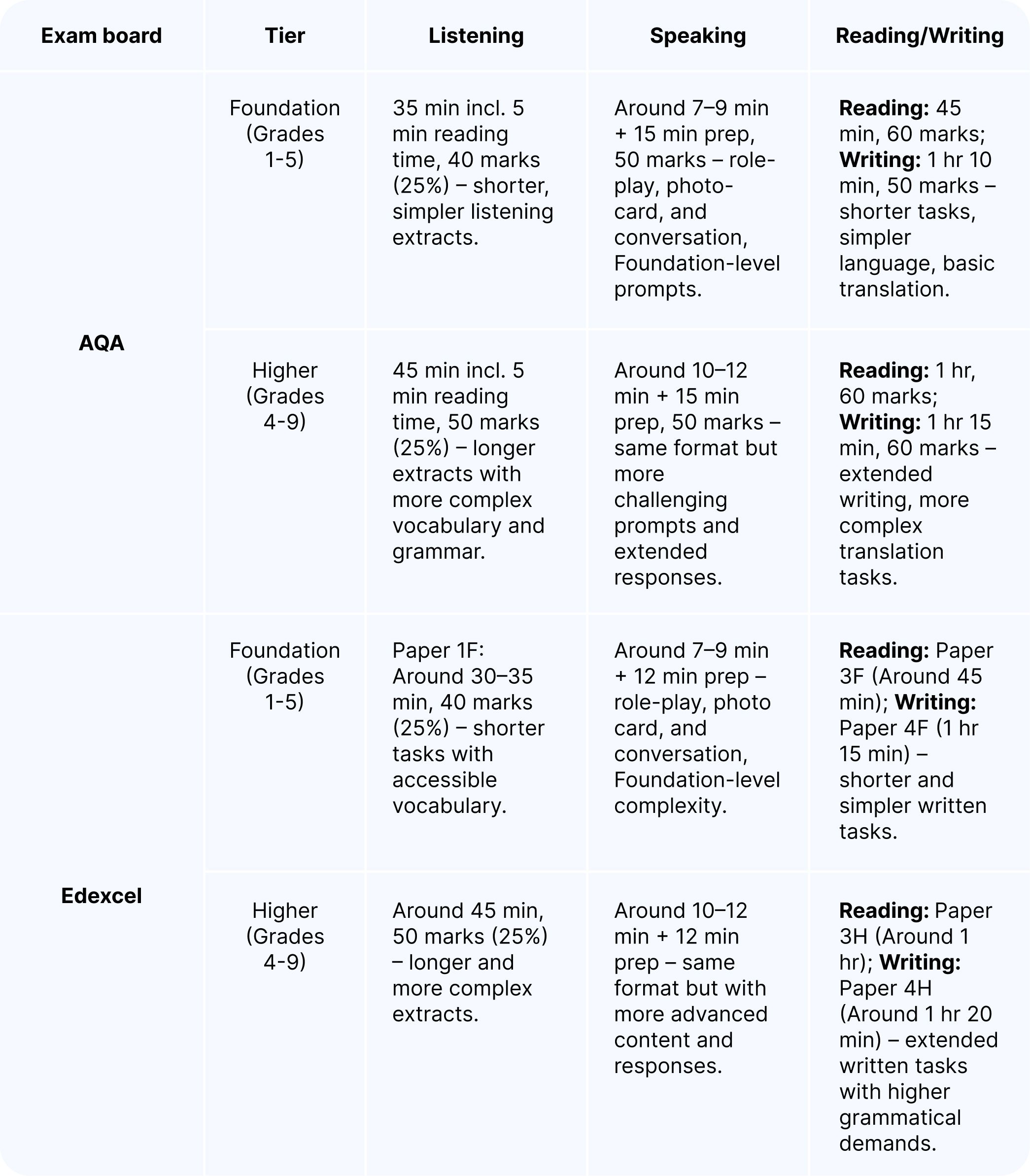
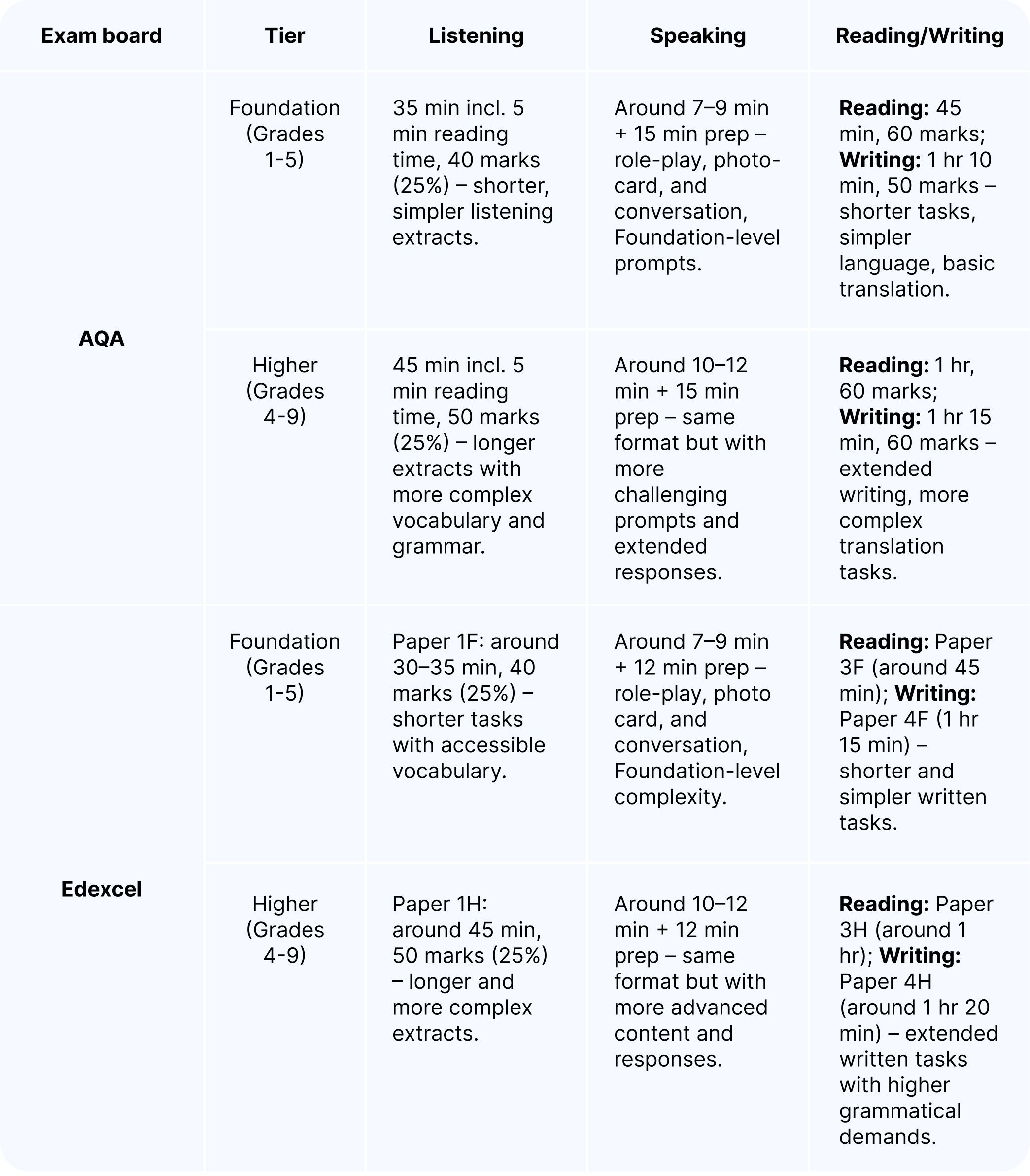
What the assessments mean
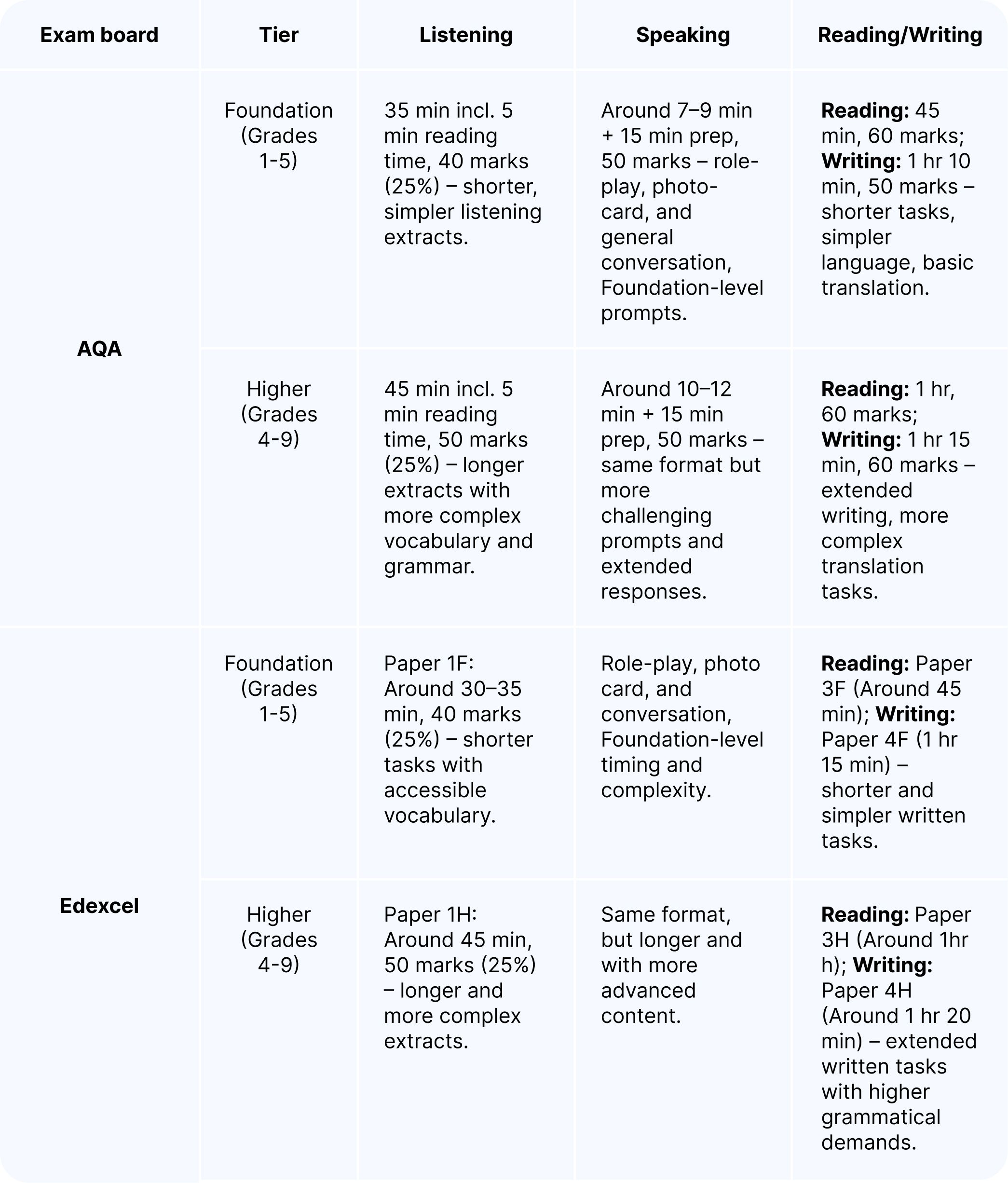
- Listening (LS): This test measures understanding of spoken passages. Foundation papers are shorter and simpler, while higher papers are longer and more complex.
- Speaking (SP—NEA): This is a face-to-face oral assessment that includes a role-play, a photo-card discussion, and a general conversation. The higher tier requires greater fluency and complexity.
- Reading (RD): This involves comprehension of texts and translation from the target language into English; the higher tier includes more challenging texts.
- Writing (WR): Produces text in the target language. Foundation tasks are simpler and shorter, while higher tasks require more detailed, accurate, and varied language use.
Topics & learning objectives by language
Why this matters
Each exam board organises topics slightly differently and may place more emphasis on certain areas. Knowing these differences can help students feel more confident and better prepared for their exams. The sample questions show the types of things students might be asked, making it easier to practise and focus their revision effectively.
French
AQA
Key topic areas:
- Identity and Culture – Self, family, relationships, daily routine, free time, preferences
- Local and Global Issues – Home, town, region, social issues, environment, festivals
- Current and Future Study and Work – School, subjects, future study, aspirations, work experience
Learning Objectives:
- Describe personal details, interests, and routines with accurate tenses and opinions
- Compare local and global issues, discuss solutions or future developments
- Plan or reflect on future goals, using future and conditional tenses
Sample Questions:
- Write a short paragraph about your typical weekend and what you’d like to change.
- Describe your town and compare it with a French-speaking city.
- Explain your plans for study after GCSE and why those subjects appeal to you.
Edexcel
Key topic areas: Similar themes, often organised as:
- Theme 1: Me, My Family, Friends, Free Time
- Theme 2: Home, Town, Environment
- Theme 3: Education, Aspirations, Future Plans
Learning Objectives:
- Use a range of tenses to express opinions and preferences
- Develop comparative structures and conditional phrases
- Communicate future and hypothetical plans coherently
Sample Questions:
- Write a dialogue between you and a friend about your weekend activities.
- Compare your school with a school in France in terms of facilities and subjects.
- Imagine your future career and explain why you chose it, using the conditional mood.
Spanish
AQA
Key topic areas:
- Identity and Culture – Personal descriptions, family, daily life, technology, free time
- Local, National, International & Global Areas of Interest – Holidays, festivals, environment, social problems, healthy living
- Current and Future Study and Employment – School subjects, further education, jobs, ambitions
Learning Objectives:
- Discuss lifestyle, personality, and preferences using present and past tenses
- Talk about social issues, travel, celebrations, and healthy routines
- Outline study and career aspirations using future and conditional tenses
Sample Questions:
- Explain your favourite leisure activity and why you enjoy it.
- Discuss a festival in a Spanish-speaking country and compare it to how it’s celebrated at home.
- Write about your ideal job and why it’s important to you.
Edexcel
Key topic areas: Very similar to AQA’s, often structured as:
- Theme 1: My Life, My Family, My Friends, Interests
- Theme 2: My Home, Where I Live, Social and Environmental Issues
- Theme 3: My School, Education, Jobs, Future Aspirations
Learning Objectives:
- Use diverse vocabulary and grammar to discuss personal identity and values
- Compare environmental and social issues at home and abroad
- Articulate ambitions and make reasoned choices about study and career
Sample Questions:
- Describe your best friend and what you like to do together.
- Compare environmental problems in your area with those in a Spanish-speaking country.
- Imagine a gap year in a Spanish-speaking country; describe your plans using the future tense. :::
German
AQA
Key topic areas:
- Identity and Culture – Self, family, daily routine, hobbies, media
- Local, National, International & Global Areas of Interest – Town, environment, travel, health, festivals
- Current and Future Study and Work – School, education, future aspirations, jobs
Learning Objectives:
- Use appropriate verb tenses to explain identity, habits, and free time
- Compare cultural or environmental aspects with those in German-speaking areas
- Envision future studies or career paths using conditionals and future forms
Sample Questions:
- Describe your daily routine and habits in detail.
- Compare environmental issues in your town with those in a German city.
- Write about your dream job and the reasons behind your choice.
Edexcel
Key topic areas: Mirroring AQA’s themes, under sections such as:
- Theme 1: Personal Life, Home, Interests
- Theme 2: Town, Environment, Health, Leisure
- Theme 3: Education, Future Plans, Work Experience
Learning Objectives:
- Apply varied grammar to talk about yourself and your lifestyle
- Use comparative language and conditional sentences at the appropriate level
- Portray future paths and demonstrate justification using advanced structures
Sample Questions:
- Write a paragraph about your hobbies and weekend activities.
- Compare transport options in your town with those in a German city and suggest improvements.
- Explain your future study plans and motivations in a letter.
Tips for revision & exam preparation
Listening
- Regularly practise authentic audio, such as news or podcasts.
- Develop strategies: note key words, anticipate question types, and listen actively for gist vs detail.
Speaking
- Use flashcards and record responses to prompts.
- Practice with peers or tutors, and simulate exam scenarios.
- Focus on clarity, pronunciation, and expanding simple answers.
Reading
- Read short articles, adverts, and letters in the target language.
- Train skimming and scanning techniques, identify main ideas quickly, then dive into detail.
Writing
- Memorise model paragraphs and adapt for versatility.
- Learn a bank of key phrases for different topics (e.g., “in my opinion”, “however”, “if I had the chance…”).
- Plan answers, write drafts, and check for accuracy and variety in grammar and vocabulary.
General
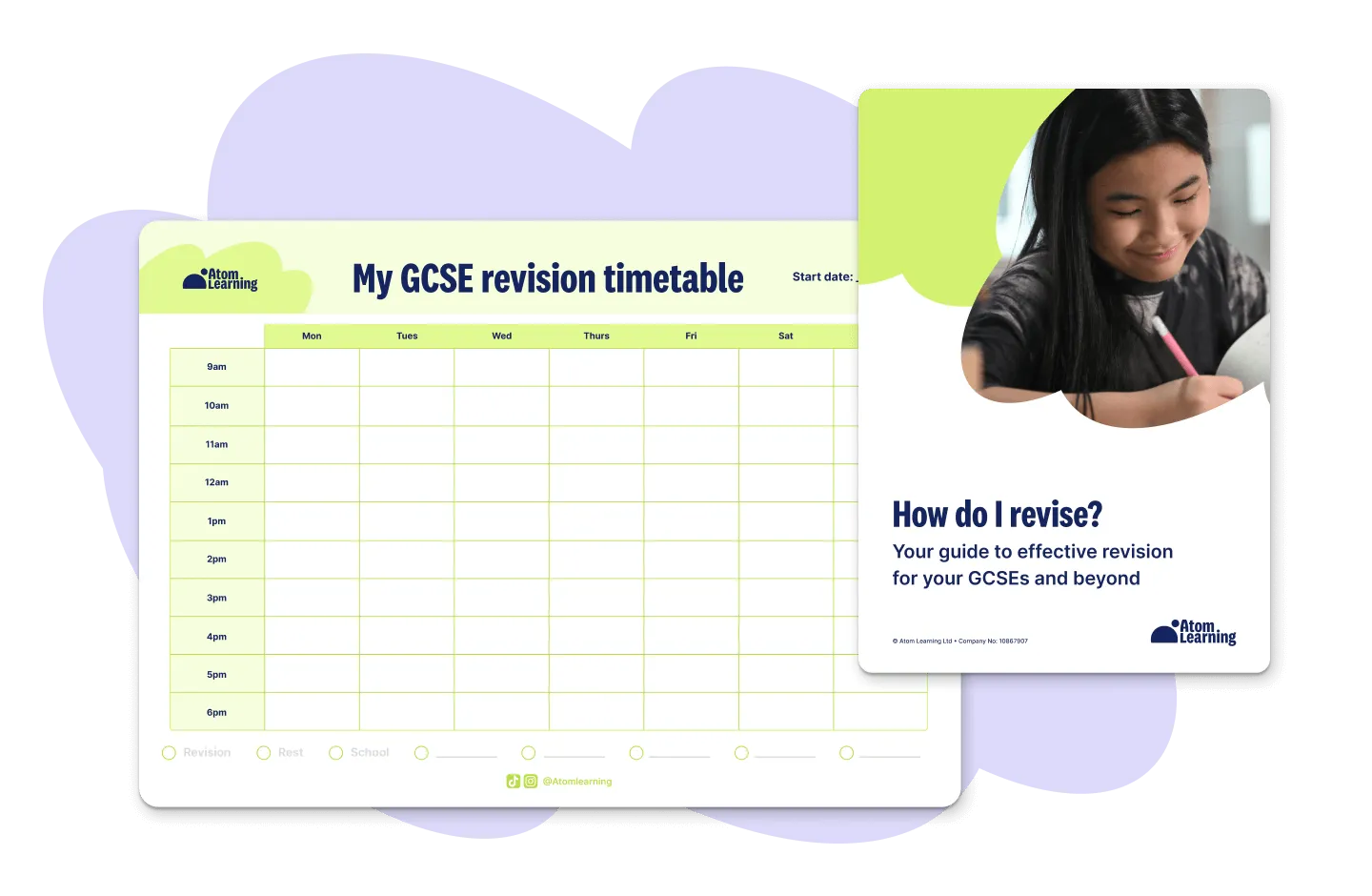
- Build a revision timetable, alternating skills to keep sessions dynamic and balanced.
- Use past papers under timed conditions to get familiar with the exam format and pacing.
- Reflect on feedback from teachers, self-mark, and focus on weaker areas.
Beyond the exam: The lifelong rewards of speaking another language
Choosing a GCSE in a modern foreign language is more than preparing for an exam; it’s an investment in skills and opportunities that will last a lifetime. Whether it’s French, Spanish, or German, each language unlocks new ways of thinking, communicating, and connecting with people worldwide.
It builds confidence, sharpens problem-solving skills, and fosters cultural understanding, which are valuable qualities in both academic and professional settings. Most importantly, it opens doors to further study, global career paths, and richer personal experiences.
With dedication and the right preparation, students can approach their GCSE language journey not just as a subject to master, but as a powerful step toward a more connected, confident, and opportunity-filled future.