How many marks is each Edexcel Combined Science paper?
There are six papers — two each in Biology, Chemistry and Physics — and each is 1 hour 10 minutes and worth 60 marks, so the qualification is marked out of 360 and every paper counts for one sixth of the two grades.
What grade counts as a pass for Combined Science?
With Combined Science giving you two grades, it can be confusing to understand whether you’ve passed or not if one of your marks is lower than a 4.
So, is a 4-3 a pass for GCSE Combined Science?
It’s important to understand that your grade is based on your overall mark across the three subjects. You can only get either the same grade (5-5) or adjacent grades (5-4), to reflect your performance across the papers.
A 4-3 would not count as a full pass. You have one pass and one fail. The best thing to do is check with your school or college to determine whether you need to resit or not to carry on with your choice of post-16 education.
Where can I find past papers and mark schemes?
Practising with past papers and mark schemes is one of the most effective ways to prepare for GCSE Combined Science.
Past papers help you understand question styles, see how marks are awarded, and build confidence with real exam timing and structure.
Head to the Edexcel website to find past papers and mark schemes from previous GCSE Combined Science exams.
Read the examiner's report, not just the mark scheme
After every series the board publishes an examiner's report on what candidates actually did — the questions that were misread, the answers that stopped half way, the marks lost to command words. It is the closest thing to being told in advance what to avoid, and almost nobody reads it.
Start with the Edexcel Combined Science 1SC0/1BH Biology Paper 1 Higher examiner's report (June 2025), then work through the rest on Edexcel Sciences course materials.
A recent Edexcel Combined Science past paper to start with
If you want to sit one now rather than browse, use the June 2025 paper (1SC0/1BH Biology Paper 1 Higher): the question paper and the mark scheme. Give yourself the real time limit, mark it against the scheme, then read the examiner's report on the same paper to see where other candidates lost the marks you lost.
Are there predicted papers for Edexcel Combined Science?
Yes. Once you have worked through the real past papers, there is nothing left that you have not already seen — and the most recent papers are the ones every other candidate has done too. Predicted papers are fresh papers written to match the style, balance and difficulty of the real thing for the year ahead.
Atom writes a set of predicted papers for Edexcel Combined Science based on our team's predictions for the next GCSE series, marked instantly with examiner-style feedback so you can see exactly where marks were gained or lost — so you can keep sitting full papers under real conditions right up to the exam.
What key topics do I need to know for Edexcel Combined Science GCSE?
Combined Science papers cover a range of topics. You’ll need a thorough understanding of each to achieve top marks, so make sure you revise any areas you find tricky ahead of the exams.
The main topics for Combined Science are:
Biology topics
- Cells and control
- Genetics
- Natural selection and genetic modification
- Health, disease and the development of medicines
- Plant structures and their functions
- Animal coordination, control and homeostasis
- Exchange and transport in animals
- Ecosystems and material cycles
Chemistry topics
- Key concepts in chemistry
- States of matter and mixtures
- Chemical change
- Extracting metals and equilibria
- Groups in the periodic table
- Rates of reaction and energy changes
- Fuels and Earth Science
Physics topics
- Key concepts of physics
- Motion and forces
- Conservation of energy
- Waves
- Light and the electromagnetic spectrum
- Radioactivity
- Energy – forces doing work
- Forces and their effects
- Electricity and circuits
- Magnetism and the motor effect
- Electromagnetic induction
- Particle model
- Forces and matter
Check out the Edexcel GCSE Combined Science specification to learn more.
What are examiners looking for?
The assessment objectives for GCSE Combined Science are set by Ofqual, the exams regulator, and are consistent across exam boards.
Examiners are looking for the following in your exam papers:
- AO1: Demonstrate knowledge and understanding of scientific ideas; scientific techniques and procedures
- AO2: Apply knowledge and understanding of scientific ideas; scientific enquiry, techniques and procedures
- AO3: Analyse information and ideas to interpret and evaluate; make judgments and draw conclusions; develop and improve experimental procedures
How can I prepare for Edexcel Combined Science GCSE?
To prepare for Combined Science exams, you’ll need to start revising early to make sure you’re confident covering all the key topics.
5 top tips to prepare for GCSE Combined Science:
1. Understand key vocabulary, definitions and units
Don’t miss out on marks for questions asking you to state or define terms. Make sure you get your head around the key vocab, definitions and units. You can use flashcards to help you memorise key terms and quiz yourself.
2. Use practice papers and mark schemes
The best way to prepare? Practise like it’s test day. Practising exam questions from past papers and checking your answers will help you get used to the question format and understand how to get top marks. You can also take a whole test and practise under timed conditions too, to build confidence for the real thing.
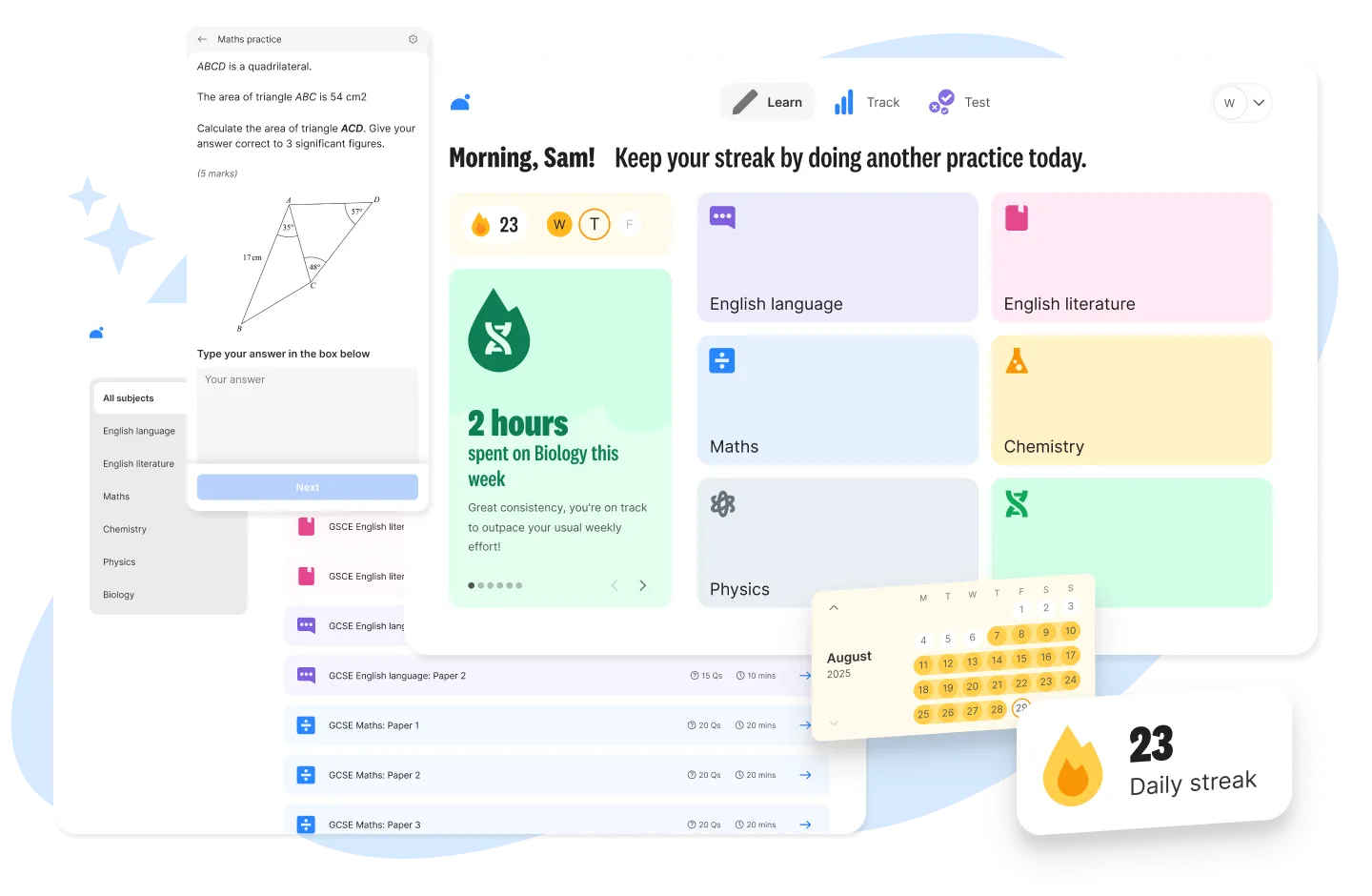
Atom gives you practice papers based on our team's predictions for the next GCSE year, along with instant, examiner-style feedback, so you get the same practise-and-check approach without having to mark everything yourself.
3. Mix up your revision techniques
It’s a good idea to try a mix of revision tactics. From flashcards to teaching others, a mix will help learning to stick. Studying little and often will also help you avoid fatigue and burnout.
4. Practise applying and analysing knowledge and ideas
Assessment objectives 2 and 3 are asking you to apply what you know to analyse and draw conclusions. When you learn a new concept, try asking yourself: how can I apply this in a different scenario? Or what assumptions or errors might affect this conclusion?
Atom's examiner-style feedback tells you whether your reasoning and application hit the mark, so you can see exactly where your analysis needs to go further.
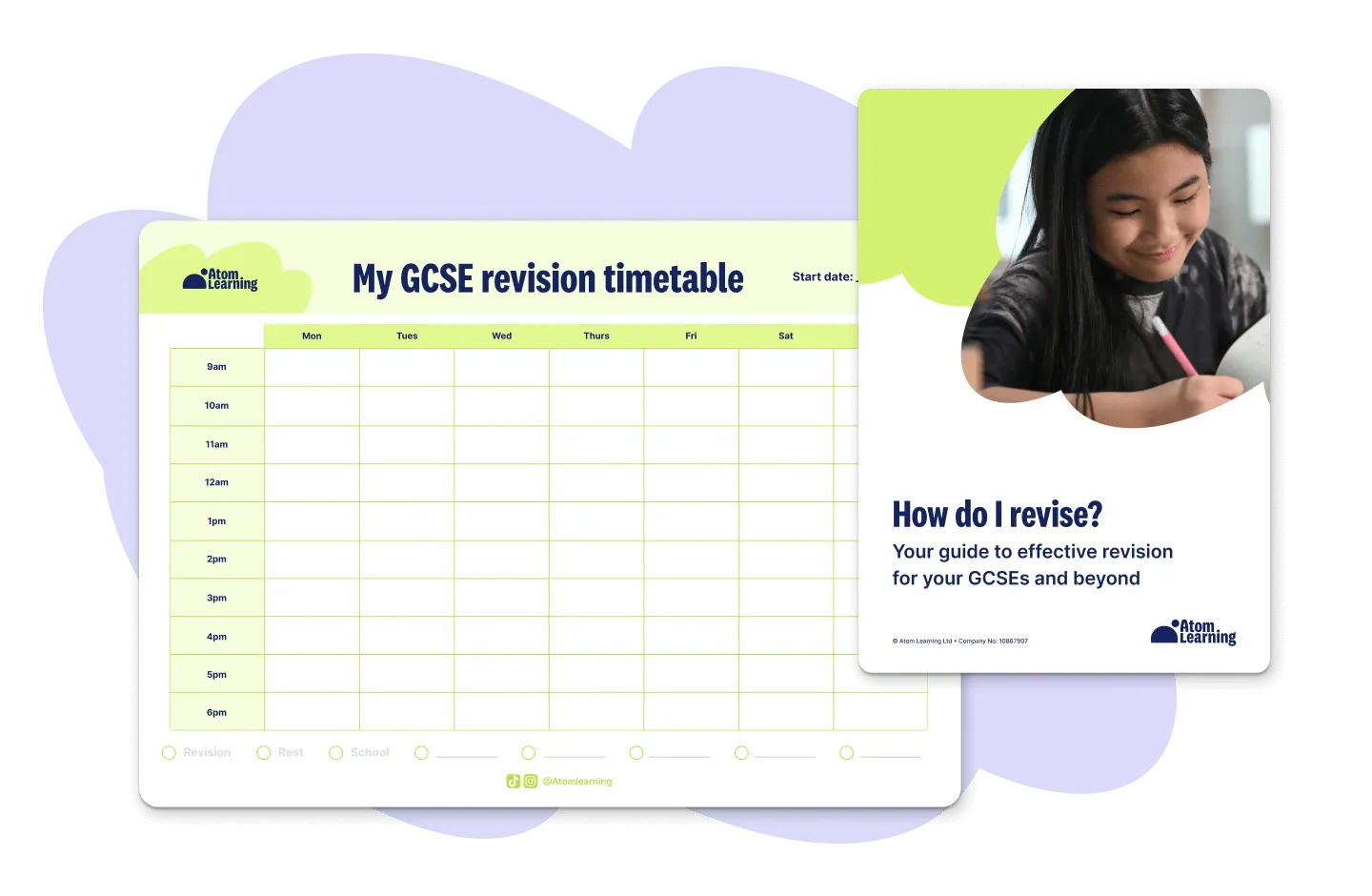
5. Plan, review, and adapt your revision
After each mock or practice paper you take, identify the topics or question types you struggle with, then prioritise those in your next revision cycle. Over time, your weak areas will shrink and your confidence will grow!
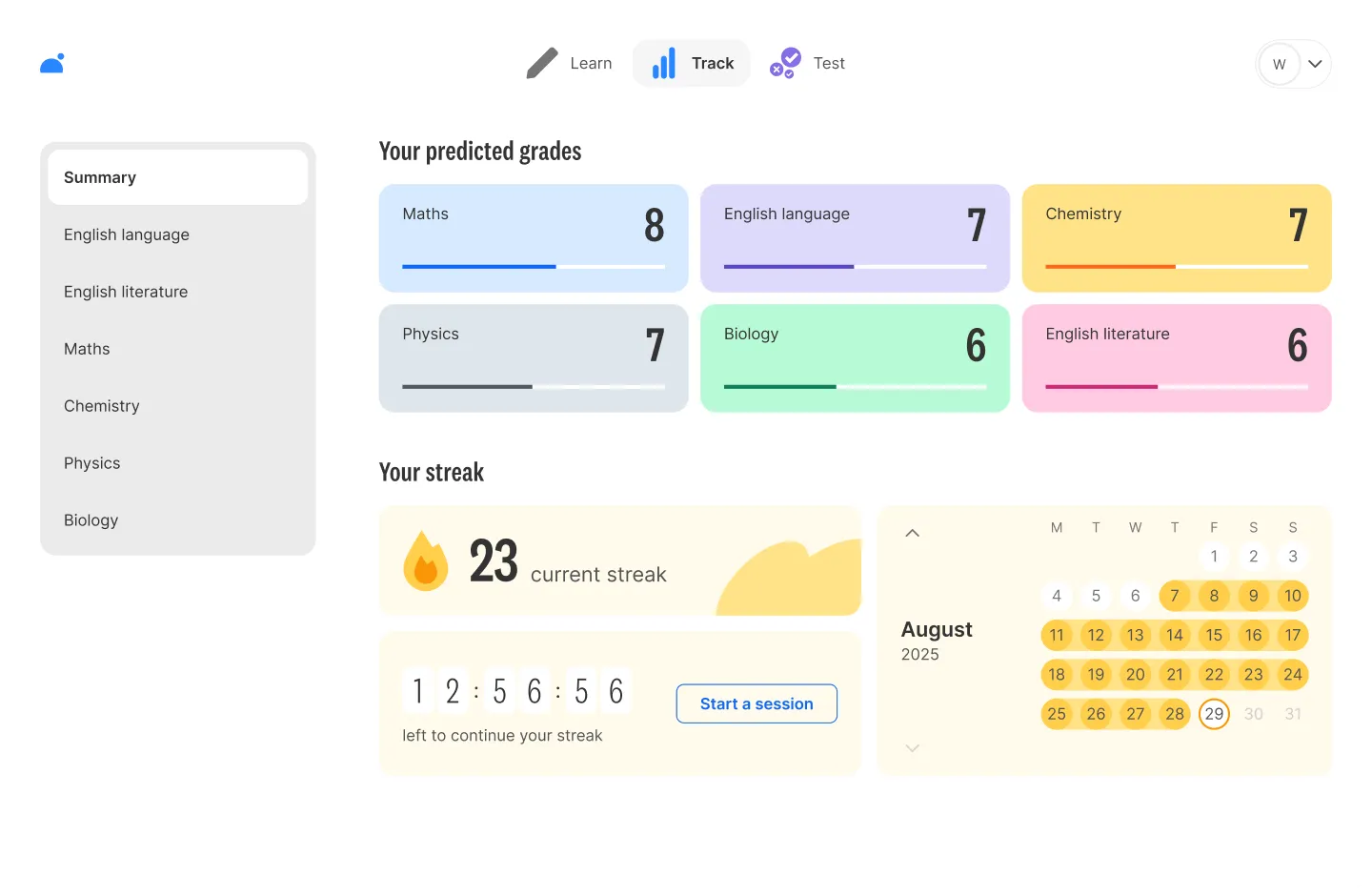
Atom tracks your performance across topics automatically, so it's easy to see which areas to prioritise in your next revision session.
There you have it - everything you need to know for Edexcel Combined Science. Use this guide to help you plan your revision and make sure you’re thoroughly prepared for your GCSE exams. Good luck!