Back to blog

Your guide to acing OCR Combined Science GCSEs

By
Atom
|
October 22, 2026

Acing your OCR Combined Science GCSE starts with good preparation.

This guide breaks down everything you need to know about the exams, including the format, potential grade boundaries, where to find past papers, and how to prepare. So, whether you’re deciding if Combined Science is right for you or deep in revision, we’re here to help.

Not sure which exam board your school uses? Take a look at our guide to finding out which exam board you’re studying.

Key takeaways:

  • Combined science is a double award, so you’ll receive two final grades.
  • You can study either Gateway Science or 21st Century Science, with Gateway following a more traditional format separating Physics, Chemistry and Biology.
  • A formula sheet for Physics will be provided for Combined Science exams.

What’s the format for OCR Combined Science GCSE?

There are several different options for OCR Science so you can choose the right level and structure for you.

  • Combined Science is a double award, meaning you’ll receive two final grades (eg. 6-7)
  • There are two tiers you can study: Foundation and Higher.
  • There are two types of OCR Combined Science exam: Gateway Science A or 21st Century Science B.
  • Both types test Chemistry, Biology and Physics.

What’s the difference between Gateway Science and 21st Century Science?

There are two routes for Combined Science with OCR: Gateway Science and 21st Century Science.

The key differences between the two are:

Gateway Science OCR

  • Focuses on each of the three sciences individually: Chemistry, Biology and Physics.
  • There are six papers: two for Chemistry, two for Physics and two for Biology.
  • Each paper is 1 hour and 10 minutes long and worth 60 marks each.
  • Each science discipline is assessed separately across two papers.

21st Century Science

  • Learning is grouped into chapters that mix Physics, Chemistry and Biology into themed modules.
  • There are four papers.
  • Each paper is 1 hour and 45 minutes long and worth 95 marks each.
  • The learning is more integrated, linking topics across disciplines.

You can also take Gateway Science as a Triple Science GCSE, earning you three GCSEs.

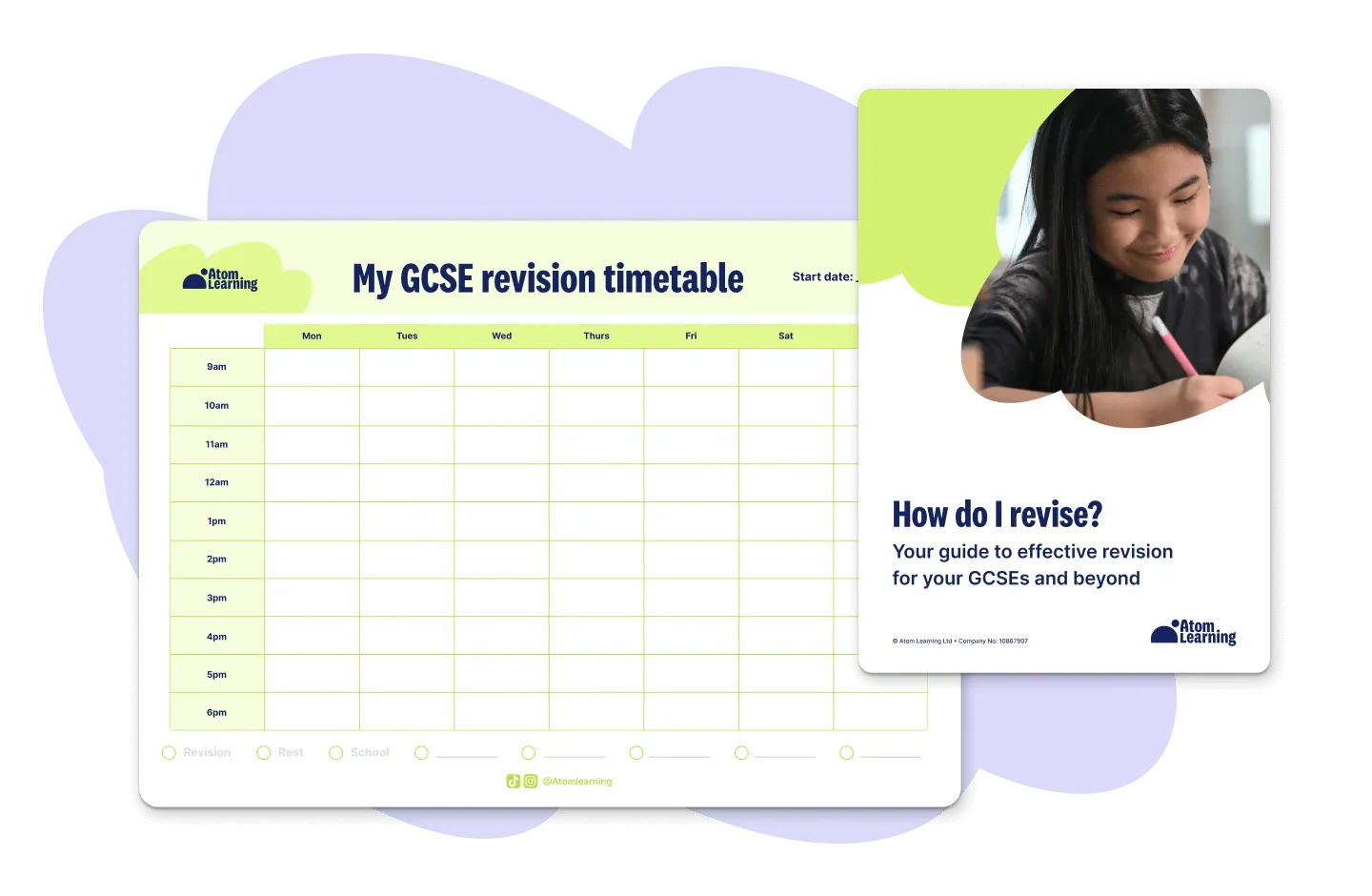
Download your free GCSE revision planner

Less stress, more success! Get your free GCSE revision planner and our handy guide to effective revision today.

Download now

What’s the difference between Combined Science: Higher and Foundation?

As well as choosing Gateway Science or 21st Century Science, you can also take Higher or Foundation tier Combined Science, depending on your level.

Foundation tier Combined Science OCR:

  • Covers the core topics you need to know and excludes more complex or demanding areas.
  • In Foundation Combined Science, you can achieve a maximum grade of 5-5.

Higher tier Combined Science OCR:

  • The higher tier covers both core and more advanced topics across the curriculum.
  • For Higher tier Combined Science, you can achieve a maximum grade of 9-9 - the highest possible grade.
  • The lowest grade you can get is a 4-4, or a 4-3 for students who just miss a 4-4.

Your school will place you in the correct tier based on your performance in Year 9. Sometimes, students may be moved up or down a tier during Year 10 or 11.

OCR requires all Combined Science exams to be taken at the same level, so you cannot do Higher for one part and Foundation for another.

Is there an equations sheet for Combined Science OCR?

Yes! It’s been confirmed that equation sheets will continue to be provided for OCR Combined Science.

The sheet will cover key formulas used for Physics. The formula sheet includes key equations needed for both Foundation and Higher tier Physics.

Take a look at the 2025 equation sheet.

What are the grade boundaries for Combined Science GCSE?

Combined Science is worth two GCSEs and is graded as a pair — 9-9, 9-8, 8-8 and so on down to 1-1 — rather than as a single grade. OCR runs two suites with different boundaries: Gateway Science (A) and Twenty First Century Science (B).

In the June 2026 series — the most recent — a 4-4 in Gateway took 174 out of 360 (48%) at Foundation tier and 121 out of 360 (34%) at Higher. A 5-5 took 209 (58%) at Foundation and 154 (43%) at Higher. In Twenty First Century Science a 4-4 took 189 (53%) at Foundation and 107 (30%) at Higher.

The full June 2026 boundaries for both suites and both tiers are below. OCR publishes the boundaries for every series on its grade boundaries page.

Combined Science A: Gateway Science (J250)

OCR GCSE Combined Science A: Gateway Science (J250) grade boundaries for the June 2026 exams, showing the raw marks needed for each grade.
Grade Foundation tier Higher tier
Grade 9-9Not available at this tier275 out of 360 (76%)
Grade 9-8Not available at this tier261 out of 360 (72%)
Grade 8-8Not available at this tier248 out of 360 (69%)
Grade 8-7Not available at this tier235 out of 360 (65%)
Grade 7-7Not available at this tier222 out of 360 (62%)
Grade 7-6Not available at this tier205 out of 360 (57%)
Grade 6-6Not available at this tier188 out of 360 (52%)
Grade 6-5Not available at this tier171 out of 360 (48%)
Grade 5-5209 out of 360 (58%)154 out of 360 (43%)
Grade 5-4191 out of 360 (53%)137 out of 360 (38%)
Grade 4-4174 out of 360 (48%)121 out of 360 (34%)
Grade 4-3153 out of 360 (42%)113 out of 360 (31%)
Grade 3-3132 out of 360 (37%)Not available at this tier
Grade 3-2111 out of 360 (31%)Not available at this tier
Grade 2-290 out of 360 (25%)Not available at this tier
Grade 2-169 out of 360 (19%)Not available at this tier
Grade 1-148 out of 360 (13%)Not available at this tier

Combined Science B: Twenty First Century Science (J260)

OCR GCSE Combined Science B: Twenty First Century Science (J260) grade boundaries for the June 2026 exams, showing the raw marks needed for each grade.
Grade Foundation tier Higher tier
Grade 9-9Not available at this tier257 out of 360 (71%)
Grade 9-8Not available at this tier244 out of 360 (68%)
Grade 8-8Not available at this tier231 out of 360 (64%)
Grade 8-7Not available at this tier218 out of 360 (61%)
Grade 7-7Not available at this tier206 out of 360 (57%)
Grade 7-6Not available at this tier189 out of 360 (52%)
Grade 6-6Not available at this tier172 out of 360 (48%)
Grade 6-5Not available at this tier155 out of 360 (43%)
Grade 5-5218 out of 360 (61%)139 out of 360 (39%)
Grade 5-4203 out of 360 (56%)123 out of 360 (34%)
Grade 4-4189 out of 360 (52%)107 out of 360 (30%)
Grade 4-3166 out of 360 (46%)99 out of 360 (28%)
Grade 3-3143 out of 360 (40%)Not available at this tier
Grade 3-2120 out of 360 (33%)Not available at this tier
Grade 2-297 out of 360 (27%)Not available at this tier
Grade 2-174 out of 360 (21%)Not available at this tier
Grade 1-151 out of 360 (14%)Not available at this tier
No items found.

What grade counts as a pass for Combined Science?

With Combined Science giving you two grades, it can be confusing to understand whether you’ve passed or not if one of your marks is lower than a 4 or 5.

So, is a 4-3 a pass for GCSE Combined Science?

It’s important to understand that your grade is based on your overall mark across the three subjects. You can only get either the same grade (5-5) or adjacent grades (5-4) to reflect your performance across the papers.

A 4-3 would not count as a full pass. You have one pass and one fail. The best thing to do is check with your school or college to determine whether you need to resit or not to carry on with your choice of Further Education.

Where can I find past papers and mark schemes?

Practising with past papers and mark schemes is one of the most effective ways to prepare for GCSE Combined Science.

Past papers help you understand question styles, see how marks are awarded, and build confidence with real exam timing and structure.

Head to the OCR website to find past papers and mark schemes from previous GCSE Combined Science exams for Gateway and 21st Century. Once you've worked through those, Atom gives you a fresh set of practice papers based on our team's predictions for the next GCSE year, plus instant, examiner-style feedback so you always know exactly where marks were gained or lost.

Read the examiner's report, not just the mark scheme

After every series the board publishes an examiner's report on what candidates actually did — the questions that were misread, the answers that stopped half way, the marks lost to command words. It is the closest thing to being told in advance what to avoid, and almost nobody reads it.

Start with the OCR Combined Science Paper 1 examiner's report (June 2025), then work through the rest on OCR Combined Science A assessment materials.

A recent OCR Combined Science past paper to start with

If you want to sit one now rather than browse, use the June 2025 paper: the question paper and the mark scheme. Give yourself the real time limit, mark it against the scheme, then read the examiner's report on the same paper to see where other candidates lost the marks you lost.

Are there predicted papers for OCR Combined Science?

Yes. Once you have worked through the real past papers, there is nothing left that you have not already seen — and the most recent papers are the ones every other candidate has done too. Predicted papers are fresh papers written to match the style, balance and difficulty of the real thing for the year ahead.

Atom writes a set of predicted papers for OCR Combined Science based on our team's predictions for the next GCSE series, marked instantly with examiner-style feedback so you can see exactly where marks were gained or lost — so you can keep sitting full papers under real conditions right up to the exam.

What key topics do I need to know for OCR Combined Science GCSE?

Combined Science papers cover a range of topics. You’ll need a thorough understanding of each to achieve top marks, so make sure you revise any areas you find tricky ahead of the exams.

The main topics for Combined Science: Gateway are:

Biology topics

  • B1: Cell level systems
  • B2: Scaling up
  • B3: Organism level systems
  • B4: Community level systems
  • B5: Genes, inheritance and selection
  • B6: Global challenges
  • CS7: Practical skills

Chemistry topics

  • C1: Particles
  • C2: Elements, compounds and mixtures
  • C3: Chemical reactions
  • C4: Predicting and identifying reactions and products
  • C5: Monitoring and controlling chemical reactions
  • C6 Global challenges
  • CS7: Practical skills

Physics topics

  • P1: Matter
  • P2: Forces
  • P3: Electricity and magnetism
  • P4: Waves and radioactivity
  • P5: Energy
  • P6: Global challenges
  • CS7: Practical skills

The main topics for Combined Science: 21st Century are:

Biology topics

  • B1: You and your genes
  • B2: Keeping healthy
  • B3: Living together - food and ecosystems
  • B4: Using food and controlling growth
  • B5: The human body - staying alive
  • B6: Life on Earth - past, present, and future

Chemistry topics

  • C1: Air and water
  • C2: Chemical patterns
  • C3: Chemicals of the natural environment
  • C4: Material choices
  • C5: Chemical analysis
  • C6: Making useful chemicals

Physics topics

  • P1: Radiation and waves
  • P2: Sustainable energy
  • P3: Electric circuits
  • P4: Explaining motion
  • P5: Radioactive materials
  • P6: Matter - models and explanations

General topics

  • BCP7: Ideas about science
  • BCP8: Practical skills

Check out the OCR GCSE Combined Science specification for Gateway and 21st Century to learn more.

What are examiners looking for?

The assessment objectives for GCSE Combined Science are set by Ofqual, the exams regulator, and are consistent across exam boards.

Examiners are looking for the following in your exam papers:

  • AO1: Demonstrate knowledge and understanding of scientific ideas; scientific techniques and procedures
  • AO2: Apply knowledge and understanding of scientific ideas; scientific enquiry, techniques and procedures
  • AO3: Analyse information and ideas to interpret and evaluate; make judgments and draw conclusions; develop and improve experimental procedures

How can I prepare for OCR Combined Science GCSE?

To prepare for Combined Science exams, you’ll need to start revising early to make sure you’re confident covering all the key topics.

5 top tips to prepare for GCSE Combined Science:

1. Understand key vocabulary, definitions and units

Don’t miss out on marks for questions asking you to state or define terms. Make sure you get your head around the key vocab, definitions and units. You can use flashcards to help you memorise key terms and quiz yourself.

2. Use practice papers and mark schemes

The best way to prepare? Practise like it’s test day. Practising exam questions from past papers and checking your answers will help you get used to the question format and understand how to get top marks. You can also take a whole test and practise under timed conditions too, to build confidence for the real thing.

Atom gives you practice papers based on our team's predictions for the next GCSE year, along with instant, examiner-style feedback, so you get the same practise-and-check approach without having to mark everything yourself.

3. Mix up your revision techniques

It’s a good idea to try a mix of revision tactics. From flashcards to teaching others, a mix will help learning to stick. Studying little and often will also help you avoid fatigue and burnout.

4. Practise applying and analysing knowledge and ideas

Assessment objectives 2 and 3 are asking you to apply what you know to analyse and draw conclusions. When you learn a new concept, try asking yourself: how can I apply this in a different scenario? Or what assumptions or errors might affect this conclusion? Atom's examiner-style feedback tells you whether your reasoning and application hit the mark, so you can see exactly where your analysis needs to go further.

5. Plan, review, and adapt your revision

After each mock or practice paper you take, identify the topics or question types you struggle with, then prioritise those in your next revision cycle. Over time, your weak areas will shrink and your confidence will grow!

Preparing for OCR Combined Science, whichever route you choose, doesn’t need to feel stressful. Bookmark this blog to refer back to when you need to. Remember, with proper preparation, you’ll enter the exam hall confident. Good luck!

No items found.
No items found.

Take control of your GCSE revision

Everything you need for GCSE success, in one place.

Feeling confident about your GCSEs comes from knowing what to revise, how to improve, and where to focus next.

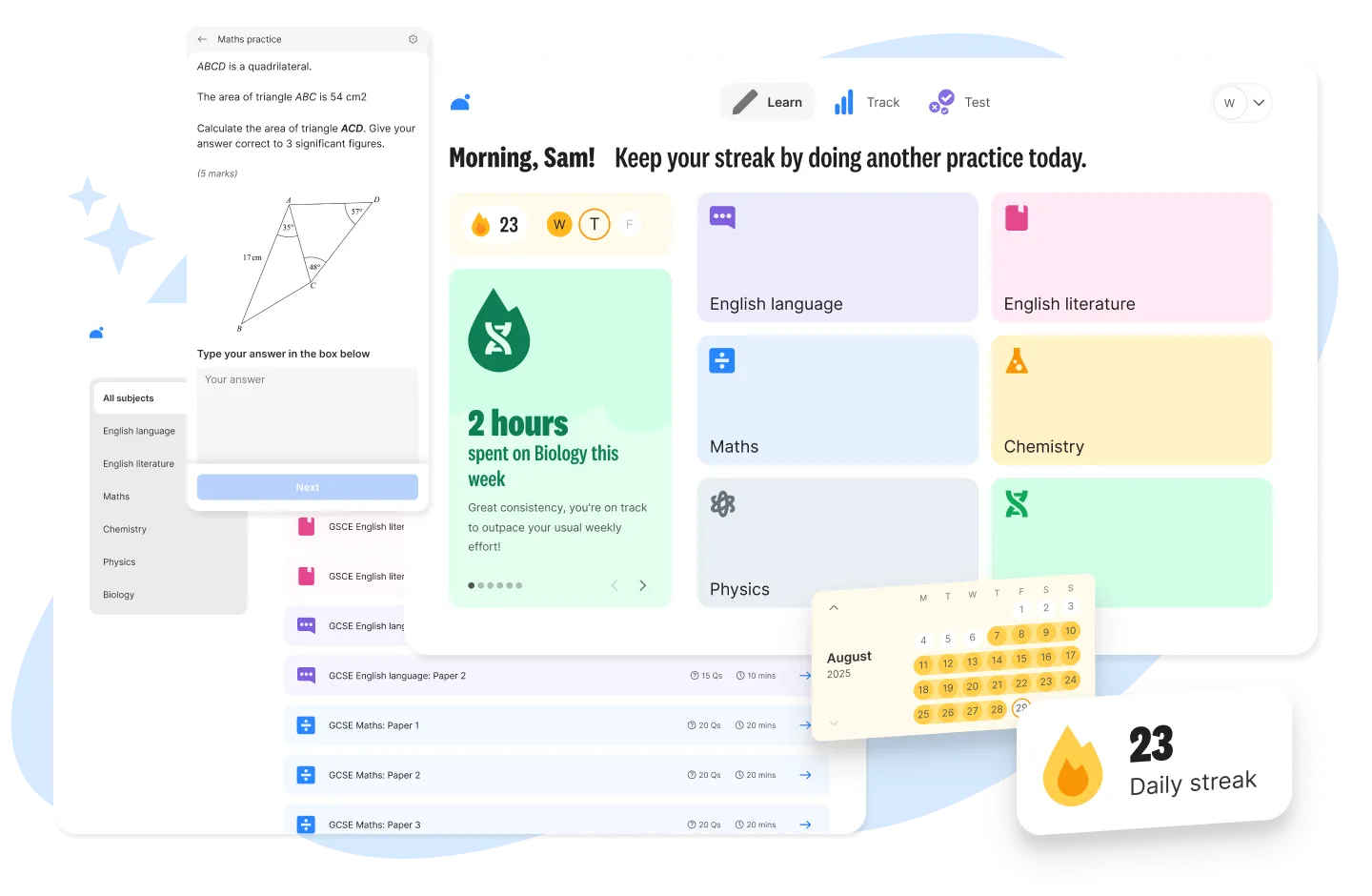
🔮 GCSE practice papers based on our team's 2026 exam predictions

🎓 Guided courses that cover all the topics on your exams

✍️ Instant feedback that tells you where you’ve gained and lost marks

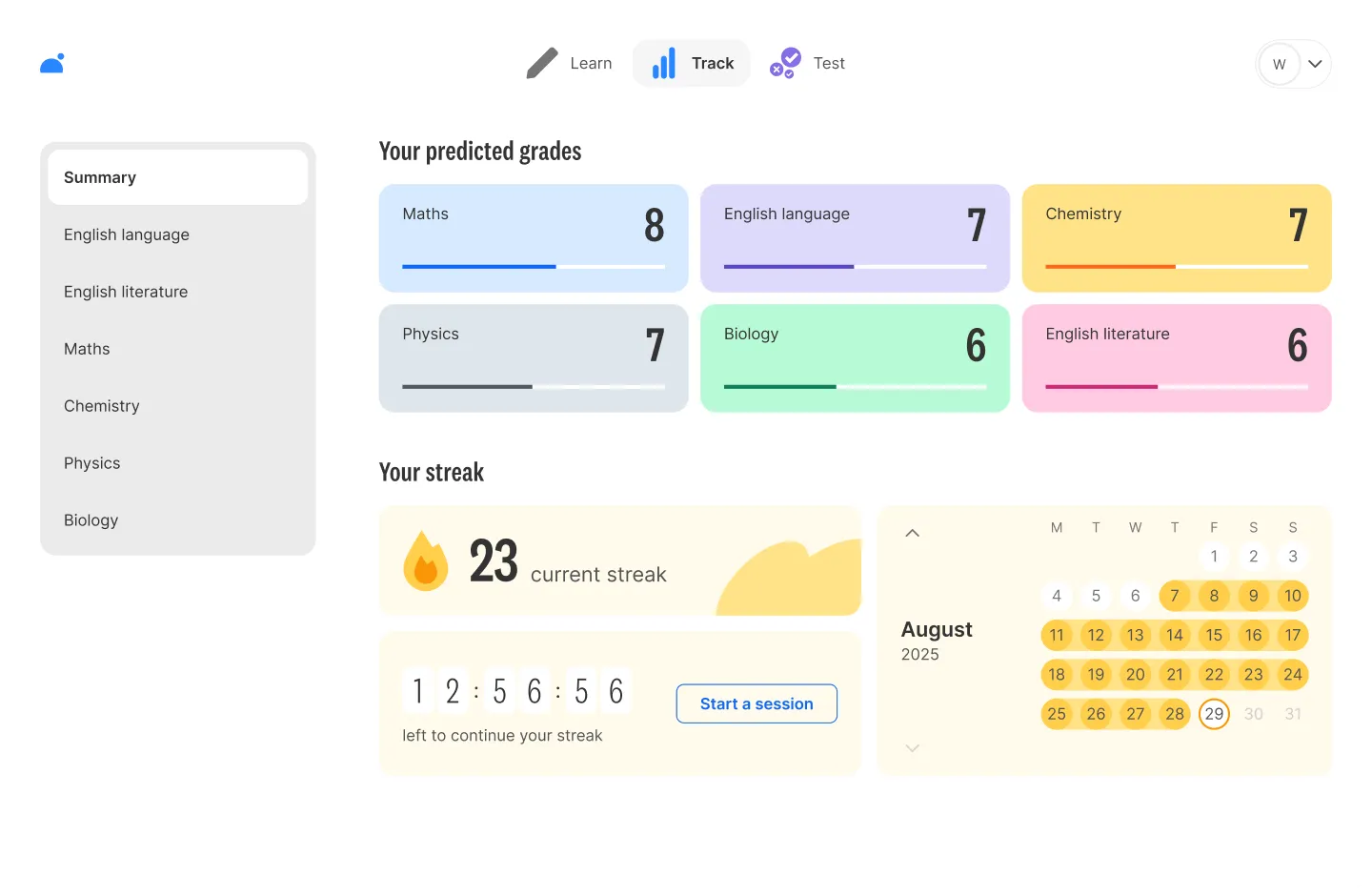
📈 Predicted GCSE grades and topic-by-topic tracking

Know where you stand and how to improve

Create your free account and start making real progress today.

Online GCSE revision

Contents