
Back to blog

A complete guide to OCR GCSE History

By
Atom
|
February 10, 2026

Taking OCR GCSE History? This guide explains what you’ll be tested on, how the course is assessed, and how to prepare effectively as you work towards exam day.

One important thing to know from the start: OCR offers two different GCSE History courses, called History A (J410) and History B (J411). Schools choose one of these courses, so it’s essential to check with your teacher which OCR History course you’re studying.

Read on for a clear breakdown of the exams, the skills examiners reward, and practical ways to focus your revision where it really counts.

Key takeaways

  • OCR offers two separate GCSE History courses: History A (J410) and History B (J411).
  • Both courses are assessed entirely through written exams.
  • You’ll be tested on historical knowledge, source analysis, and extended writing.
  • Grade boundaries change each year, but past data can help you set realistic targets.
  • Practising exam-style questions is one of the best ways to improve your marks.

What’s the format for OCR History GCSE?

OCR History A (Explaining the Modern World)

OCR History A focuses on modern world history, thematic British history, and a historic environment study, where you examine a specific historical site and how it links to the period you’re studying.

The course is assessed through:

  • Three written exam papers
  • All exams are taken at the end of the course
  • There is no coursework
  • Your final grade is based entirely on exam performance

Your school selects the topics you’ll study by choosing one option from each part of the course.

OCR History B (Schools History Project)

OCR History B is also assessed entirely by exams, but it has a slightly different structure and approach.

The course includes:

  • Three written exam papers
  • One British history paper
  • One world history paper
  • One “History Around Us” paper (a local or site-based historical study)

History B places more emphasis on historical enquiry and understanding how historians work.

What’s the difference between the papers for OCR History GCSE?

OCR History A (Explaining the Modern World)

Paper 1: Period study and non-British depth study (1 hour 45 minutes)

This paper focuses on modern world history.

You’ll study:

  • One-period study, which explores key developments across a set period of time
  • One non-British depth study, which looks closely at a specific country or international topic

In the exam, you’ll be asked to:

  • Answer short knowledge questions
  • Analyse historical sources
  • Write extended answers explaining causes, consequences, and significance

This paper rewards your ability to explain how and why events developed over time.

Paper 2: British thematic study (1 hour 45 minutes)

This paper focuses on change and continuity in British history across a long time period.

You’ll study:

  • One thematic study, tracking how an aspect of British society developed over hundreds of years

In the exam, you’ll be assessed on:

  • Explaining what changed and what stayed the same
  • Making comparisons across time
  • Writing clear, structured explanations supported by evidence

This paper rewards strong organisation and the ability to link ideas across different periods.

Paper 3: The historic environment (1 hour)

This paper focuses on a specific historical site, studied within its wider historical context.

You’ll be assessed on:

  • Your knowledge of the site
  • How it links to the themes and events you’ve studied
  • Your ability to use evidence and sources effectively

This paper rewards careful reading of sources and applying knowledge to a real historical setting.

OCR History B (Schools History Project)

OCR History B is also assessed through three exam papers, but they are organised by area of history, rather than by type of study.

Paper 1: British history (1 hour 45 minutes)

This paper focuses on British history, combining long-term themes with more focused depth.

You’ll study:

  • A British thematic study, which looks at how an aspect of life in Britain changed over time and what stayed the same
  • A British depth study, looking closely at a specific period or event

In the exam, you’ll be asked to:

  • Explain causes and consequences
  • Analyse sources
  • Write extended answers using detailed evidence

This paper rewards clear explanation and strong use of factual detail.

Paper 2: World history (1 hour 45 minutes)

This paper focuses on international history beyond Britain.

You’ll study:

  • A world history depth study, looking at a specific country, conflict, or global issue

In the exam, you’ll be assessed on:

  • Explaining key developments
  • Analysing sources and interpretations
  • Writing structured, well-supported answers

This paper rewards your ability to understand events in a wider global context.

Paper 3: History Around Us (1 hour)

This paper focuses on a local historical site or environment.

You’ll be assessed on:

  • Your knowledge of the site
  • How historians study and interpret evidence
  • Answering questions based on sources and context

This paper also includes marks for spelling, punctuation, and grammar (SPaG).

What are examiners looking for?

OCR History examiners assess your work using clear assessment objectives. In simple terms, they want to see that you can:

  • Show accurate knowledge and understanding
    • Key events, people, dates, and developments
  • Explain and analyse historical concepts
    • Cause and consequence
    • Change and continuity
    • Significance of historical events
  • Analyse and evaluate sources by:
    • Describing what the source tells you about the past
    • Thinking about why it was produced and who it was aimed at
    • Explaining how far it helps answer the question, and where its limits might be

To reach the top grades, you’ll need to:

  • Use precise factual detail
    Naming specific events, laws, people, and dates shows a secure understanding.
  • Answer the question directly
    Focus only on what the question is asking and avoid just writing down everything you know. Make sure your response focuses on answering the question specifically.
  • Structure your answers clearly
    Using a structure like PEEL (Point, Evidence, Explain, Link) helps examiners follow your thinking and reward it. You can learn how to use this effectively in our guide to the PEEL technique for GCSE essay writing: How to use the PEEL technique to write an effective essay.
  • Explain why events happened, not just what happened
    Examiners reward answers that explain causes, consequences, and historical significance, not just descriptions of events.

Atom GCSE is coming!

Guided courses.
Instant feedback.
Built for the 2026 exams.

Join the waitlist now to be the first to get free, early access. 

Sign up now

What are the grade boundaries for OCR History GCSE?

It’s important to remember that the exact grade boundaries for your GCSE exams will change every year. Exam boards adjust grade boundaries after an exam, depending on the exam's difficulty and how the cohort performed.

This is so students don’t have an advantage or disadvantage because of the year they took the paper. For example, if your paper were harder, grade boundaries would be lowered so that a grade 5 reflects the same level of knowledge as in previous years.

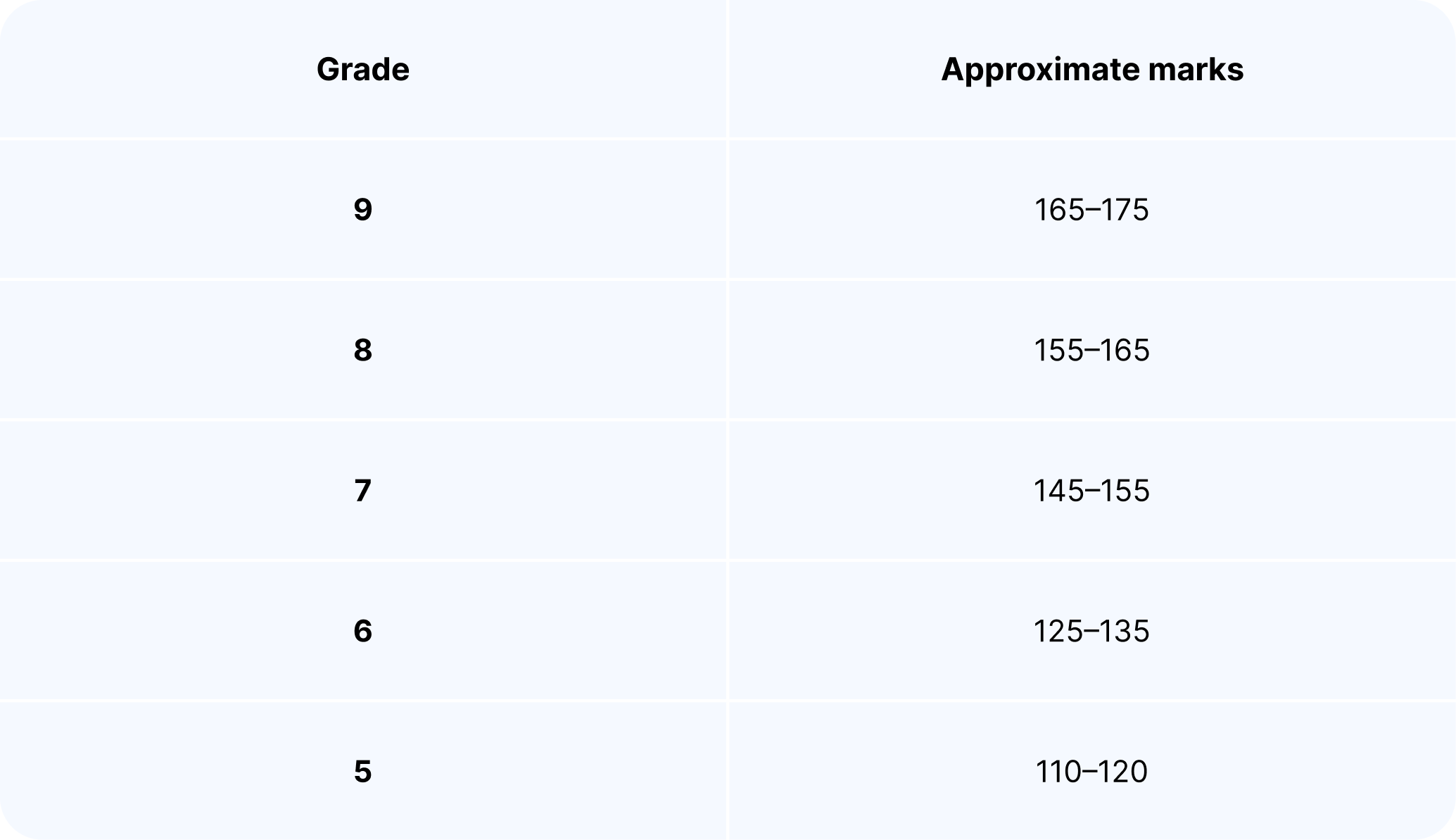
To give you a sense of what to expect, the table below shows approximate grade boundary ranges for OCR GCSE History, based on recent exam series.

These approximate marks apply across both OCR History A and History B, but exact grade boundaries vary slightly depending on the course, options studied, and exam year.
What key topics do I need to know for OCR History GCSE?

The topics you study depend on which options your school has chosen from the OCR History course.

OCR History A topics may include:

  • International relations (such as conflict and diplomacy in the 20th century)
  • Non-British depth studies (a focused study of a specific country or region outside Britain)
  • British thematic studies (how an aspect of British society changed over a long period of time)
  • A historic environment study linked to your course (a specific site studied in its historical context)

OCR History B topics may include:

  • British thematic studies (such as health or crime over time in Britain)
  • British depth studies (a detailed study of a particular period in British history)
  • World history depth studies (a focused study of an international event, country, or conflict) 
  • History Around Us (a local or site-based historical study)

You only need to revise the topics your school has chosen. Your teacher will confirm which ones apply to you.

Where can I find past papers and mark schemes?

Practising with past papers and mark schemes is one of the most effective ways to prepare for GCSE History.

Past papers help you understand question styles, see how marks are awarded, and build confidence with real exam timing and structure.

Head to the OCR website to find past papers and mark schemes from previous GCSE History exams: 

How can I prepare for OCR History GCSE?

Here are 5 top tips to help you prepare confidently for your OCR History exams.

1. Focus on explanation, not just facts

History isn’t just about memorising facts, it’s about explaining why things happened and why they mattered.

Ask yourself:

  • Why did this event happen?
  • What changed because of it?
  • Why is it historically significant?

2. Practise writing regularly

OCR History exams involve extended writing, so regular practice is key.

  • Write short PEEL paragraphs (Point, Evidence, Explain, Link) to keep your answers focused and clearly structured
  • Use specific evidence, such as dates, events, and key people, to support every point you make
  • Practise under timed conditions so you get used to planning, writing, and finishing answers within the exam time

3. Get confident with sources

Source questions appear across OCR History exams.

  • Look carefully at what the source shows
  • Consider who created it and why
  • Always link back to the question

4. Use past papers and mark schemes

Past papers help you understand what examiners reward.

  • Practise planning answers
  • Compare your work to the mark scheme
  • Identify where you can improve next time

5. Make exam practice feel normal

The more familiar the exam feels, the calmer you’ll be on the day.

  • Sit full papers under timed conditions
  • Avoid notes when practising
  • Reflect on timing and structure afterwards

OCR GCSE History rewards clear thinking, strong structure, and confident explanation.

Once you know which OCR History course you’re studying, and practise regularly with exam-style questions, you’ll go into the exam knowing exactly what’s expected and how to show it.

Save this guide and come back to it as you revise. You’ve got this.

No items found.
No items found.
No items found.
No items found.
No items found.

Contents