How many marks is each OCR Maths paper?
There are three papers, each 1 hour 30 minutes and worth 100 marks, so the GCSE is marked out of 300 and each paper counts for a third.
The middle paper of each tier is the non-calculator one — Paper 2 at Foundation (J560/02) and Paper 5 at Higher (J560/05). You can use a calculator on the other four.
Where can I find past papers and mark schemes?
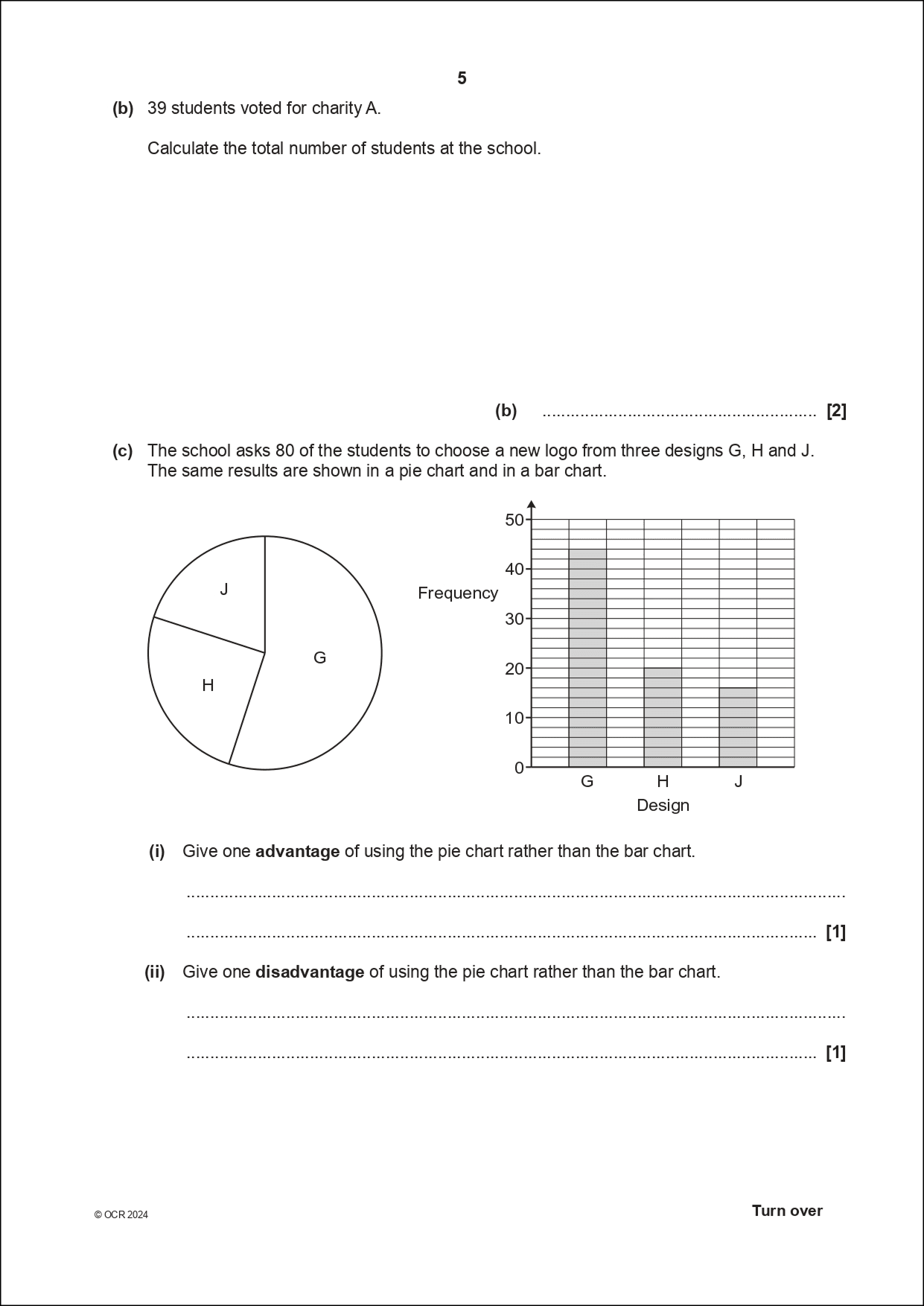
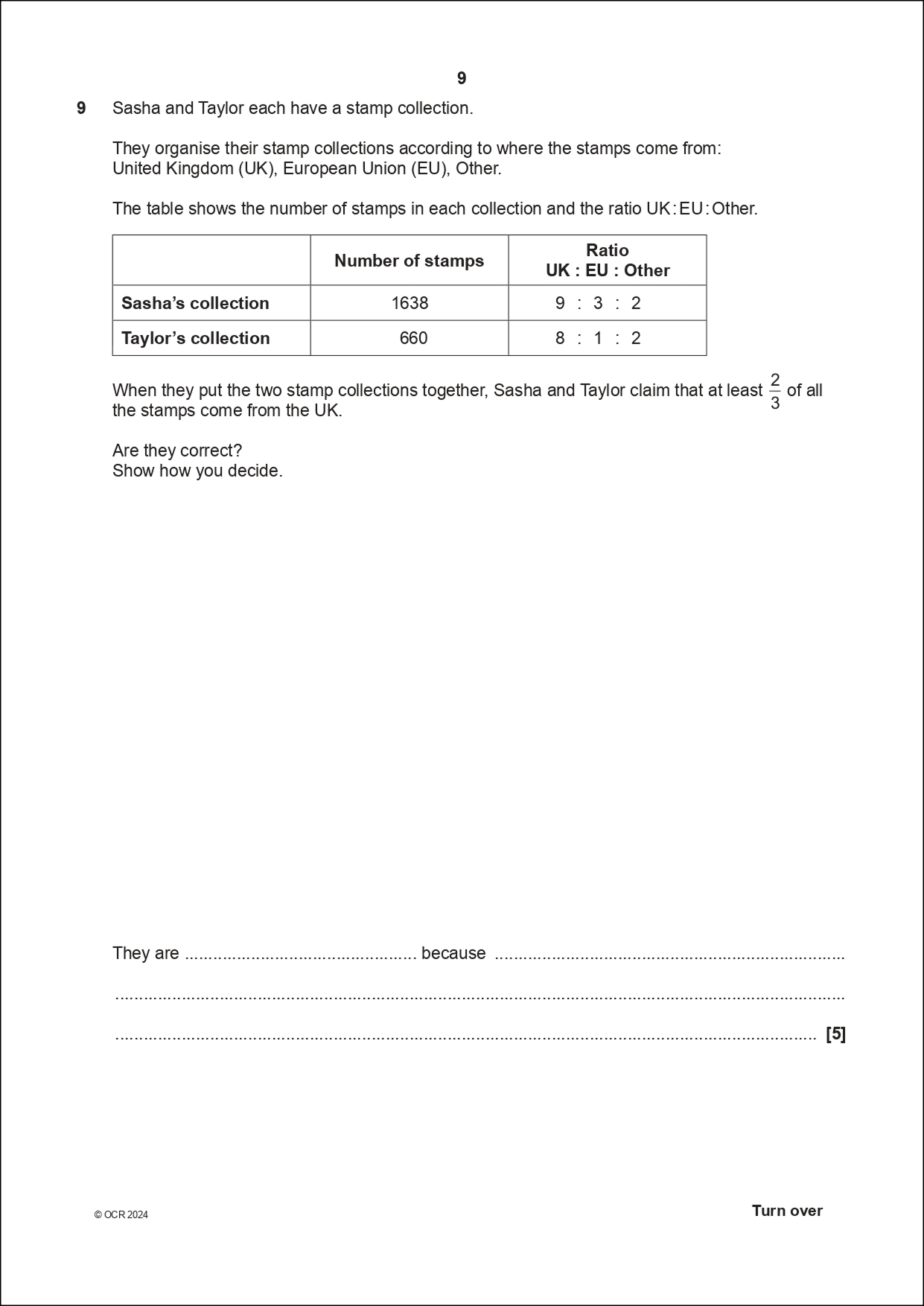
Practising with OCR past papers and mark schemes is one of the most effective ways to prepare for GCSE Maths. Past papers help you understand the question style, see how marks are awarded, and build confidence with real exam timing and structure.
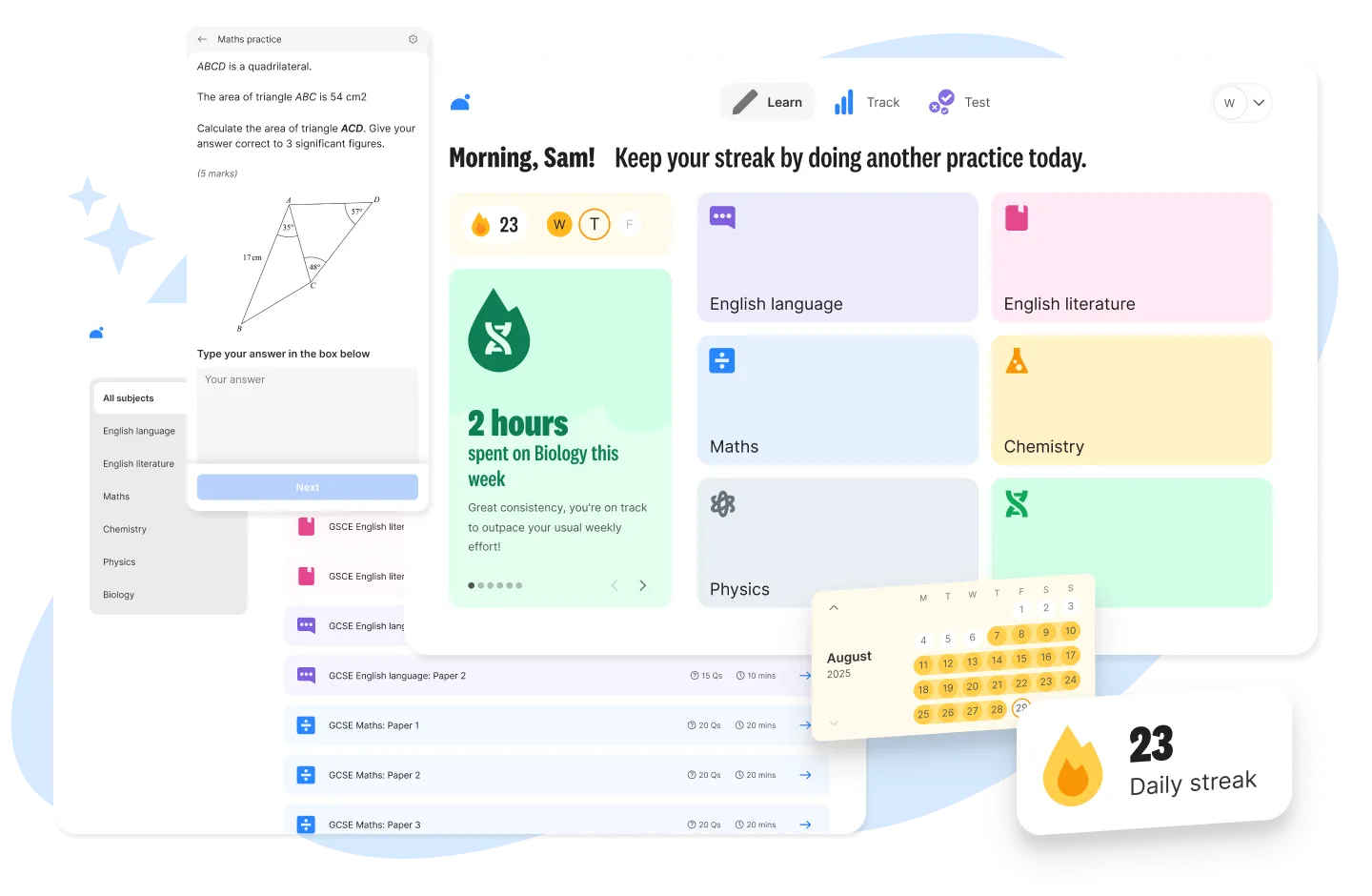
Head to the OCR website to find past papers and mark schemes from previous GCSE OCR Maths exams. Once you've worked through those, Atom gives you a fresh set of practice papers based on our team's predictions for the next GCSE year, plus instant, examiner-style feedback so you always know exactly where marks were gained or lost.
Read the examiner's report, not just the mark scheme
After every series the board publishes an examiner's report on what candidates actually did — the questions that were misread, the answers that stopped half way, the marks lost to command words. It is the closest thing to being told in advance what to avoid, and almost nobody reads it.
Start with the OCR Maths Paper 1 examiner's report (June 2025), then work through the rest on OCR Maths assessment materials.
A recent OCR Maths past paper to start with
If you want to sit one now rather than browse, use the June 2025 paper: the question paper and the mark scheme. Give yourself the real time limit, mark it against the scheme, then read the examiner's report on the same paper to see where other candidates lost the marks you lost.
Are there predicted papers for OCR Maths?
Yes. Once you have worked through the real past papers, there is nothing left that you have not already seen — and the most recent papers are the ones every other candidate has done too. Predicted papers are fresh papers written to match the style, balance and difficulty of the real thing for the year ahead.
Atom writes a set of predicted papers for OCR Maths based on our team's predictions for the next GCSE series, marked instantly with examiner-style feedback so you can see exactly where marks were gained or lost — so you can keep sitting full papers under real conditions right up to the exam.
What key topics do I need to know for OCR Maths GCSE?
OCR Maths specifications set out a broad range of topics. You’ll need a thorough understanding of each to achieve top marks, so make sure you revise any areas you find tricky ahead of the exams.
The main topic areas from the OCR specification are:
- Number: Includes calculations with integers, inverse operations and whole number theory.
- Fractions, decimals, percentages: Includes topics like decimal fractions, ordering decimals, fractions and percentages.
- Ratio, proportion, and rates of change: Includes calculations using ratio, direct and inverse proportion and discrete growth and decay.
- Algebra: Includes topics such as expressions, equations, inequalities, sequences, and functions.
- Indices and surds: Includes powers, roots, and exact calculations.
- Basic Geometry: Including conventions, notation and terms, angles, circles and polygons.
- Probability and statistics: Including sampling, analysing data and basic probability and experiments.
- Approximation and estimation
- Graphs of equations and functions: Includes straight line graphs and transformations.
Check out the OCR website for the full list.
These topics can appear in any of the three papers. For the non-calculator exam, it’s likely that topics such as simplifying, arithmetic, fractions, basic algebra and exact values will show up.
What are examiners looking for?
For OCR GCSE Maths papers, examiners aren’t just checking for the right answers; they want to see how you think. They’re looking for clear working, sensible explanations and answers that show genuine understanding of the questions.
Every question on the paper is written to show examiners what a student can really do. Each question tests one or more of the three Assessment Objectives (AOs), which we’ve laid out below to help you prepare.
The three assessment objectives are:
1. AO1 – Use and apply standard techniques
Students should be able to:
- Accurately recall facts, terminology and definitions.
- Use and interpret notation correctly.
- Accurately carry out routine procedures or set tasks requiring multi-step solutions.
2. AO2 – Reasoning, interpreting and communicating
Students should be able to:
- Make deductions, inferences and draw conclusions from mathematical information.
- Construct chains of reasoning to achieve a given result.
- Interpret and communicate information accurately.
- Present arguments and proofs.
- Assess the validity of an argument and critically evaluate a given way of presenting information.
3. AO3 – Solving problems in context
Students should be able to:
- Translate problems in mathematical or non-mathematical contexts into a process or a series of mathematical processes.
- Make and use connections between different parts of mathematics.
- Interpret results in the context of the given problem.
- Evaluate methods used and results obtained.
- Evaluate solutions to identify how they may have been affected by assumptions made.
Every OCR Maths paper provides you with the opportunity to demonstrate what you truly understand. The best way to impress examiners is to approach each question step by step, show the working clearly, and check that your answers make sense.
By practising this approach regularly, you build the habits examiners look for: clear working, logical thinking, and confidence in tackling unfamiliar problems. It’s these skills, developed over time, that help turn preparation into strong, well-earned marks on exam day.
How can I prepare for OCR Maths?
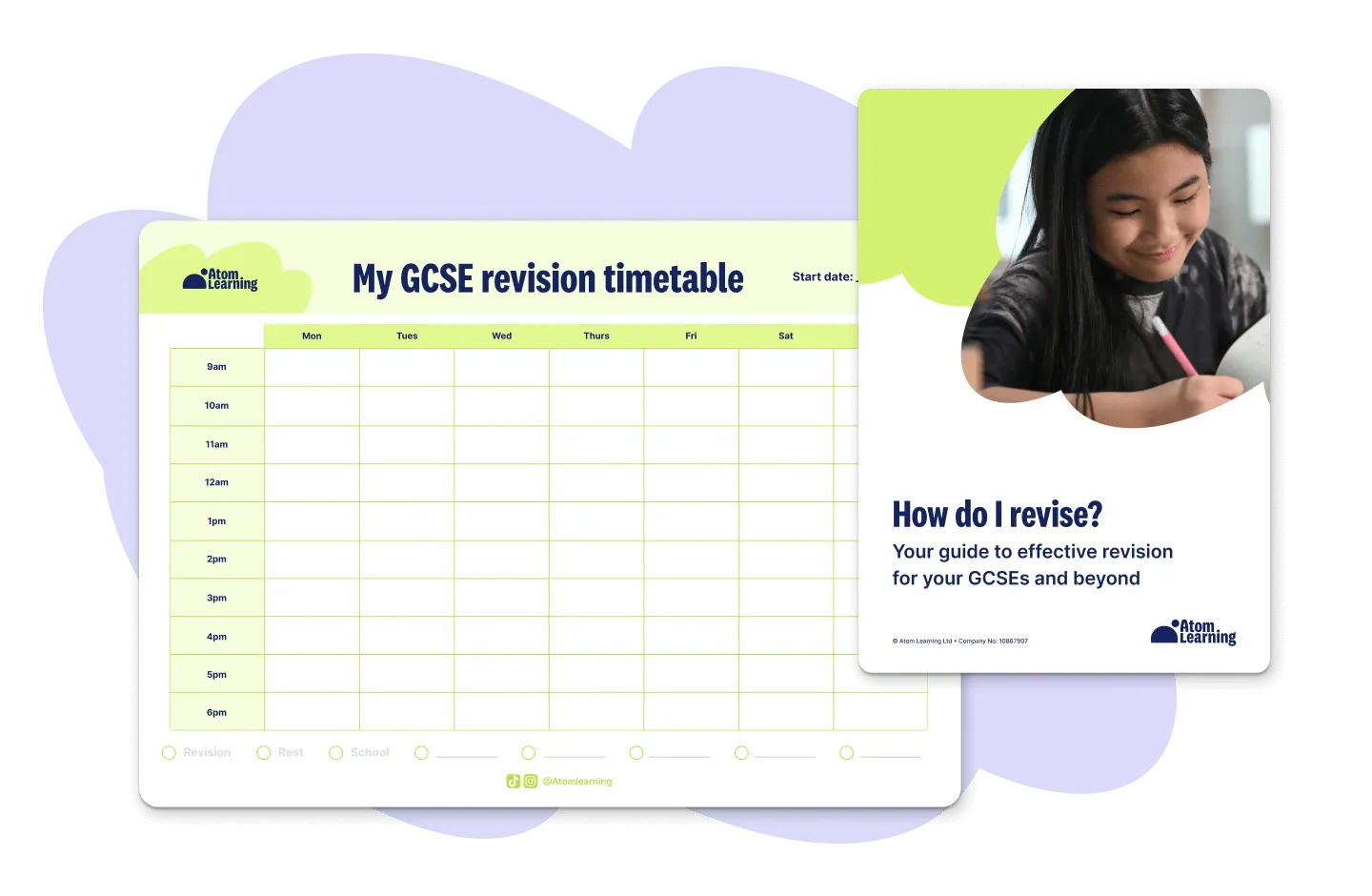
To prepare for OCR Maths exams, you’ll need to start revising early to make sure you’re confident covering all the key topics. For exam revision tips, take a look at our Maths breakdown here.
What do I need to bring to the exam?
Feeling calm and prepared on exam day starts with having everything you need ready to go. For OCR GCSE Maths, what you’ll need for exam day depends slightly on which paper you’re sitting.
For Paper 1, you’ll need:
- A black pen (bring a few spares!)
- Pencil, ruler, rubber, and sharpener.
- Protractor and compass for geometry questions.
For Papers 2 and 3, you’ll need everything above, plus a scientific calculator that meets exam board regulations. Make sure it’s in good condition with fresh batteries and that you’re confident using all its functions.
Finally, beyond Maths equipment, there are a few other essentials you’ll need for exam day:
- Make sure to have a clear pencil case.
- A bottle of water with no label.
- If you’re wearing a school uniform, pack a jumper in case the exam hall is cold.
- If your school allows non-uniform, choose clothes that feel comfortable and relaxed, so you can focus fully on the paper, not your outfit.
- If you wear glasses, double-check they are packed the night before.
- Bring any medications you may need, for example, your inhaler if you’re asthmatic.
Is there a formula sheet for GCSE Maths?
Yes! OCR provides a Formula and Tables booklet to all students during the exam. The DfE has confirmed that formula sheets will continue to be provided for Maths exams in 2025, 2026 and 2027.
This booklet will contain key formulas such as for area, volume, circle formulae, Pythagoras, and trigonometry and tables (e.g. statistical tables) that you are allowed to use in the exam. Take a look at the formula sheet for OCR 2025.
And that’s it - everything you’ll need to know to tackle OCR Maths GCSEs. Remember, proper preparation, including using practice papers and thorough revision, is the key to acing these tests.