Back to blog

Highgate School 11+ entry guide

By
Atom
|
July 28, 2026

Are you thinking about applying to Highgate School for 11+ entry? Find out everything you need to know about the admissions process and how to prepare for the entrance exam.

Key information for Highgate School

  • School type: co-educational independent day school
  • Location: Highgate, North London
  • Admissions contact: senioradmissions@highgateschool.org.uk
  • 11+ exam: school-set English and maths papers, plus GL Assessment non-verbal reasoning
  • Financial assistance: means-tested bursaries
  • Scholarships: Music Award

Important dates for 2027 entry

  • Wednesday 20th May 2026: applications open
  • Wednesday 4th November 2026, noon: application, bursary and Music Award deadline
  • Tuesday 1st December 2026: entrance exam
  • Monday 11th to Friday 15th January 2027: interviews and taster lessons
  • Friday 12th February 2027: offer letters sent
  • Wednesday 3rd March 2027: deadline for accepting offers

How to apply to Highgate School

Highgate School is selective. This means that your child will need to take an entrance exam to be eligible for a place.

You must apply for Year 7 entry via the school website. Applications open in May in Year 5 and close in November in Year 6. An application fee of £210 applies, though this is reduced for families applying for a bursary.

Highgate School sets its own English and maths papers, alongside a non-verbal reasoning test from GL Assessment. The exam takes place in December when your child is in Year 6. Around the same time, the school will also request a confidential reference from your child's current headteacher.

Children who perform well in the entrance exam are invited back for a second stage in January, made up of a group interview and taster lessons. You will receive your child's offer in February. If they are offered a place at Highgate School, you will have until early March to accept.

What will my child be tested on?

The Highgate School 11+ entrance exam consists of three papers: English, maths and non-verbal reasoning.

English

The English test lasts 45 minutes and has two sections.

In Section 1, your child will read a short extract from a story or novel and answer three questions testing their reading comprehension and their ability to analyse the effect the writer has created. These require written answers and should take around 30 minutes, including reading time.

Section 2 is a single creative writing task, such as writing the opening of a story or a description, with prompts provided to guide their answer. Marks are split between content and spelling, punctuation and grammar. Your child should spend around 15 minutes on this, leaving time to check their work.

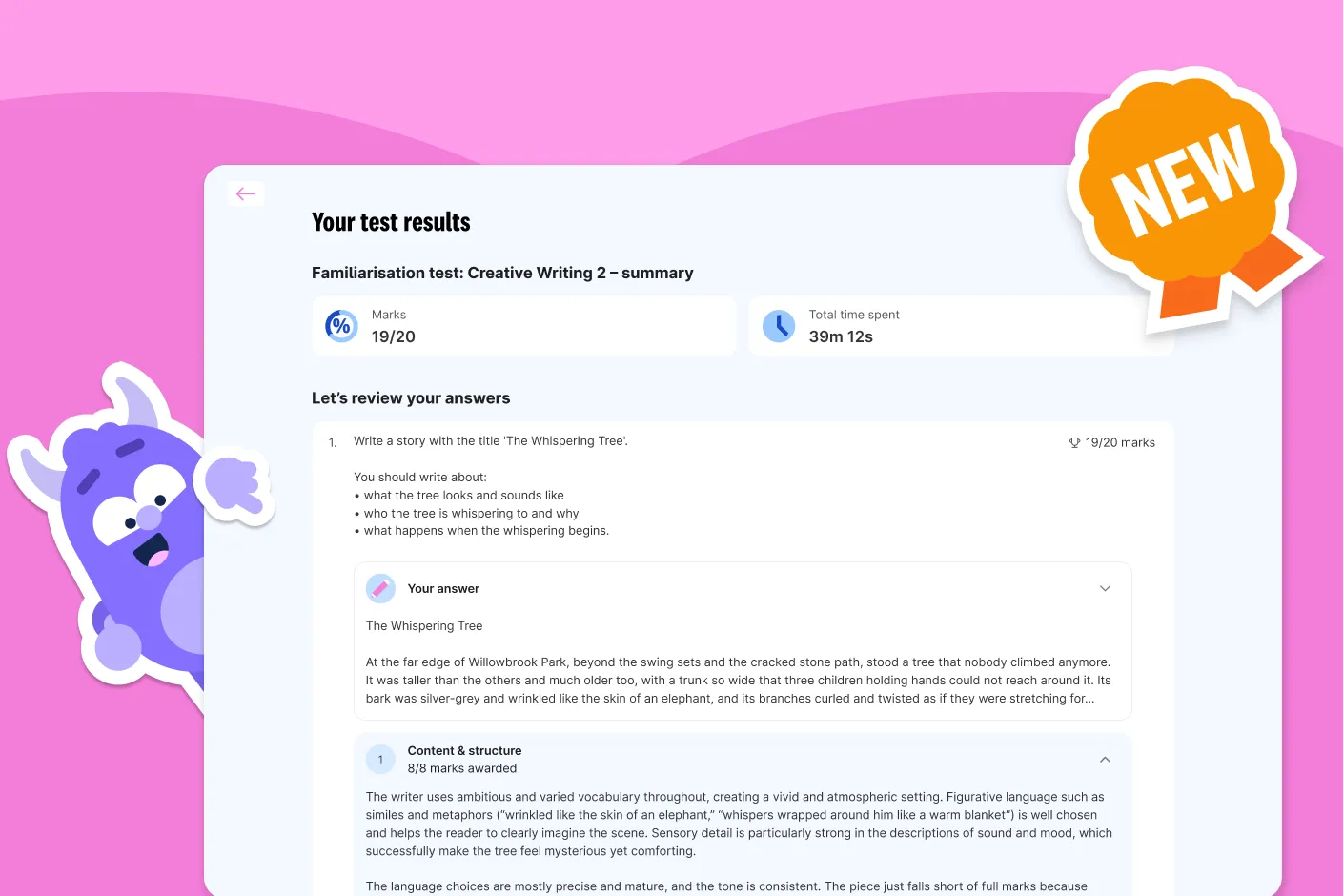
Instantly marked creative writing for ages 7–11

Creative writing is one of the hardest parts of 11+ prep to get right, with vague expectations, unclear marking, and no easy way to know how your child’s doing.

Atom’s new writing tests change that. They’re modelled on real grammar and independent school exams, marked instantly, and come with clear, expert feedback, so you can support your child with confidence.

Explore creative writing tests

Maths

The maths test lasts around 45 minutes and assesses the Key Stage 2 maths curriculum, though your child won't know in advance which topic each question covers.

There are four questions, each split into four parts of increasing difficulty. Ten minutes is allowed per question, after which all children move on to the next question together, with time built in at the end to check answers.

Non-verbal reasoning

The third paper tests non-verbal reasoning using GL Assessment papers. It lasts around 40 minutes and is divided into four sections, which your child must complete in order. All questions are multiple-choice, answered on a separate answer sheet.

How are places decided?

Alongside the entrance exam, Highgate School requests a confidential reference from your child's current headteacher. Children who perform well in the exam and reference are invited back to the school in January for a group interview and taster lessons, giving the school a chance to get to know your child further.

Offers are based on:

  • their performance in the entrance exam
  • the interview and taster lessons
  • the headteacher's reference

Offer letters are sent in February, and you will have until early March to accept a place.

Financial information

Highgate School is a fee paying school. Take a look at the school website for a full breakdown of fees per year group.

Financial assistance

When exploring independent schools for your child, scholarships and bursaries are worth considering. They can ease the pressure of school fees and open doors to opportunities that might otherwise feel out of reach.

Scholarships

Highgate School offers a Music Award for 11+ entry, recognising musical talent and ability rather than academic performance alone.

Awards like this often come with a small fee reduction and acknowledge your child's talents, motivating them and boosting their confidence. Some schools automatically consider all applicants, while others may request an additional application, assessment or audition.

Visit Highgate School's website to see the scholarships available and how to apply.

For more information, read: Your guide to independent school scholarships.

Bursaries

Bursaries are means-tested awards (based on a family's financial situation) designed to make independent education more accessible. Depending on your circumstances, a bursary could cover part or all of the school fees and sometimes extras like uniforms, IT or educational trips.

Families provide financial information to qualify, and awards are reassessed each year. For many families, bursaries make an excellent education possible that might otherwise seem out of reach.

Visit Highgate School's website to find out what bursaries are available and how to apply.

For more information, read: Bursaries: a parents' guide
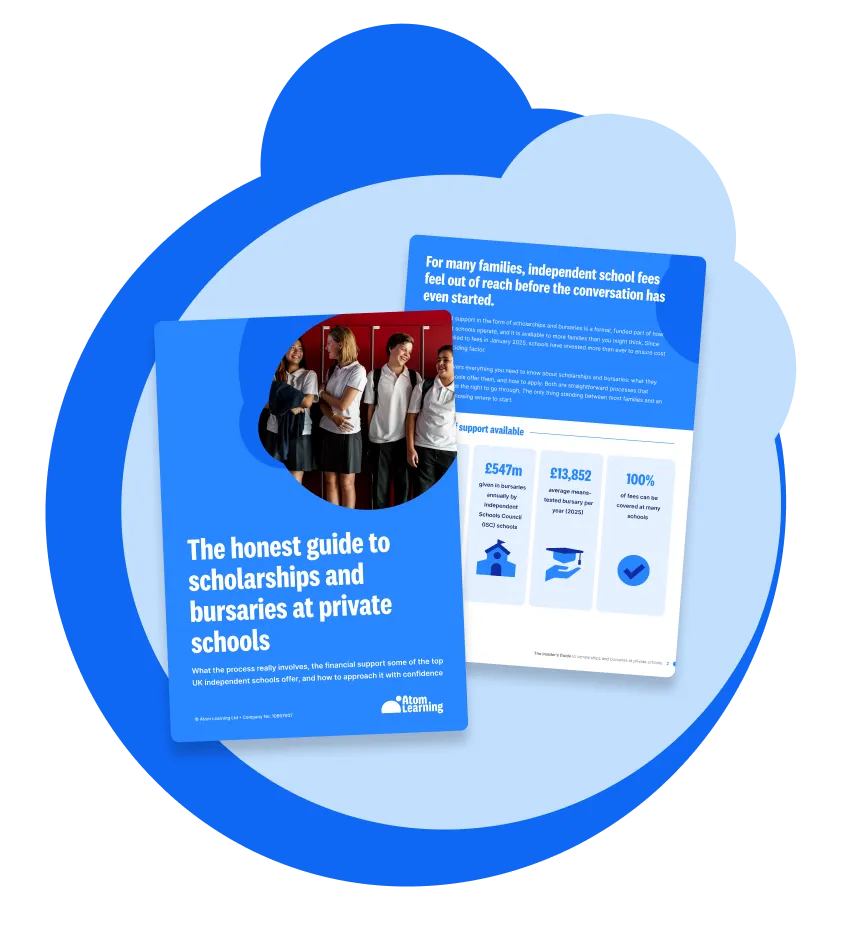
Your guide to scholarships & bursaries

Financial support for independent school fees is more available than most families realise.

This free guide is an honest look at how scholarships and bursaries work in practice: what they cover, how the timeline unfolds from Year 4 to Year 6 and how to approach admissions with confidence.

Download the guide

How can I help my child prepare for the test?

Applying to senior school can feel like a big milestone, but preparation doesn't have to be overwhelming. Here's how you can help your child prepare for test day.

Stay on track with a clear plan

One of the hardest parts of exam preparation is knowing what to focus on, when, and how to make steady progress without it taking over family life.

A clear, structured plan helps your child feel less overwhelmed and more in control. It ensures they build skills in the right order, cover everything they need, and avoid last-minute cramming.

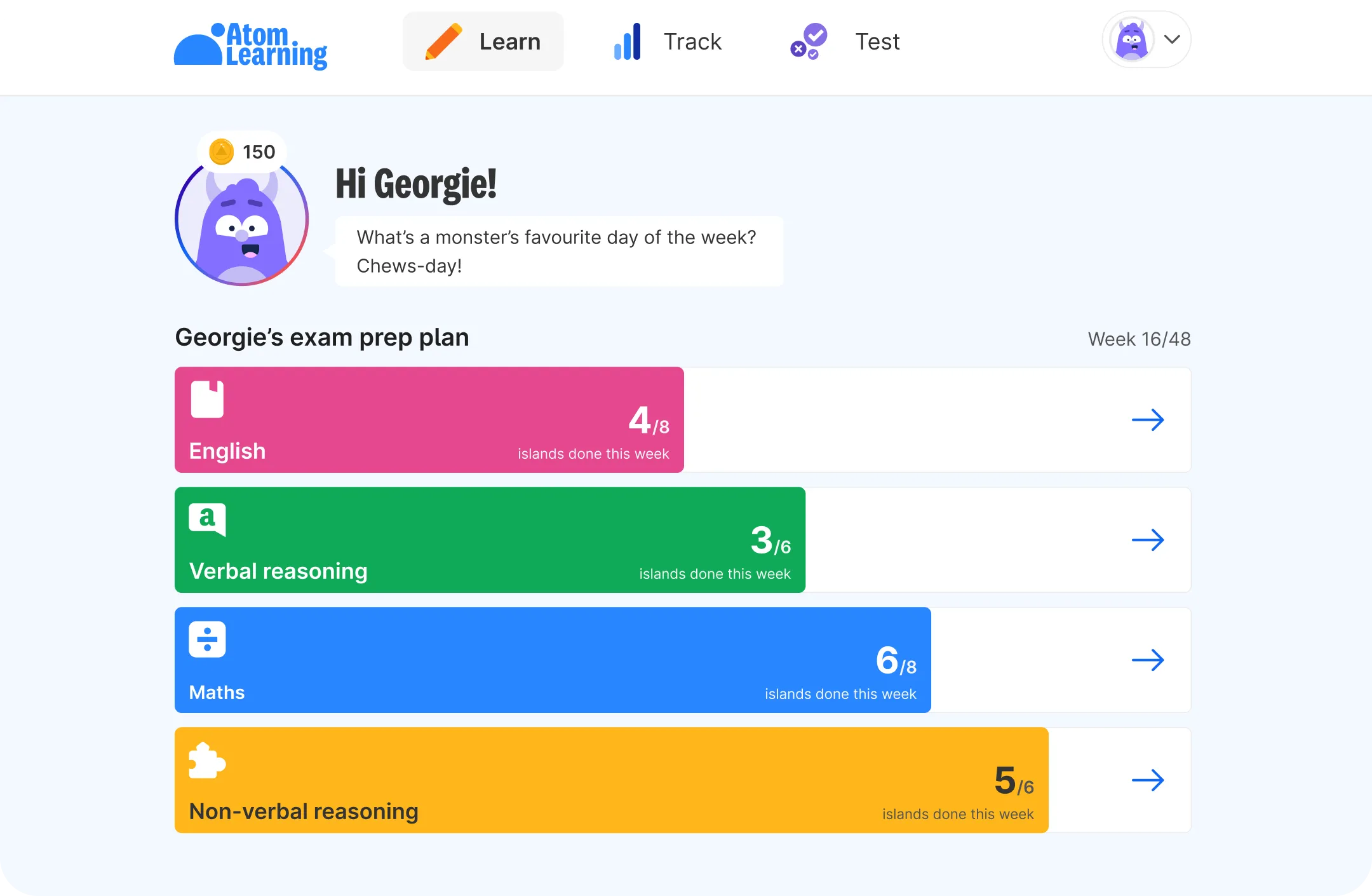
Atom's exam plan makes this easier. Enter your child's target schools and exam dates, and we'll create a personalised weekly plan tailored to the topics they'll be tested on. It shows them what to work on and when, adapts as they improve, and helps them build progress in a calm, manageable way — little and often.

That means less guesswork for you, less stress for them, and a clearer path all the way to exam day.

Build smart exam technique

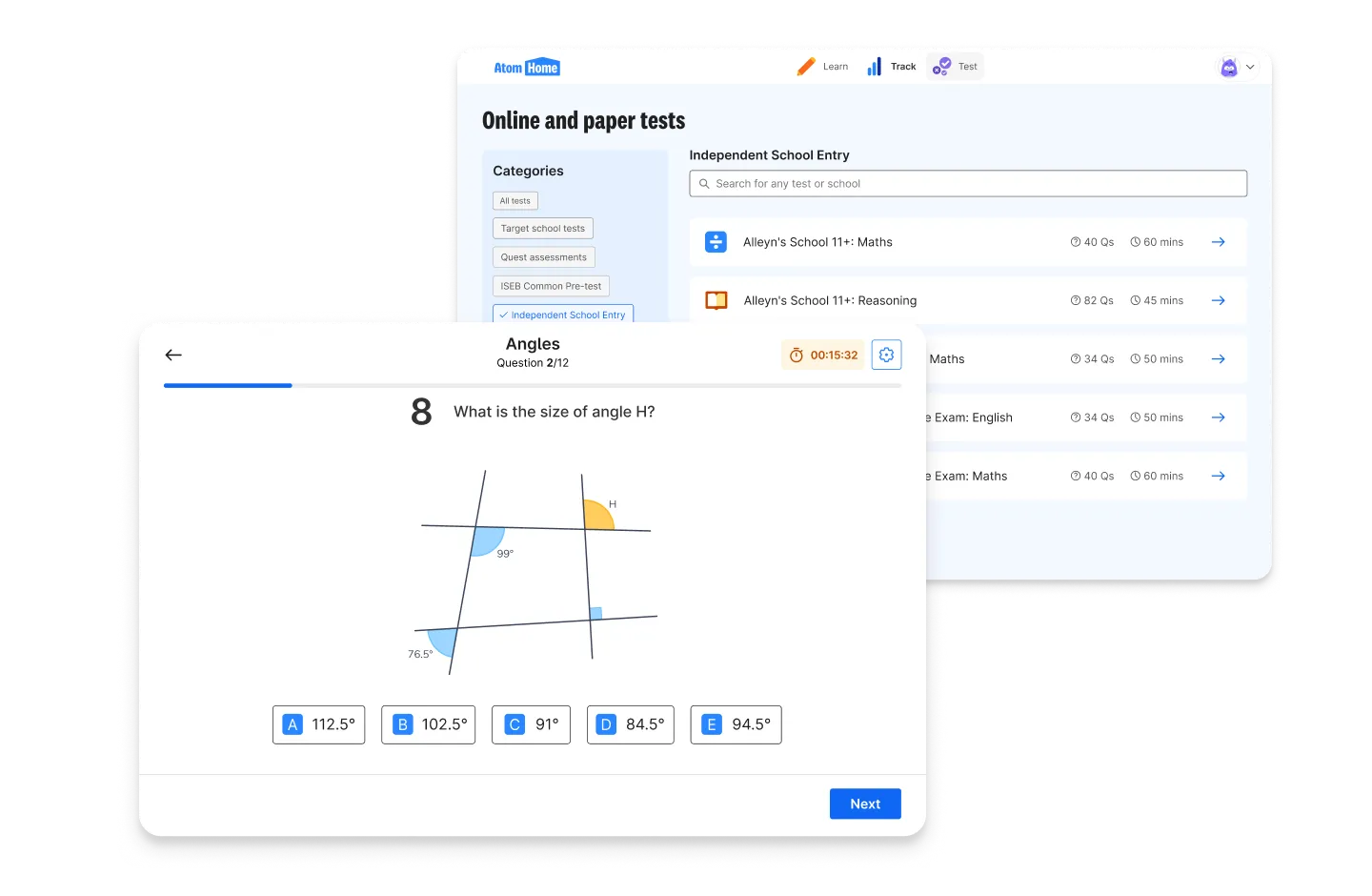
As your child's knowledge grows, practice tests can help them feel more comfortable with the real exam format.

Atom's mock tests are exact replicas of real entrance exams. They're also unlimited — your child can take the same test repeatedly and see new questions each time. This helps them practise without repeating the same content.

Atom's mock tests are automatically marked. You'll see your child's standardised age score (SAS), where they're doing well, and what they should focus on next. You'll also learn how they compare to other children applying to the same school.

Encourage regular reading

Strong reading skills play a big role in preparation for entrance exams.

Encourage your child to read every day, even for just 10–15 minutes. The key is variety. Mix fiction and non-fiction, different genres, and a range of authors. This helps them become more confident in understanding tone, purpose, and meaning across different texts.

Over time, regular reading will:

  • broaden their vocabulary
  • improve comprehension and inference
  • build confidence in tackling unseen texts

And just as importantly, it can help them enjoy reading — not just see it as exam preparation.

Looking for inspiration? Atom's reading and writing starter kit has suggestions spanning fiction and non-fiction for Years 3–6.

Celebrate progress, not just scores

When you're supporting your child through exam preparation, what really matters is knowing they're moving in the right direction — not just how they scored on a single test.

Atom's progress tracking gives you a clear, simple picture of how your child is doing in each topic and the direction they're moving in. You can see where they're on track, where they might need more practice, and spot progress as it happens.

That makes it easier to give meaningful encouragement, keep motivation steady, and focus on what matters most: consistent improvement, not just one-off results.

No items found.
No items found.
No items found.

Take control of your child’s independent school prep.

Worried about keeping pace with the competition? Independent school exams can feel unpredictable, but your child’s preparation doesn’t have to be. Atom shows you exactly what to practise and how they’re performing, so you can stay ahead throughout the admissions process. 

Partnered with leading independent schools, trusted by families.

Start your free trial and help your child get ready for senior school entry.

Try Atom for free

Contents