

How to choose your GCSEs: a step-by-step guide
Here’s how to choose your GCSEs with confidence, whether you have specific career plans or simply want to keep your options open.
1. Start with what you enjoy
Studying something you enjoy often leads to better grades. Ask yourself:
- Which lessons do I look forward to?
- Where do I feel confident?
- Which topics interest me most?
Like with anything in life, the more enjoyment you get out of something, the better the results are. Keep that in mind when you’re picking your GCSEs.
2. Think about the skills different subjects build
Choosing GCSEs isn’t only about content - it’s also about the skills each subject develops.
- Humanities (such as history and geography): extended writing, critical thinking
- Languages: communication, memory skills, cultural awareness
- Creative subjects (such as art, drama or music): creativity, interpretation, improvisation
- Computer Science & DT: logic, coding, problem-solving
Think of it as unlocking a new ability. If you want to be a lawyer, which skills would be most helpful?
3. Choosing GCSEs for specific career paths
If you already have a career in mind, here are common GCSE choices that support certain pathways:
STEM careers (maths, engineering, medicine, technology)
- Triple Science
- Maths
- Statistics
- Computer Science
Creative careers (art, media, design, performance)
- Art
- Drama
- English Literature
- Music
- Media Studies
Business or finance careers
- Business
- Economics
- Computer Science
- Maths
- Statistics
Law, humanities, journalism
- History
- English Literature
- English Language
- Geography
- Modern Languages
You don’t need to have your entire career planned out, but these subjects align well with broad career pathways.
4. Keep your options open if you’re unsure
Lots of students don’t yet know what career they want, which is completely normal. If you’re not sure, choose GCSE options that:
- Genuinely spark your interest
- You’re good at
- Develop valuable skills
- Keep your A-level options open
A balanced mix often includes:
- One humanities subject
- One creative or technical subject
- One subject you simply enjoy
5. Check sixth-form or college entry requirements
Some A-level courses require specific GCSEs. For example:
- A-Level Maths → usually a Grade 6 or 7 in GCSE Maths
- A-Level Sciences → strong grades in Double or Triple Science
- A-Level Languages → At least a Grade 5 at GCSE in that language
Think ahead. A quick look now can make choosing GCSEs much easier.
6. Speak to people who know you well
It’s not easy for everyone to pick out what they’re good at or enjoy. Talk to teachers, parents, your friends, or older students. More often than not, they’ll spot strengths you haven’t noticed.
7. Don’t choose based on what your friends do!
It’s one of the most common GCSE mistakes. Choose subjects for you - not to match your friends’ timetables. It might seem like the fun option, but you’ll likely end up in classes that feel like a drag!
How Atom helps you work towards your goals
Whatever GCSEs you choose, good grades come from having a clear structure and understanding how to improve.
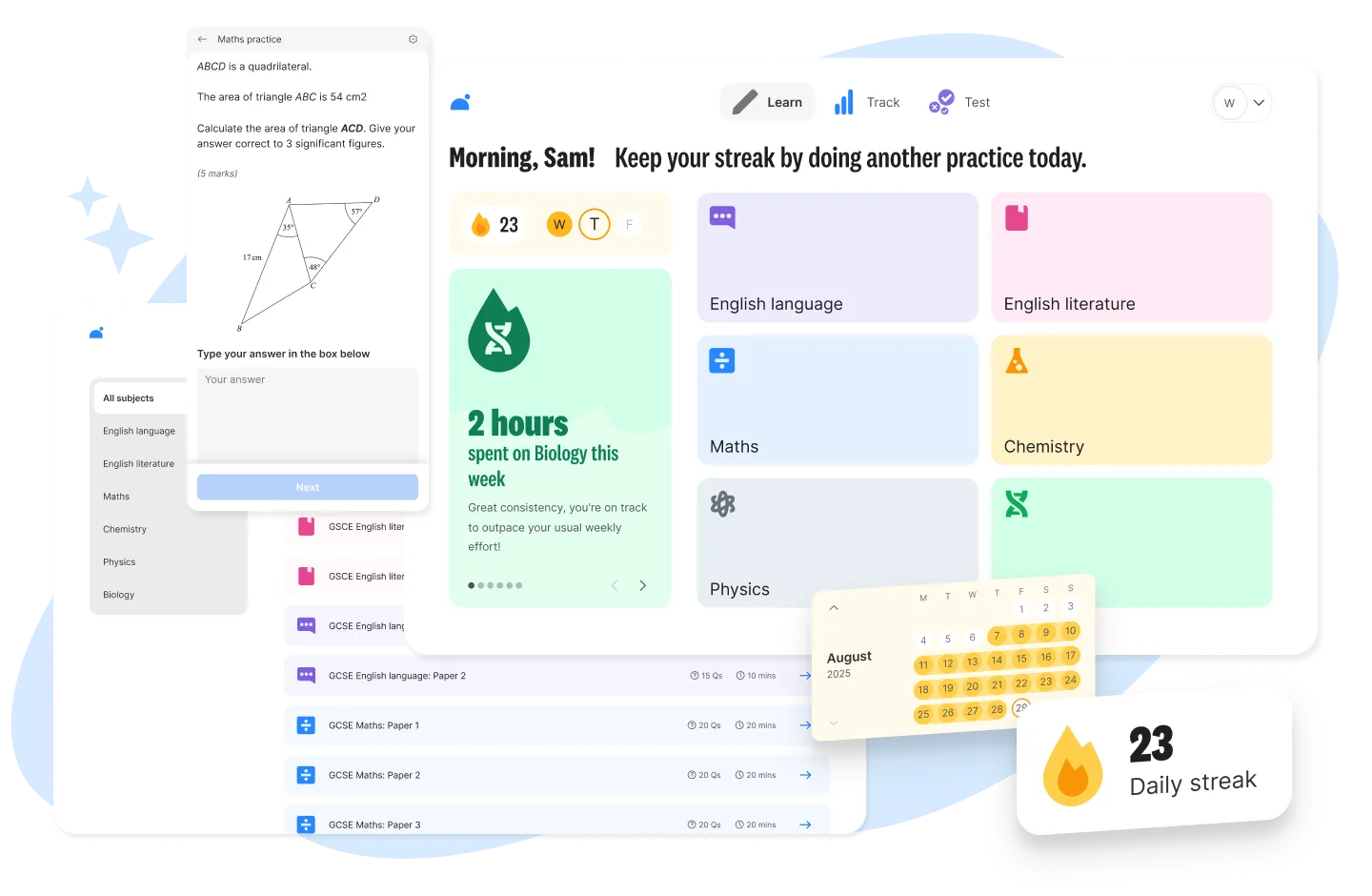
Atom gives you everything you need to revise with confidence:
- Practice questions and papers specific to your subjects and exam boards
- Instant, examiner-style feedback showing how to improve
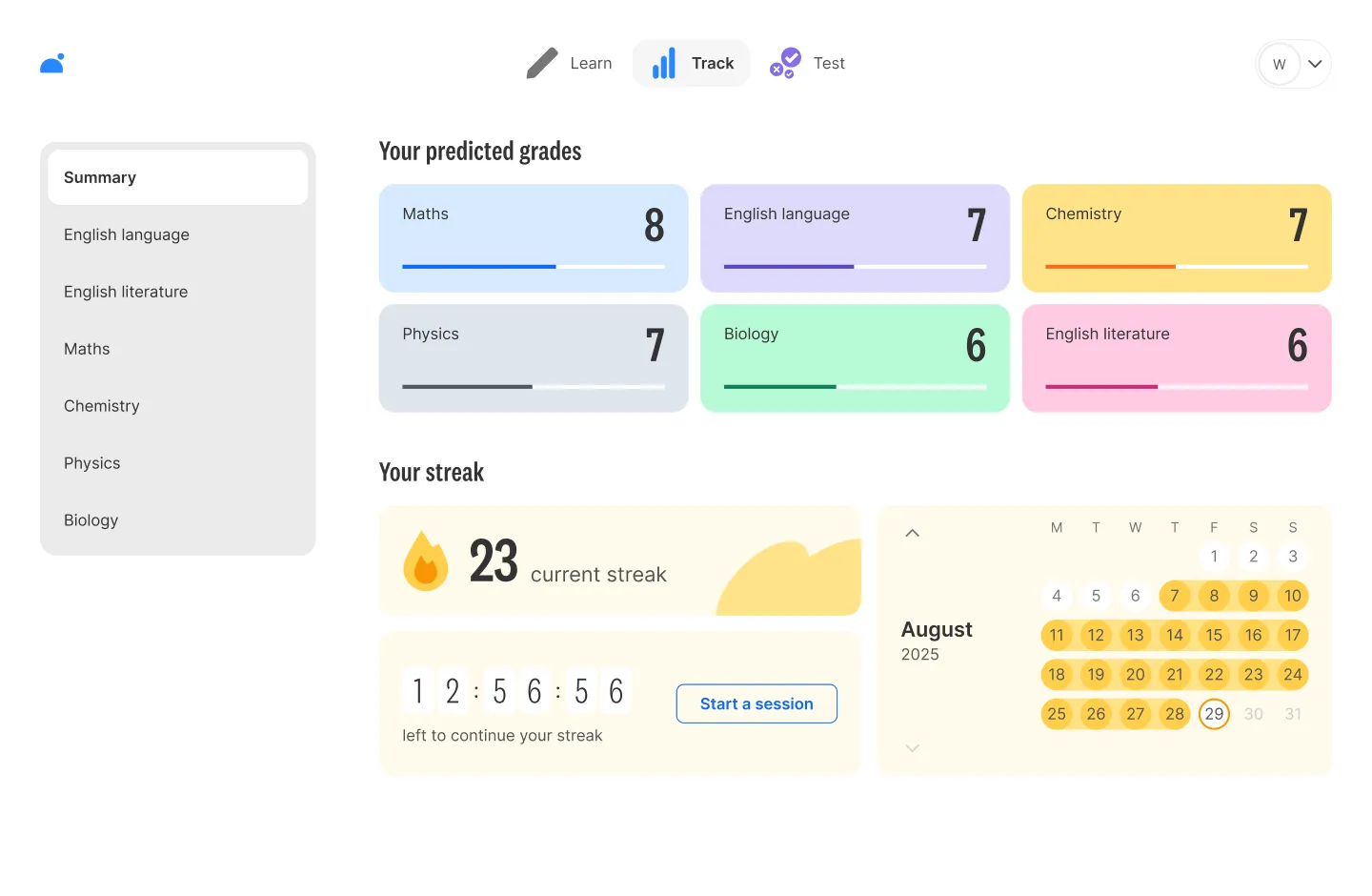
- Progress tracking in all your course topics
- Predicted grades for all your subjects
It’s your online GCSE partner.
Atom GCSE is launching in February 2026. Join the waitlist to get free, early access.