

Back to blog

Cambridge IGCSE Biology: everything you need to know

By
Atom
|
September 2, 2026

Studying Cambridge IGCSE Biology? Here's a full breakdown of the exam, so you know exactly what to expect.

If you're taking this course at an international school, you're working towards Cambridge's own IGCSE qualification, officially called Biology (0610). This guide walks you through how the papers are structured, what you'll be tested on, and how to prepare with confidence. Read on to find out more.

Key takeaways:

  • Cambridge IGCSE Biology is graded A* to G, not the 9 to 1 scale used in the UK's domestic GCSE.
  • You'll take papers from either the Core route (grades capped at C) or the Extended route (full A* to G range), plus a practical component.
  • Your school decides which route and which practical option you take.

What's the format of the Cambridge IGCSE Biology exam?

Your school will choose whether you follow the Core or Extended route, plus one of two practical options.

If you're on the Core route, you'll sit:

  • Paper 1: Multiple Choice. 45 minutes, worth 40 marks.
    • 40 questions, each with four possible answers, covering the Core content only.
  • Paper 3: Theory. 1 hour 15 minutes, worth 80 marks.
    • A mix of short-answer and structured questions on the Core content. This route caps your grade at a C.

If you're on the Extended route, you'll sit:

  • Paper 2: Multiple Choice. 45 minutes, worth 40 marks.
    • 40 questions, each with four possible answers, covering the Core content plus the extra Supplement topics.
  • Paper 4: Theory. 1 hour 15 minutes, worth 80 marks.
    • A mix of short-answer and structured questions covering the Core content plus the Supplement topics. This route gives access to the full A* to G grade range.

Everyone also sits one of these two practical options:

  • Paper 5: Practical Test. 1 hour 15 minutes, worth 40 marks.
    • A hands-on lab exam where you'll use apparatus safely, take accurate measurements, record results in tables, and make labelled biological drawings.
  • Paper 6: Alternative to Practical. 1 hour, worth 40 marks.
    • A written paper that tests the same practical skills without a lab, such as interpreting given data, planning an experiment on paper, and spotting errors or improvements in a method.

Ask your teacher which route and practical option applies to you, as this affects how you should prepare.

Full details are in the official Cambridge IGCSE Biology specification.

What are the grade boundaries for Cambridge IGCSE Biology?

It's important to remember that the exact grade boundaries for your exams will change every year. Cambridge sets them after the exam has been sat, based on how difficult the papers were and how the whole cohort performed.

Your final grade combines several papers, and depends on whether you took Core or Extended, so there isn't one single number that applies to everyone. Cambridge publishes the exact thresholds for every paper after each series on its grade threshold pages.

Use last year's thresholds as a general guide to what a strong answer looks like, not as a fixed target. Boundaries can move by several marks either way from one series to the next.

What are examiners looking for?

Cambridge marks your answers against three skills, called assessment objectives. Examiners want to see that you can:

  • Show knowledge and understanding of biological facts, concepts and processes, worth 50% of your final grade.
  • Handle information and solve problems, applying what you know to new situations, worth 30%.
  • Show experimental skills, including planning, carrying out and evaluating investigations, worth 20%.

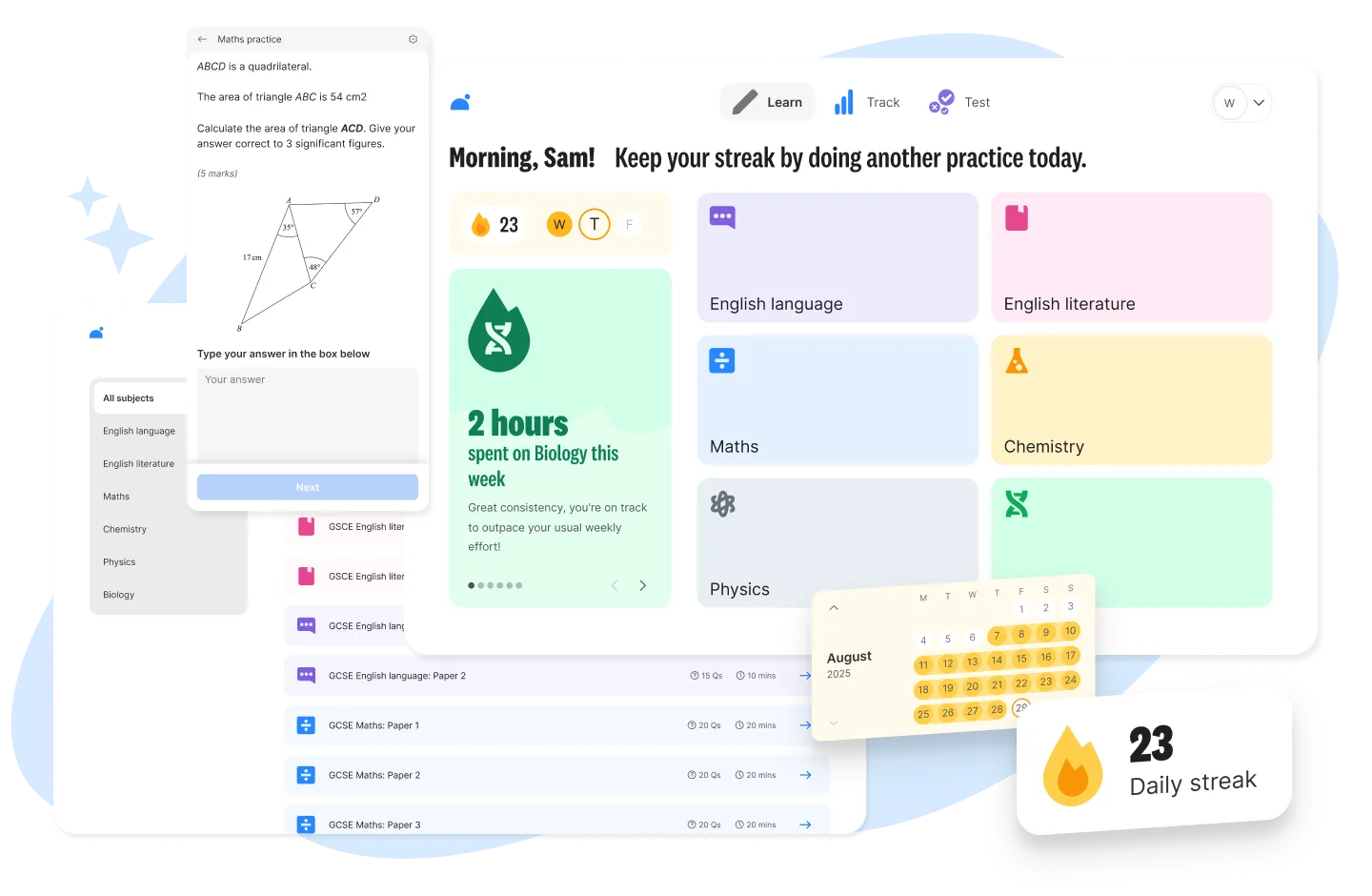
This is exactly what Atom GCSE is designed to support. It tracks your practice against each of these three assessment objectives separately, so you can see exactly where you're hitting the marks examiners are looking for and where you still need to improve.

It then shapes what it gives you to practise next around those gaps, with instant, examiner-style feedback on every answer, so you always know precisely where you're losing marks and what to change next time.

Past papers and resources

Cambridge publishes past papers, mark schemes and examiner reports for Biology (0610) on its past papers page. These are the best way to see exactly how questions are worded and how marks are awarded.

Atom gives you unlimited practice papers and questions, including predicted papers that Atom's team of experts build by analysing exam trends and data for the year ahead. And the best part? You don't have to mark them yourself, Atom's instant feedback lets you know exactly how you've done.

Take a look at our guide on how to get the most out of GCSE past papers to make sure you're getting the most out of both.

Not sure where to start with revision? We've got you.

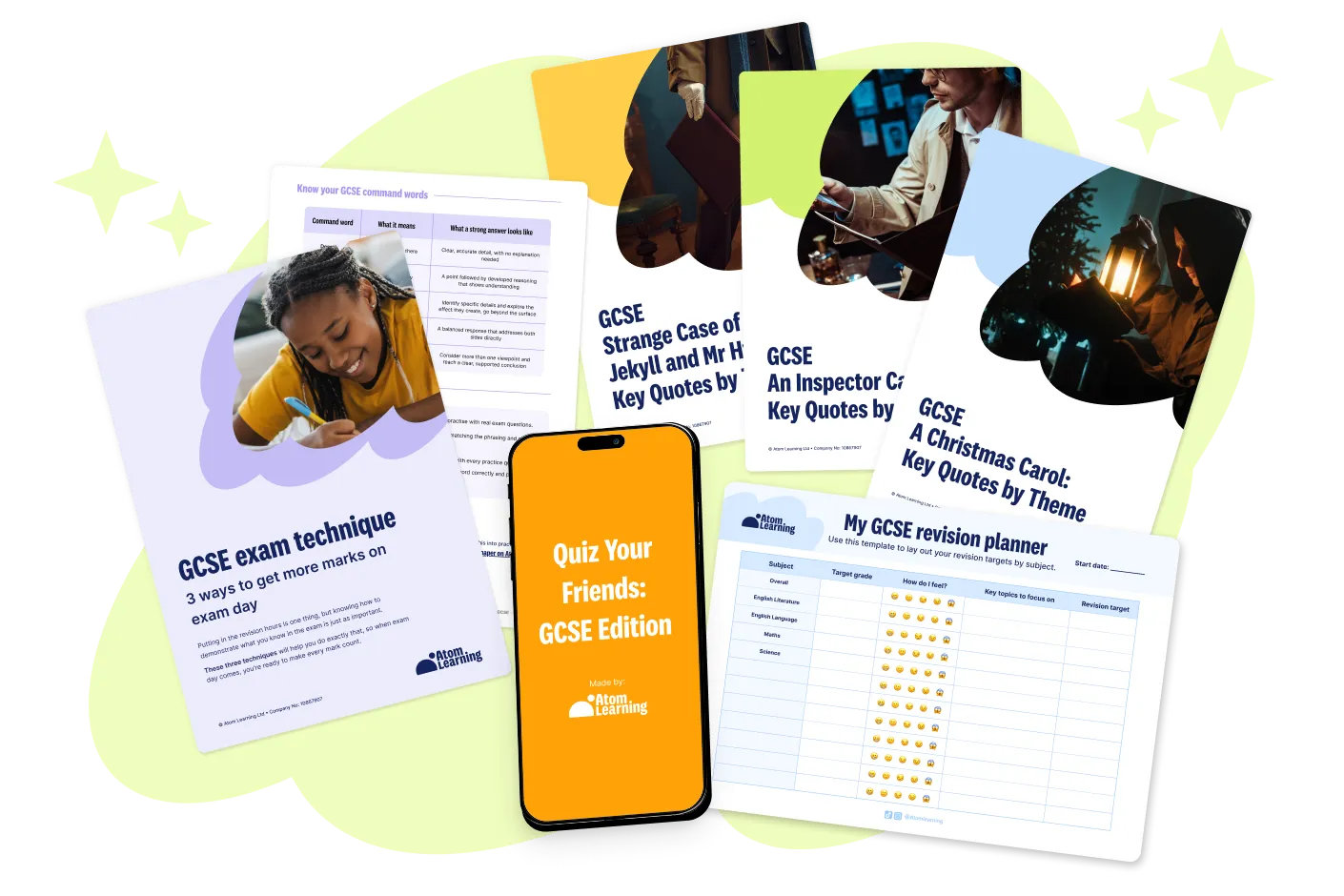
From revision planners to formula sheets, we've got the tools to make revision feel a little less daunting.

All free. All in one place.

Let's get started

How can I prepare for Cambridge IGCSE Biology?

Here are 5 top tips to help you get ready:

1. Learn processes as labelled diagrams, not paragraphs

Biology is full of processes like photosynthesis, respiration and the menstrual cycle, and these are much easier to recall as a diagram than as blocks of text. Redraw key diagrams from memory, then check them against your notes.

Top tip: Practise labelling a blank diagram of each major process until you can do it without looking, since diagram-based questions are common across every paper.

2. Practise applying knowledge to unfamiliar contexts

A large share of your marks come from applying what you know to new examples, not just recalling facts. When you revise a topic, find a past paper question that uses an unfamiliar scenario and practise applying the same idea.

Top tip: After each topic, ask yourself "how could this appear in a different context?" and try to answer your own question.

3. Get comfortable with practical and data questions

Whether you sit the Practical Test or the Alternative to Practical paper, both test the same experimental skills, including identifying variables, reading graphs and evaluating methods. Practise past questions on experimental design regularly, not just content recall.

Top tip: When asked to evaluate an experiment, always mention at least one improvement and explain exactly how it would improve accuracy.

4. Use command words to guide your answer length

Command words like "state," "describe" and "explain" each need a different depth of answer, and misjudging this costs easy marks. Check the number of marks available and match your answer length to it.

Our free GCSE exam techniques guide has a section that breaks down exactly what each command word is asking for, to help you nail this exam technique before exam day.

Top tip: If a question is worth 3 marks, aim for three distinct, clearly separated points, not one long sentence.

5. Get comfortable with the exam format, not just the content

Knowing your biology content is only half the story. Doing well on exam day also depends on knowing exactly what to expect, how questions are worded, how long to spend on each one, and what a strong answer looks like under time pressure.

Build regular timed practice into your revision routine at least once a fortnight in your final term, so the format feels familiar rather than unfamiliar.

Top tip: Atom's practice questions and predicted papers are built to test exactly this, giving you feedback that shows whether you're losing marks on your content knowledge or on your exam technique, so you know exactly what to work on next.

Biology rewards steady, varied practice more than last-minute cramming, so keep testing yourself on diagrams, data and unfamiliar contexts and you'll build real confidence for exam day.
No items found.
No items found.
No items found.
No items found.

Take control of your GCSE revision

Everything you need for GCSE success, in one place.

Feeling confident about your GCSEs comes from knowing what to revise, how to improve, and where to focus next.

🔮 GCSE practice papers based on our team's 2026 exam predictions

🎓 Guided courses that cover all the topics on your exams

✍️ Instant feedback that tells you where you’ve gained and lost marks

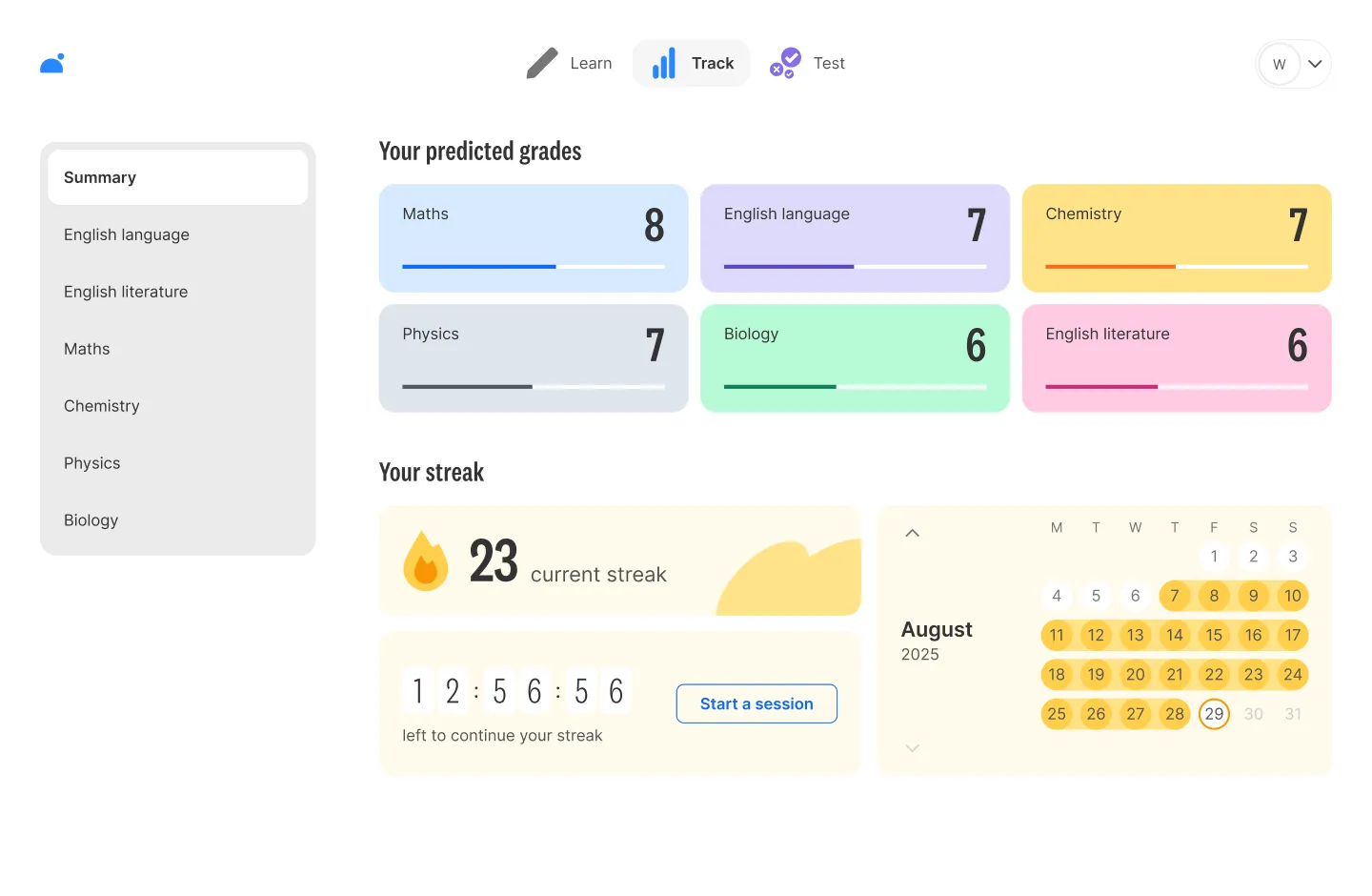
📈 Predicted GCSE grades and topic-by-topic tracking

Know where you stand and how to improve

Create your free account and start making real progress today.

Online GCSE revision

Contents