
Everything you need to know about Cambridge iGCSE Maths

Tackling Cambridge iGCSE Maths? Take a look at our guide to the exam to get prepared.
Whether you're just starting your course or preparing to sit your final exams, understanding the format of the papers, what examiners are looking for and what marks you might need to get your target grade will help keep your revision on track.
Not sure which exam board your school uses? Take a look at our guide to finding out which exam board you're studying.
Key takeaways:
- Cambridge iGCSE Maths (0580) is split into two tiers: Core and Extended.
- You'll sit two papers for your tier, one without a calculator and one with.
- No formula sheet is provided in the exam, so key formulae need to be learned.
What's the format of the Cambridge iGCSE Maths exam?
Cambridge iGCSE Maths (0580) consists of the following:
- Core tier: Paper 1 (no calculator, 1 hour 30 minutes, 80 marks) and Paper 3 (calculator allowed, 1 hour 30 minutes, 80 marks). Total: 160 marks.
- Extended tier: Paper 2 (no calculator, 2 hours, 100 marks) and Paper 4 (calculator allowed, 2 hours, 100 marks). Total: 200 marks.
- Each paper is weighted at 50% of your final mark.
- There's no coursework. Both papers are set and marked externally by Cambridge.
What's the difference between Core and Extended for Cambridge iGCSE Maths?
Cambridge iGCSE Maths is split into Core and Extended tiers, depending on your level.
Core tier:
- Covers the essential topics you need to know and leaves out the more demanding content.
- The highest grade you can achieve on Core is a grade C.
Extended tier:
- Covers everything in Core, plus more advanced topics and harder problem-solving.
- Grades range from A* down to E on Extended.
Your school will usually recommend a tier based on your performance earlier in the course. If you're hoping to take Maths further at A-Level or an equivalent qualification, you'll need to be entered for Extended, since Core caps out at a C.
Not sure where to start with revision? We've got you.
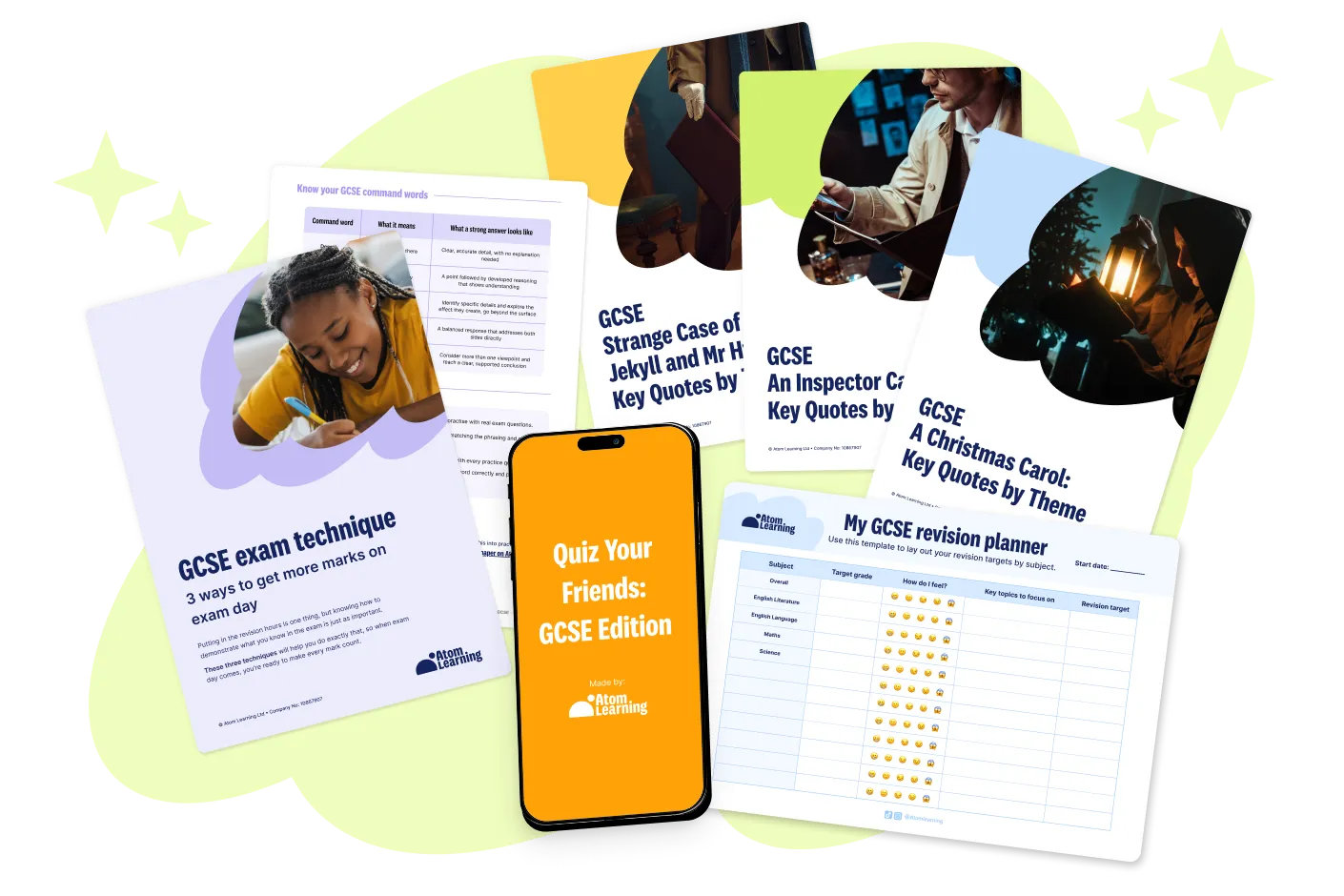
From revision planners to formula sheets, we've got the tools to make revision feel a little less daunting.
All free. All in one place.

What are examiners looking for?
Cambridge iGCSE Maths has two assessment objectives:
- AO1: Knowledge and understanding of mathematical techniques. This means showing you can use the right method and get an accurate answer.
- AO2: Analyse, interpret and communicate mathematically. This means applying what you know to solve problems, explain your reasoning, and set out your working clearly.
On Core, AO1 makes up around 60-70% of the marks, so a lot of your marks come from applying methods correctly.
On Extended, that shifts; AO2 rises to around 50-60%, so more of your marks depend on reasoning through a problem and explaining your approach, not just getting the right method down.
What are the grade boundaries for Cambridge iGCSE Maths?
It's important to remember that the exact grade boundaries for your iGCSE exams will change every exam series.
Cambridge adjusts grade boundaries after each exam, depending on how difficult the papers were and how students performed overall. This keeps things fair, so a grade C reflects the same standard of work whether you sat the exam this year or last year.
Cambridge publishes a grade threshold table for Mathematics 0580 after each series, alongside the past papers and mark schemes. Take a look at the most recent grade thresholds here to get a sense of how grades are awarded.
Where can I find past papers and mark schemes?
Practising with past papers and mark schemes is one of the most effective ways to prepare for Cambridge iGCSE Maths. Past papers help you get used to the style of questions, see exactly how marks are awarded, and build confidence with real exam timing.
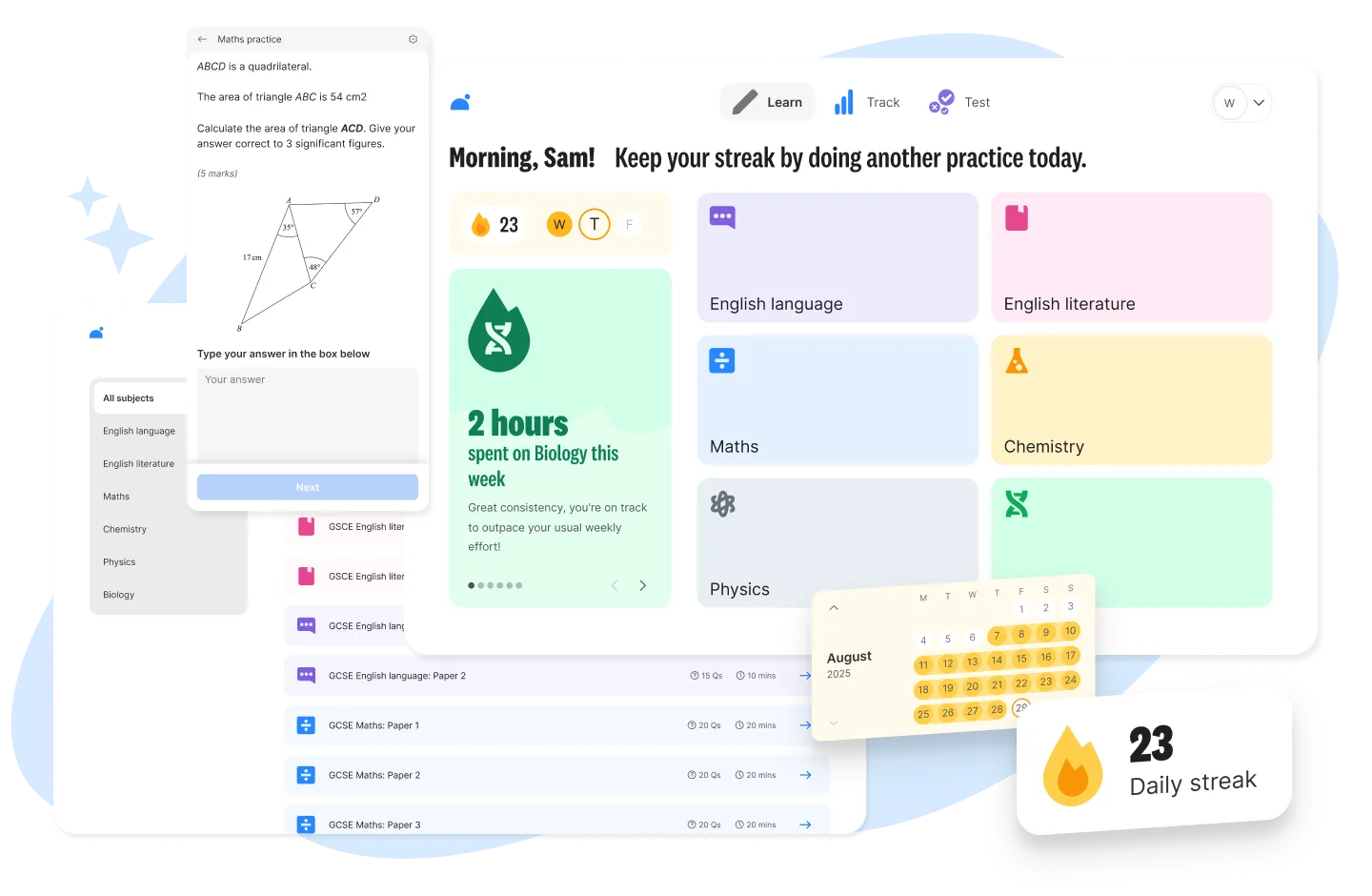
Atom has predicted papers and past papers to help you prepare for your iGCSE. Take a look at what's available.
You can also find official past papers, mark schemes and grade thresholds for Mathematics 0580 on the Cambridge International website.
What key topics do I need to know for Cambridge iGCSE Maths?
Cambridge iGCSE Maths covers nine topic areas. You'll need a solid understanding of each one to do well, so make sure you revise any topics you find tricky ahead of the exam.
The main topics are:
- Number
- Algebra
- Coordinate geometry
- Geometry
- Mensuration
- Trigonometry
- Vectors and transformations
- Probability
- Statistics
Check the Cambridge iGCSE Mathematics 0580 syllabus to see exactly what's covered at your tier.
How can I prepare for Cambridge iGCSE Maths?
Here are 5 top tips for preparing for your Cambridge iGCSE Maths exam:
1. Show your working, every time
Marks are often awarded for method, not just the final answer. If you make a small slip but your method is clearly shown, you can still pick up most of the marks. Get into the habit now, so it becomes automatic by exam day rather than something you have to remember under pressure.
Top tip: it's hard to know if your working is good enough without someone checking it properly. Atom gives instant, examiner-style feedback on exactly where you gained and lost marks for every question you answer, so you're not left guessing.
2. Practise both with and without a calculator
Since you'll sit one paper of each, don't neglect your non-calculator skills. Mental arithmetic and estimation come up often on the non-calculator paper, and it's easy to let this slip if most of your practice happens with a calculator in hand.
Top tip: if you're not sure which skills need the most work, Atom breaks practice down by topic, making it easy to spot the gaps between your calculator and non-calculator performance.
3. Learn your formulae properly
With no formula sheet provided, this is one area where a small amount of daily effort pays off. Little and often beats a last-minute cram, since formulae stick better with repeated, low-pressure exposure.
Top tip: stick your formula list somewhere you'll see it every day, like the back of your door. Pairing this with regular practice on Atom helps turn that memorising into confident, exam-ready recall.
4. Use past papers under timed conditions
Past papers show you exactly how questions are worded and how marks are split. Take a look at our guide on how to use past papers effectively for more. Timing yourself matters just as much as getting the right answer, since running out of time in the real exam can cost marks you'd otherwise have earned.
Top tip: Atom's predicted papers let you build that timed pressure into your practice from early on, so exam day timing feels familiar rather than a shock.
5. Focus extra time on your weaker topics
After each practice paper, note down which topics cost you the most marks. It's tempting to keep practising what you're already good at, but the real gains come from targeting your weak spots directly.
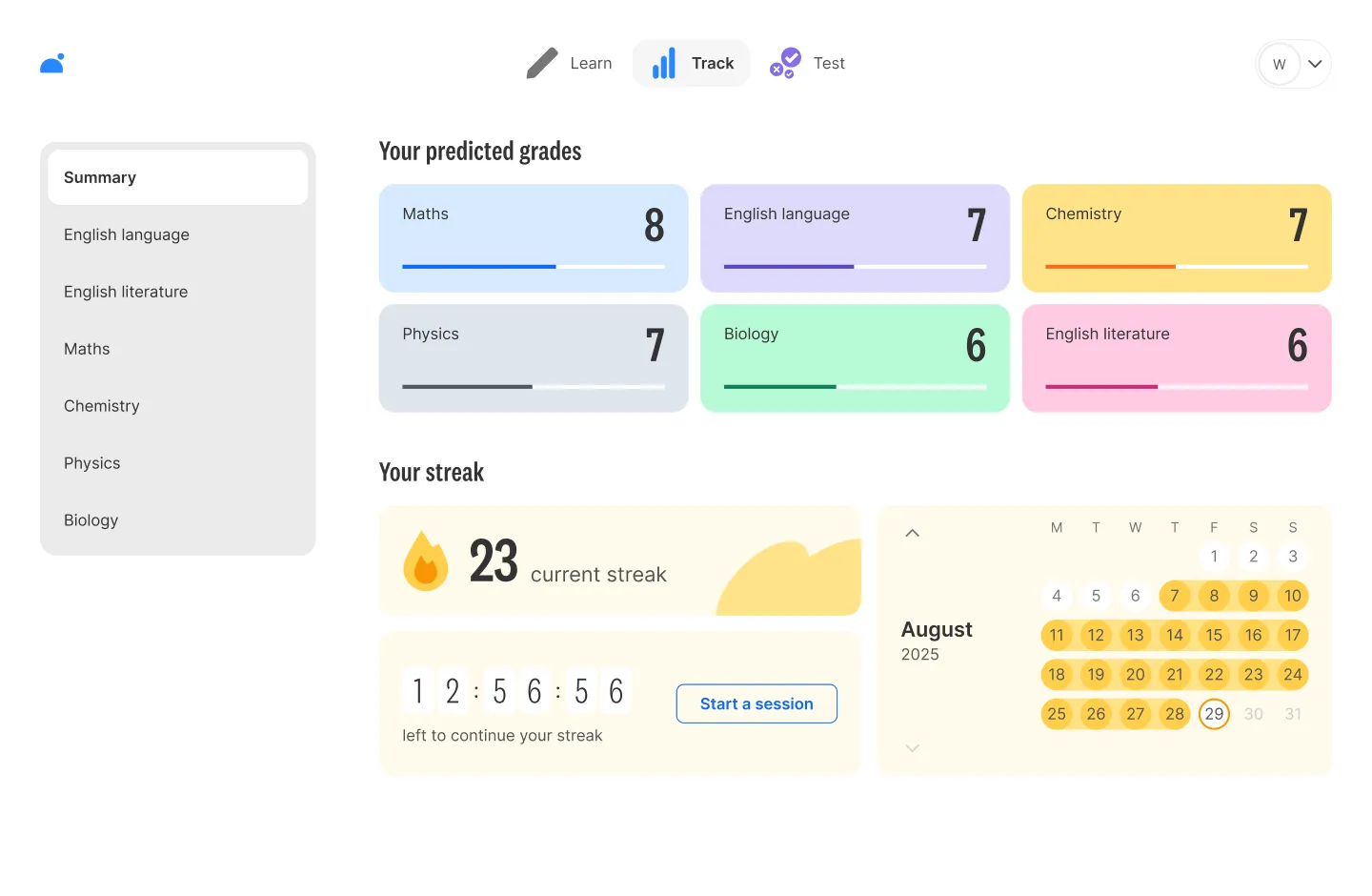
Top tip: if you're keeping track by hand, it's easy to lose sight of the bigger picture. Atom's progress dashboard shows your results topic by topic, so you always know exactly where to focus next.
There we have it, your guide to Cambridge iGCSE Maths. Now that you understand how the paper will be structured and marked, you can focus your revision on nailing exam technique.
Take control of your GCSE revision

Everything you need for GCSE success, in one place.
Feeling confident about your GCSEs comes from knowing what to revise, how to improve, and where to focus next.
🔮 GCSE practice papers based on our team's 2026 exam predictions
🎓 Guided courses that cover all the topics on your exams
✍️ Instant feedback that tells you where you’ve gained and lost marks
📈 Predicted GCSE grades and topic-by-topic tracking
Create your free account and start making real progress today.