

What are examiners looking for?
Cambridge marks your answers against four skills, called assessment objectives. In plain English, examiners want to see that you can:
- Show you know the text well, using well-chosen quotes and details to back up your points.
- Understand what's really going on, picking up on ideas below the surface, not just the plot.
- Explain how the writer creates effects, such as through word choice, structure or imagery.
- Give your own honest, thoughtful response to the text, not just repeat what you've been taught.
Sit down with your teacher's feedback on past essays and check which of these four areas you're strongest and weakest in. That's the fastest way to know what to work on next.
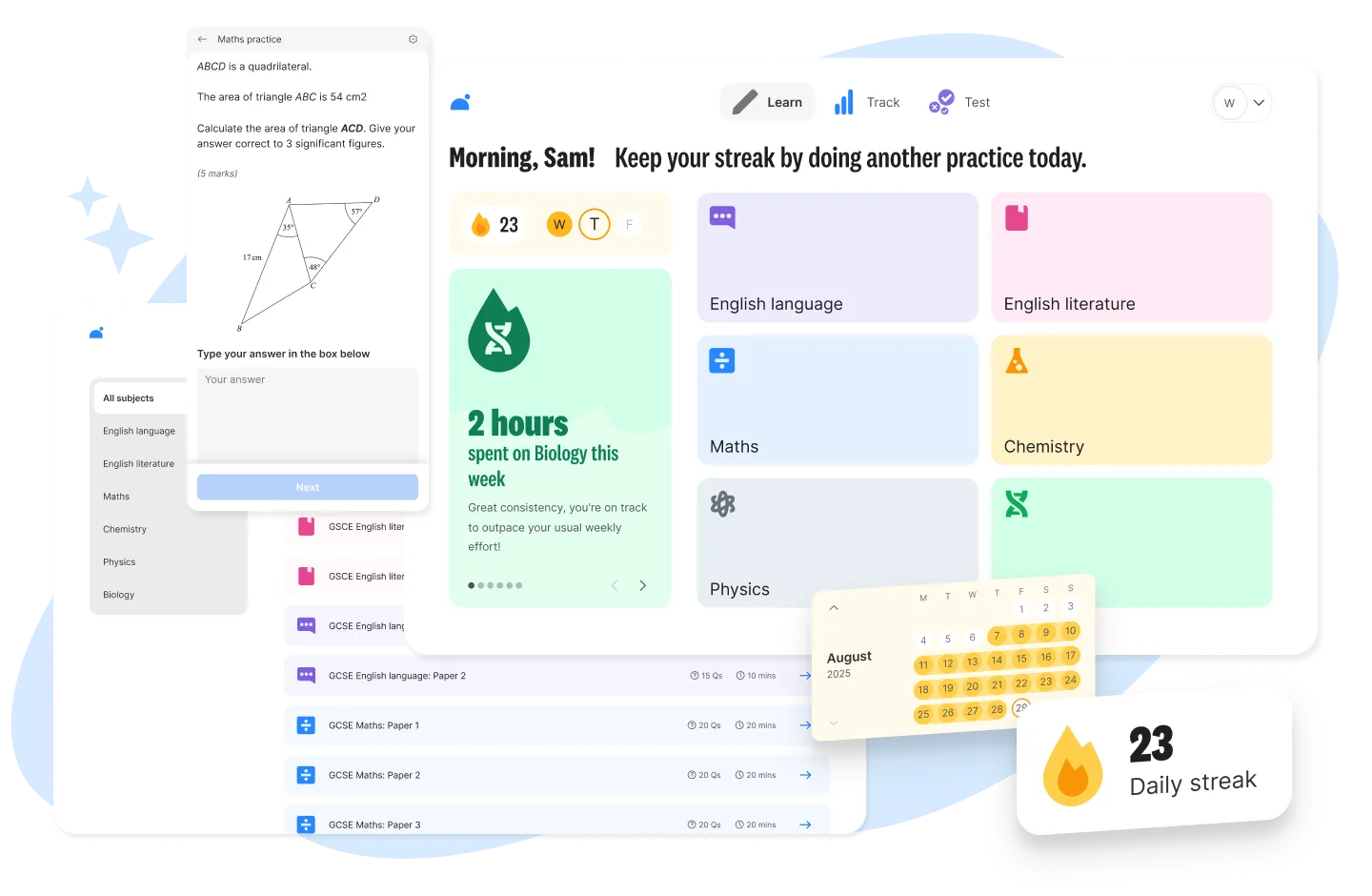
If you want a faster way to spot the gaps, Atom gives you instant, examiner-style feedback on your practice answers, showing you exactly which of these areas you're losing marks on and what to do differently next time.
What are the grade boundaries for Cambridge IGCSE English Literature?
It's important to remember that grade boundaries change every series. Cambridge sets them after the exam has been sat, based on how difficult the paper was and how students performed overall, so a grade 5 this year reflects the same standard as a grade 5 last year, even if the raw marks needed look different.
Because the overall grade depends on which route you take (Paper 2, or Papers 3 and 4, or Paper 3 and coursework), there isn't one single boundary that applies to everyone. Cambridge publishes the exact thresholds for every component after each series on its grade threshold pages.
Use last year's thresholds as a general guide to what a strong answer looks like, not as a fixed target. Boundaries can move by several marks either way from one series to the next.
What texts will I study?
Your school picks your set texts from Cambridge's approved lists, and these are reviewed and updated from time to time. Across the qualification, you'll typically study a mix of:
- A play, often chosen from well-known writers such as Shakespeare or more modern playwrights.
- Prose fiction, which could be a novel or a set of short stories.
- Poetry, either a set collection or unseen poems you haven't studied before.
Because the exact list changes and your school chooses from it, check with your teacher for the specific texts you're studying this year rather than relying on an old list you find online.
How can I prepare for Cambridge IGCSE English Literature?
Here are 5 top tips to help you get ready:
1. Learn your texts in layers, not all at once
Trying to remember everything about a text in one go is overwhelming, and it doesn't stick. Instead, build your knowledge in layers: plot first, then characters, then themes, then quotes.
- Start with a simple timeline of what happens and when.
- Add character notes once the plot is solid.
- Only then start learning quotes, and link each one to a theme or character.
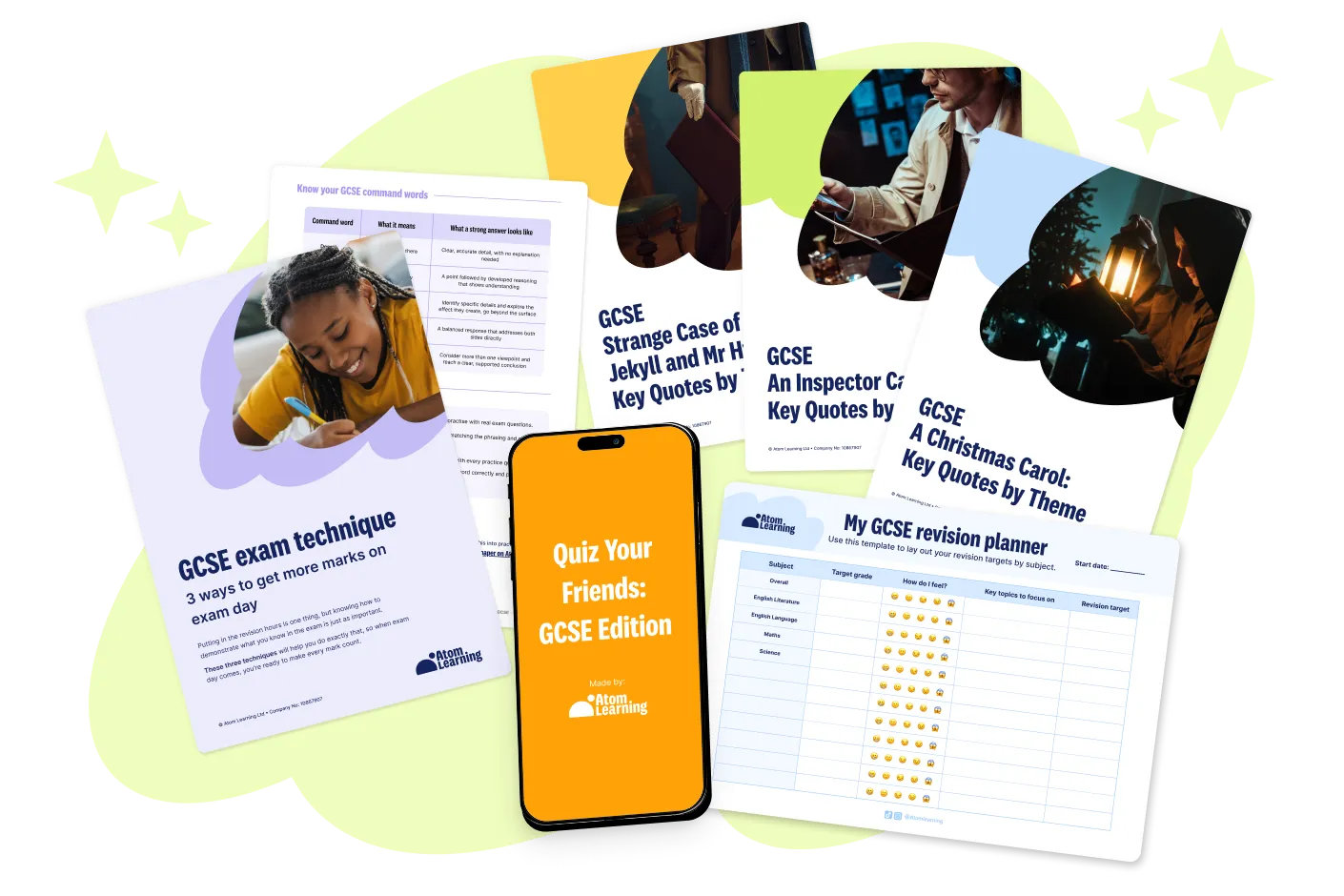
Top tip: Learn 8 to 10 short, flexible quotes per text that can be used to answer more than one type of question. Want a head start? Grab our free key quotes by theme resource and walk into your exam with the quotes that matter most already at your fingertips.
2. Practise the open text skill separately
If your route includes Paper 3 (open text), you're allowed your text in the exam, but that doesn't mean you can just read from it. You still need to write from your own understanding.
- Practise answering questions with your text closed first, so you're not relying on it.
- Use your open text only to check quotes and details, not to plan your whole answer.
Top tip: Time yourself flicking to a page and back. If it takes too long, you're probably leaning on the book more than you need to, and that's a really common habit to fall into. A gentle way to build confidence here is to try a few of Atom's practice questions with your text closed first, then use its instant, examiner-style feedback to see how much you already know from memory. You might be surprised how much has stuck.
3. Write shorter, sharper practice answers
You don't need to write a full essay every time you revise. Short, focused practice builds the same skills faster.
- Pick one question and write a single paragraph answering it fully.
- Focus on making one clear point, backing it up with a quote, and explaining how the writer's choices create meaning.
Top tip: Set a 10-minute timer for a single paragraph. It forces you to be precise instead of padding your answer. Atom organises its English Literature questions by topic in exactly these small, bite-sized chunks, so it's an easy way to slot this kind of focused practice into a short revision session.
4. Compare texts across the syllabus, even if you won't be asked to
Even where the exam doesn't ask you to compare texts directly, thinking about how your different set texts explore similar themes (power, loss, identity, conflict) deepens your understanding of each one individually.
- Pick two of your set texts and think of one theme they both explore.
- Write a few sentences on how each text handles that theme differently.
Top tip: Do this once a week, picking a different theme each time. It's a quick way to build connections between your texts without setting aside extra revision time. Working through Atom's practice questions across your different set texts is another easy way to build this same thinking in, since you naturally start noticing the same themes coming up again and again.
5. Practise under real exam conditions
Reading revision notes feels productive, but writing under timed conditions is what actually prepares you for exam day.
- Sit a full past paper section under strict timing, with no notes unless your route allows an open text.
- Mark your own answer using Cambridge's published mark scheme, or ask your teacher to check it.
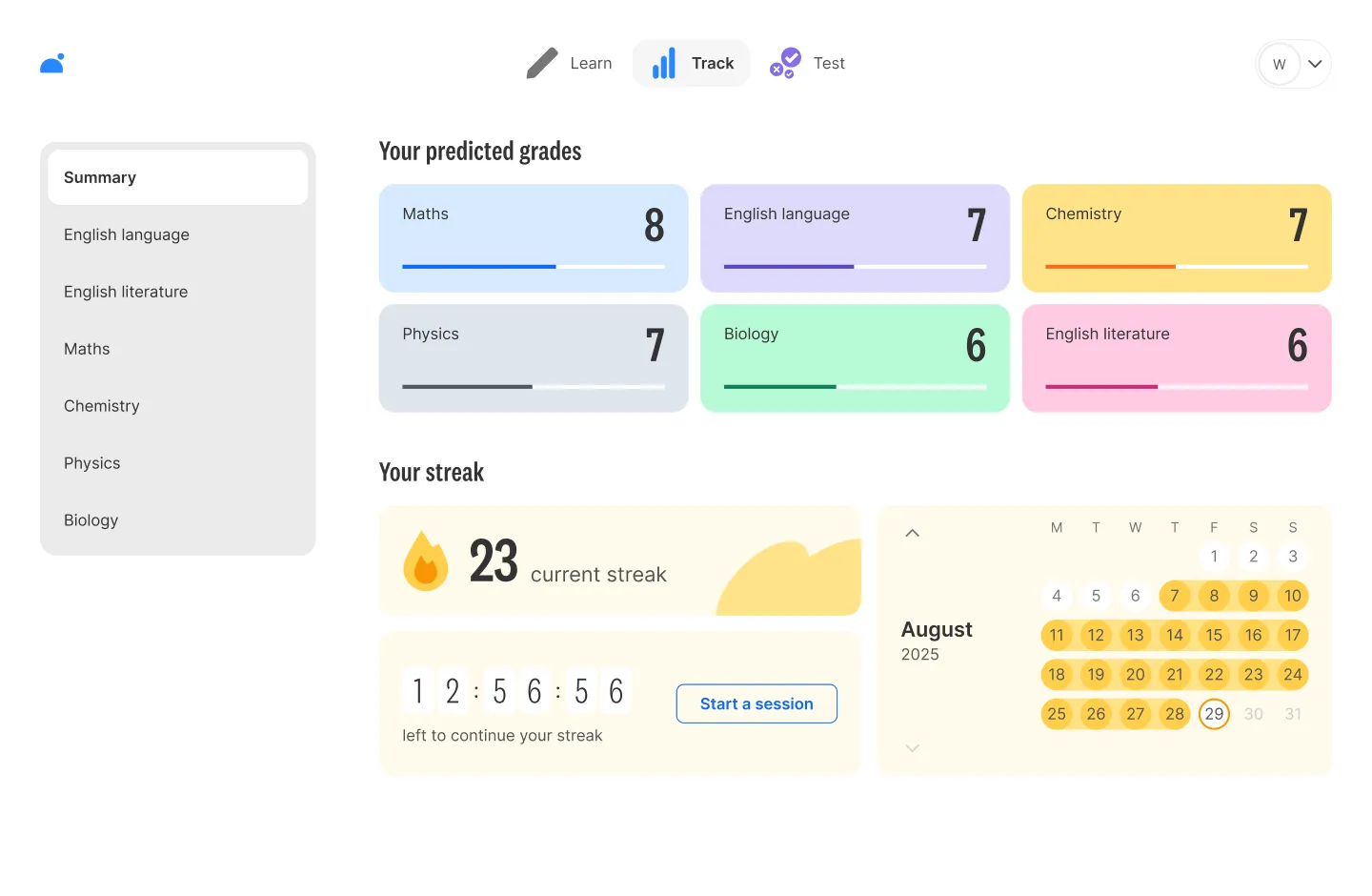
Top tip: Time-pressure reveals gaps in your knowledge that untimed revision hides. Do this at least once a fortnight in your final term. A full Atom practice paper is a good way to build this habit, since it's timed like the real thing and gives you a predicted grade at the end, so you can watch your progress build session by session.
Past papers and resources
Cambridge publishes past papers, mark schemes and examiner reports for Literature in English (0475) on the Cambridge International website. These are the best way to see exactly how questions are worded and how marks are awarded.
For extra practice with the same essay and analysis skills, Atom gives you practice papers and instant, examiner-style feedback on every answer, so you can see exactly where you're gaining and losing marks.
Take a look at our guide on how to get the most out of GCSE past papers for tips on using past papers effectively alongside your Atom practice.
Cambridge IGCSE English Literature rewards students who know their texts deeply and can write about them with a genuine point of view. Build your knowledge layer by layer, practise under timed conditions, and you'll walk into the exam feeling ready.