
Back to blog

Cambridge IGCSE Physics: everything you need to know

By
Atom
|
September 2, 2026

Studying Cambridge IGCSE Physics? Here's a full breakdown of the exam, so you know exactly what to expect.

If you're taking this course at an international school, you're working towards Cambridge's own IGCSE qualification, officially called Physics (0625). This guide walks you through how the papers are structured, what you'll be tested on, and how to prepare with confidence. Read on to find out more.

Key takeaways:

  • Cambridge IGCSE Physics is graded A* to G, not the 9 to 1 scale used in the UK's domestic GCSE.
  • You'll take papers from either the Core route (grades capped at C) or the Extended route (full A* to G range), plus a practical component.
  • Your school decides which route and which practical option you take.

What's the format of the Cambridge IGCSE Physics exam?

Your school will choose whether you follow the Core or Extended route, plus one of two practical options.

If you're on the Core route, you'll sit:

  • Paper 1: Multiple Choice. 45 minutes, worth 40 marks (30%).
    • 40 questions, each with four possible answers, covering the Core content only.
  • Paper 3: Theory. 1 hour 15 minutes, worth 80 marks (50%).
    • A mix of short-answer and structured questions on the Core content. This route caps your grade at a C.

If you're on the Extended route, you'll sit:

  • Paper 2: Multiple Choice. 45 minutes, worth 40 marks (30%).
    • 40 questions, each with four possible answers, covering the Core content plus the extra Supplement topics.
  • Paper 4: Theory. 1 hour 15 minutes, worth 80 marks (50%).
    • A mix of short-answer and structured questions covering the Core content plus the Supplement topics. This route gives access to the full A* to G grade range.

Everyone also sits one of these two practical options, worth 20%:

  • Paper 5: Practical Test. 1 hour 15 minutes, worth 40 marks.
    • A hands-on lab exam where you'll carry out experiments, take measurements, make observations and record your results.
  • Paper 6: Alternative to Practical. 1 hour, worth 40 marks.
    • A written paper that tests the same skills without a lab, such as reading experimental data, planning a method, and evaluating results.

There's no separate formula sheet, but you'll be given a table of physical quantities, symbols and units to refer to in your written papers.

Ask your teacher which route and practical option applies to you, as this affects how you should prepare.

Full details are in the official Cambridge IGCSE Physics specification.

What are the grade boundaries for Cambridge IGCSE Physics?

It's important to remember that the exact grade boundaries for your exams will change every year. Cambridge sets them after the exam has been sat, based on how difficult the papers were and how the whole cohort performed.

Your final grade combines several papers, and depends on whether you took Core or Extended, so there isn't one single number that applies to everyone. Cambridge publishes the exact thresholds for every paper after each series on its grade threshold pages.

Use last year's thresholds as a general guide to what a strong answer looks like, not as a fixed target. Boundaries can move by several marks either way from one series to the next.

What are examiners looking for?

Cambridge marks your answers against three skills, called assessment objectives. Examiners want to see that you can:

  • Show knowledge and understanding of physical facts, concepts and processes, worth 50% of your final grade.
  • Handle information and solve problems, applying what you know to new situations and calculations, worth 30%.
  • Show experimental skills, including planning, carrying out and evaluating investigations, worth 20%.

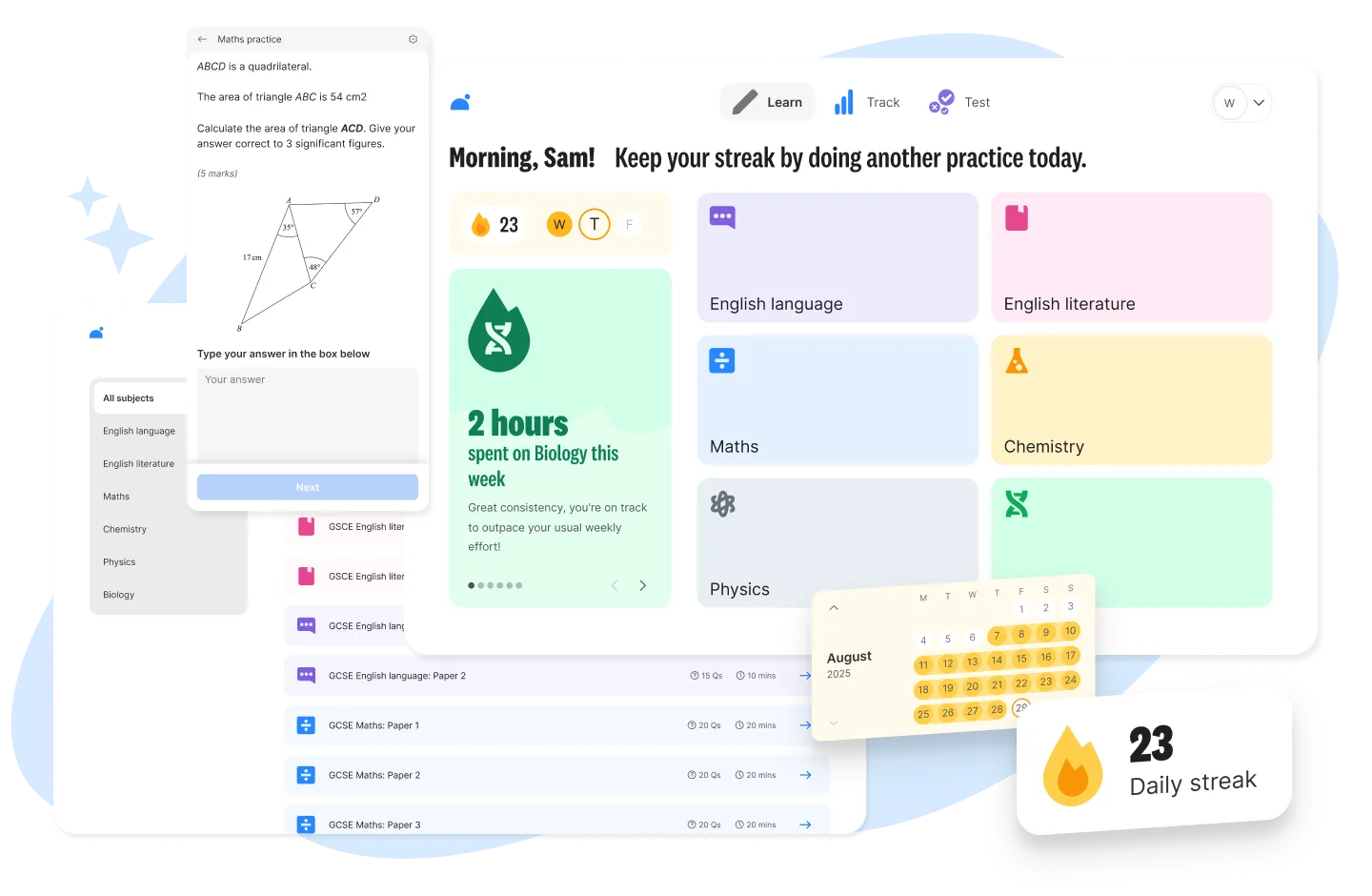
This is exactly what Atom GCSE is designed to support. It tracks your practice against each of these three assessment objectives separately, so you can see exactly where you're hitting the marks examiners are looking for and where you still need to improve.

It then shapes what it gives you to practise next around those gaps, with instant, examiner-style feedback on every answer, so you always know precisely where you're losing marks and what to change next time.

Past papers and resources

Cambridge publishes past papers, mark schemes and examiner reports for Physics (0625) on its past papers page. These are the best way to see exactly how questions are worded and how marks are awarded.

Atom gives you unlimited practice papers and questions, including predicted papers that Atom's team of experts build by analysing exam trends and data for the year ahead. And the best part? You don't have to mark them yourself, Atom's instant feedback lets you know exactly how you've done.

Take a look at our guide on how to get the most out of GCSE past papers to make sure you're getting the most out of both.

Not sure where to start with revision? We've got you.

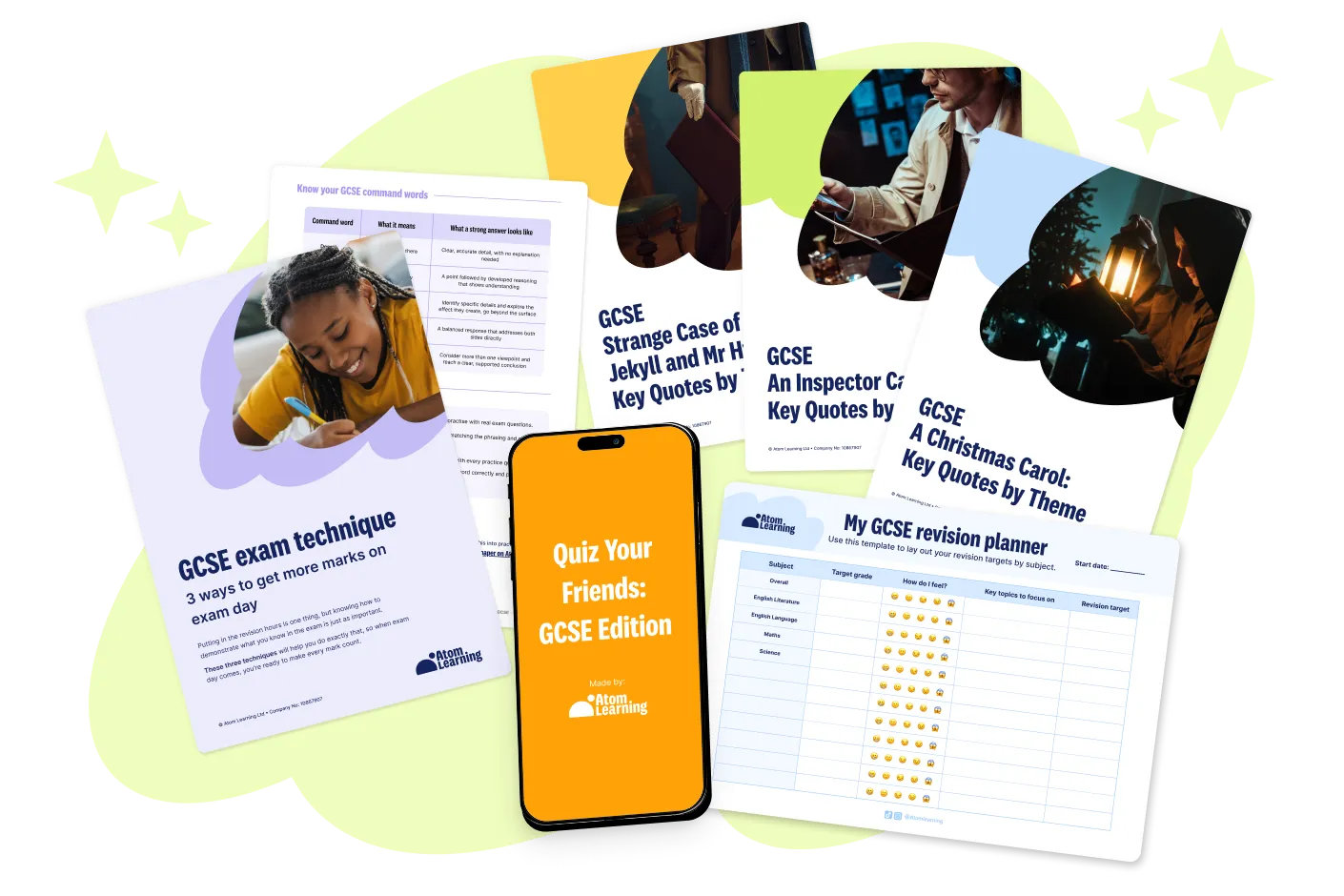
From revision planners to formula sheets, we've got the tools to make revision feel a little less daunting.

All free. All in one place.

Let's get started

How can I prepare for Cambridge IGCSE Physics?

Here are 5 top tips to help you get ready:

1. Learn your equations and know when to use them

Physics calculation questions test whether you can pick the right equation as much as whether you can rearrange and solve it. Build a single equation sheet organised by topic, and practise identifying which equation a question needs before you start calculating.

Top tip: Cover the equation sheet and try to recall each equation from its topic heading alone, since knowing when to use an equation is half the skill.

2. Practise rearranging equations before the exam

Even where you're given an equation, many questions ask you to rearrange it to find a different quantity. Practise rearranging your key equations regularly so this step doesn't cost you time under pressure.

Top tip: For every equation you learn, practise rearranging it for each different variable, not just the one you usually calculate.

3. Get comfortable with practical and data questions

Whether you sit the Practical Test or the Alternative to Practical paper, both test the same experimental skills, including identifying variables, reading graphs and evaluating methods. Practise past questions on experimental design regularly, not just content recall.

Top tip: When asked to evaluate an experiment, always mention at least one improvement and explain exactly how it would improve accuracy.

4. Show your working on every calculation

Physics calculations award marks for method as well as the final answer, so a correct approach can still earn marks even with an arithmetic slip. Always write out each step, including the equation you're using and the numbers you're substituting in.

Top tip: Underline the units in your final answer every time, since forgetting units is one of the most common ways to drop an easy mark.

5. Get comfortable with the exam format, not just the content

Knowing your physics content is only half the story. Doing well on exam day also depends on knowing exactly what to expect, how questions are worded, how long to spend on each one, and what a strong answer looks like under time pressure. Build regular timed practice into your revision routine at least once a fortnight in your final term, so the format feels familiar rather than unfamiliar.

Top tip: Atom's practice questions and predicted papers are built to test exactly this, giving you feedback that shows whether you're losing marks on your content knowledge or on your exam technique, so you know exactly what to work on next.

There you have it, everything you need to know about Cambridge IGCSE Physics, from how the papers are structured to what examiners are looking for and how to prepare with confidence.
No items found.
No items found.
No items found.
No items found.

Take control of your GCSE revision

Everything you need for GCSE success, in one place.

Feeling confident about your GCSEs comes from knowing what to revise, how to improve, and where to focus next.

🔮 GCSE practice papers based on our team's 2026 exam predictions

🎓 Guided courses that cover all the topics on your exams

✍️ Instant feedback that tells you where you’ve gained and lost marks

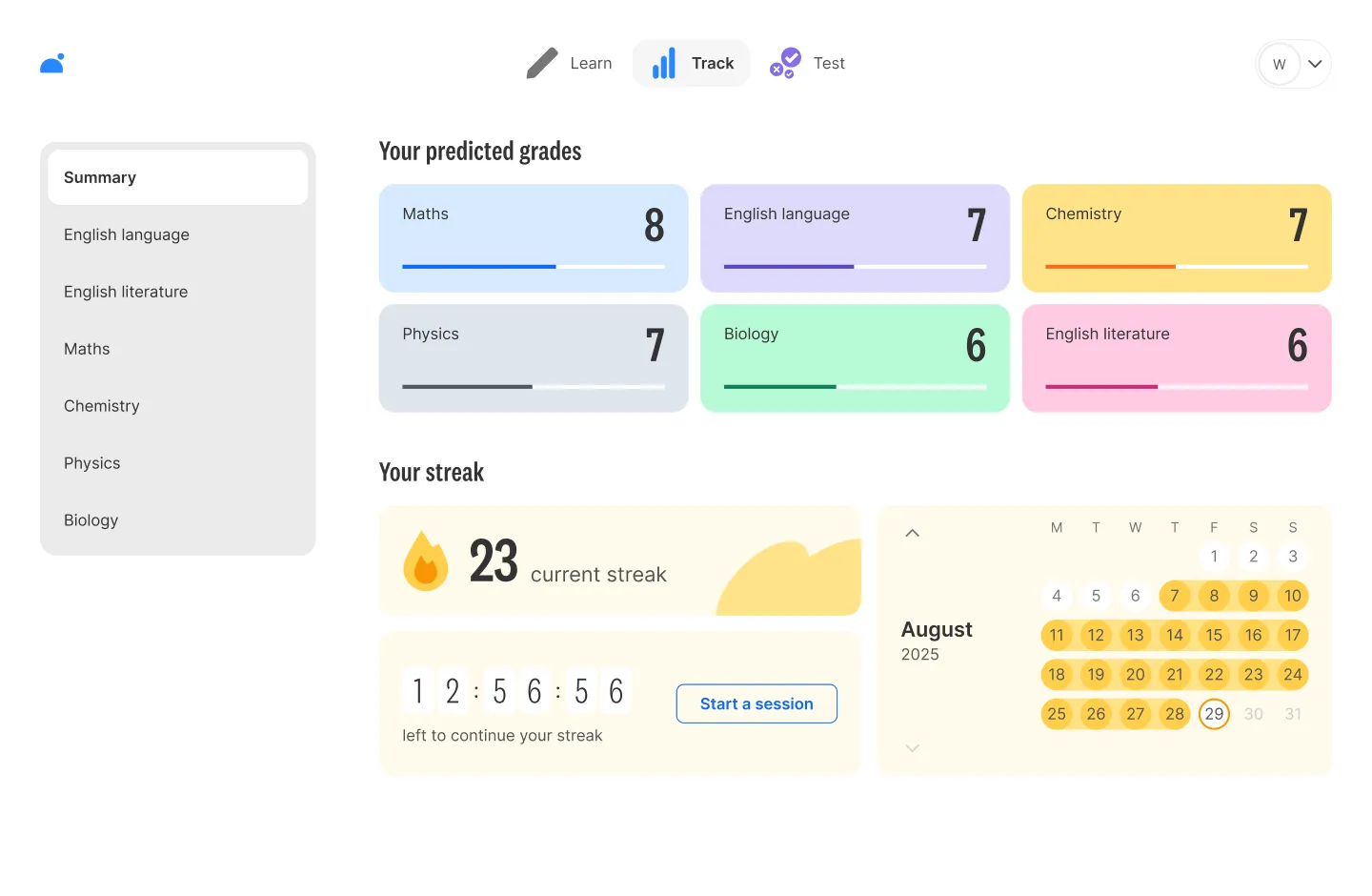
📈 Predicted GCSE grades and topic-by-topic tracking

Know where you stand and how to improve

Create your free account and start making real progress today.

Online GCSE revision

Contents