
Cambridge IGCSE Religious Studies: everything you need to know

Studying Cambridge IGCSE Religious Studies? Here's a full breakdown of the exam, so you know exactly what to expect.
If you're taking this course at an international school, you're working towards Cambridge's own IGCSE qualification, officially called Religious Studies (0490). This guide walks you through how the papers are structured, what you'll be tested on, and how to prepare with confidence. Read on to find out more.
Key takeaways:
- Cambridge IGCSE Religious Studies is graded A* to G, not the 9 to 1 scale used in the UK's domestic GCSE.
- You'll study two religions, chosen by your school from Christianity, Islam and Judaism.
- You'll sit two papers, each worth 50% of your final grade.
What's the format of the Cambridge IGCSE Religious Studies exam?
You'll sit two written papers, each 1 hour 45 minutes long and worth 80 marks. There are no Foundation or Higher tiers.
On each paper, you'll answer questions on the two religions your school has chosen to study. Each question is split into three parts:
- Part (a): 6 marks, testing your knowledge of beliefs, practices and teachings.
- Part (b): 6 marks, testing your ability to describe or explain those beliefs and practices in more depth.
- Part (c): 8 marks, testing your ability to evaluate different viewpoints and reach a reasoned judgement.
Full details are in the official Cambridge IGCSE Religious Studies specification.
What are the grade boundaries for Cambridge IGCSE Religious Studies?
It's important to remember that the exact grade boundaries for your exams will change every year. Cambridge sets them after the exam has been sat, based on how difficult the papers were and how the whole cohort performed.
Your final grade combines two papers on two different religions, so there isn't one simple number that applies to everyone. Cambridge publishes the exact thresholds for each series on its grade threshold tables page.
Use previous thresholds as a general guide to what a strong answer looks like, not as a fixed target. Boundaries can move by several marks either way from one series to the next.
What are examiners looking for?
Cambridge marks your answers against two skills, called assessment objectives. Examiners want to see that you can:
- Show knowledge and understanding of religious beliefs, practices, teachings and traditions, using accurate detail and, where relevant, references to sacred texts.
- Evaluate the significance of religious beliefs and practices, weighing up different viewpoints and using evidence to support a reasoned conclusion.
Ask your teacher for feedback on which of these two skills your recent answers show you're weakest in, so you know what to work on next.
The fastest way to spot the gaps in your written answers is Atom, which gives you instant, examiner-style feedback on your practice answers, showing you exactly which of these areas you're losing marks on and what to do differently next time.
Past papers and resources
Cambridge publishes past papers, mark schemes and examiner reports for Religious Studies (0490) on its past papers page. These are the best way to see exactly how questions are worded and how marks are awarded.
Since there's only a limited number of real past papers available, Atom's team of experts analyse exam trends and data to build predicted papers, giving you extra practice on the kind of questions likely to come up once you've worked through the official ones.
Take a look at our guide on how to get the most out of GCSE past papers to make sure you're getting the most out of both.
Not sure where to start with revision? We've got you.
From revision planners to formula sheets, we've got the tools to make revision feel a little less daunting.
All free. All in one place.

How can I prepare for Cambridge IGCSE Religious Studies?
Here are 5 top tips to help you get ready:
1. Learn key terms and their exact meanings
Religious Studies has its own vocabulary, and vague or muddled definitions cost marks in part (a) questions. Keep a running glossary of key terms for each religion you study, and test yourself on the exact wording regularly.
Top tip: Learn one short quotation or reference for every major belief, since specific evidence scores higher than a general description.
2. Practise the three-part question structure separately
Each question moves from knowledge, to explanation, to evaluation, and many students blend these together instead of answering each part properly. Practise writing just a part (c) evaluation on its own, focusing purely on weighing up different views.
Top tip: In every evaluation answer, include at least one view you agree with and one you don't, before giving your own conclusion.
3. Build balanced arguments for common debate topics
Evaluation questions often ask about controversial or debated issues within a religion. For each likely topic, prepare two points on each side of the argument in advance, so you're not thinking from scratch in the exam.
Top tip: Use a simple two-column table, one side for each viewpoint, and add to it every time a new topic comes up in class.
4. Compare your two religions where relevant
Even where a question doesn't ask you to compare directly, understanding how your two religions approach similar issues, such as worship, morality or the afterlife, deepens your understanding of each one. Practise this by picking a theme and writing a few lines on how each religion views it.
Top tip: Revisit your comparison notes every few weeks, your understanding will get sharper each time you look at it.
5. Practise under timed conditions
Reading revision notes feels productive, but writing under time pressure is what actually prepares you for exam day. Sit a full past paper section under strict timing, then mark it using the official mark scheme.
Top tip: Time-pressure reveals gaps in your knowledge that untimed revision hides, so do this at least once a fortnight in your final term.
Want extra practice on these tips? Atom gives you subject-specific practice questions and instant, examiner-style feedback, so you always know what to work on next.
Strong Religious Studies answers combine solid knowledge with a confident, well-reasoned argument, so keep practising both as your exam approaches.
Take control of your GCSE revision

Everything you need for GCSE success, in one place.
Feeling confident about your GCSEs comes from knowing what to revise, how to improve, and where to focus next.
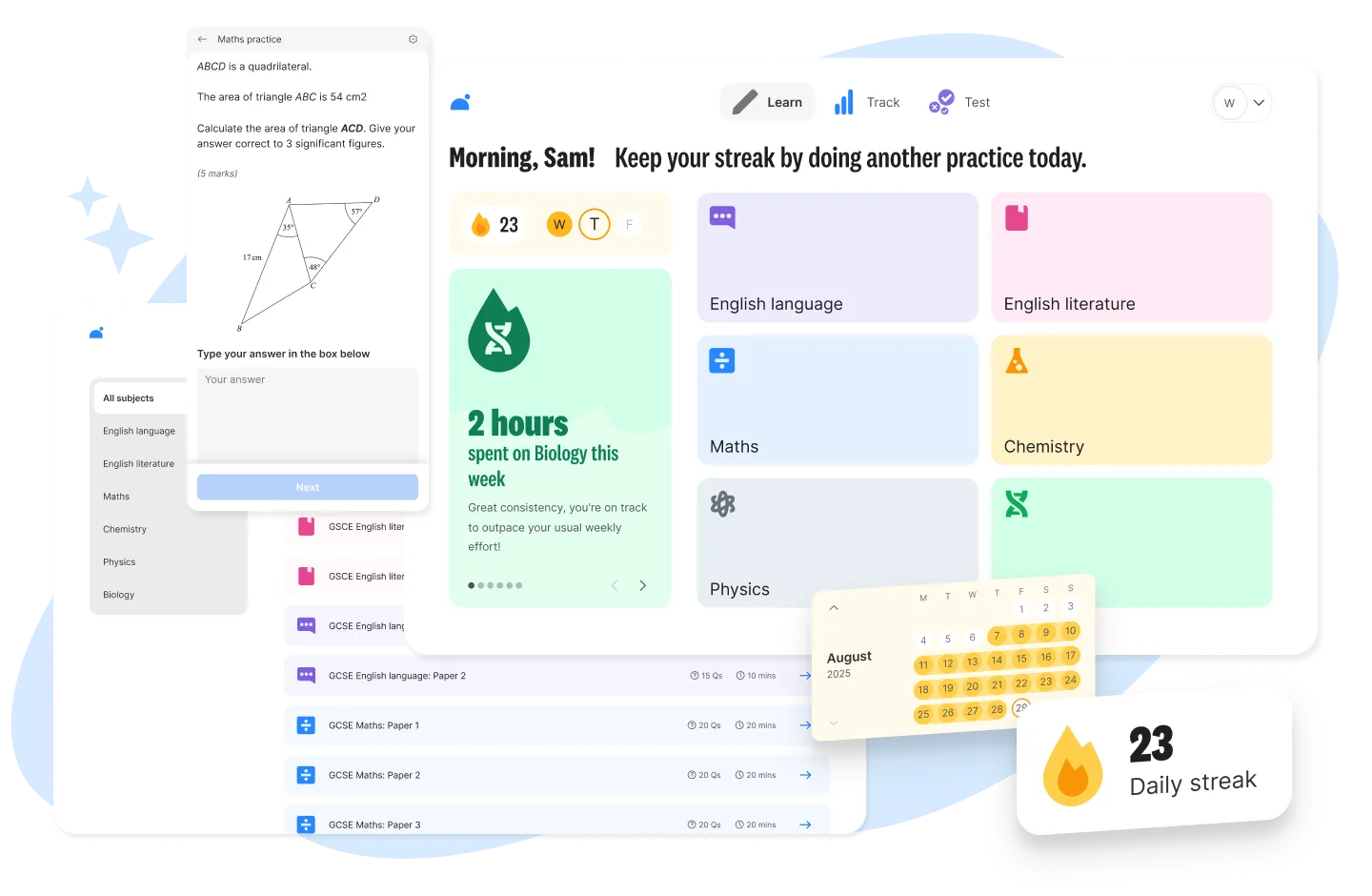
🔮 GCSE practice papers based on our team's 2026 exam predictions
🎓 Guided courses that cover all the topics on your exams
✍️ Instant feedback that tells you where you’ve gained and lost marks
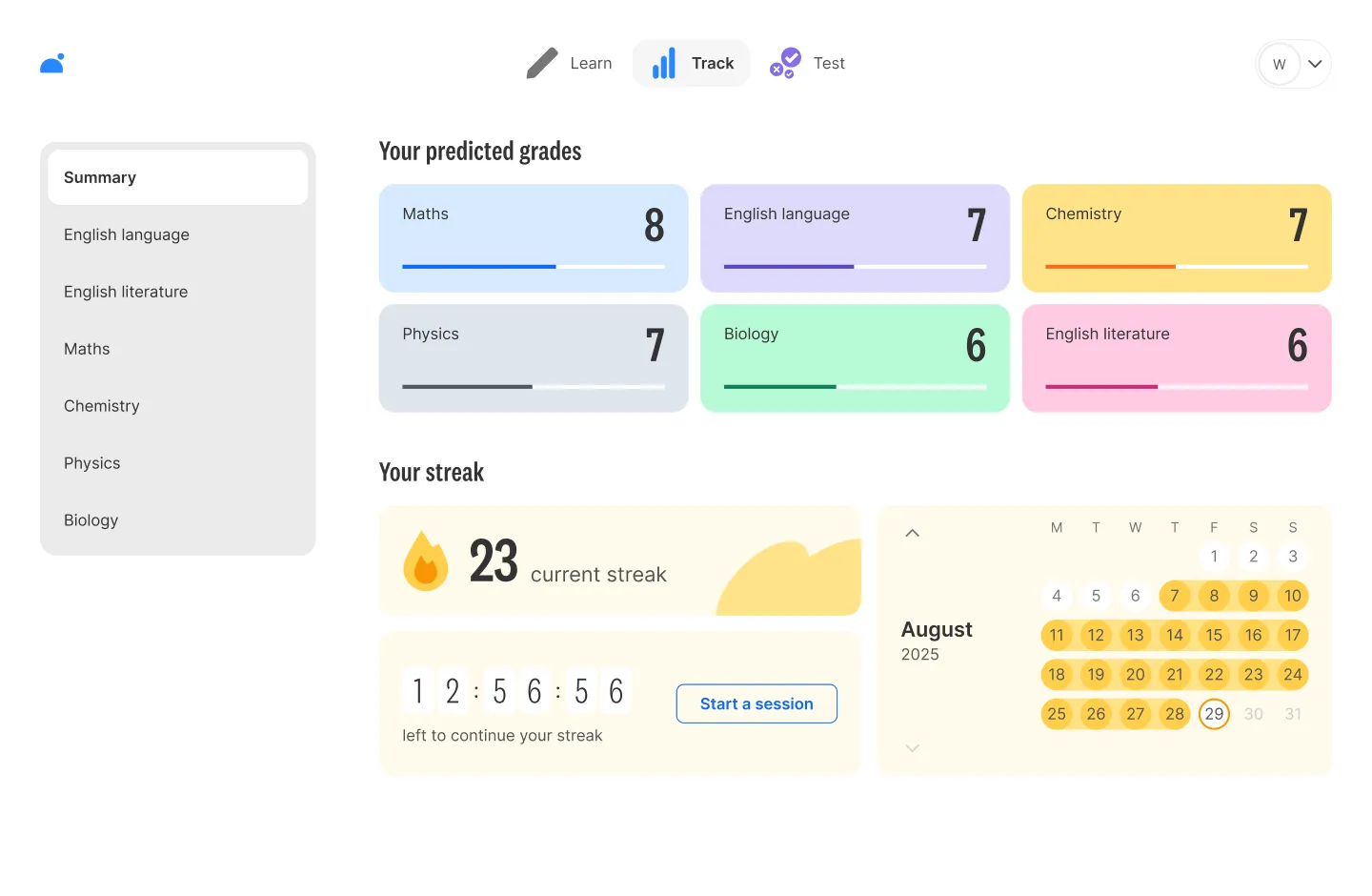
📈 Predicted GCSE grades and topic-by-topic tracking
Create your free account and start making real progress today.