Cambridge IGCSE Spanish: everything you need to know

Studying Cambridge IGCSE Spanish? Here's a full breakdown of the exam, so you know exactly what to expect.
If you're taking this course at an international school, you're working towards Cambridge's own IGCSE qualification, officially called Spanish - Foreign Language (0530). This guide walks you through how the papers are structured, what you'll be tested on, and how to prepare with confidence. Read on to find out more.
Key takeaways:
- Cambridge IGCSE Spanish is graded A* to G, not the 9 to 1 scale used in the UK's domestic GCSE.
- You'll sit four papers, each worth 25% of your final grade: listening, reading, speaking and writing.
- Your speaking paper is marked by your own teacher and checked by Cambridge, not by an outside examiner.
What's the format of the Cambridge IGCSE Spanish exam?
You'll take four papers, each worth 25% of your final grade. There are no Foundation or Higher tiers, everyone sits the same papers.
- Paper 1: Listening. Around 50 minutes, worth 40 marks.
- You'll hear each recording twice and answer questions on announcements, phone messages and news items, short conversations, and longer discussions or interviews, mostly using multiple choice or matching questions.
- Paper 2: Reading. 1 hour, worth 45 marks.
- You'll read short notices, adverts, emails, letters and articles, then answer questions using a mix of multiple choice, matching activities and short written answers in Spanish.
- Paper 3: Speaking. About 10 minutes, with 10 minutes to prepare beforehand, worth 40 marks.
- This is conducted by your own teacher and sent to Cambridge to be checked. After a short, unassessed warm-up chat, you'll do a role play with five short exchanges, then two longer conversations on set topics, marked on how well you communicate and how accurate your Spanish is.
- Paper 4: Writing. 1 hour, worth 45 marks.
- You'll complete three tasks: filling in a short form, writing a short piece of around 80 to 90 words, and choosing one longer piece of around 130 to 140 words, such as an email or a blog post.
Since your teacher runs the speaking paper, your school will tell you exactly when it happens, usually a few weeks before the written papers.
Full details are in the official Cambridge IGCSE Spanish specification.
What are the grade boundaries for Cambridge IGCSE Spanish?
It's important to remember that the exact grade boundaries for your exams will change every year. Cambridge sets them after each exam series, based on how difficult the papers were and how the whole cohort performed.
Your final grade combines four separate papers, so there isn't one simple number to aim for. Cambridge publishes the exact thresholds for every paper after each series on its grade threshold pages.
Use last year's thresholds as a general guide to what a strong performance looks like, not as a fixed target. Boundaries can move by several marks either way from one series to the next.
What are examiners looking for?
Cambridge marks you across the four skills that make up the course. Examiners want to see that you can:
- Understand the main points and detail in spoken Spanish, even when people speak at natural speed.
- Pick out the meaning of written Spanish, including longer or more complex texts.
- Hold a real conversation, responding naturally and using accurate pronunciation.
- Write clearly and accurately in Spanish, using a good range of vocabulary and grammar.
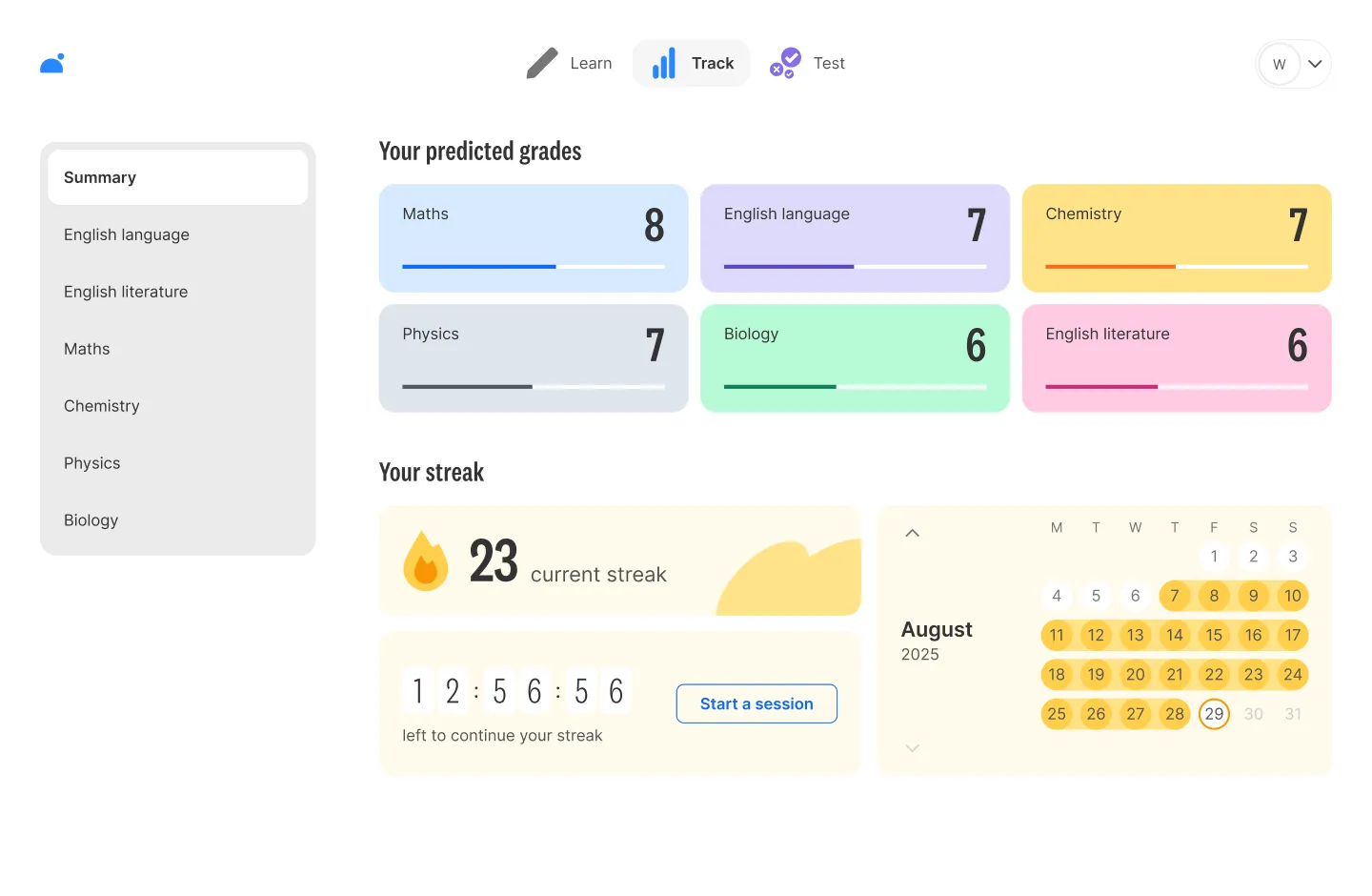
This is exactly what Atom GCSE is designed to support. It tracks your practice against each of these four skills separately, so you can see exactly where you're hitting the marks examiners are looking for and where your skills still need to improve.
It then shapes what it gives you to practise next around those gaps, with instant, examiner-style feedback on every writing and speaking answer, so you always know precisely where you're losing marks and what to change next time.
Past papers and resources
Cambridge publishes past papers, mark schemes and examiner reports for Spanish - Foreign Language (0530) through your school's access to the Cambridge School Support Hub. These are the best way to see exactly how questions are worded and how marks are awarded.
Atom gives you unlimited practice papers and questions, including predicted papers that Atom's team of experts build by analysing exam trends and data for the year ahead. And the best part? You don't have to mark them yourself, Atom's instant feedback lets you know exactly how you've done.
Take a look at our guide on how to get the most out of GCSE past papers to make sure you're getting the most out of both.
Not sure where to start with revision? We've got you.
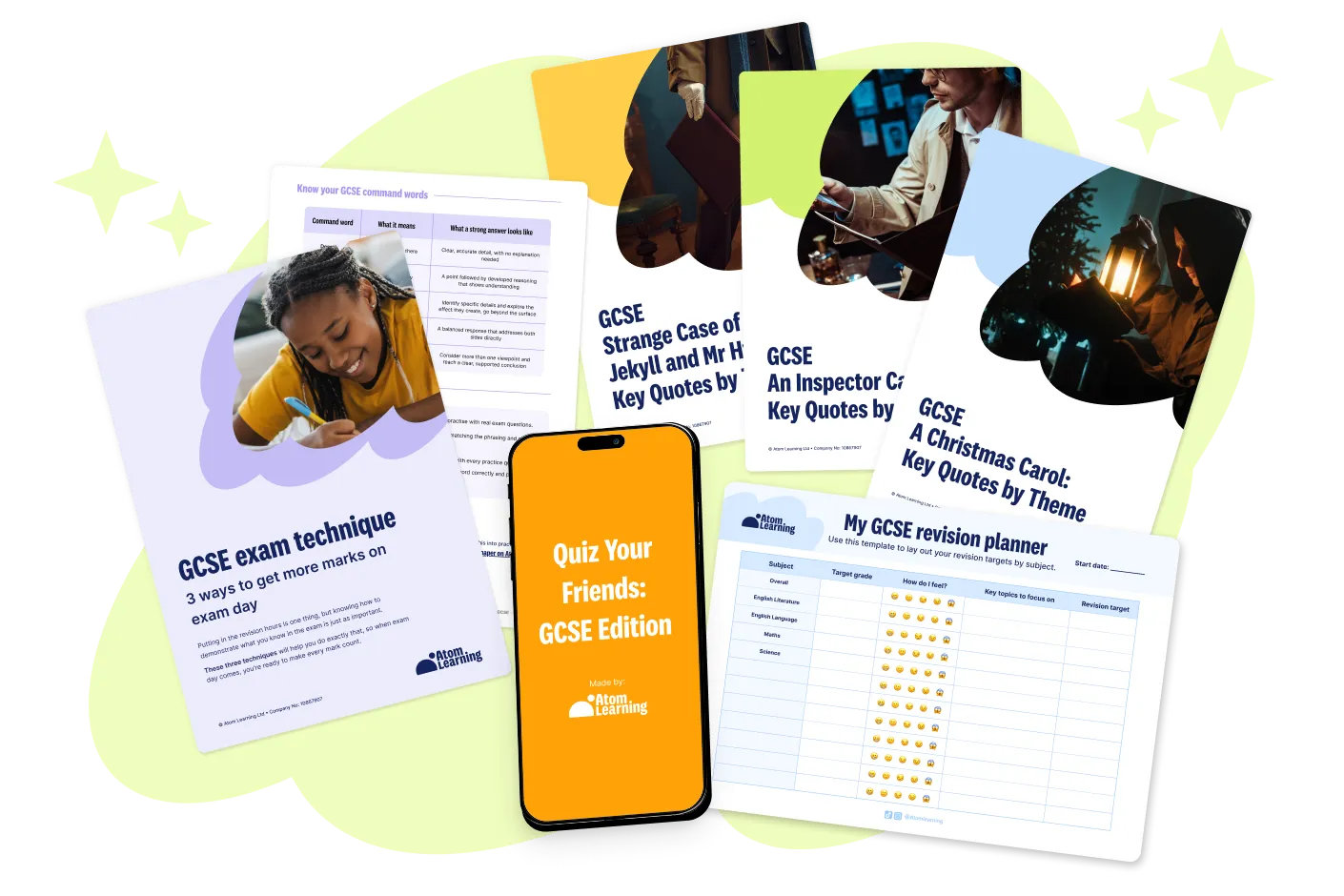
From revision planners to formula sheets, we've got the tools to make revision feel a little less daunting.
All free. All in one place.

How can I prepare for Cambridge IGCSE Spanish?
Here are 5 top tips to help you get ready:
1. Learn vocabulary in topics, not lists
Random word lists are hard to remember under pressure. Group new words by topic, such as family, holidays or school, and practise using them in full sentences rather than on their own.
Top tip: Turn each topic into 5 to 6 flexible sentences you can adapt for different questions, rather than memorising single words in isolation.
2. Practise listening at natural speed
Spanish spoken in real conversations moves faster than most classroom recordings. Listen to short Spanish podcasts, songs or clips daily, even if you only catch half the words at first.
Top tip: Play the same short clip three times: once to get the general idea, once to pick out detail, and once to check what you missed.
3. Rehearse your speaking topics out loud
Reading your answers silently doesn't prepare you for the real thing. Say your role play and conversation answers out loud, ideally to a friend or teacher who can ask follow-up questions.
Top tip: Record yourself on your phone and listen back. You'll hear mistakes with pronunciation or hesitation that you wouldn't notice while speaking.
4. Build a bank of connectives and opinion phrases
Strong writing and speaking answers link ideas and give opinions, not just facts. Learn phrases like sin embargo (however), en mi opinión (in my opinion) and por ejemplo (for example) so you can use them automatically.
Top tip: Aim to use at least three different connectives in every practice paragraph you write.
5. Time yourself on writing tasks
Running out of time in the exam is one of the most common reasons for lost marks. Practise writing full answers under exam timing so you learn how much you can realistically plan and check. Atom GCSE gives you writing tasks in the same style and timing as the real exam, with instant, examiner-style feedback so you know exactly where you're losing marks.
Top tip: Leave the last two minutes of any writing task to check verb endings and accents, since these are easy marks to lose and easy marks to save.
Want extra practice on these tips? Atom gives you subject-specific practice questions and instant, examiner-style feedback, so you always know what to work on next.
A little regular practice across all four skills goes a long way in Spanish, so keep listening, reading, speaking and writing every week and the exam will start to feel familiar rather than daunting.
Take control of your GCSE revision

Everything you need for GCSE success, in one place.
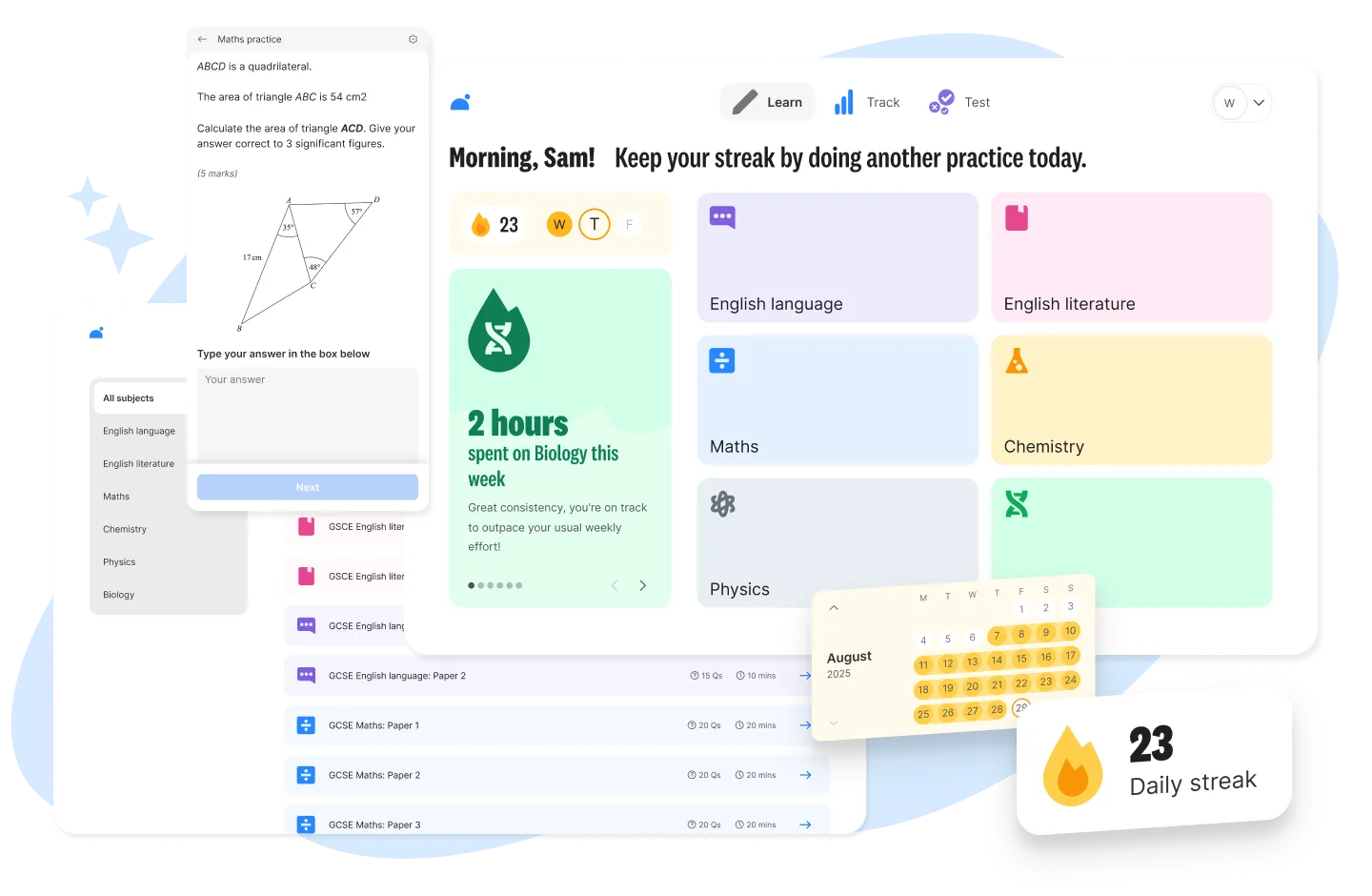
Feeling confident about your GCSEs comes from knowing what to revise, how to improve, and where to focus next.
🔮 GCSE practice papers based on our team's 2026 exam predictions
🎓 Guided courses that cover all the topics on your exams
✍️ Instant feedback that tells you where you’ve gained and lost marks
📈 Predicted GCSE grades and topic-by-topic tracking
Create your free account and start making real progress today.