Grade boundaries
It's important to remember that the exact grade boundaries for your exams will change every series. Pearson sets them after each exam, based on how difficult the paper was and how the whole cohort performed.
You can check the official Edexcel International GCSE grade boundaries to see how past years have landed. Use these as a general guide only. Don't treat last year's boundary as a fixed target for your own exam.
What texts and topics will I study?
For Component 1, you'll study non-fiction texts from the Edexcel Anthology, covering topics like travel writing, journalism, speeches and autobiography extracts.
For Component 2 or 3, you'll study poetry and prose from the Edexcel Anthology, including poems and short stories exploring themes like identity, conflict and change.
Your teacher will confirm exactly which texts and combinations your school is covering, since anthology content is reviewed and can change between years.
5 top revision tips
1. Learn the anthology texts inside out, but practise on unseen ones too.
You'll always get one unseen text in Component 1, so don't just memorise the anthology. Practise applying the same reading skills to something new.
Top tip: time yourself reading an unseen extract in under 10 minutes before you even look at the questions. This is exactly the kind of skill Atom's practice questions are built to sharpen, with a constant stream of fresh, unseen-style texts so you're never just recycling the same anthology extracts.
2. Match your writing to the exact audience and purpose you're given.
A letter to a headteacher reads very differently to a magazine article for teenagers. Examiners reward writing that fits the brief, not just writing that's well written.
Top tip: before you start writing, underline the audience, form and purpose in the question so you don't drift off them. Atom checks this specifically when you practise, telling you straight away whether your tone actually landed with the right audience, marked and explained against AO4, so you know exactly how to structure your answers.
3. Use short, varied quotations rather than long ones.
For AO2, a well-chosen short quote you can actually analyse is worth more than a long one you just describe.
Top tip: pick quotes with one or two techniques in them, like a metaphor or a short sentence, so you have something specific to say. It's a habit that's easy to miss on your own, but Atom's instant, examiner-style feedback catches it straight away, showing you exactly where a quote needed more analysis before it costs you marks in the real exam.
4. Plan your writing tasks for two minutes before you start.
A quick plan for your transactional or imaginative writing keeps your structure clear and stops you running out of things to say halfway through.
Top tip: jot down three or four bullet points for your main sections before you write a single sentence. Atom takes the guesswork out of this. Answer a practice question and you'll see immediately if your structure held up or a section ran out of steam, so you're fixing pacing issues weeks before they'd cost you marks on the day.
5. Practise timed past papers under real exam conditions.
Reading and understanding the format is one thing. Writing at exam speed is another skill entirely, and it only comes with practice.
Top tip: Atom's GCSE past papers are a good way to build up this timed practice alongside the official papers. Atom's predicted papers mirror the real exam format and timing, so you can sit a full paper under proper conditions, then see straight after exactly where your pace or detail dropped off, ready to fix before the real thing.
Past papers and resources
Start with the official Edexcel International GCSE English Language A past papers, which give you the most accurate sense of question style and difficulty.
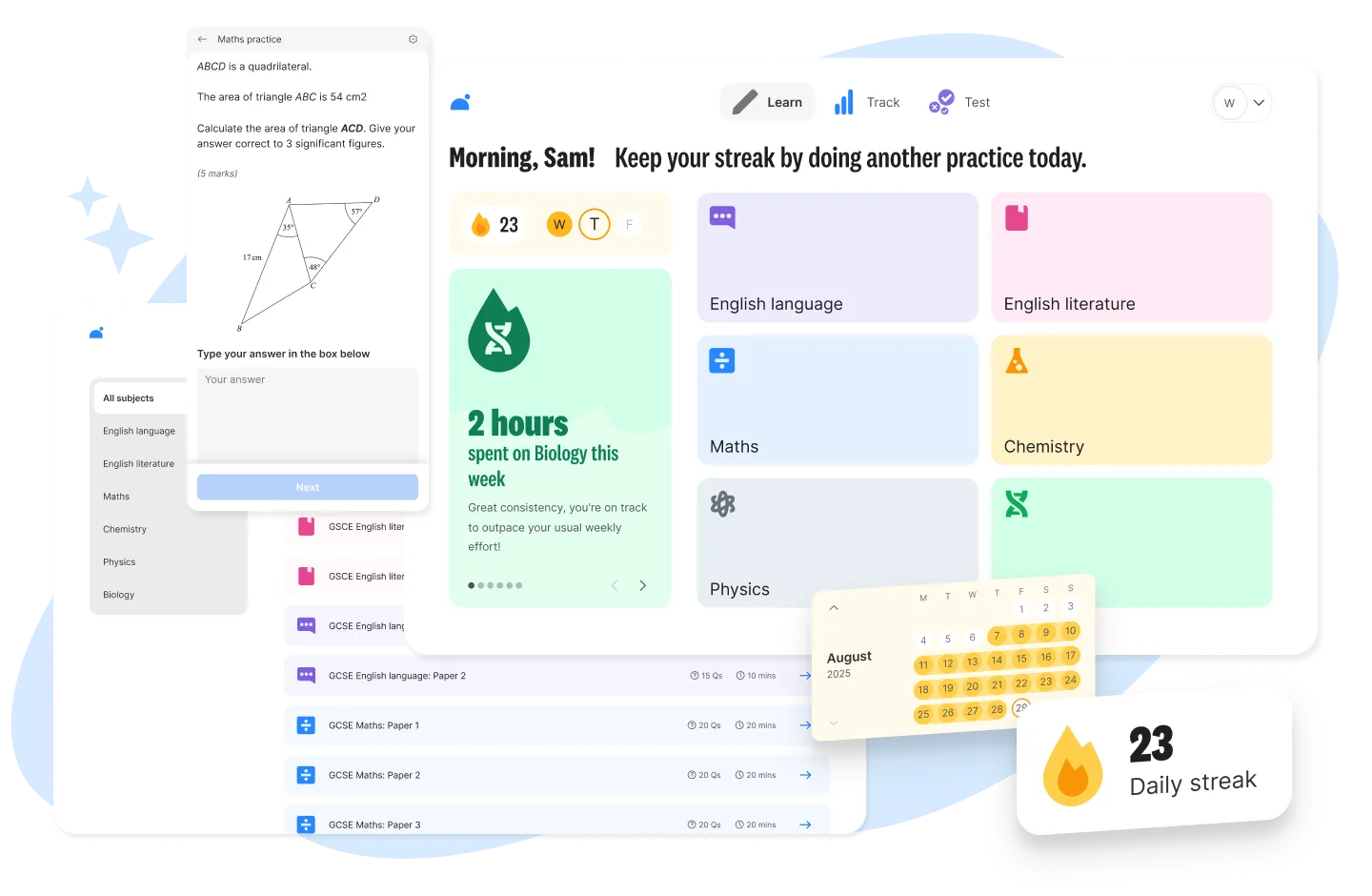
Alongside these, Atom gives you practice papers with instant, examiner-style feedback, so you can see exactly where you're gaining and losing marks as you go. Take a look at our guide on how to get the most out of GCSE past papers for a simple way to build this into your revision.
Once you understand how Edexcel International GCSE English Language is structured and marked, revision becomes much more focused. You'll know exactly what each section is testing, and that's the biggest head start you can give yourself.