Back to blog

How to motivate your Year 8 child when school loses its shine

By
Atom
|
November 17, 2026

If your Year 8 child has lost interest in school, you are not doing anything wrong, and there is a lot you can try. This guide explains why motivation can fade after Year 7, what it looks like at home, and six things you can try this week, each with an example. The ideas here are practical suggestions rather than a formula, so take what suits your child and leave the rest.

Key takeaways

  • Interest often drops once the newness of secondary school wears off.
  • Low motivation can look like avoidance, "what's the point?" or giving up at the first hurdle.
  • A reason to try, a small goal and a way to see progress are good places to start.
  • Parents can set the routine and leave the content to their child.
  • If one subject is the problem, or the low mood lasts, school is a good next step.

Why do children lose motivation in Year 8?

There is rarely one reason, but a fading sense of newness is one possible starting point. Year 7 comes with a new building, new friends and a new timetable. By Year 8, that has worn off, and the work and homework are still there.

Other things can add to it. The work may feel harder to follow. In a survey of 157,468 secondary pupils in 2024/25, the pupil survey company Edurio found that 60% of Year 7 pupils say teachers explain work clearly, compared with 45% in Year 8. That is an average, not a diagnosis, but it is hard to feel motivated by something you cannot quite follow.

Teenagers also have more going on outside lessons: friends, hobbies, phones and tiredness.

What does low motivation look like?

Low motivation usually looks like avoidance rather than refusal. You might notice:

  • Homework left until the last minute, or "forgotten".
  • "What's the point of this?" about a subject.
  • Giving up at the first hard question. For example, one tricky maths problem and the book is shut.
  • Doing the minimum, such as three lines when five were asked for.
  • Less interest in things they used to enjoy.

Changing moods are also normal in the teenage years. The NHS notes that many changes parents see can be put down to normal teenage behaviour. If this is the pattern over time, that tells you it’s more than just one bad day.

How can you help your child find a reason to try?

A reason that matters to your child works better than one that matters to you. Here are three ways to find one.

1. Link the subject to something they care about

Ask yourself what they already enjoy, then look for a link. A football fan can use percentages and averages to look at their team's season. A child who loves cooking is already using ratios and measuring.

Top tip: Make the link in passing, not as a lecture. "That's actually the same maths as your match stats" works better than a speech.

2. Give them a say

Offer choices inside a routine you set. For example, homework happens at 5pm, and your child picks which subject goes first. The structure stays, but they feel in charge.

3. Ask what they would like to get better at

Try "Is there one thing in school you'd like to feel better at?" The answer may be small, such as speaking in French or finishing science write-ups, but it gives you something real to work with.

Atom for Years 7-9 is coming this November.

Built to keep your child on track for top sets and GCSE success. Join the waitlist for early access.

Join the waitlist

How do small goals and visible progress help?

A goal you can see yourself reaching is easier to start than a vague "try harder". Small goals also give you something specific to notice and talk about.

Try one goal a week, written down. For example:

  • "Learn 10 French words by Friday."
  • "Hand in the history homework on the day it is due."
  • "Do 15 minutes on fractions on Monday, Wednesday and Thursday."

Put a tick list on the fridge or in a notebook. When a week ends, look at what has been ticked off. It makes progress easy to see, even when grades have not changed yet.

How much should parents step in?

Step in on the routine and the environment, and step back on the work itself. You can control when and where homework happens. You do not need to control how it gets done.

In practice, that looks like:

  • You: set a regular slot, keep distractions away, ask once a week what is due.
  • Your child: chooses the order, does the work and owns the result.
  • Together: a five-minute check on Sunday evening. Our guide to building an effective study routine has ideas.

Offer help when your child asks for it, but avoid redoing the work yourself. If they ask you to check an answer, ask "how did you get that?" first.

Sleep and downtime also matter. Tiredness makes everything feel harder, so our guide to getting into a school-night sleep routine may help.

What if it is one subject?

If it is one subject, the issue is usually specific, so aim for a specific fix. Start by asking what exactly is hard: the topic, the teacher's style, or a gap from earlier.

Take Spanish as an example. Your child says "I hate Spanish". Ask "Is it the speaking, the vocabulary or the grammar?" If the answer is vocabulary, try 10 minutes of word practice with a family member quizzing them. If it is speaking, a short video or audio clip can help them hear the language in use.

Then tell the teacher. A message like "Spanish has become a struggle for Noah. Is there anything specific we can do at home?" is easy to reply to. See our guide to getting the most out of parents' evening for more questions to ask.

When should you involve school?

Involve school if low motivation lasts, if it is focused on one subject you cannot shift, or if it comes with other changes. A form tutor or head of year is a good first person to contact.

You should also talk to school if your child is reluctant to attend, or if reading, writing or organisation seems to be a real struggle. If you think your child may have special educational needs, contact the SENCo (special educational needs co-ordinator) at their school.

If your child's mood is low and not lifting, the NHS advises talking to them, asking the school whether staff have concerns, and booking a GP appointment. The NHS also lists the YoungMinds parents' helpline on 0808 802 5544 (9.30am to 4pm, Monday to Friday).

Looking for advice for a younger child? Our guide to keeping your child motivated in Key Stage 2 is written for primary-age children. A few weeks of small goals, a steady routine and an interested adult can help at 12 or 13.
No items found.
No items found.
No items found.

Take control of the years that shape GCSE success.

Everything you need to support Years 7, 8 and 9, in one place.

Over 350,000+ families already trust Atom for 11+ and GCSE. Now we're bringing the same support to Years 7-9, the years that set the pace for everything after.

πŸ“„ Topic-by-topic practice across Maths, English, Biology, Chemistry and Physics, so you always know exactly what's covered

πŸŽ“ Guided learning that meets your child where they are, whether that's reaching top sets or building confidence in weaker subjects

✍️ Instant feedback on every question, including full written answers

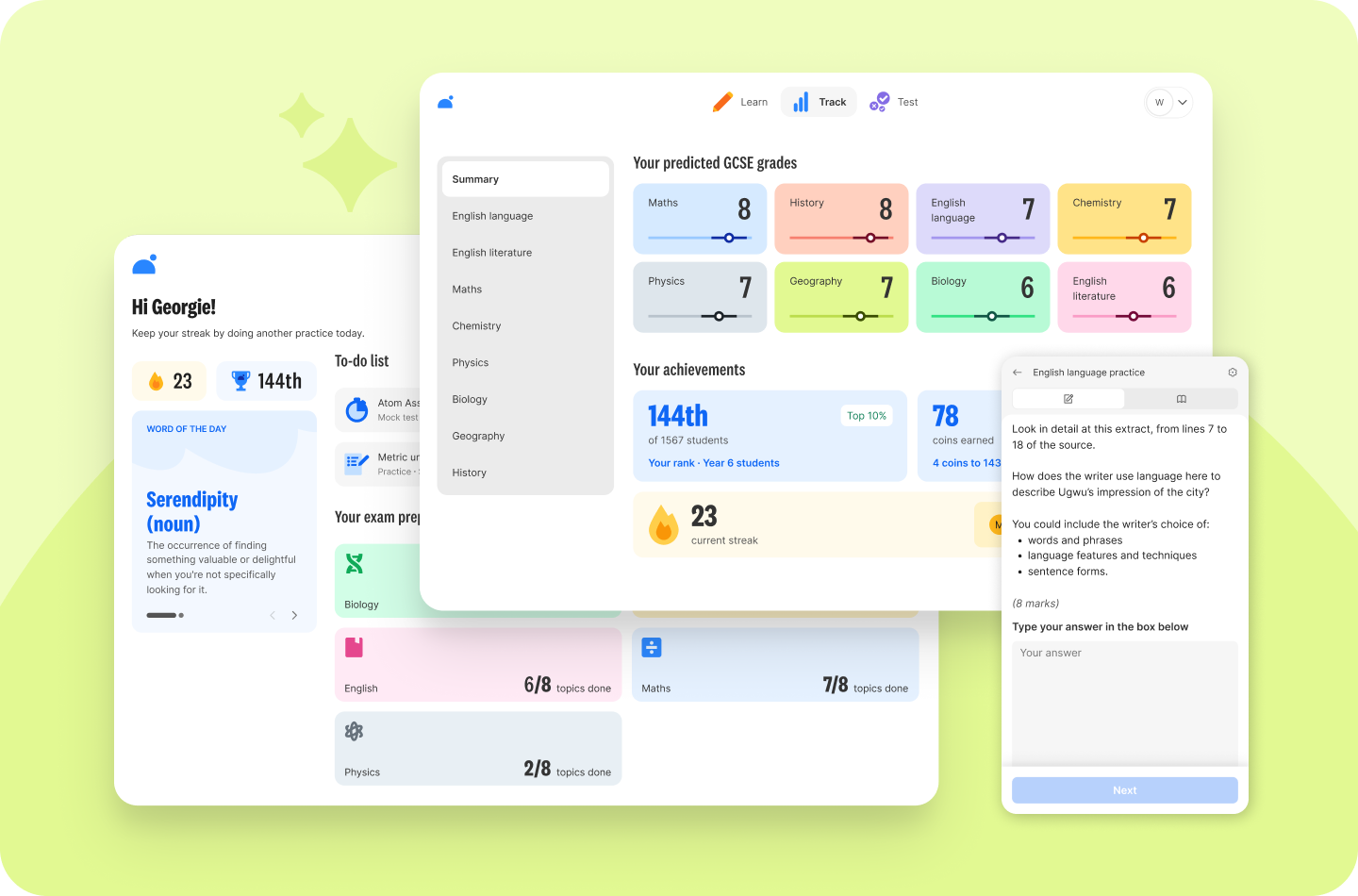
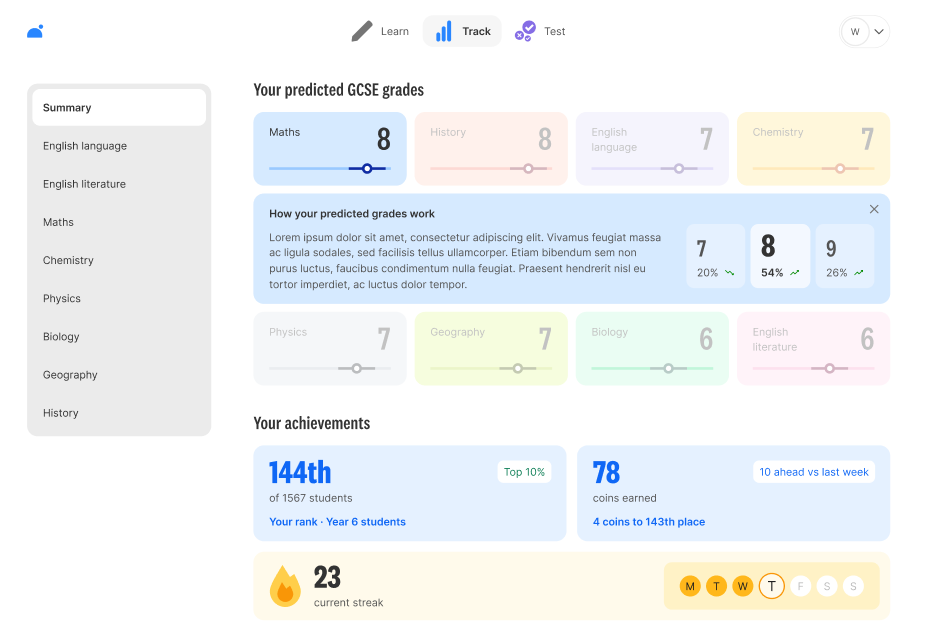
πŸ“Š Personalised weekly goals and topic-by-topic progress tracking

Be the first to know when Atom for Years 7-9 launches

Join the waitlist now for early access, ahead of the November launch.

Sign up now

Contents