
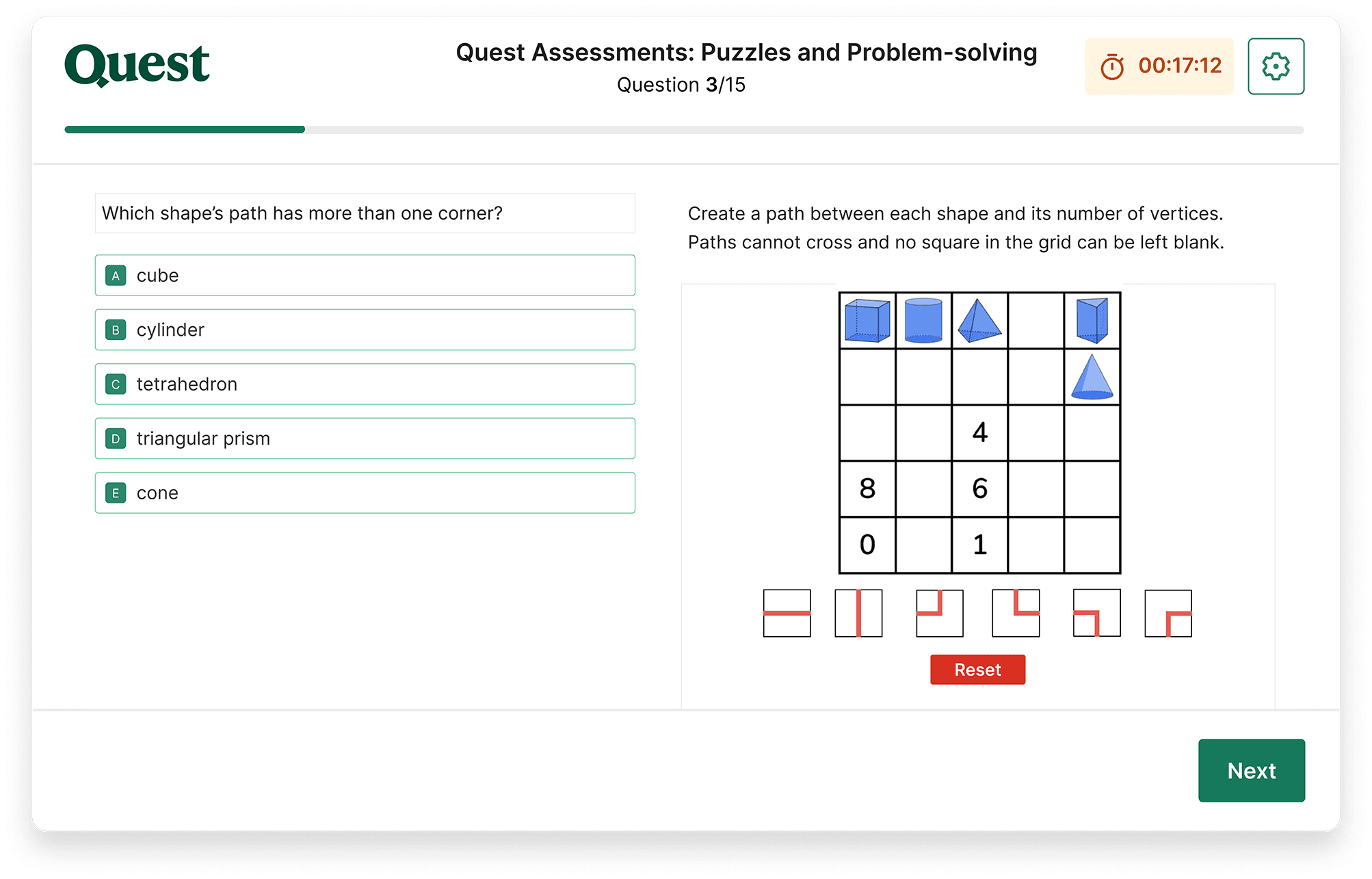
Puzzles & Problem-Solving
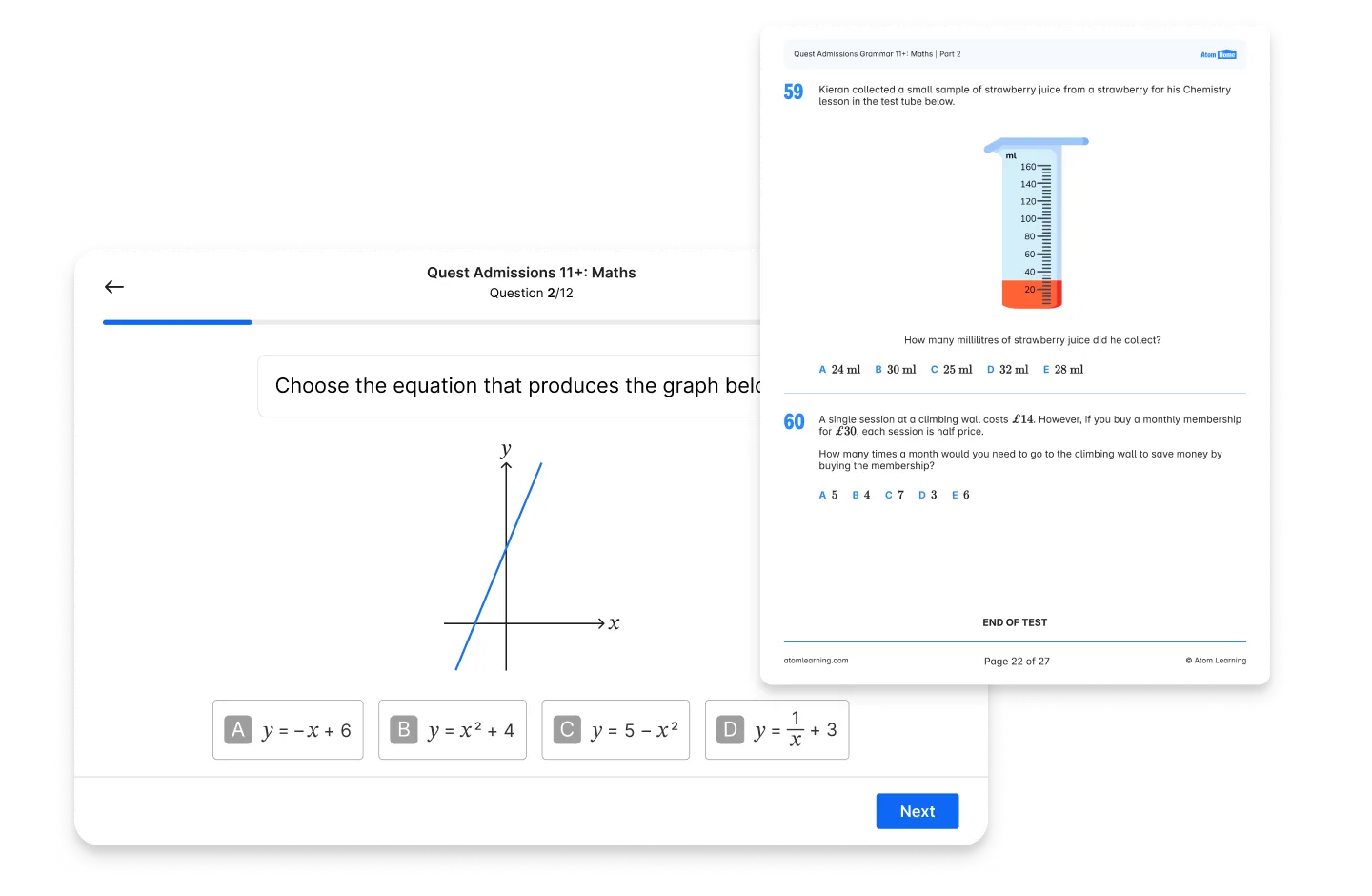
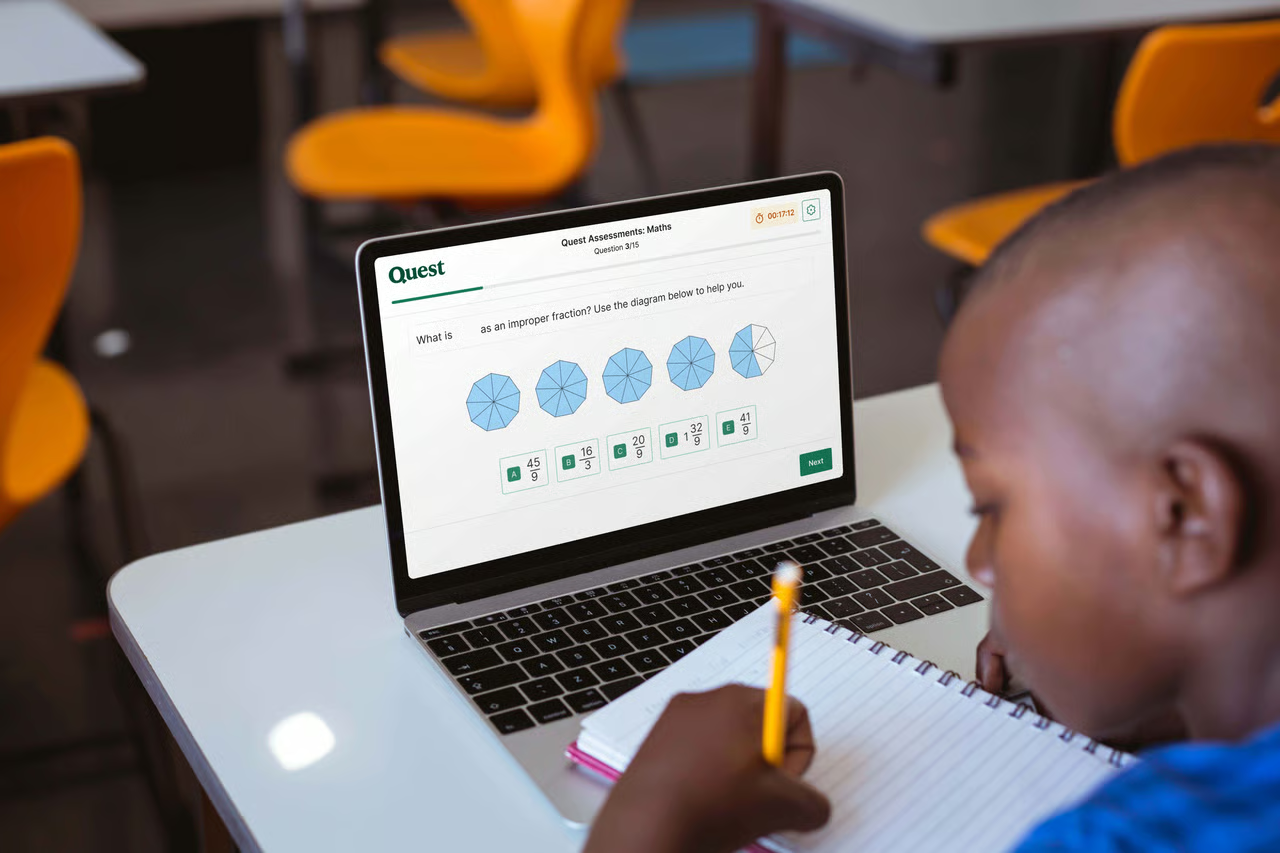
This section includes a variety of interactive puzzles based on maths, logic and reasoning. Your child might see:
- Shape sequences and patterns
- Strategy puzzles that require trial and error
- Tasks that involve finding rules or spotting relationships
- Problems combining number, geometry or algebra with logical thinking
These questions are designed to assess how your child thinks through a challenge, adapts their strategy, and stays focused when the answer isn’t obvious.
The Puzzles & Problem-Solving section usually lasts around 15 minutes.
Creative Comprehension
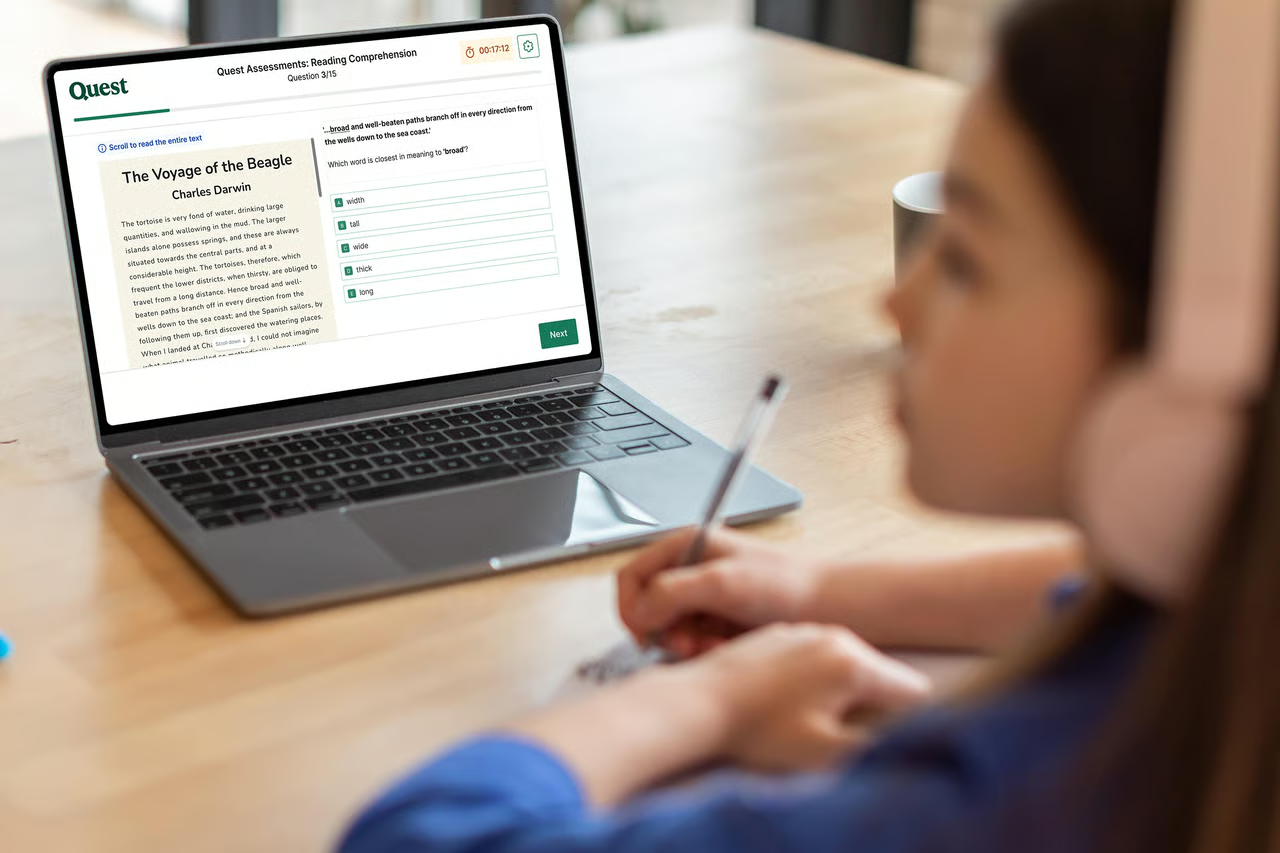
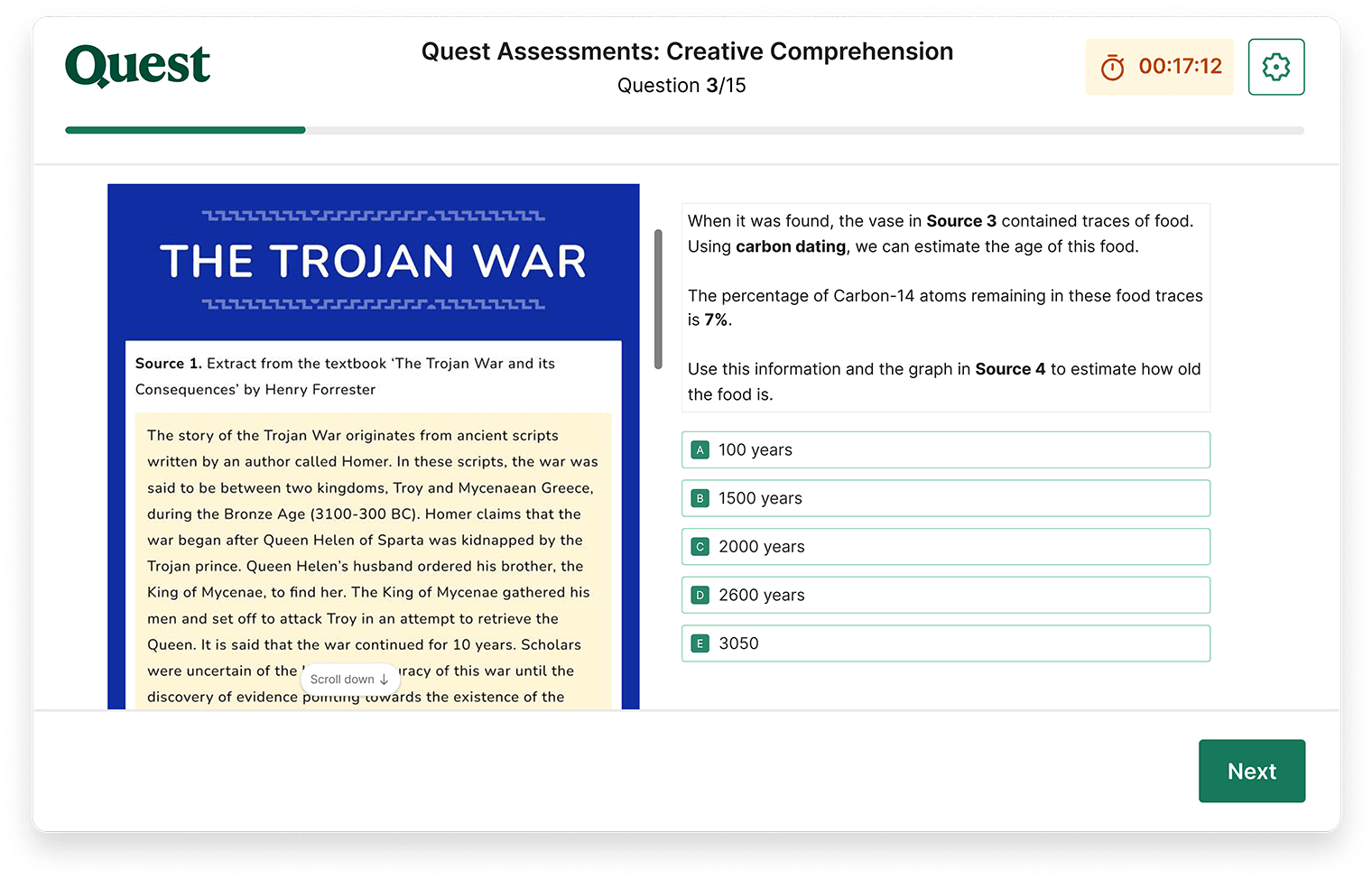
This section is all about making connections between different types of information. Your child will be shown several sources around a shared theme. These could include:
- A short story or diary entry
- A map with grid references
- A graph, table or chart
- A coded message or set of results
Your child will need to look through each resource, interpret it, and spot connections between resources to answer questions.
This task blends reading, reasoning and creative thinking. It gives your child a chance to show how they make sense of new information.
This section usually has a time limit of around 20 minutes.
10 ways to develop key exam skills at home
Quest Part 2 doesn’t test what your child has memorised – it explores how they think. The best way to prepare is through simple, low-pressure activities that build curiosity, logic, and confidence.
Here are 10 fun and practical ways to help your child build the key skills assessed in Puzzles & Problem-Solving and Creative Comprehension. No workbooks required!
1. Read regularly and widely
Reading helps your child build vocabulary, understand different points of view, and get better at spotting hidden clues in a text – all useful for creative comprehension. Aim to make reading part of your daily routine.
Try:
- A mix of fiction and nonfiction (e.g. adventure stories, biographies, news articles)
- Short bursts of shared reading and discussion
- Asking open questions like “What do you think might happen next?” or “How is this character feeling?”
Looking for inspiration? Explore Atom’s free reading and writing starter kit for helpful suggestions of age-appropriate books your child can read!

2. Play logic and word games
Games like Scrabble, Boggle, Bananagrams, Wordle or Murdle help children practise vocabulary, spelling and reasoning, all while having fun. These games also build mental flexibility, especially when played under gentle time pressure.
Tip: Let your child explain their thinking as they play. This helps build confidence in describing how they solve problems.
3. Try real-world reading
Encourage your child to make sense of everyday materials, like train timetables, maps, menus or leaflets. Can they spot key details? Draw conclusions? Work out which option is best?
You might ask:
- “What time does the next train arrive?”
- “Which meal has the fewest ingredients?”
- “What’s the best route on this map?”
This helps build the same skills used in the Creative Comprehension section – interpreting different types of information and making connections.
4. Build spatial skills through hands-on play
Activities like building with LEGO, completing jigsaw puzzles, or arranging Tangrams help your child get better at visualising shapes and patterns. These are the same skills they’ll need to spot sequences or manipulate shapes in logic puzzles.
Try setting challenges like:
- “Can you build a tower using only 10 bricks?”
- “Can you copy this pattern and then flip it?”
- “How many ways can you arrange these blocks to make a square?”
5. Play board games that use strategy
Many family board games build problem-solving and planning skills. Look for games where your child needs to make decisions, adjust their strategy and think ahead. Try:
- Ticket to Ride: builds planning and pattern-spotting
- Rush Hour: great for logic and sequencing
- Chess or draughts: boosts forward thinking and resilience

6. Encourage writing for fun
Creative Comprehension tasks reward original thinking, and writing helps children practise expressing their ideas clearly. Encourage them to:
- Write short stories, letters, or diary entries
- Re-tell a well-known story from a new point of view (e.g. Little Red Riding Hood from the wolf’s perspective!)
- Keep a travel or weekend journal
This helps build written fluency and encourages them to look at situations from more than one angle.
7. Get moving with memory and problem-solving games
Physical games can be great for building focus and flexible thinking. Try:
- A memory treasure hunt: hide clues around the house and ask your child to remember them in order
- “Simon Says” with a twist: add a maths fact or spelling word to each action
- Quick-fire brain challenges: “How many ways can you use a paperclip?” or “What could you do with three empty boxes?”
These kinds of games help your child practise following multi-step instructions, just like they’ll need to do in Quest Part 2.
8. Explore museums or galleries together
Museums and exhibitions are brilliant for sparking curiosity and discussion. Look at displays together and ask:
- “What do you notice first?”
- “What do you think this object was used for?”
- “What do these two paintings have in common?”
These conversations help build observation, interpretation and comparison skills – exactly what’s needed for multi-source questions in Creative Comprehension.

9. Play collaborative puzzle games
Escape room-style games or group puzzles can be a brilliant way to build persistence and problem-solving skills. Try:
- Murdle: Volume 1: a detective-style logic puzzle book
- Printable escape room kits – many are available online for free or at low cost
- Home-made riddles and treasure hunts
These games encourage children to think carefully, test ideas, and keep going when the answer isn’t obvious, just like in the Quest puzzles.
10. Use everyday maths
Look for quick and easy ways to weave maths into your day:
- Work out change at the shops
- Scale a recipe to serve more people
- Estimate how long a journey will take
- Set fun time-based challenges (e.g. “Can you do 12 star jumps in 20 seconds?”)
This helps your child build number fluency, estimation and reasoning. These skills are all useful when working through unfamiliar maths-style questions in the Quest assessment.