
Back to blog

SATs and the 11+: do they overlap, and does it matter?

By
Atom
|
November 17, 2026

If your child is in Year 6, they may be facing two very different-sounding exams in the same school year: the government's SATs tests in May, and, for many families, the 11+ in the autumn term before that. It's a fair question to ask whether preparing for one actually helps with the other, or whether you're looking at two separate processes. This post sets out what each exam tests, where the real overlap is, and how to sequence preparation across the year so the two don't compete for the same time.

What do the SATs actually test?

KS2 SATs are the government's national curriculum tests, sat by every Year 6 pupil in a state-funded school in England during a fixed week each May. They cover three subjects, all drawn directly from what's taught in primary school:

  • English reading — one paper: a reading booklet containing several texts, with a separate answer booklet.
  • English grammar, punctuation and spelling (often shortened to "GPS") — two parts: a paper testing grammar and punctuation knowledge, plus a short spelling test where a child writes down words read aloud by the teacher.
  • Maths — three papers: an arithmetic paper testing calculation methods, and two reasoning papers testing how a child applies maths to worded and multi-step problems.

There's no separate test of puzzle-solving or reasoning skills outside these three subjects. Everything SATs assess comes from the national curriculum content a child has been taught since Year 3.

It's also worth being clear about what SATs are for. They're a national progress check, used to measure how a school and a cohort are performing against the curriculum. The results don't affect which secondary school your child goes to, but they do still matter: some secondary schools use KS2 SATs results, alongside their own assessments, to help place children in sets when they start Year 7. That's a different purpose from the 11+, which brings us to the second exam.

What does the 11+ actually test?

The 11+ isn't a single, standard exam; it's the umbrella term for the entrance tests grammar schools and some independent schools use to select pupils. Most children sit it in the autumn term of Year 6, with many schools testing in September or early October, months ahead of SATs.

Depending on the school or consortium, the 11+ can cover up to four subjects:

  • English — reading comprehension and spelling, punctuation and grammar (some schools add a creative writing task).
  • Maths — drawn from the KS2 curriculum, covering similar ground to SATs maths.
  • Verbal reasoning — puzzles built from words and letters, working out patterns, codes and relationships in language rather than answering comprehension questions.
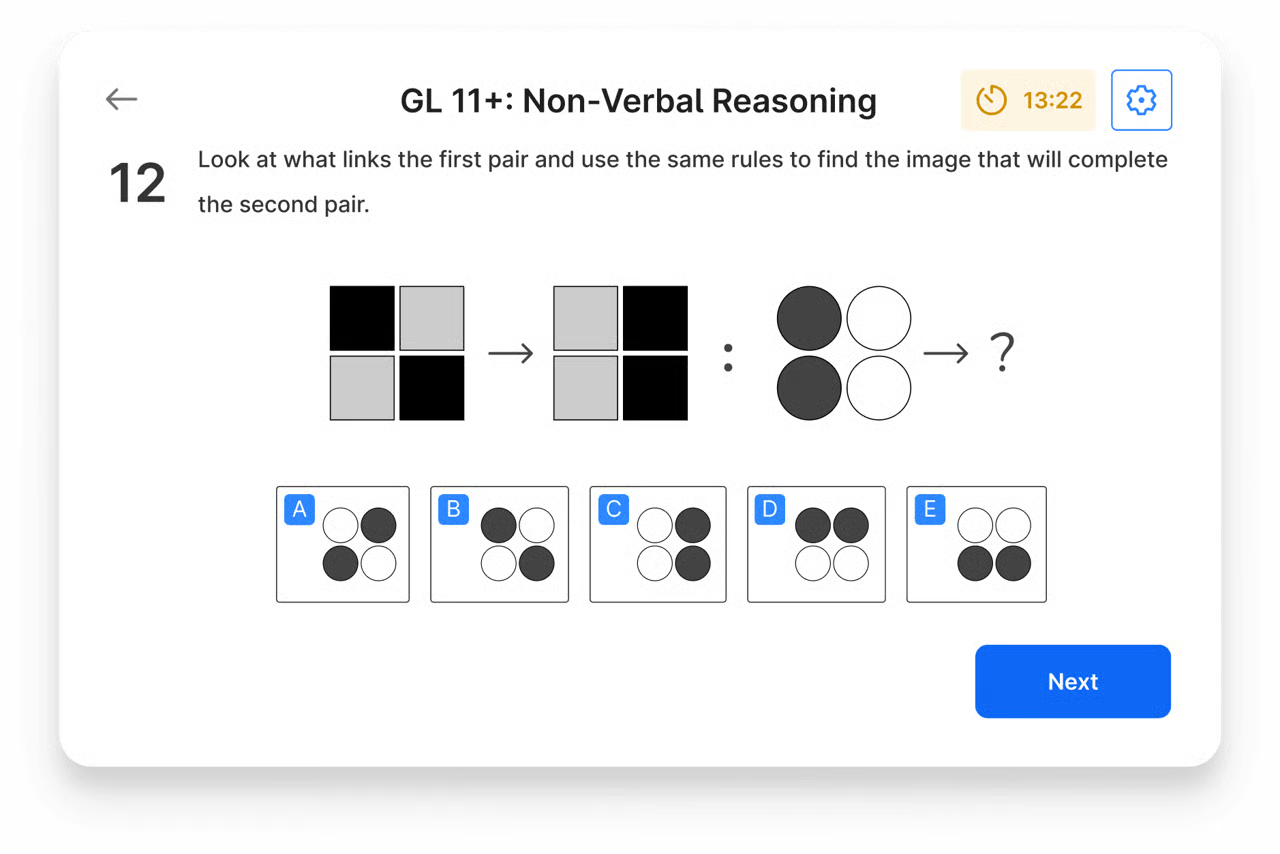
  • Non-verbal reasoning — puzzles built from shapes and diagrams, spotting patterns, sequences and the odd one out visually rather than with words.

Unlike SATs, the 11+ result directly affects which school your child is offered a place at. That's the practical reason it tends to carry more weight for families, even though it happens earlier in the year and with less of the curriculum behind it.

Where do the two exams overlap?

The overlap is there, but it sits in underlying skills, not in test format. Both exams draw on the same reading and number skills a child has been building since Year 3: comprehension, spelling and grammar accuracy, and fluency with number operations and fractions, all pulled from the same national curriculum. A child who reads widely and confidently, and who can add, subtract, multiply, divide and work with fractions without hesitating, is building the foundation both exams reward, even though the papers look different on the page.

In practice, this means most of the reading, spelling, grammar and core maths preparation your child does for the 11+ directly strengthens what SATs will test later in the year. The reading, spelling, grammar and core maths skills built up while preparing for the 11+ feed straight into what's needed for the Year 6 SATs papers, including the Year 6 SATs maths programme. These core reading, spelling and grammar skills are worth building well regardless of which exam you're focused on that week, because both exams end up relying on them.

Explore Atom's reading & writing starter kit

Atom's free starter kit includes four resources for ages 7–9: a curated book list, a 30-day writing challenge, a reading depth quiz and a daily vocab builder. Everything you need to start building the foundations that matter for the 11+.

Build my child's reading and writing skills

Where do SATs and the 11+ differ?

Do SATs include verbal and non-verbal reasoning?

The main thing that doesn't transfer between the exams is verbal and non-verbal reasoning. Most 11+ papers, whichever exam board or individual school sets them, include both: verbal reasoning puzzles built from words, letters and codes, and non-verbal reasoning puzzles built from shapes, patterns and sequences.

Neither subject is included in the national curriculum or the SATs exams. That's a deliberate part of what the 11+ is for: testing subjects outside the curriculum is how it assesses general academic ability in children who are already doing very well at school, rather than just how well a child has learned what's been taught that year.

When are the 11+ and SATs taken?

Most 11+ exams fall in the autumn term of Year 6 rather than in May, so your child sits their 11+ English and maths papers with a full term or two less of Year 6 curriculum behind them than they'll have by the time SATs comes around. That just means 11+ preparation has to cover some content that SATs preparation would otherwise reinforce naturally, later in the year. Our 11+ guide sets out the typical autumn timetable school by school.

Do the 11+ and SATs papers look the same?

The papers themselves look and feel different too. Most 11+ papers use a different format and structure from SATs altogether, whether that's multiple choice versus full written answers, different timings, or question styles that don't appear on a SATs paper at all. None of this sits inside the national curriculum, so primary schools don't teach or prepare children for the 11+ specifically, and any familiarisation with the format has to happen outside school.

This is exactly the gap Atom's 11+ preparation programme is built to close: targeted practice across English, maths, verbal and non-verbal reasoning, matched to the exam your child is actually sitting, so the format itself isn't a surprise on the day.

How should you sequence preparation across the year?

The 11+ is a demanding exam, and part of what it tests, verbal and non-verbal reasoning, isn't part of the national curriculum, so there's real value in starting gently well before Year 6 rather than waiting. It helps to think of the run-up in four stages rather than one long stretch of "exam prep":

  • Year 3 and 4 (gentle familiarisation): light, regular exposure to reasoning puzzles alongside everyday reading and number practice gives a child time to grow into the format without pressure, well ahead of any exam. Atom's 11+ programme is built to support this kind of steady, early start.
  • Before the 11+ (spring and summer of Year 5 into early autumn of Year 6): step up verbal and non-verbal reasoning practice, since it's the one area nothing else in the school day will cover, alongside steady reading, spelling and core maths work that serves both exams. Atom's 11+ preparation targets exactly this mix.
  • After the 11+ (winter and early spring): for children not facing further assessments, reasoning practice can drop away, and attention shifts to consolidating and extending the maths and English content SATs will test — the areas of the Year 6 SATs curriculum that hadn't yet been covered in the autumn. Atom's SATs resources cover this stage.
  • The final term before SATs (spring into May): familiarity with the specific SATs paper formats — the arithmetic paper's calculation methods, the separate spelling test, timed reading comprehension — matters more at this stage than new content. Atom's SATs preparation is built around exactly this kind of paper-format practice.

None of this requires more hours of work overall. It requires the right emphasis at the right point, so a child isn't learning verbal reasoning and consolidating fractions in the same week under pressure. Steady, well-sequenced practice serves both exams better than concentrated bursts of cramming before either one.

For most families, the reassuring part is this: once the reasoning papers are accounted for separately, everything else you do to help your child read more confidently, spell accurately and calculate fluently is working towards both exams at once.

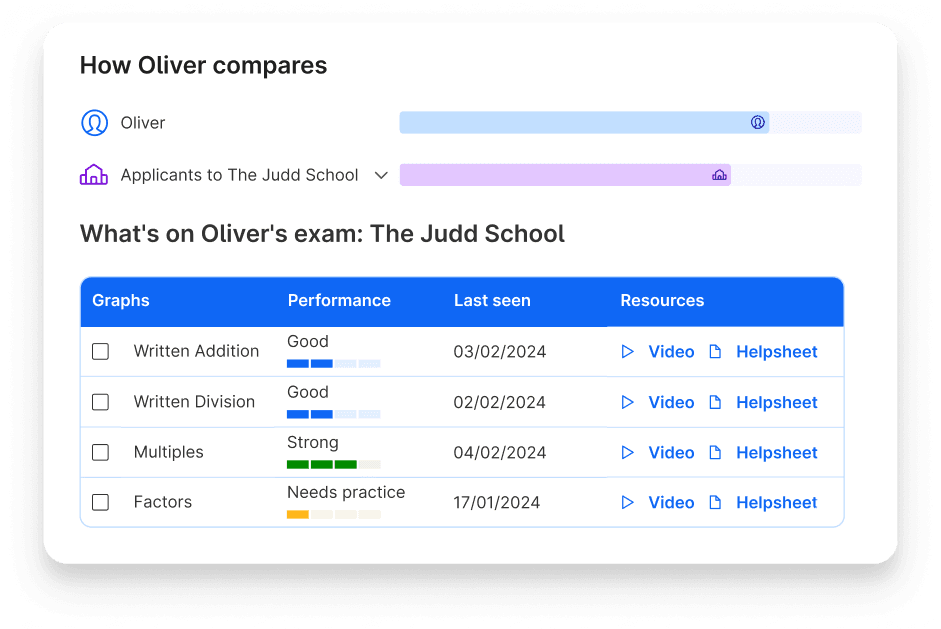
We realise it can feel like a lot to juggle. Atom manages both for you: it identifies your child's gaps across SATs and the 11+ and gives them personalised, targeted support so they're prepared for both, without you having to plan two separate revision journeys on top of everything else in Year 6.
No items found.
No items found.
No items found.

Help your child ace the 11+

Get the pass mark you need with Atom Home – the leading exam platform for grammar and independent schools.

Watch your child's scores soar

Join 100,000+ families who trust Atom to help their children excel in Key Stage 2 and entrance exams. Endorsed by grammar schools, loved by parents.

Get started today