Starting Year 11: How to Set Up a Revision Routine From September

Starting Year 11 can feel like a big step, and it's completely normal to wonder how you'll fit everything in. The good news is that you don't need a perfect plan or hours of extra work every evening. A simple routine, set up in the first few weeks of term, makes the rest of the year feel far more manageable, so mocks and coursework deadlines arrive as steps you're ready for rather than surprises.
This guide covers what's actually different about Year 11 from day one, how to build a weekly routine that lasts, how to fit coursework and NEA deadlines around your revision, and how to keep track of your progress across every subject. Read on to find out more.
Key takeaways
- Mock exams in the autumn or winter term are a helpful practice run, showing what's already going well and where a little extra focus will help, with plenty of time to build on it.
- A routine set up in September is far easier to keep than one built under spring-term pressure.
- NEA and coursework subjects usually have an earlier school deadline than the exam board's, so get your dates early.
- Tracking your progress subject by subject, rather than just ticking off "revision done", shows you exactly where to focus next.
What's different about Year 11 from day one
Every lesson from September now counts toward your final grade in a way that can feel different from Year 10. Teachers are working to a tighter timetable, since most specifications need to be finished well before study leave to leave time for revision.
Mock exams usually land in the autumn or winter term, often November, December or January, depending on your school. Think of them as a practice run. They give you and your teachers a clear, early picture of what's going well and where a bit more focus would help, while there's still plenty of time to build on it.
Options also narrow. Coursework subjects move into their assessed pieces, class discussions get more exam-focused, and homework starts to look more like revision. None of this needs to feel overwhelming. It's just a shift worth naming early, so it doesn't catch you off guard in October, and a solid weekly routine set up now takes most of the pressure out of it.
Setting up a weekly routine that lasts
The routines that survive the whole year are simple ones, not ambitious ones. Start with something you can realistically keep up every single week, then build from there.
A good starting point is a fixed weekly slot for each subject, even if it's only 15 to 20 minutes. Short, regular sessions help information stick better than long, irregular ones. Add one slot each week to review what you covered in lessons that week, and one slot at the weekend to revisit anything you found tricky.
Write your routine down somewhere visible, whether that's a wall planner, a shared calendar, or an app. Our guide to building a GCSE revision timetable walks through how to structure a weekly plan around your actual subjects and exam boards.
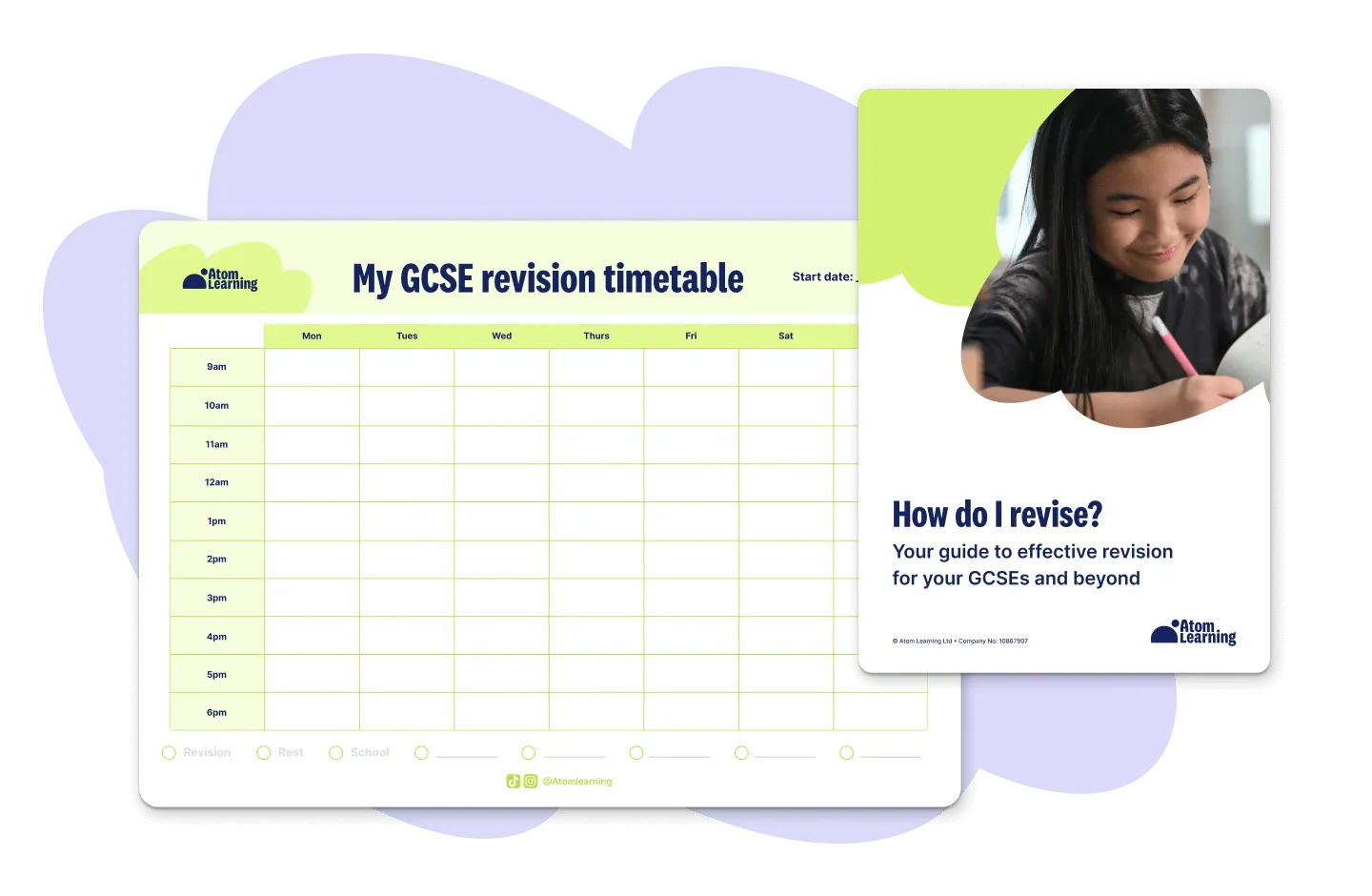
Download your free GCSE revision planner
Less stress, more success! Get your free GCSE revision planner and our handy guide to effective revision today.

This is exactly what Atom Learning is built to help with Year 11 specifically. It maps out the whole year by your subjects and exam boards, then breaks it into manageable, trackable weekly steps. Instead of guessing whether you're covering the right things, you can see exactly where you stand, from September through to your final exam.
Balancing coursework and NEA deadlines with revision
Some GCSE subjects include non-exam assessment, usually shortened to NEA, or coursework. This is work marked by your school rather than sat as a written exam, and it still counts toward your final grade. Art and Design, Design and Technology, Drama, Music and PE are the most common subjects with this kind of assessment, though it varies by exam board.
Exam boards set their own final submission dates for NEA marks, and these tend to fall in the spring and early summer term. AQA's published key dates, for example, show GCSE Art and Design submissions due at the end of May, while OCR's guidance sets earlier windows for subjects like PE, often by the end of March. Your school will almost always set its own internal deadline ahead of these, to leave time for marking and moderation, so treat your teacher's date as the real one rather than the exam board's.
The practical fix is to keep NEA work and revision in separate slots in your routine, rather than letting one quietly crowd out the other. Block time for your NEA subject specifically, finish it in line with your school's internal deadline, and then fold that subject back into your normal revision rotation once it's handed in. Once that's settled, the next question is simply whether your regular routine is actually working.
Tools to track progress across every subject
A weekly routine only works if you can see whether it's working. Rather than just logging hours spent, track what you actually know, subject by subject and topic by topic.
A simple topic checklist for each subject, marked as not started, in progress, or confident, gives you a clearer picture than a general sense of "I've done some revision". Past papers are one of the best ways to test where you really stand rather than where you think you stand. Our guide on using GCSE past papers effectively explains how to time them and use your results properly.
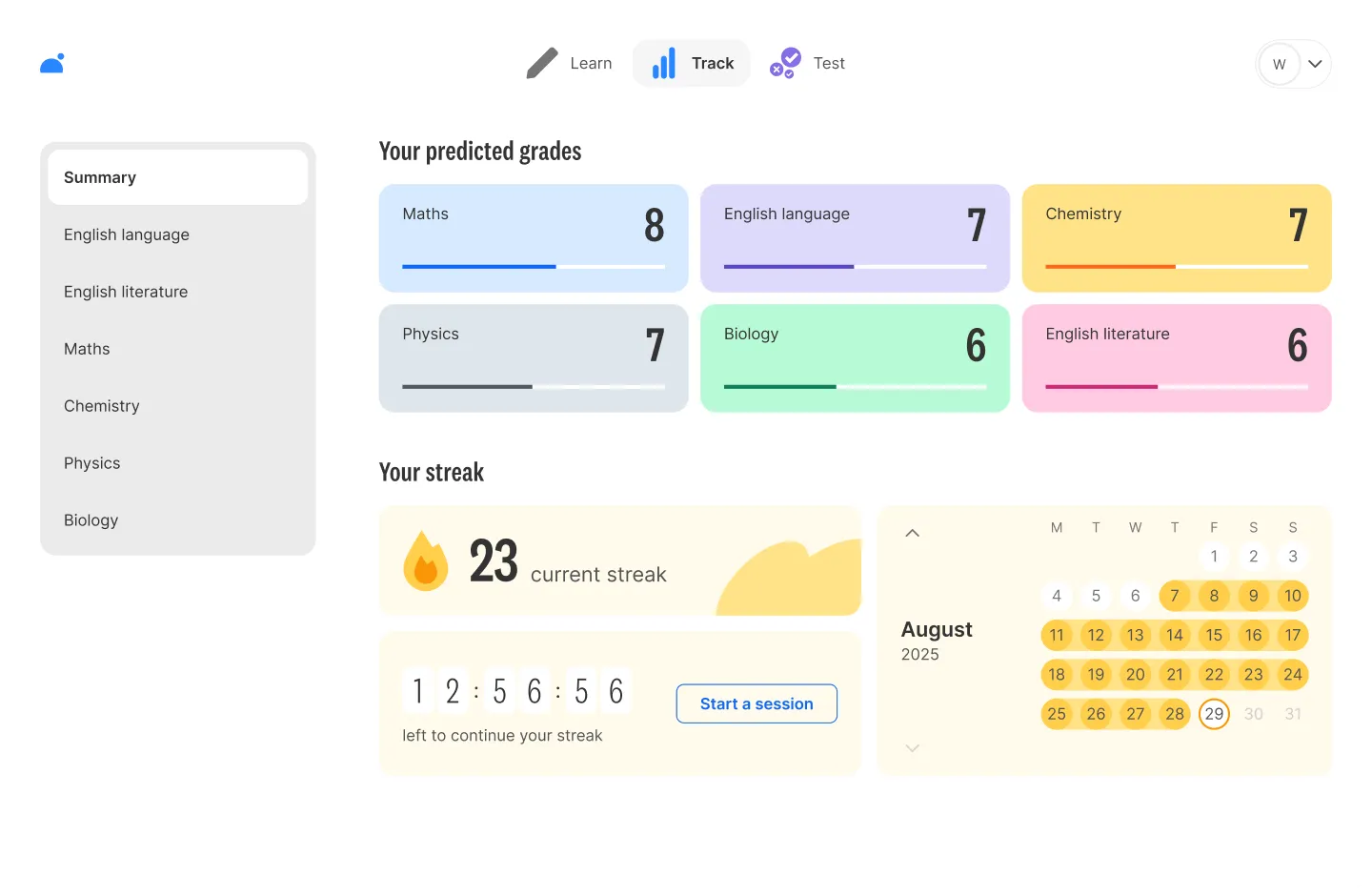
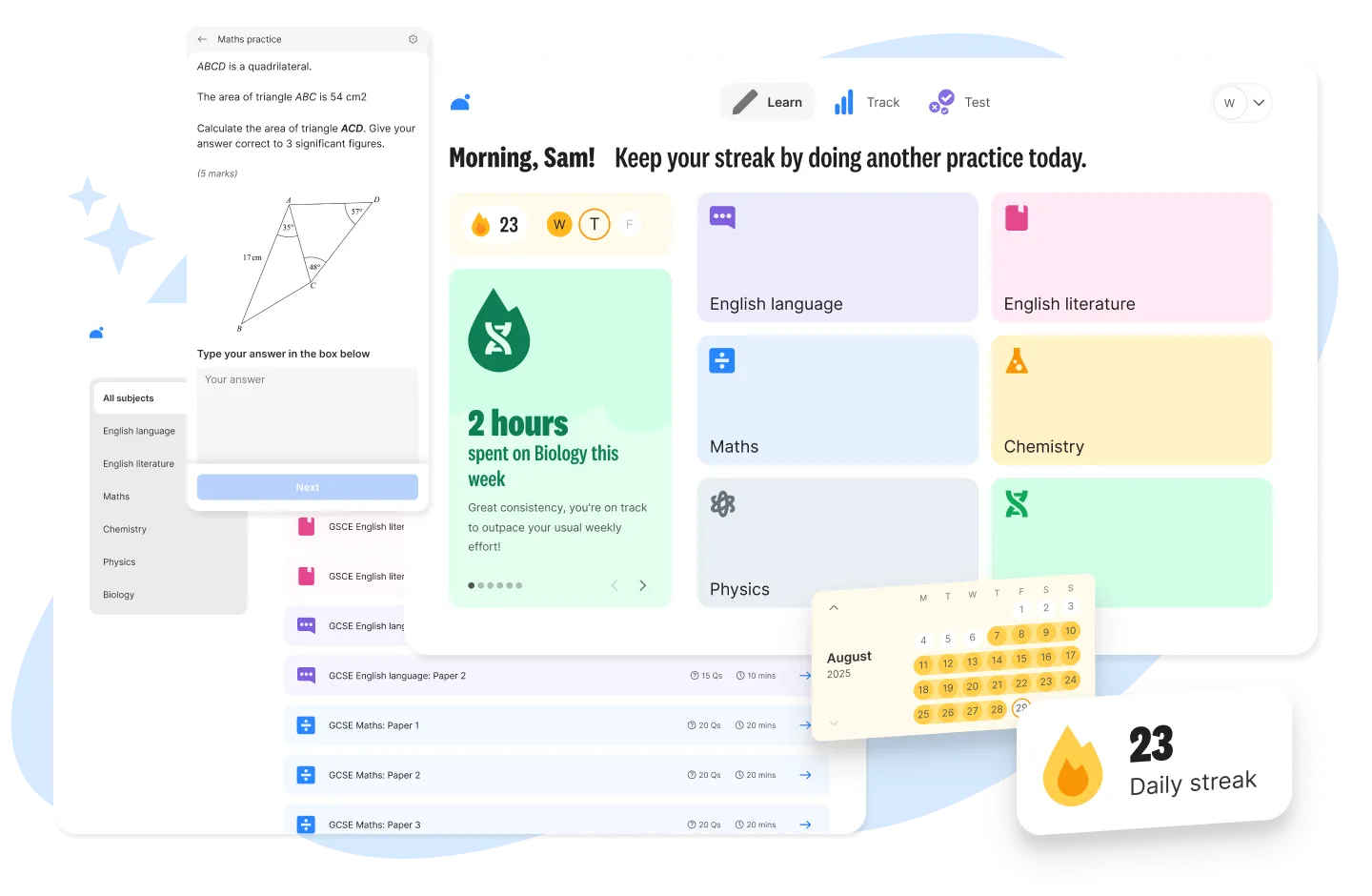
This is also where a platform like Atom Learning helps. It brings your courses, practice questions, past papers and progress tracking into one place, so you can see where you stand across every subject rather than piecing it together from separate folders and exercise books. Instant examiner-style feedback on your practice answers means you find out what to improve straight away, instead of waiting for a teacher to mark a full set.
It's also worth checking in on the whole routine every few weeks rather than just each subject in isolation, so you can adjust the balance if one subject keeps slipping. Our guide to building good GCSE study habits has more on keeping a routine going well beyond the first few weeks.
Getting your Year 11 routine right in September doesn't mean getting it perfect. It means building something steady enough to still be working in May.
Take control of your GCSE revision

Everything you need for GCSE success, in one place.
Feeling confident about your GCSEs comes from knowing what to revise, how to improve, and where to focus next.
🔮 GCSE practice papers based on our team's 2026 exam predictions
🎓 Guided courses that cover all the topics on your exams
✍️ Instant feedback that tells you where you’ve gained and lost marks
📈 Predicted GCSE grades and topic-by-topic tracking
Create your free account and start making real progress today.