

What is the difference between higher and foundation for GCSEs?

If you are getting ready for your GCSEs, you may have heard the words Foundation and Higher and wondered what they mean. You are not alone. Many students are unsure which tier is right for them, and it is an important decision.
Read on to find out what the difference is, which subjects have tiers, and how to decide which one is right for you.
Not sure which exam board your school uses? Take a look at our guide to finding out which exam board you are studying.
This blog will cover:
- What Foundation and Higher tier mean
- Which GCSE subjects have tiers
- The difference in grades between Foundation and Higher
- How to decide which tier is right for you
- Top tips for whichever tier you are sitting
What does Foundation and Higher tier mean?
Most GCSE exams come in two versions: Foundation tier and Higher tier. They cover the same subject, but the questions are different.
- Foundation papers have questions that are a bit more straightforward.
- Higher papers have harder questions that go into more depth.
Think of it this way: both tiers test you on the same subject, but Higher tier expects you to show a deeper level of understanding.
The tier you sit is chosen by your school and teacher, often based on your practice test results and how you are doing in class. If you are unsure which tier you are entered for, ask your teacher.
Which GCSE subjects have Foundation and Higher tiers?
Not all GCSEs have two tiers. Some subjects have just one set of papers for everyone. Here are the main subjects that do have tiers:
- Maths (all exam boards)
- Sciences (all exam boards) — whether you are doing Triple Science or Combined Science, you can sit either Foundation or Higher tier papers
- Geography (some exam boards)
- Modern Foreign Languages such as French, Spanish, and German
It is worth checking with your teacher or looking at the exam board website to confirm whether your specific subjects have tiers.
What grades can you get on Foundation vs Higher?
This is one of the biggest differences between the two tiers. The grades available to you depend on which tier you sit.
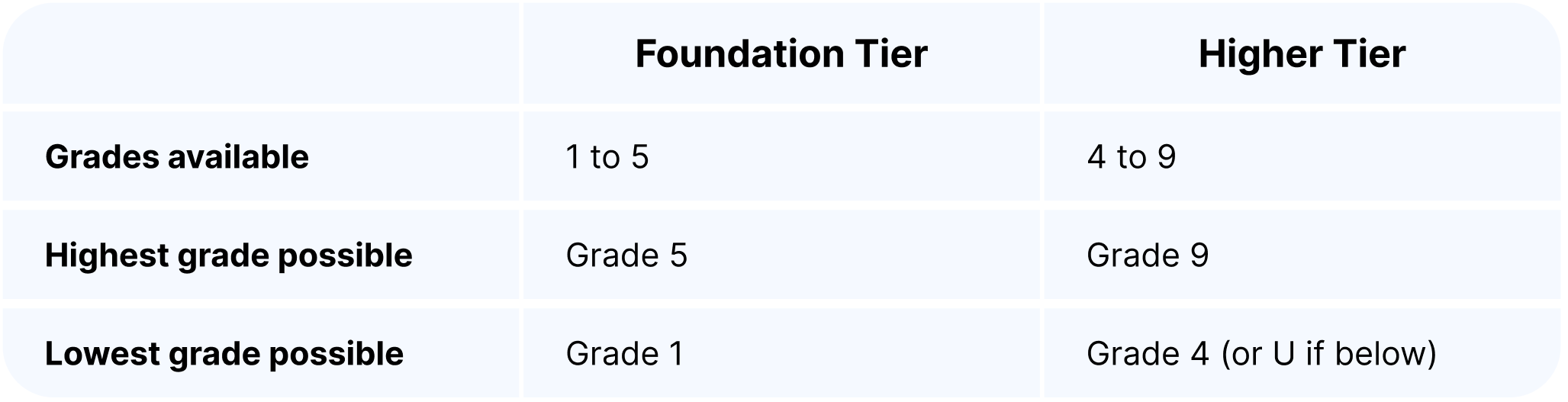
Important: If you sit the Higher tier and score below the minimum, you will receive a U grade (ungraded) rather than a Grade 3 or below. This is why it is so important to be entered for the right tier.
The overlap between the two tiers is at grades 4 and 5. This is sometimes called the "safety net" grade on Higher. A grade 4 is a standard pass and a grade 5 is a strong pass. Both are important thresholds, especially if you are planning to study certain A Levels or apply to college.
To understand more about what each grade means, take a look at our guide to how GCSEs are graded.
How do you decide which tier is right for you?
Your teacher will usually guide this decision. But it helps to understand what each choice means for you.
Choose Foundation tier if:
- You find the subject quite difficult and want to make sure you get a solid pass
- Your practice scores are mostly in the Grade 1 to 4 range
- You feel more confident answering questions at a steady pace rather than under harder exam pressure
Choose Higher tier if:
- You are aiming for a Grade 6 or above
- Your practice scores are in the Grade 5 or above range
- You are hoping to take the subject at A Level or need a higher grade for your chosen sixth form or college
If you are right on the borderline, talk to your teacher. They know your work and can help you make the best call. It is also worth knowing that you cannot change your tier on the day of the exam, so it is important to decide early and practise on the right papers.
Not sure what grades you need? Take a look at our guide to GCSE predicted grades to understand how teachers work out where you are and what you are on track to achieve.
5 top revision tips for Foundation and Higher students
1. Practise on the right tier papers
It sounds simple, but many students revise using the wrong past papers. Make sure you are using Foundation papers if you are sitting Foundation, and Higher papers if you are sitting Higher.
The question styles are different, so practising on the wrong tier will not fully prepare you. Atom has practice papers tailored to your exact exam board and tier, so you can be sure you are always practising on the right content.
Top tip: When you sit a practice paper on Atom, treat it like the real exam. Work through it in timed conditions, then use Atom's feedback to understand exactly where you gained and lost marks and what to do to improve.
2. Know your grade target and work backwards
Once you know your tier, set yourself a clear grade target. Then look at the mark scheme for past papers and work out exactly how many marks you need. Breaking it down into marks per question makes it feel much more manageable.
Top tip: For Higher tier students, focus on securing the lower-mark questions first. These are often more straightforward and add up quickly.
Take a look at our guide on how to use GCSE past papers to make the most of your practice.
3. Focus on the topics most likely to come up
Both Foundation and Higher papers cover the same specification, but the weight given to each topic can differ. Instead of working through everything and hoping for the best, it helps to focus your time on what is most likely to come up.
Atom's practice papers are built by a team of experts around their predictions for this year's exams, so your revision is always pointed in the right direction. Atom will also track your performance and highlight the topics that need the most attention.
Top tip: Use Atom's topic tracking to see exactly which areas still need work, so every revision session is focused on what will make the biggest difference to your grade.
4. Learn how marks are awarded
Every GCSE question is worth a set number of marks, and understanding what examiners are looking for in each one can make a big difference to your score. The number of marks tells you how much detail is expected in your answer. On Higher tier especially, simply stating a fact is rarely enough. Getting comfortable with the format and knowing what is expected for each question type is one of the most effective techniques for performing well on exam day.
Top tip: After completing a practice question, always check the mark scheme to see exactly what the examiner was looking for.
For more advice on how to approach different types of exam questions, take a look at our guide on how to answer GCSE questions based on their marks.
5. Make sure you are revising the right content for your tier
Not every topic in your subject is tested on both tiers. Some topics are Higher tier only, meaning Foundation students will not be asked about them in the exam. Revising content that is not on your tier wastes valuable time, and it can also make revision feel harder and more overwhelming than it needs to be.
Check your exam board's specification carefully, as it will clearly show which topics are assessed at Foundation, which are at Higher, and which appear on both.
Top tip: If you are unsure which topics are on your tier, ask your teacher or download the specification from your exam board's website. All the major exam boards, AQA, Edexcel, and OCR, publish their specifications for free.
Foundation or Higher: what matters is being prepared
Now that you know the difference between Foundation and Higher, you can make sure you are revising in the right way and aiming for the right grade. The tier you sit does not define how hard you have worked. What matters is that you prepare well, practise on the right papers, and walk into that exam feeling ready.
Whatever subject or tier you are sitting, Atom can support you throughout your GCSE revision.
Take control of your GCSE revision
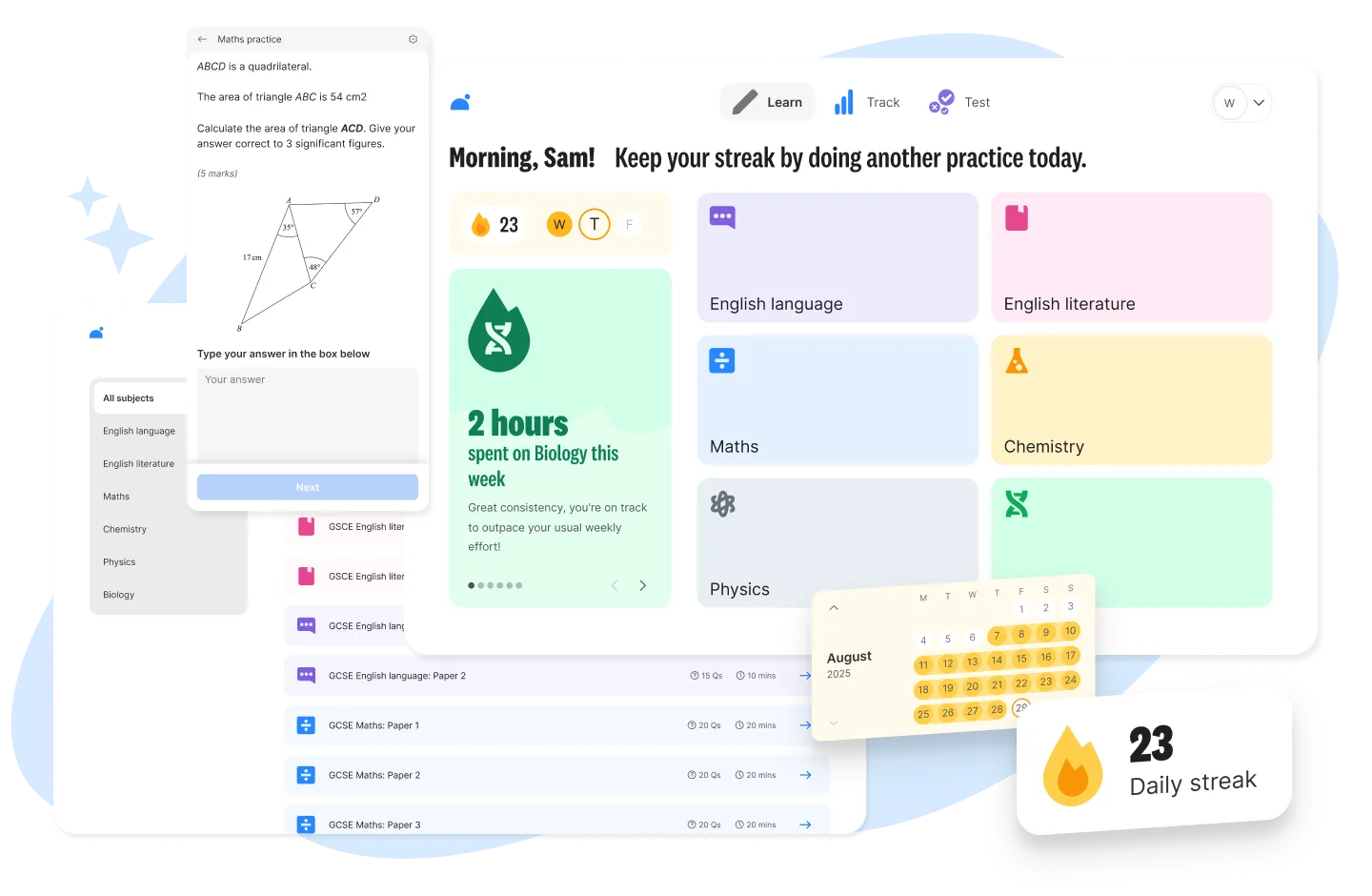
Everything you need for GCSE success, in one place.
Feeling confident about your GCSEs comes from knowing what to revise, how to improve, and where to focus next.
🔮 GCSE practice papers based on our team's 2026 exam predictions
🎓 Guided courses that cover all the topics on your exams
✍️ Instant feedback that tells you where you’ve gained and lost marks
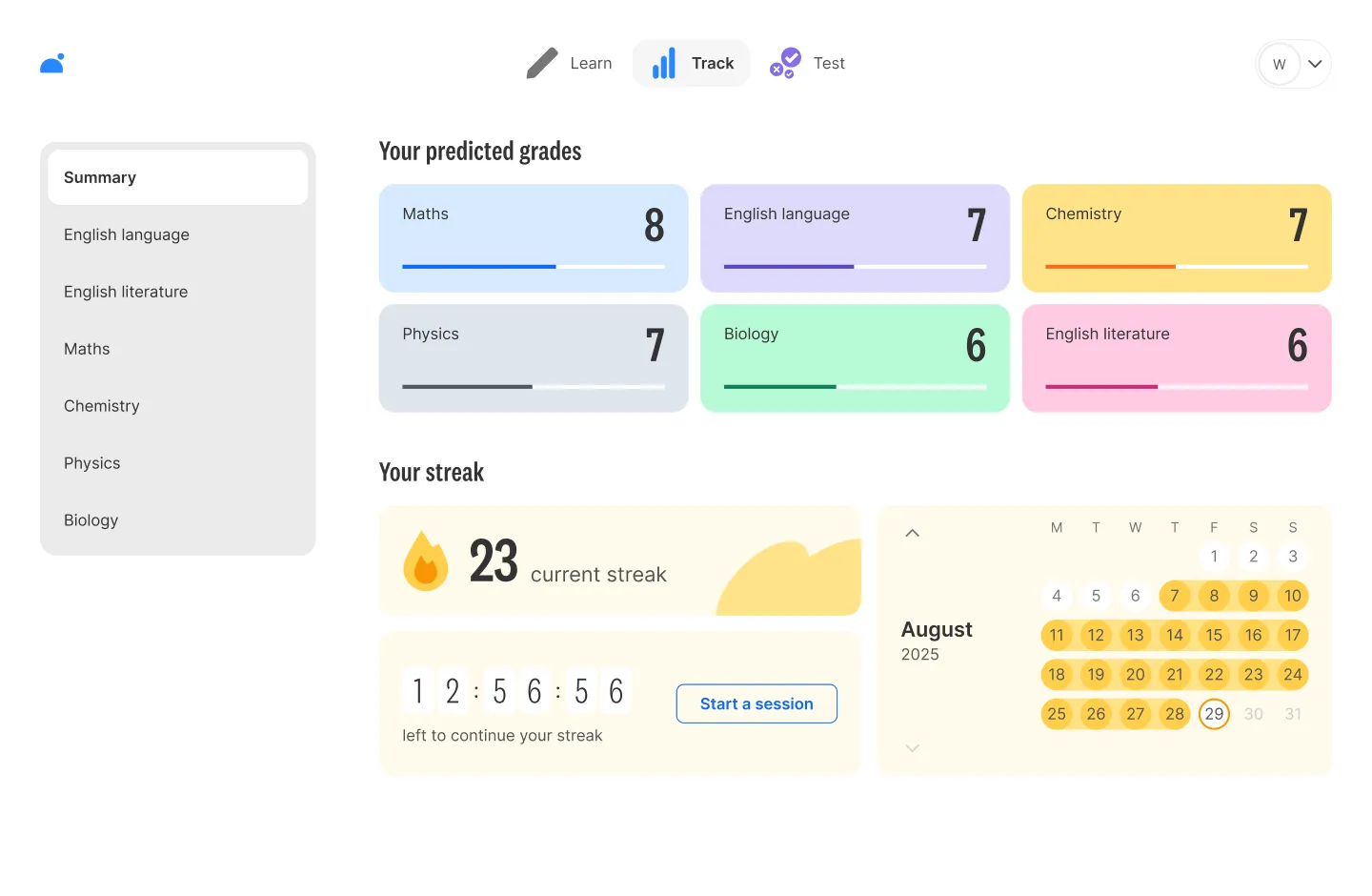
📈 Predicted GCSE grades and topic-by-topic tracking
Create your free account and start making real progress today.
Related posts