Neutralisation reactions

A neutralisation reaction happens when an acid reacts with an alkali to make a salt and water. It is part of the acids and alkalis topic in KS3 Chemistry, where students learn to name the salt that is made and to write the reaction as a word equation.
What is a neutralisation reaction?
When an acid reacts with an alkali, they neutralise each other and form a salt and water. This is called a neutralisation reaction:
acid + alkali → salt + water
An alkali is one kind of base. A base is any substance that can neutralise an acid, and an alkali is a base that has dissolved in water.
The pH scale shows whether a solution is acidic, alkaline or neutral. It runs from 0 to 14:
- Acids have a pH below 7.
- Alkalis have a pH above 7.
- A neutral solution has a pH of exactly 7.

How do you use universal indicator to tell when an acid is neutralised?
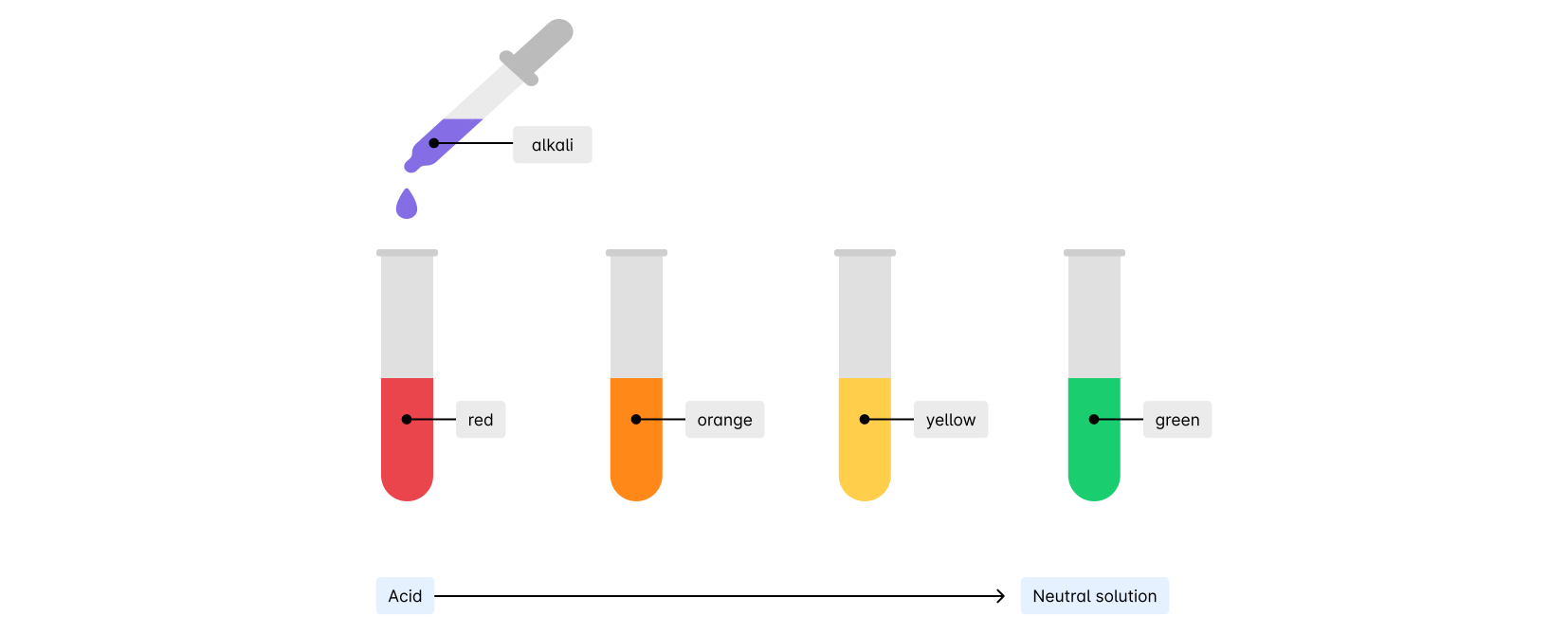
To neutralise an acid, you add an alkali to it a little at a time. Universal indicator is a mixture of dyes that changes colour with the pH, so it lets you check the solution after each addition.
The indicator turns green once all the acid has reacted to form salt and water. At that point the solution is neutral.
- If you don't add enough alkali, the solution stays yellow, orange or red. It is still acidic.
- If you add too much alkali, the indicator turns blue or purple. The solution has become alkaline.
A careful method looks like this:
- Add a few drops of universal indicator to the acid.
- Add the alkali one drop at a time, using a pipette.
- Mix gently after each drop, so the colour is even before you check it.
- Compare the colour with the indicator's colour scale after every drop, so you don't miss the exact point where it becomes neutral.
- Stop as soon as the solution turns green.
How do you name the salt made in a neutralisation reaction?
The salt's name comes from the acid and the alkali that react together. It has two parts:
- The first word is a metal, taken from the alkali.
- The second word ends in 'ide' or 'ate', and is taken from the acid.
Each acid gives its own second word:
- Hydrochloric acid makes a chloride.
- Sulfuric acid makes a sulfate.
- Nitric acid makes a nitrate.
Only part of the alkali's name goes into the salt's name. Sodium hydroxide and hydrochloric acid make sodium chloride, not 'sodium hydroxide chloride'.
How do you write a word equation for neutralisation?
A word equation is a short way of showing what happens in a reaction. Instead of writing 'sodium hydroxide and hydrochloric acid react to make sodium chloride and water', you can write:
hydrochloric acid + sodium hydroxide → sodium chloride + water
- Reactants are the chemicals present at the start of a reaction. They go on the left, before the arrow.
- Products are the chemicals made in the reaction. They go on the right, after the arrow.
- The arrow (→) shows that a reaction is happening.
- Don't use an equals sign (=) in place of the arrow. It means something different, and using it could lose you marks.
How do you stay safe with acids and alkalis?
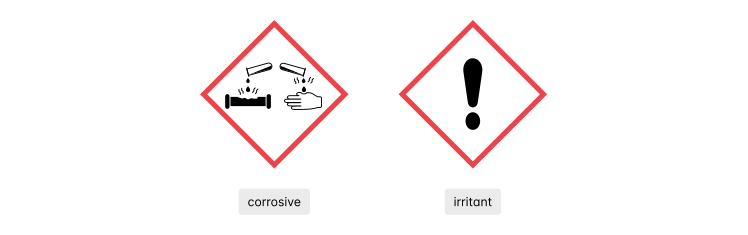
Laboratory acids and alkalis can be corrosive or irritant, so you need to take precautions when you handle them.
- Always wear eye protection, such as goggles, to stop splashes from harming your eyes.
- Wear a lab coat or apron to protect your skin and clothes.
- Tell a teacher straight away if anything spills, so it can be cleaned up safely.
- Wear gloves if you are handling a larger amount or a more concentrated substance.
Key terms
- Neutralisation: A reaction between an acid and a base that makes a salt and water.
- Acid: A solution with a pH less than 7.
- Base: A substance that can neutralise an acid.
- Alkali: A base that has dissolved in water, giving a solution with a pH greater than 7.
- Neutral: A solution with a pH of exactly 7.
- Salt: A compound made when an acid reacts with a base.
- pH scale: A scale from 0 to 14 that shows how acidic or alkaline a substance is.
- Universal indicator: A mixture of dyes that changes colour depending on how acidic or alkaline a solution is.
- Reactants: The chemicals present at the start of a reaction, written on the left of the arrow.
- Products: The chemicals made in a reaction, written on the right of the arrow.
Worked example: Naming the salt and writing the word equation
Potassium hydroxide solution is used to neutralise sulfuric acid. What is the salt called, and what is the word equation for the reaction?
- Take the first word of the salt's name from the alkali. The metal in potassium hydroxide is potassium.
- Take the second word from the acid. Sulfuric acid makes a sulfate.
- Put the two words together, leaving out 'hydroxide'. The salt is potassium sulfate.
- Write the reactants on the left of the arrow: sulfuric acid + potassium hydroxide →
- Write the products on the right of the arrow: the salt, potassium sulfate, and water.
Answer: The salt is potassium sulfate: sulfuric acid + potassium hydroxide → potassium sulfate + water
Frequently asked questions
What are the products of a neutralisation reaction?
A salt and water. When an acid reacts with an alkali, they neutralise each other and form these two products.
How do you know when an acid has been neutralised?
Add universal indicator to the acid, then add the alkali a little at a time. The indicator turns green when the solution reaches a neutral pH. If it is still red, orange or yellow, there is still acid that hasn't reacted.
What happens if you add too much alkali?
The solution becomes alkaline instead of neutral, and the universal indicator turns blue or purple.
What is the difference between an alkali and a base?
A base is any substance that can neutralise an acid. An alkali is a base that has dissolved in water, giving a solution with a pH greater than 7.
What does my child learn about neutralisation in KS3 Chemistry?
They learn that an acid and an alkali react to make a salt and water, how to name the salt, and how to write the reaction as a word equation. They also learn to neutralise an acid safely, using universal indicator to tell when the solution is neutral.