If you're looking into 11+ preparation, you've probably already worked out that tutoring in some form is part of the landscape. What's less clear is what "tutoring" actually means in 2026, because the options have expanded considerably beyond the traditional image of a tutor at the kitchen table on a Wednesday evening.
There are four main categories. Each works well for some families and poorly for others. Here is an honest comparison.
Option 1: Private one-to-one tutors
What it is: A tutor works with your child individually, usually for one hour per week. Sessions are typically tailored to your child's specific exam board and target school. Many tutors work in person, while others offer online sessions via Zoom or equivalent.
Typical cost: £40–80 per hour. In London and the South East, expect the higher end. A twelve-month programme at weekly sessions typically costs £2,200–4,000 in total - more if you start in Year 4 or use specialist tutors for particular subjects.
Who it works best for: Children who respond well to a non-parent adult and those with specific learning needs that require specialist teaching.
Limitations: Cost is the primary barrier and for many families, a prohibitive one.
"I feel awful that his education may be hindered as we don't have £150pm to throw at tuition." — Mumsnet.
Beyond cost, quality varies significantly. Progress visibility can also be limited: parents often report not knowing whether sessions are producing improvement.
"I never really truly understood exactly what she was doing or what she was struggling with."
Option 2: Tutoring centres and academies
What it is: Group-based preparation at dedicated centres, typically in small classes of 4–8 children.
Typical cost: £120–200 per month, depending on location and frequency. Some centres offer intensive holiday programmes as supplements.
Who it works best for:
- Families who want structure without the full cost of private one-to-one tuition
- Children who respond well to a classroom-style environment with peers
- Parents who want a preset programme
Limitations:
- Less personalised than one-to-one tutoring: a child's specific gaps may not get the attention they need
- Fixed schedule means missed sessions are lost
- Location: the best centres are concentrated in grammar school areas and may not be accessible or conveniently located
- Still a significant monthly cost for most families
Option 3: Online live tutoring
What it is: One-to-one or small group tutoring delivered live over video, typically through platforms that match families with tutors. Similar in structure to private tutoring but without geographic constraint.
Typical cost: £30–60 per hour — generally lower than in-person rates, though quality varies more.
Who it works best for:
- Families in areas without strong local tutoring provision
- Those who prefer the flexibility of scheduling online
- Children comfortable learning over video
Limitations:
- The relationship element that makes in-person tutoring effective can often be harder to build online
- Progress visibility has the same limitations as private tutoring: parents still often don't know whether sessions are producing measurable improvement
- Quality control is difficult: the tutor marketplace varies enormously
Option 4: Adaptive digital platforms (self-directed preparation)
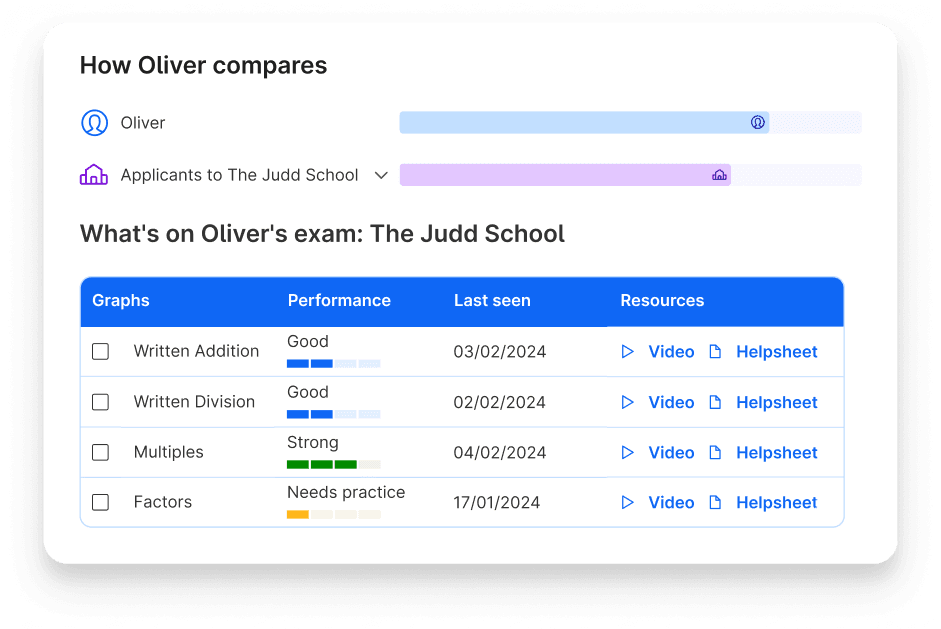
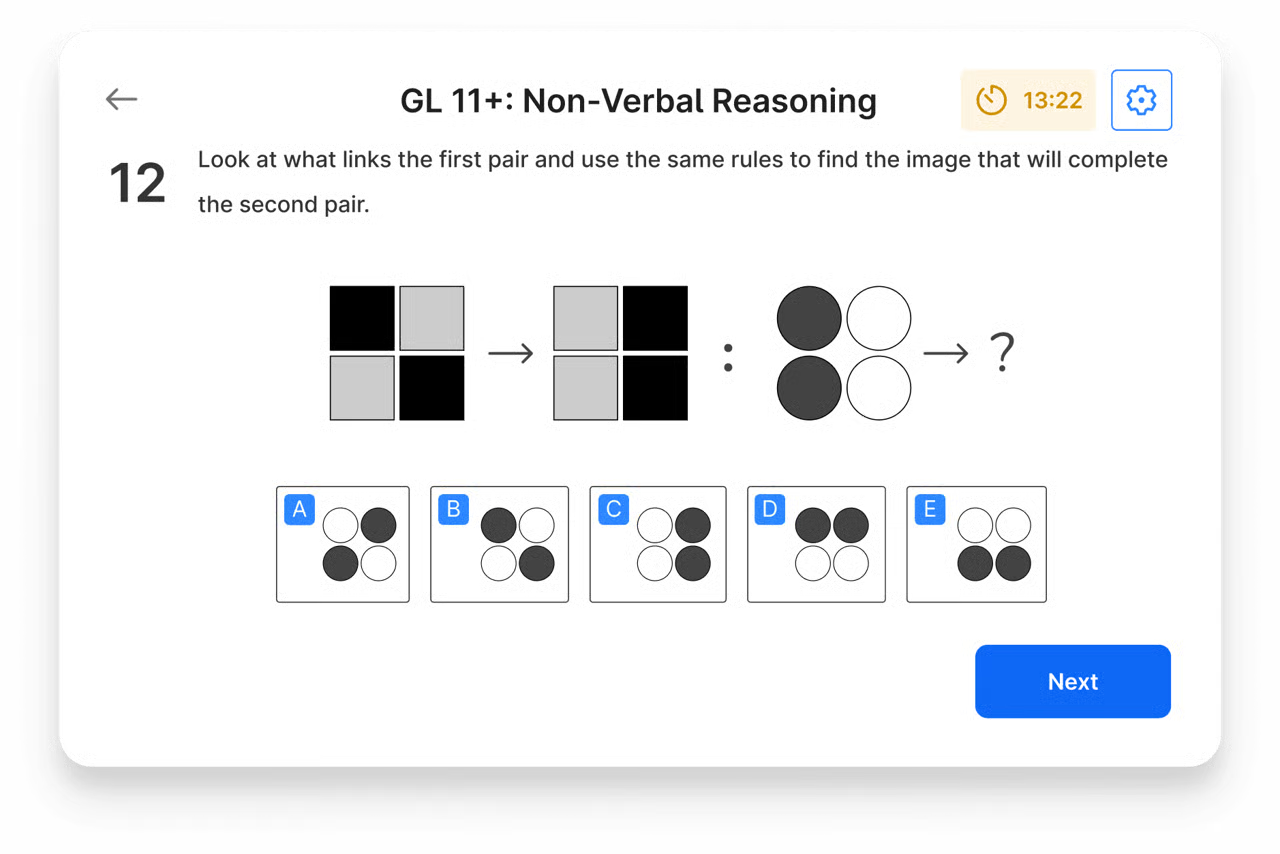
What it is: A structured digital programme your child works through independently, with content that adapts to their level. Rather than a human tutor directing the session, an adaptive algorithm identifies what your child knows, what they don't, and sequences practice accordingly. Your child completes daily sessions; you receive progress reports.
Typical cost: Significantly lower than any tutor option. See Atom's current pricing.
Who it works best for:
- Children who can work independently for short focused periods
- Working parents who can't supervise daily sessions
- Families where cost makes tutoring inaccessible
- Children preparing for multiple independent and grammar school exams
Limitations:
- Requires the child to be able to self-direct for short periods without an adult present
- Not a replacement for one-to-one support for children with specific learning needs or significant gaps requiring targeted expert attention
What parents say: One Trustpilot reviewer who had used both options described the comparison directly:
"We had a tutor for 9 months and did not find out about Atom until the grammar school recommended it. My son and I both agree that the 4 weeks he used Atom was at least as valuable as his time with the tutor."
Another:
"Atom is great alternative for someone who can't afford tuition. I used Atom to prepare my daughter for her 11+, with some additional learning at home, and she passed her exam."
89% of Atom students get into their first-choice school, the majority without a private tutor.