
What are examiners looking for?
Edexcel History examiners mark your work using clear assessment objectives. In simple terms, they want to see that you can:
- AO1: Show accurate knowledge and understanding
Examiners want to see that you know the content well. This means using precise facts, including key people, dates, events, and subject-specific terms, to make your answers clear and specific. - AO2: Explain and analyse historical concepts
Here, examiners are looking for clear explanations. You should be able to explain why events happened, what changed and what stayed the same, how things were similar or different, and why events or people were important. - AO3: Analyse and evaluate sources and interpretations
This is about showing how historians use evidence. Examiners want you to explain what sources tell you, how useful they are, and why different historians can have different views about the same events.
To reach the top grades, focus on:
- Answering exactly what the question is asking
- Using specific evidence, not vague statements
- Writing clear, structured paragraphs that fully explain your ideas
If you’re not sure how to structure your answers, our guide How to use the PEEL technique to write an effective essay shows you how to build clear, high-scoring paragraphs step by step.
Examiners reward clarity, precision, and well-supported arguments, not just writing everything you know.
What are the grade boundaries for Edexcel GCSE History?
It’s important to remember that the exact grade boundaries for your GCSE exams will change every year. Exam boards adjust grade boundaries after an exam, depending on the exam's difficulty and how the cohort performed.
This is so students don’t have an advantage or disadvantage because of the year they took the paper. For example, if your paper were harder, grade boundaries would be lowered so that a grade 5 reflects the same level of knowledge as in previous years.
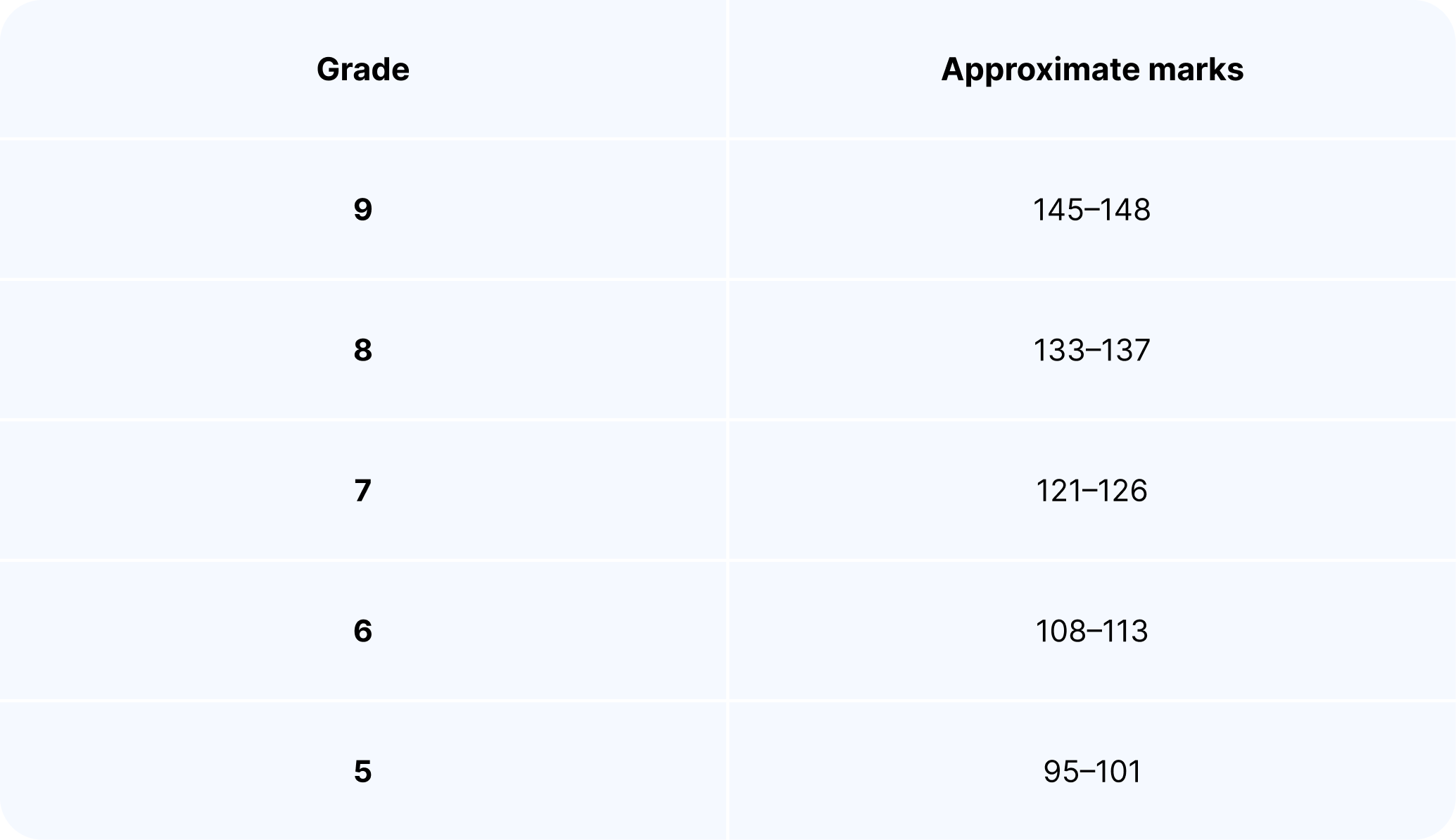
To give a sense of what to expect, here are the grade boundaries for History Edexcel GCSE from the last year:
What key topics do I need to know for Edexcel GCSE History?
The exact topics you study depend on your school, but everyone follows the same overall structure.
Paper 1 options:
- Crime and punishment in Britain, c1000–present and Whitechapel, c1870–c1900
- Medicine in Britain, c1250–present and The British sector of the Western Front
- Warfare and British society, c1250–present and London and the Second World War
- Migrants in Britain, c800–present and Notting Hill, c1948–c1970
Paper 2 options:
British depth study:
- Anglo-Saxon and Norman England, c1060–88
- King Richard I and King John, 1189–1216
- Henry VIII and his ministers, 1509–40
- Early Elizabethan England, 1558–88
Period study:
- Spain and the ‘New World’, c1490–c1555
- British America, 1713–83
- The American West, c1835–c1895
- Superpower relations and the Cold War, 1941–91
- Conflict in the Middle East, 1945–95
Paper 3 options:
- Weimar and Nazi Germany, 1918–39
- Russia and the Soviet Union, 1917–41
- Mao’s China, 1945–76
- The USA, 1954–75
You’ll only study one option per paper, but you’ll need to know that content in depth.
Where can I find past papers and mark schemes?
Practising with past papers and mark schemes is one of the most effective ways to prepare for GCSE History.
Past papers help you understand question styles, see how marks are awarded, and build confidence with real exam timing and structure.
Head to the Edexcel website to find past papers and mark schemes from previous GCSE History exams.
How can I prepare for Edexcel GCSE History?
Here are 5 top tips to help you prepare confidently for your Edexcel GCSE History exams.
1. Get confident explaining why things happened
Edexcel History isn’t just about remembering facts; it’s about explaining events clearly and logically.
When you revise a topic, always ask yourself:
- Why did this happen?
- What caused it, and what did it lead to?
- Why was this event, person, or decision important?
Edexcel rewards answers that explain how events are connected, not just what happened.
Top tip: Try explaining a topic out loud, as if you’re teaching someone else. If you can explain it clearly, you’re on the right track.
2. Practise structured writing little and often
All three Edexcel papers involve extended writing, so regular practice really matters.
When you practise:
- Use PEEL-style paragraphs (Point, Evidence, Explain, Link) to stay focused
- Include specific evidence (dates, names, events)
- Practise writing answers in short, timed bursts
Top tip: Short, regular practice answers are far more effective than long revision sessions done occasionally.
3. Build confidence with sources and interpretations
Sources and interpretations are a big part of Edexcel History, especially in Papers 1 and 3.
When practising source questions:
- Focus on what the source shows, not just what it says
- Think about who produced it, when, and why
- Always link your answer back to the question
For interpretation questions:
- Focus on why historians might disagree
- Use your own knowledge to support or challenge interpretations
Top tip: Avoid describing sources. Instead, explain what they show and why that matters for the question.
4. Use past papers and mark schemes wisely
Past papers are one of the best ways to improve your exam performance for Edexcel History.
Use them to:
- Learn how Edexcel questions are worded
- Practise planning answers before you start writing
- Check your answers against the Edexcel mark schemes to see what examiners reward
Top tip: After each paper, note which question types you found hardest and focus your revision there next.
If you want to build on that practice, Atom gives you access to GCSE practice papers based on our team's exam predictions, along with instant, examiner-style feedback that shows you exactly where you gained and lost marks. It's a simple way to turn what you learn from past papers into a clear plan for what to revise next.
5. Make the exam feel familiar
The more familiar the exam feels, the calmer you’ll be on the day.
To build confidence:
- Sit full Edexcel papers under timed conditions
- Avoid using notes while practising
- Reflect afterwards: Did you manage your time well? Did you fully answer every question?
Top tip: Before you start writing, quickly decide how many minutes you’ll spend on each question and stick to it.
Edexcel GCSE History rewards clear explanation, strong structure, and confident use of evidence. With regular practice and the right focus, you’ll go into the exam knowing exactly what’s expected and how to show it.
Save this guide and come back to it as you revise. You’ve got this.