Back to blog

Recommended reading to support your GCSEs

By
Atom
|
January 13, 2026

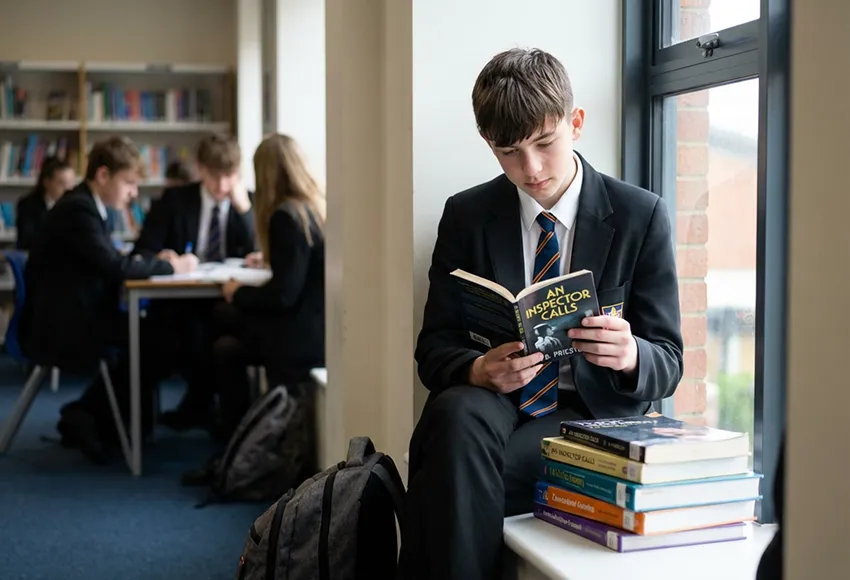
Reading is one of the easiest ways to build confidence in your GCSE subjects. Just 10–15 minutes a day can boost your GCSE results more than you’d expect.

This list includes books chosen specifically to help you expand your knowledge, deepen your critical thinking, and see your subjects in new ways. 

They’re not textbooks; they’re engaging reads that help you prepare with minimal effort. Pick one that grabs your attention and start there.

How to build a reading habit for GCSE success

  • Read for 10-15 minutes a day.
  • Try different genres to expose yourself to a variety of writing styles.
  • Use audiobooks if you prefer listening.
  • Practise active reading. Make notes on new phrases, vocabulary, and ideas.

Active reading

Active reading means thinking about what you’re reading, not just turning the pages. It helps you understand more, remember more, and use what you read in exams.

How to do it:

  • Read in short chunks: 2-5 pages for non-fiction, and 5-10 pages for fiction
  • Pause often
  • Keep a pen or notes app open

Strategies:

  1. Ask questions (Why is this important?)
  2. Highlight or make a note of keywords
  3. Write a one-sentence summary per page, and link ideas to GCSE topics you’re studying

Why it helps:

Active reading makes information stick. 

When you pause to summarise, question, and connect ideas to your GCSE subjects, you train your brain to understand texts more deeply.

You’ll build a stronger vocabulary, spot literary techniques more easily, and feel more confident when analysing passages in exams. In short, the effort you put in while reading now pays off with faster recall, clearer thinking, and better answers under pressure on exam day.

Why is wider reading important for GCSEs? 

  • Helps you build a stronger vocabulary and feel more confident when you encounter challenging texts.
  • Deepens your understanding of ideas, themes and real-world examples that you can use in essays and exam answers.
  • Improves your ability to analyse, compare and question what you read. These are skills examiners love to see.
  • Makes revision easier because you’re connecting new topics to things you already know.
  • Exposes you to different writing styles, which naturally improves your own writing over time.

Atom GCSE is coming!

Guided courses.
Instant feedback.
Built for the 2026 exams.

Join the waitlist now to be the first to get free, early access. 

Sign up now

English Literature & Language

1984, George Orwell, 1949
Winston Smith secretly rebels against a terrifying dictatorship that watches your every move, risking everything for truth and love.

To Kill a Mockingbird, Harper Lee, 1960
Scout Finch grows up in a small 1930s Southern town where her father defends a wrongly accused Black man, forcing her to confront hatred, innocence and courage.

Lord of the Flies, William Golding, 1954
A group of boys stranded on an island create their own society, which slowly collapses into violence and chaos.

The Hate U Give, Angie Thomas, 2017
After witnessing her friend being shot, Starr must decide whether to stay silent or speak out, sparking a movement.

The Picture of Dorian Gray, Oscar Wilde, 1890
Dorian stays young and beautiful while a hidden portrait absorbs his sins, leading to obsession, secrets and destruction.

No items found.

Humanities

History

Sapiens, Yuval Noah Harari, 2011
A sweeping story of how humans evolved from ordinary animals into the most dominant and dangerous species on Earth.

The Diary of a Young Girl, Anne Frank, 1947
Anne documents her life hiding from the Nazis, revealing hope, fear and teenage thoughts in the darkest of times.

Black and British, David Olusoga, 2016
A gripping uncovering of Black history in Britain, full of surprising stories and forgotten voices.

The Kite Runner, Khaled Hosseini, 2003
Childhood friends Amir and Hassan are torn apart by betrayal, guilt and Afghanistan's violent history.

Humankind, Rutger Bregman, 2020
Real examples from history reveal how people work together in crises, proving that kindness changes societies.

Geography

The Future We Choose, Christiana Figueres & Tom Rivett-Carnac, 2020
Two climate experts show two possible futures – one hopeful, one devastating – and how we can choose between them.

The World Without Us, Alan Weisman, 2007
What happens if humanity disappeared tomorrow? Forests return, cities crumble, and nature rewrites the world.

Prisoners of Geography, Tim Marshall, 2015
Maps reveal why countries fight, trade and ally the way they do, from Russia's frozen ports to desert borders in Africa.

The Geography of Thought, Richard E. Nisbett, 2003
A fascinating look at how people in the East and West literally think differently because of their environments.

Half-Earth, Edward O. Wilson, 2016
A bold idea: protecting half the planet to save life on Earth from extinction.

Philosophy & Religion

The Pig That Wants to Be Eaten, Julian Baggini, 2005
Short philosophical puzzles asking weird questions on topics such as cloning, robots and identity. You’ll be challenged to decide what's right.

A Little History of Philosophy, Nigel Warburton, 2011
Travel from ancient Greece to modern debates in short stories about brilliant thinkers.

Think: A Compelling Introduction to Philosophy, Simon Blackburn, 1999
Arguments about happiness, knowledge, freedom and how we should live are explained through real-world examples.

The Little Book of Big Ethical Questions, Susan Liautaud, 2021
Different scenarios that ask what you would do in dilemmas involving privacy, justice, technology and law.

I Am Malala, Malala Yousafzai, 2013
Malala risks her life to defend the right to education after the Taliban forbade girls from attending school.

Five Dialogues, Plato, 4th century BC
Socrates debates truth, morality and justice in conversations that feel surprisingly modern.

Psychology

Thinking, Fast and Slow, Daniel Kahneman, 2011
Real experiments show why your brain makes mistakes, jumps to conclusions, and sometimes thinks brilliantly.

The Man Who Mistook His Wife for a Hat, Oliver Sacks, 1985
True stories of patients whose minds work in strange, surprising ways.

Blink, Malcolm Gladwell, 2005
Discover how split-second judgments can save you or completely mislead you, without you realising.

Opening Skinner's Box, Lauren Slater, 2004
Ten shocking psychological experiments reveal how people respond to fear, love, obedience and authority.

The Lucifer Effect, Philip Zimbardo, 2007
Uses the Stanford Prison Experiment to reveal how rules, authority and group dynamics can make regular people act in shocking and harmful ways.

No items found.

Science

Biology

The Selfish Gene, Richard Dawkins, 1976
See how genes fight to survive, shaping animals, evolution and human behaviour.

The Emperor of All Maladies, Siddhartha Mukherjee, 2010
A doctor traces the history of cancer from ancient times to modern science through stories of real patients.

The Immortal Life of Henrietta Lacks, Rebecca Skloot, 2010
Henrietta's stolen cells changed medicine forever, raising huge questions about consent and science.

Gulp: Adventures on the Alimentary Canal, Mary Roach, 2013
A funny journey from your tongue to your intestines, exploring the science of everything we eat.

Why We Sleep, Matthew Walker, 2017
Real studies show how sleep affects memory, emotions, health and exam success.

Chemistry

The Disappearing Spoon, Sam Kean, 2010
Discover weird true stories behind chemical elements, from poisonings to explosions.

Uncle Tungsten, Oliver Sacks, 2001
Oliver Sacks remembers his childhood surrounded by experiments, sparks and strange metals, discovering a lifelong love of chemistry in his uncle’s workshop.

Napoleon's Buttons, Penny Le Couteur & Jay Burreson, 2003
Dive into how seventeen molecules changed wars, empires, food and medicine in surprising ways.

The Poisoner's Handbook, Deborah Blum, 2010
A fascinating read about two scientists who solve real crimes using the chemistry of poisons in 1920s New York.

Molecules, Theodore Grey, 2013
Amazing photos reveal the hidden structures behind materials you see every day.

Physics

Astrophysics for Young People in a Hurry, Neil deGrasse Tyson, 2019
A whistlestop tour of black holes, galaxies and cosmic mysteries in bite-sized chapters.

Why Does E = mc²?, Brian Cox & Jeff Forshaw, 2009
A friendly guide to the most important equation in physics, and why it changed everything.

The Fabric of the Cosmos, Brian Greene, 2004
Time travel, parallel universes and the strange truth behind space.

A Brief History of Time, Stephen Hawking, 1988
Hawking explains the beginning of the universe, how black holes work, and what might happen at the end of time.

The Elegant Universe, Brian Greene, 1999
Strings, dimensions and quantum mysteries reveal a weird but beautiful universe.

Maths

Murderous Maths, Kjartan Poskitt, 1997
Mad characters and puzzles show tricks, shortcuts and hidden maths behind everyday problems.

How to Think Like a Mathematician, Kevin Houston, 2009
Learn the secrets mathematicians use to break down tricky problems step by step.

The Joy of x, Steven Strogatz, 2012
Discover the hidden maths behind love, sports, traffic jams and social media.

Humble Pi: A Comedy of Maths Errors, Matt Parker, 2019
True stories of disasters caused by tiny maths mistakes.

The Number Devil: A Mathematical Adventure, Hans Magnus Enzensberger, 1997
A boy keeps meeting a mischievous number devil in his dreams who takes him on magical journeys to explore surprising and creative mathematical ideas.

Business & Economics

Business

Start with Why, Simon Sinek, 2009
Real stories about how successful people and companies begin with a clear purpose or belief, inspiring others to follow their ideas and make a bigger impact.

The 7 Habits of Highly Effective Teens, Sean Covey, 1998
Simple habits help you set goals, manage stress and build confidence in school and life.

Like a Virgin, Richard Branson, 2012
Shares Richard Branson’s surprising business lessons and real-life stories, showing how creativity, confidence and taking risks can turn small ideas into big successes.

Shoe Dog: A Memoir by the Creator of Nike (Young Readers Edition), Phil Knight, 2021
Follows Phil Knight’s journey from selling shoes out of his car to building Nike, showing the risks, failures and determination behind creating a global brand.

The Business Book: Big Ideas Simply Explained, DK Publishing, 2010
Breaks down important business concepts into short, simple sections that show how companies grow, innovate and make decisions in the real world.

Economics

Freakonomics, Steven D. Levitt & Stephen J. Dubner, 2005
Investigate weird questions, such as what sumo wrestling and school cheating have in common, using economic logic.

The Undercover Economist, Tim Harford, 2006
Shows how everyday choices like buying coffee, taking the bus or picking a supermarket are shaped by hidden economic forces you never knew were there.

50 Economics Ideas You Really Need to Know, Edmund Conway, 2009
Introduces big topics like inflation, global trade and money through quick, real examples that make complicated ideas easy to understand.

Naked Economics (Young Readers Edition), Charles Wheelan, 2014
Uses stories from schools, sports and global events to explain how money, markets and governments affect your life every day.

The Price of Everything, Eduardo Porter, 2011
Explores why two people pay different amounts for the same thing and what that reveals about fairness, value and the choices we make.

Computing

The Code Book, Simon Singh, 1999
Tells the story of secret codes from ancient kingdoms to modern encryption, showing how puzzles, spies and mathematics have changed history.

Hello World: How to Be Human in the Age of the Machine, Hannah Fry, 2018
Reveals how algorithms influence everything from exams and dating to policing and justice, and asks when computers should decide for us.

The New Turing Omnibus, A. K. Dewdney, 1994
Presents clever mini-stories and thought experiments that explain computer science ideas in quick, unforgettable chapters.

How to Think Like a Coder, Jim Christian, 2017
Uses fun challenges and reasoning puzzles to teach the logic and problem-solving skills behind programming without needing to write code.

Code: The Hidden Language of Computer Hardware and Software, Charles Petzold, 1999
Explore how simple switches and electrical signals become the programmes, apps and games we use today.

No items found.
No items found.
No items found.

Ready to achieve top GCSE grades?

Whatever GCSE subjects you’re studying, top grades come from having a clear structure and knowing how to improve.

Atom GCSE gives you everything you need to feel confident and organised:

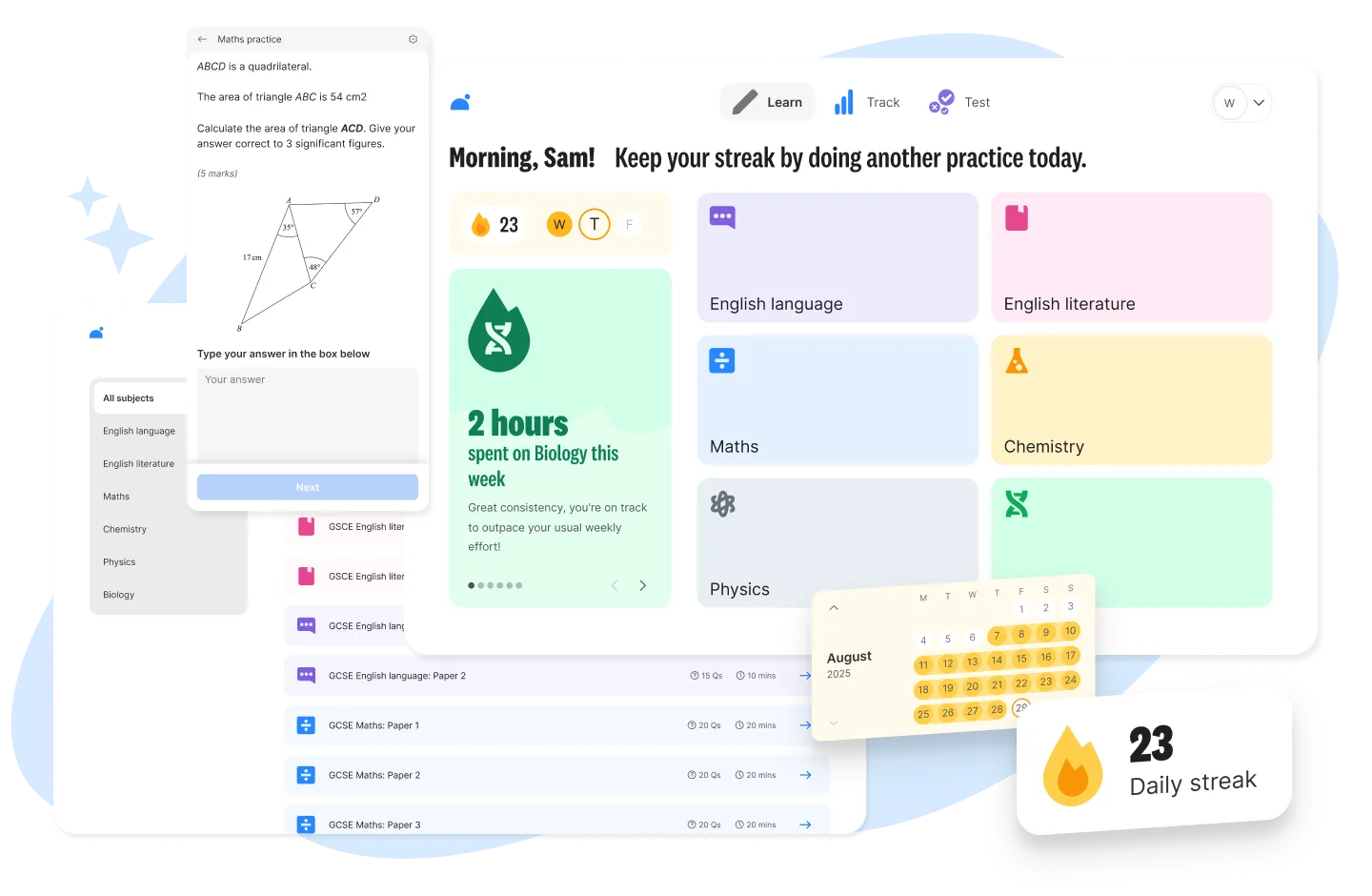
  • GCSE papers based on our team's 2026 exam predictions
  • Guided courses that cover all the topics on your exams
  • Instant feedback that tells you where you gained and lost marks
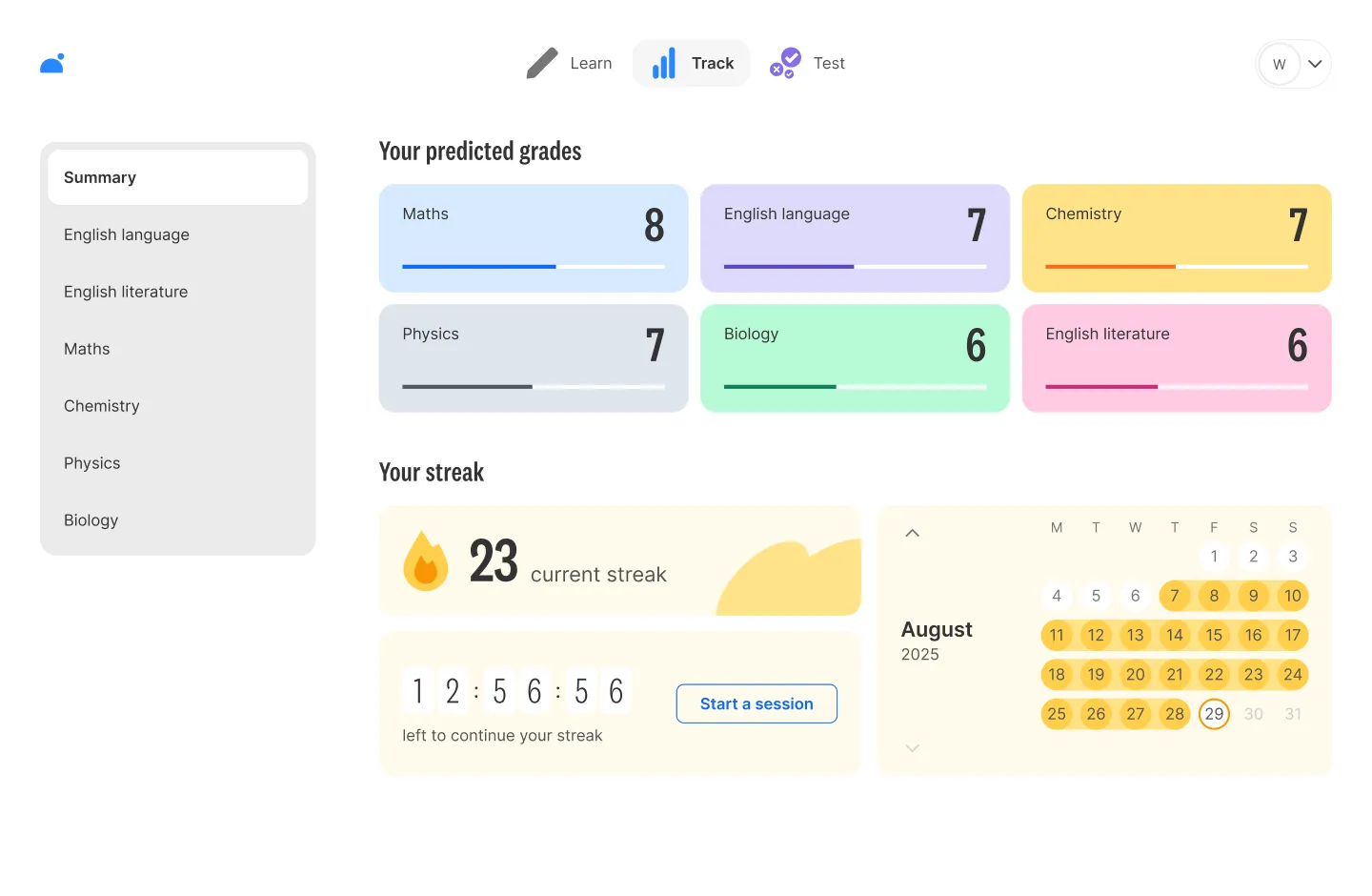
  • Predicted GCSE grades and topic-by-topic tracking

It’s your online GCSE revision partner.

Atom GCSE is launching in February 2026. Join the waitlist to get free, early access.

Final thought

You don’t need to work through every book on this list; pick a few that genuinely interest you and set yourself a small weekly reading goal. A little, often, is what makes the difference. 

The more you read, the more your vocabulary grows, tricky ideas start to make sense, and your writing becomes more confident. These are the skills that help you shine in your GCSEs, and they build up quietly, page by page. 

Stick with it, and the progress will follow.
Contents