

How is the Gloucestershire 11+ exam scored?
After the test, answer sheets are marked using Optical Mark Recognition (OMR) technology.
Scores are then age-standardised, which means younger children aren't disadvantaged.
Your child's results will be sent to you in mid-October 2026. If they meet the qualifying standard for your target school, you can then apply for that school through your common application form (CAF).
What's the pass mark for the Gloucestershire 11 plus?
There's no single fixed pass mark. Instead:
- All children's age-standardised scores are ranked.
- Each school sets its own qualifying score.
Some priority groups (including Looked After Children and children eligible for Pupil Premium) may qualify with a lower score.
Each grammar school also applies its own admissions criteria when allocating places.
How to apply for Gloucestershire grammar schools
1. Register for the Gloucestershire 11+
To be considered for a place, you must register your child to take the Gloucestershire Grammar Schools Entrance Test.
- Registration opens: Monday 18th May 2026
- Registration closes: Friday 26th June 2026
2. Apply for school places
Test results are sent in mid-October 2026.
If your child meets the qualifying standard for a school, you can list it on your secondary school common application form, which must be submitted to your local authority by Saturday 31st October 2026.
Before listing a school, check the admissions policy to make sure your child meets all criteria.
3. National Offer Day
On Monday 1st March 2027, you'll be informed which secondary school your child has been allocated.
If your preferred school isn't offered, your child will receive another local school place, and you'll be given information about how to appeal.
How can I help my child prepare for the Gloucestershire 11 plus?
The Gloucestershire 11+ can feel like a big milestone, but preparation doesn't have to be stressful.
Here are some practical ways to support your child in a calm, structured way.
Stay on track with a clear Gloucestershire 11+ revision plan
One of the hardest parts of 11+ preparation isn't motivation – it's knowing what to work on, when, and how to stay consistent without it taking over family life.
A clear plan helps your child build skills in the right order and avoid last-minute cramming.
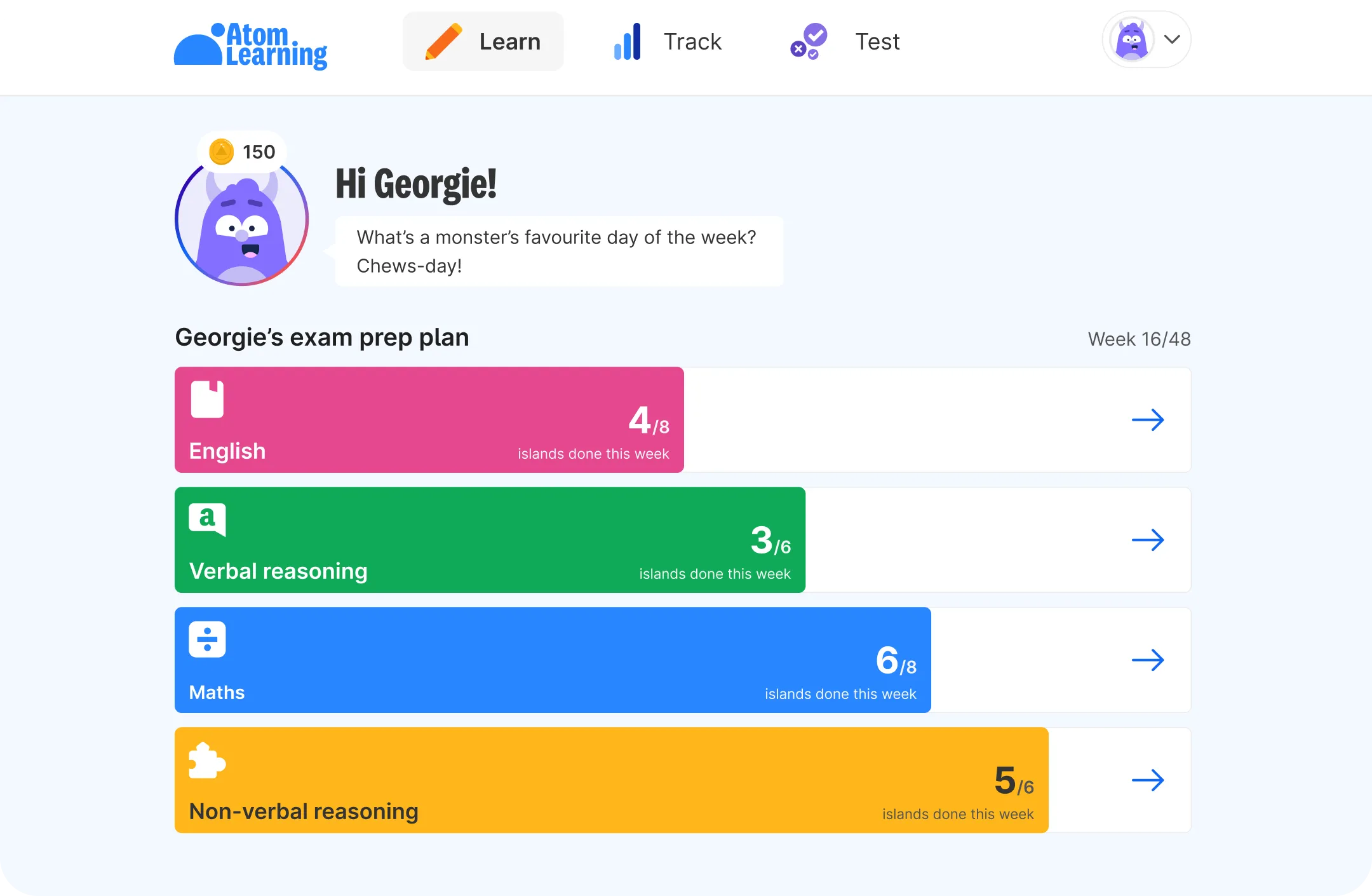
With Atom's Exam Plan, you enter your child's exam date and target schools, and Atom builds a personalised weekly plan based on the key skills they'll be tested on. It adapts as they improve and shows them exactly what to focus on each week.
That means less guesswork for you, less stress for them, and a clearer path to exam day.
Build 11+ exam technique with realistic practice papers
Once your child feels secure with the main topics, paper practice tests help them feel more confident with the exam format.
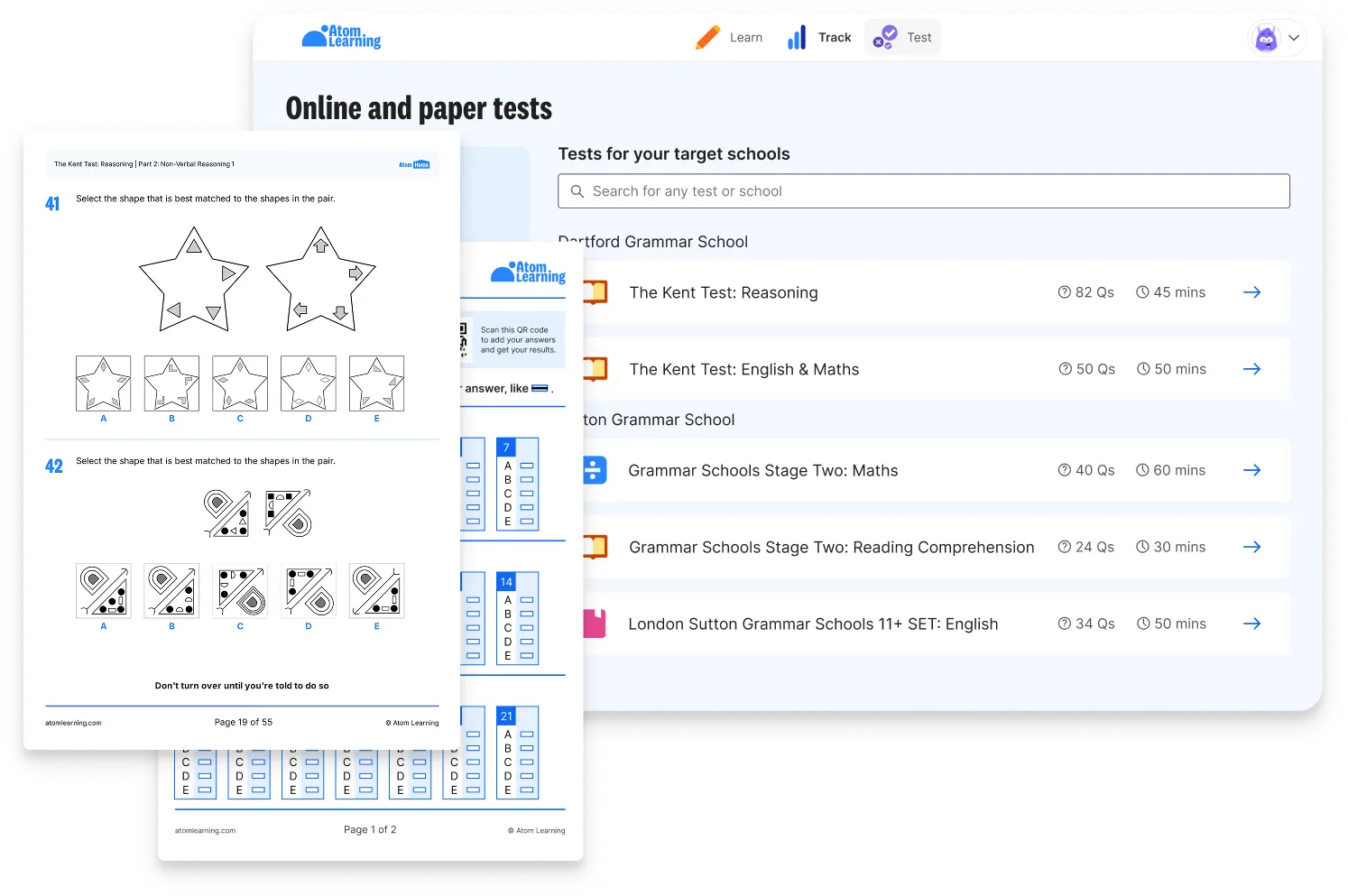
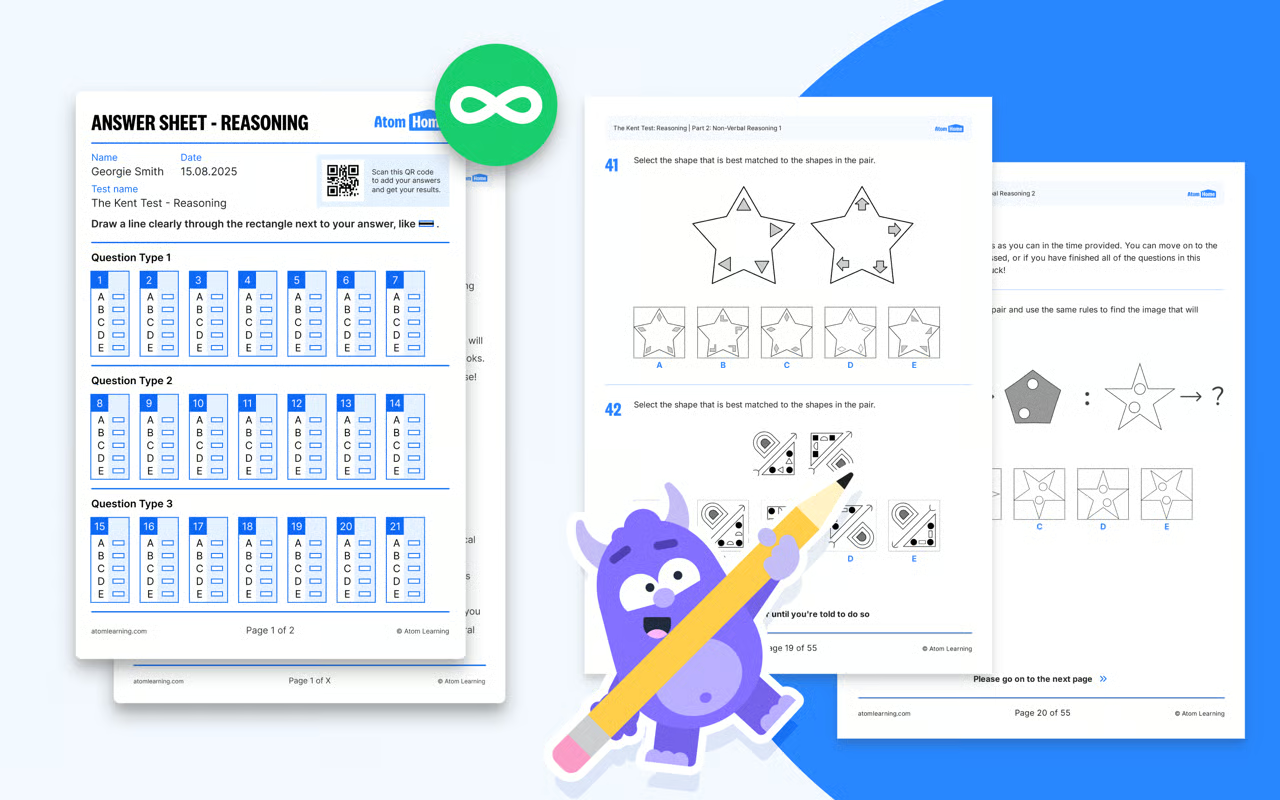
Atom's 11+ practice papers are designed to reflect real test conditions. Parents simply photograph their child's answer sheets and upload them to Atom for instant marking.
You'll get:
- a Standardised Age Score (SAS)
- clear insight into strengths and areas for improvement
- a comparison with other children applying to the same schools
The papers are unlimited, meaning your child can practise again and again with new questions each time.
Encourage regular reading for 11+ English success
Strong reading skills underpin almost every part of the 11+.
Encourage your child to read for 10–15 minutes a day, focusing on variety – fiction, non-fiction, different genres and authors.
This helps build:
- vocabulary
- comprehension and inference
- confidence with unfamiliar texts
Looking for inspiration? Explore Atom's free reading and writing starter kit for helpful suggestions of age-appropriate books your child can read!
Celebrate progress, not just 11+ scores
When you're supporting your child through 11+ preparation, what really matters is knowing they're moving in the right direction.
Atom's progress tracking gives you a clear, simple view of how your child is doing across topics and how their performance is developing over time.
That makes it easier to give meaningful encouragement, keep motivation steady and focus on consistent improvement – not just one-off test results.