If you’re thinking about applying to selective independent schools for your child, you likely have some questions about what the process looks like.
Read on to learn more about entrance exam boards, what type of tests to expect and how to prepare.
This guide will cover:
Everything you need to know about independent school entrance exams and exam boards
What to expect on the entrance exam for senior schools
Timelines and further information on the exam process
Top tips on how to prepare your child for the exam
Free resources to help your child ace their tests!
What are independent school entrance exams?
Independent school entrance exams are sometimes used by schools to choose which children to give places to. These schools are selective, allocating places based on academic ability and potential.
It’s up to the school to decide on the type of exam they use, with many choosing to create their own bespoke assessment. Most exams test children’s abilities in core areas on the Key Stage 2 curriculum, but some test potential through subjects like reasoning and others not taught at school.
The entrance exam may cover English, maths, verbal reasoning, non-verbal reasoning, or a combination of these subjects. Plus, some exam boards cover additional topics like puzzles and problem solving or creative comprehension. Their score is then used to determine whether they are suitable for the school, with some schools also holding interviews or other additional steps.
Not every independent school uses entrance exams, but those that do might use them at several entry points, including 11+ for Year 7 entry.
What exam boards are used for independent school entrance exams?
There are several exam boards that independent schools can use for their entrance exams. Some of the most widely used exam boards are:
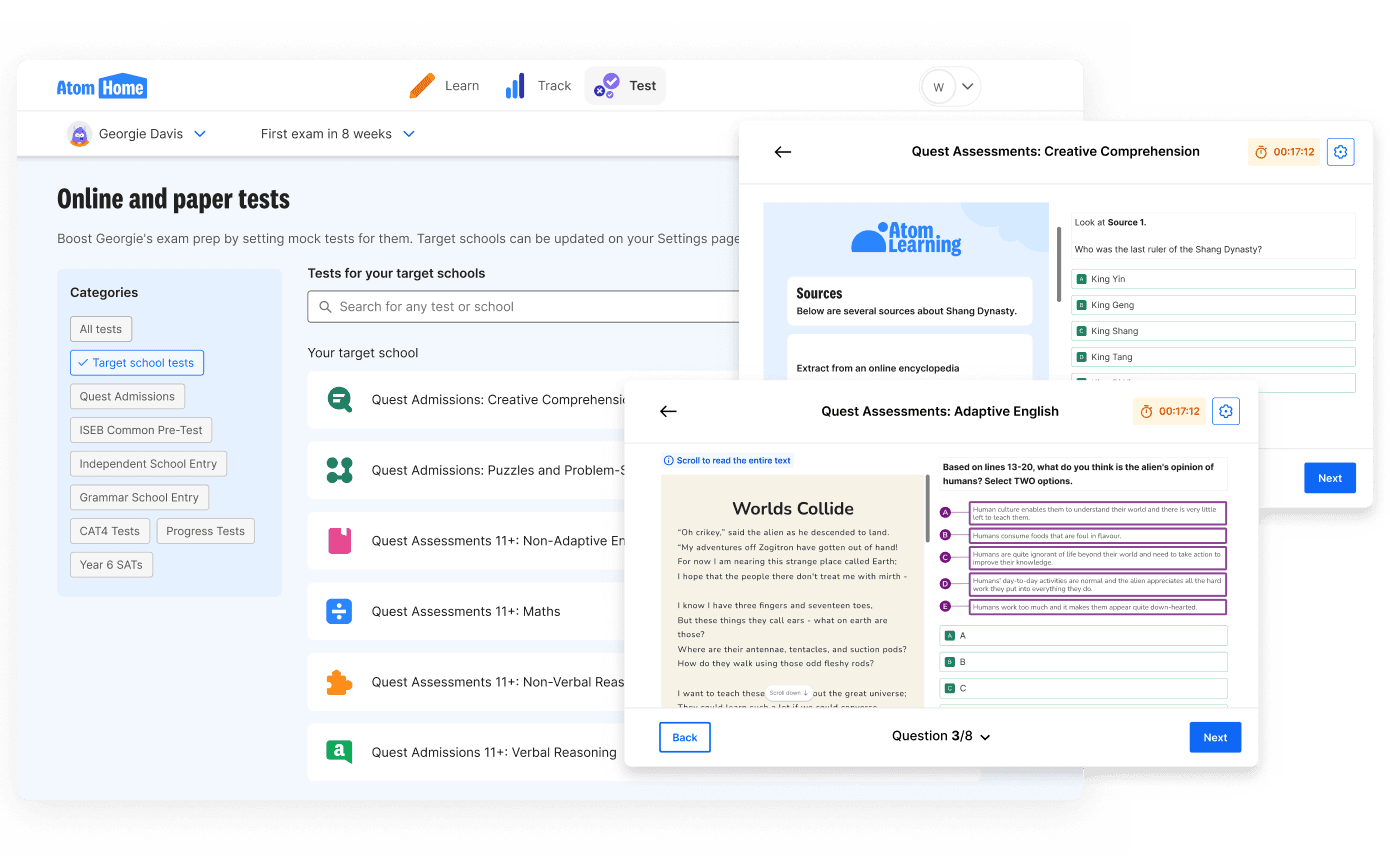
Quest Admissions exams are split into 2 parts, covering subjects like English, maths, verbal reasoning, non-verbal reasoning, puzzles and creative comprehension. Schools can use either Part 1 or Part 2 or a combination of both. The test consists of adaptive and non-adaptive questions to test how your child thinks, rather than just what they know.
Take a look at our guides to Part 1 and Part 2 to find out more about Quest exams.
GL Assessment are typically paper-based and non-adaptive, meaning the difficulty of the questions does not adapt depending on the answers your child gives. The test may cover a combination of English, maths, verbal reasoning and non-verbal reasoning. The English and maths content covers all of Key Stage 2, including Year 6 topics that children may not yet have covered in school. Whereas verbal and non-verbal reasoning are not covered on the national curriculum.
Cambridge Select Insight is a computer-based exam that consists of non-adaptive questions. It has a time limit of 1 hour and is split into 6 sections. Children can move backwards and forwards through the questions to double-check their answers. The question types include multiple choice, drag and drop and auto-complete style.
The ISEB Common Pre-Test is an adaptive online exam, meaning the questions will become more difficult depending on how your child answers. The test will cover English, maths, verbal reasoning and non-verbal reasoning. The English and maths sections are based on Key Stage 2 learning up to Year 5. The 4 sections can be taken all at once, with short breaks in between, or at separate times.
For international students, the UKiset may be used by schools to assess students applying from overseas.
Each exam board is different. It’s important for parents to take the time to research and understand which exam (or exams) your child will be taking.
Which independent schools have entrance exams?
There are approximately 1,500 senior independent schools in the UK, and many have entrance exams. For some schools, the test might just be to get an idea of your child’s attainment level rather than to decide whether they should be offered a place or not.
You can find out more about your target schools using our school search tool here. Use the tool to find out your target school's exam type, deadlines and more.
We also recommend contacting your target school for more information, as this tool is not exhaustive.
What’s included on the test?
11+ entrance exams for independent schools can consist of a combination of the following commonly tested subjects:
Exams may take place online or on paper and can vary in length and topic depending on the school. Some tests may also include a creative writing exam, and some schools will interview your child before offering a place.
No items found.
When do independent school exams take place?
School entrance exams usually take place in the autumn or spring term of Year 6 for entry into Year 7. The exact dates will vary depending on the school, so make sure to check your target school’s dates.
It’s a good idea to start exam preparation early on to give your child time to learn key skills, perfect exam technique, and build confidence. Subjects like verbal and non-verbal reasoning aren’t taught on the national curriculum, so starting early to learn the techniques needed for these questions is recommended.
How are independent school entrance exams different from the 11+?
Independent school exams are sometimes referred to as 11+ exams if they are used for 11+ entry. While the name might be the same as the grammar school 11+, there are several key differences to note:
Independent schools can set their own exam format and deadline dates throughout the year. Whereas most grammar schools hold exams in September, with results released in mid-October.
While grammar school tests also vary in format and exam board, there are several consortia that hold the same tests. For example, grammar schools in Kent will use the Kent Test.
Independent schools may include additional assessments, such as a creative writing task or an interview, as part of the process. Only a few grammar schools have second-stage exams, and interviews are rare.
It’s a good idea to contact your target independent schools and talk to them about how they structure their exam and what to expect.
Top tips for applying to independent schools
Preparing for independent school entrance exams doesn’t need to feel daunting. With the right support, your child can feel confident and ready for the exam process.
Here are our top tips to do just that:
1. Get familiar with the 11+ exam format
Many independent school entrance exams test four key areas: English, maths, verbal reasoning, and non-verbal reasoning. These aren’t always taught explicitly in school, so it’s important your child gets used to the types of questions they’ll see in the test.
How Atom helps: Atom’s learning platform mirrors independent school exams, with thousands of interactive questions in all four subjects. Learning content is adaptive, so your child will always work at the right level to keep them challenged without losing motivation.
2. Strengthen core knowledge
A strong grasp of Key Stage 2 English and maths is essential. Make sure your child is confident with grammar, spelling, punctuation, arithmetic and problem-solving before focusing on exam technique.
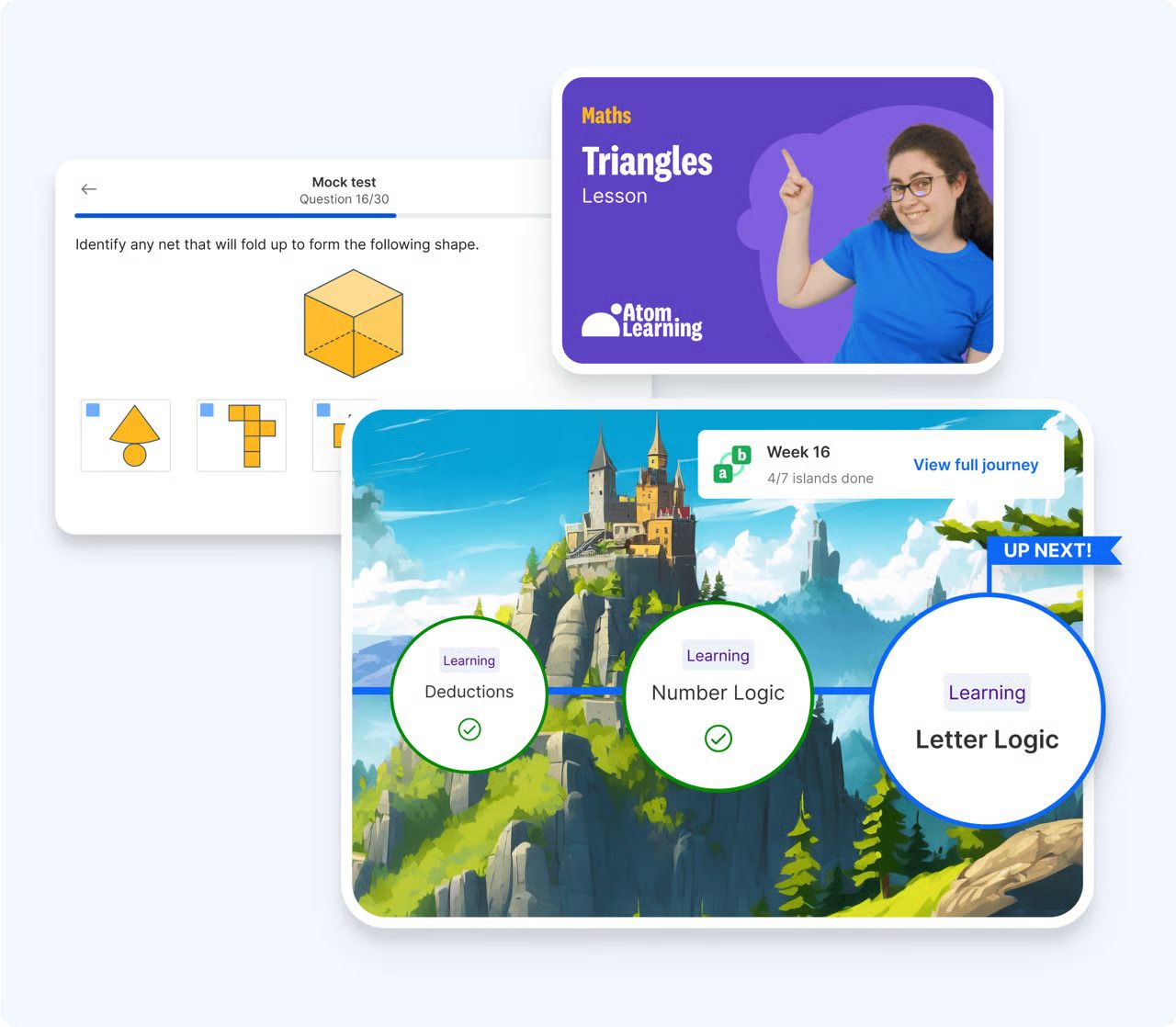
How Atom helps: Atom covers the entire Key Stage 2 curriculum in English and maths, plus verbal and non-verbal reasoning (which aren't taught on the national curriculum). As your child learns, they’ll earn rewards and progress through fun, engaging learning journeys — all in one platform.
3. Practise speed and accuracy
Your child will need to answer questions accurately and under timed conditions. Regular practice will help them build speed and avoid common mistakes.
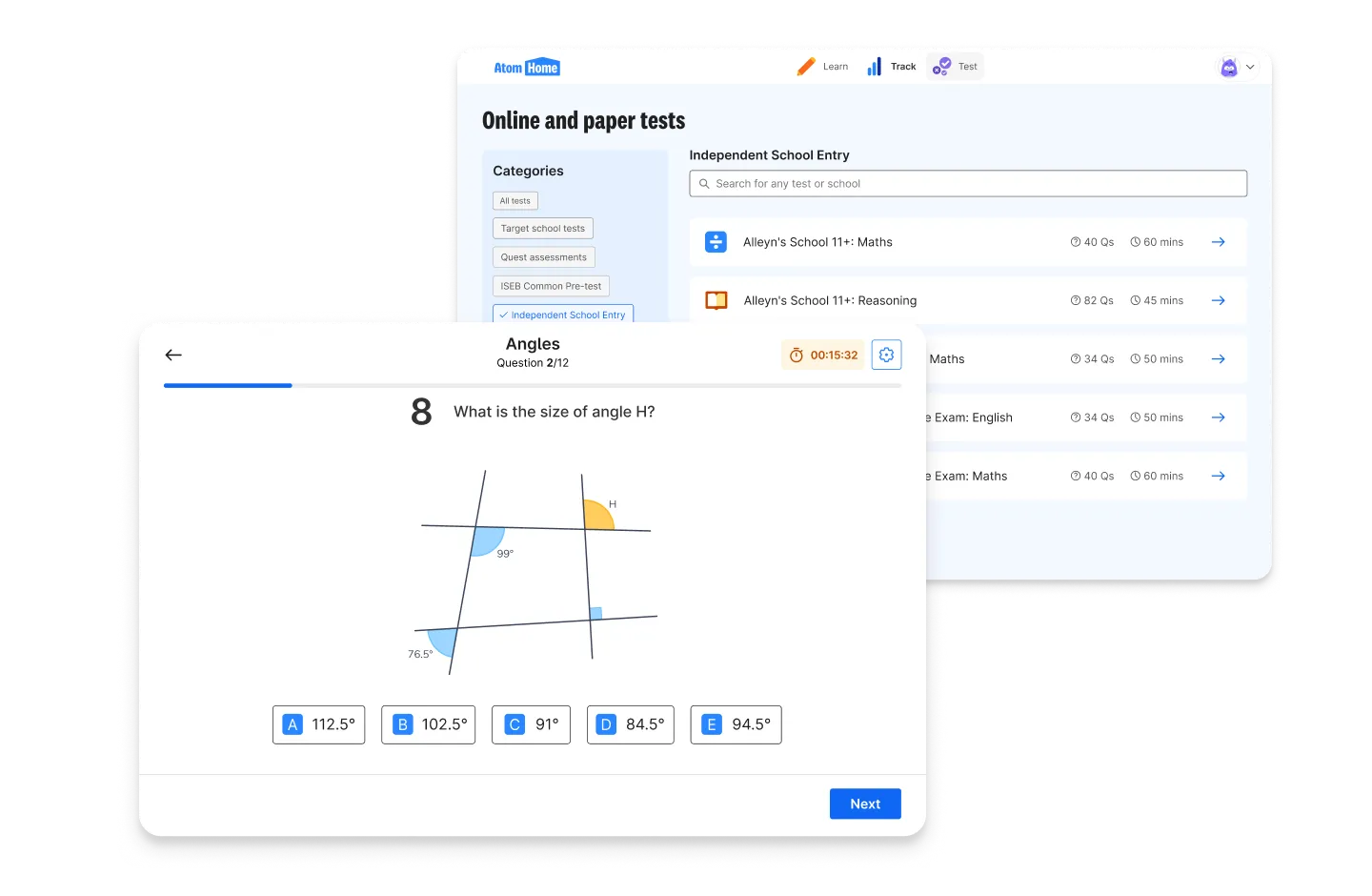
How Atom helps: With Atom, your child can access unlimited custom mock tests. You'll get instant results and insights into their strengths and areas to improve.
4. Keep a regular routine
Consistent, manageable study sessions work better than last-minute cramming. Aim for short bursts of focused learning, with regular breaks to avoid fatigue and keep motivation high.
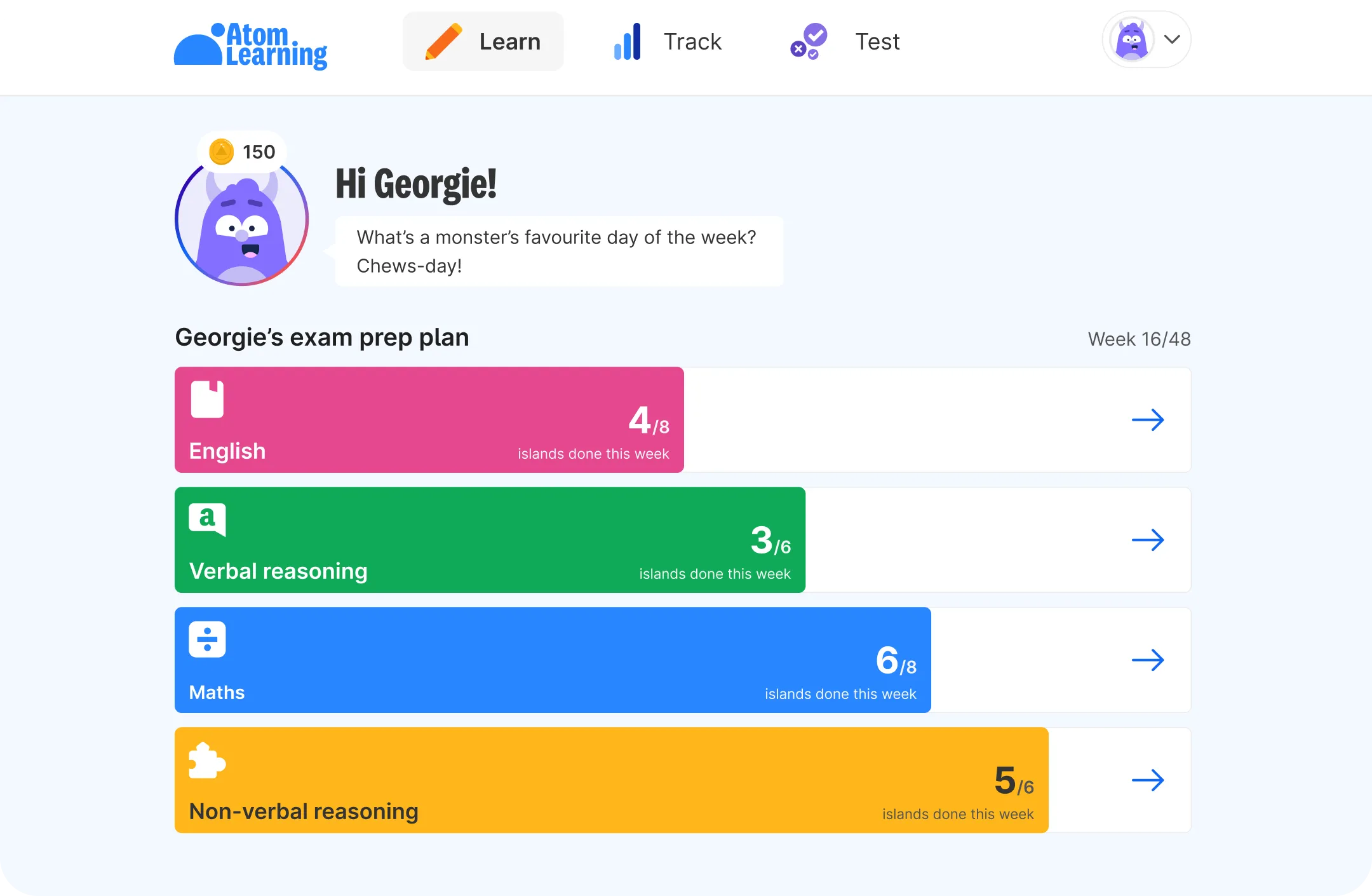
How Atom helps: Atom creates a personalised weekly learning schedule based on your child’s progress. This helps them stay on track without feeling overwhelmed.
5. Practise interview technique
Many independent schools hold interviews to provide a better understanding of whether the school is right for your child and vice versa. Practising interview techniques at home will build confidence ahead of the big day.
How Atom helps: Find out more about preparing your child in our ultimate guide to interviews, including question examples and more.
6. Track progress over time
Knowing how your child is progressing can give you peace of mind — and help you target revision more effectively. It’s also a great way to celebrate the effort they’re putting in.
How Atom helps: You’ll get access to a real-time parent dashboard, where you can see how your child is performing across all subjects. No need to guess what’s going well or what needs more attention.
7. Get the right support
You don’t need to rely on expensive tutors to prepare for independent school exams. With the right tools, your child can prepare effectively and independently — while building long-term skills and confidence.
How Atom helps: Atom combines high-quality learning resources with smart technology to deliver a tutor-quality experience at home. And if you ever need help, our Education Support team is here to guide you.
No items found.
No items found.
Take control of your child’s independent school prep.
Worried about keeping pace with the competition? Independent school exams can feel unpredictable, but your child’s preparation doesn’t have to be. Atom shows you exactly what to practise and how they’re performing, so you can stay ahead throughout the admissions process.