Back to blog

Cambridge IGCSE English language: everything you need to know

By
Atom
|
August 12, 2026

Cambridge IGCSE First Language English can feel like a lot to take in, especially with the choice between an exam route and a coursework route. This guide breaks the whole thing down clearly, so you know exactly what you're working towards. Read on to find out more.

Not sure which board your school follows? Take a look at our guide to finding out which exam board you're studying.

Key takeaways

  • Cambridge IGCSE First Language English (0500) is graded on the A* to G scale, with A* the highest grade.
  • Everyone sits Paper 1, then either Paper 2 (an exam) or Component 3 (coursework) makes up the rest of your grade.
  • There's an optional Speaking and Listening Test. It gets its own separate result and doesn't affect your overall A* to G grade.
  • Grade thresholds change every series, so use past data as a guide, not a fixed target.

How is the exam structured?

Cambridge IGCSE First Language English has two parts that count towards your final grade, plus one optional part that doesn't.

Paper 1: Reading 

Everyone sits this. It's a 2-hour written exam worth 80 marks, which is 50% of your final grade. You'll answer three compulsory questions based on three reading texts:

  • A comprehension and summary task on Text A and Text B.
  • Short-answer questions and a language task on Text C.
  • An extended response to Text C, written as a letter, report, journal, speech, interview or article.

Paper 2 or Component 3: writing 

This makes up the other 50% of your grade, worth 80 marks. Your school picks one route for you:

  • Paper 2 (exam): a 2-hour written exam with two sections. Section A is a directed writing task, using one or two unseen texts to write a discursive, argumentative or persuasive piece. Section B is a composition, where you choose one title from four (two descriptive, two narrative) and write your own piece.
  • Component 3 (coursework): a portfolio of three assignments marked by your teacher across the course. One is a discursive or persuasive response to a text, one is descriptive writing, and one is narrative writing.

Ask your teacher which route your school uses, since your preparation looks quite different depending on the answer.

Speaking and Listening Test (optional) 

Some schools also enter students for this. It's an individual talk followed by a conversation with your teacher, lasting around 10 to 12 minutes in total. It's graded separately from 1 (high) to 5 (low) and does not count towards your overall A* to G grade.

For the full details, you can check the official Cambridge IGCSE First Language English syllabus.

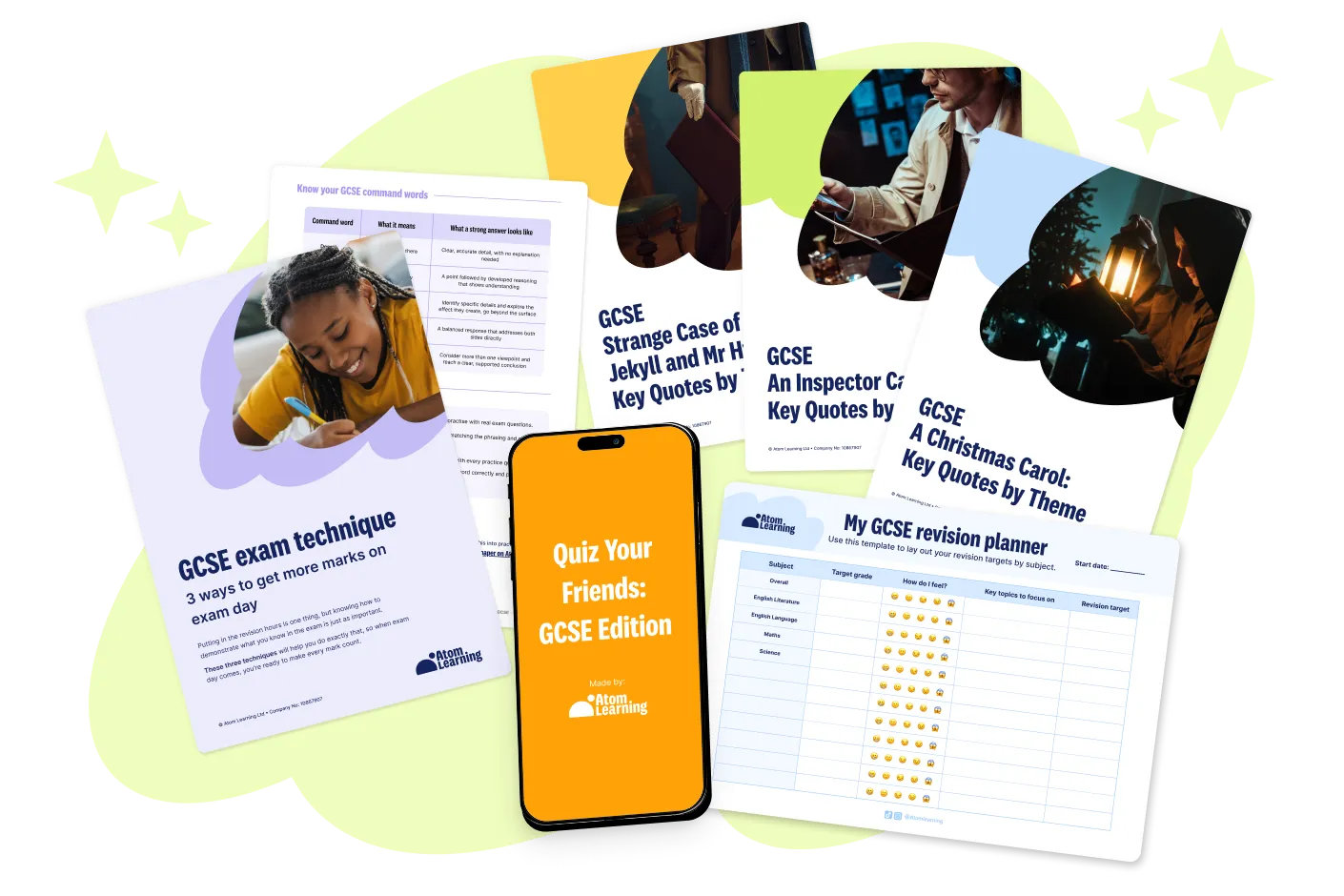
Not sure where to start with revision? We've got you.

From revision planners to formula sheets, we've got the tools to make revision feel a little less daunting.

All free. All in one place.

Let's get started

What are examiners looking for?

Cambridge marks your work against two main assessment objectives (AOs), each worth 50% of your grade. Here's what they actually mean:

  • AO1 Reading: understand what's stated directly in a text, understand what's implied, analyse and evaluate ideas using evidence from the text, understand how writers create effects, and pick out the right information for a specific purpose.
  • AO2 Writing: express your own ideas and feelings clearly, structure your writing for effect, use a good range of vocabulary and sentence structures, match your tone to the audience and purpose, and use accurate spelling, punctuation and grammar.

Understanding exactly which skill each question is testing makes a huge difference to how you plan your answer, and it's exactly what Atom's instant, examiner-style feedback is built to show you. 

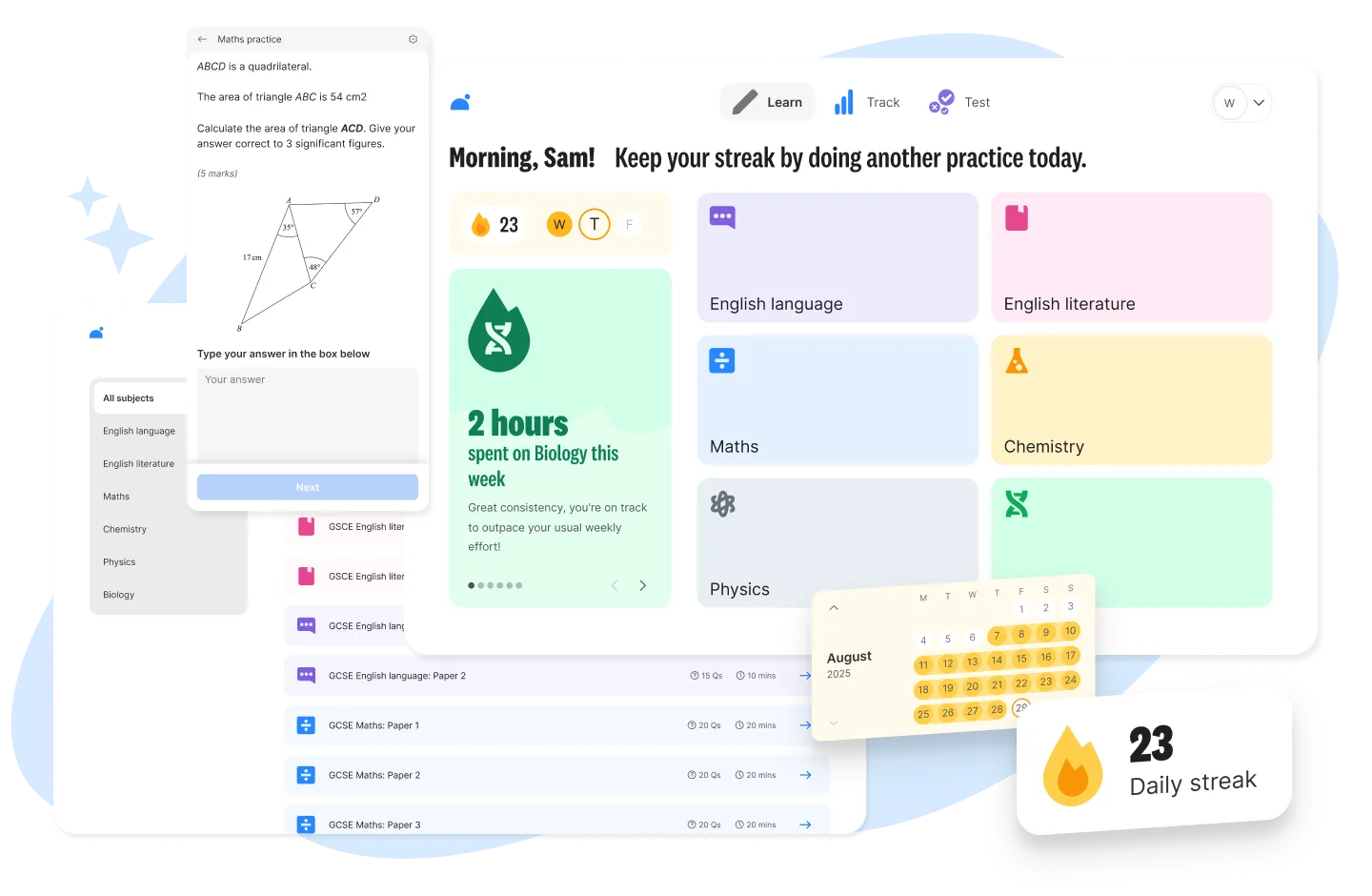
Answer a practice question on Atom, and you'll get feedback broken down by AO straight away, telling you exactly where you gained marks, where you lost them, and how to fix it next time. It's the kind of insight that normally takes years of exam experience to build up, and Atom hands it to you after every single answer.

No items found.

Grade thresholds

It's important to remember that the exact grade thresholds for your exams will change every series. Cambridge sets them after each exam, based on how difficult the paper was and how the whole cohort performed.

You can check Cambridge's official grade threshold tables to see how past series have landed. Use these as a general guide only. Don't treat last year's threshold as a fixed target for your own exam.

What texts and topics will I study?

For Paper 1, you'll practise reading and responding to non-fiction and other text types, such as journalism, travel writing and personal accounts, since the exam always uses unseen texts rather than set texts you learn in advance.

For Paper 2 or Component 3, you'll practise directed writing (for example, letters, articles or speeches based on a given text) alongside descriptive and narrative writing, so you can write confidently in whichever form comes up.

Your teacher will confirm exactly which texts and practice materials your school is using, since these can vary between schools and years.

5 top revision tips

1. Practise reading unseen texts against the clock. 

Every text in this exam is unseen, so the skill you're building is reading quickly and accurately under pressure, not memorising set texts. 

Top tip: give yourself no more than 15 minutes to read all three texts before you look at a single question, just like in the real exam. This is exactly the kind of skill Atom's practice questions are built to sharpen, with a constant stream of fresh, unseen texts so you always have new material to practise reading at speed.

2. Keep your summary answers tight and in your own words. 

The summary task rewards you for selecting the right information and rewording it yourself, not for copying chunks of the original text. 

Top tip: write your summary, then check every sentence for words lifted straight from the text and swap them out. Atom's instant feedback flags it if your summary lifts wording straight from the text, so you can catch this habit early rather than losing marks for it in the real exam.

3. Match your writing style to the text type you're asked for. 

A speech, a letter and a report all need a different tone and structure, even if the content is similar. 

Top tip: before you start writing, jot down three features specific to that text type (for example, a greeting and sign-off for a letter) so you don't forget them under time pressure. It's worth practising this on Atom too, since the feedback checks whether your writing matches the conventions of that specific text type, so you know straight away if a letter reads like a letter or a report reads like a report.

4. Plan your composition before you write a word. 

For narrative and descriptive writing, a few minutes of planning stops you running out of ideas halfway through. 

Top tip: sketch out a beginning, middle and end in one line each before you start your full answer. With so many practice questions to work through on Atom, you can turn this into a genuine habit rather than something you only remember to do once or twice before the real exam. Plan first, answer, then see immediately if your structure held up or your ending felt rushed, so the habit is second nature by exam day.

5. Practise timed past papers under real exam conditions. 

Understanding the format on paper is one thing. Writing at exam speed and pace is a different skill, and it only comes from practice. 

Top tip: Atom's GCSE past papers are a good way to build up this timed practice alongside your school's resources. Atom's predicted papers mirror the real exam format and timing, so you can sit a full paper under proper conditions, then see straight after exactly where your pace or detail dropped off, ready to fix before the real thing.

Past papers and resources

Your school's Cambridge School Support Hub account is the best place to find official past papers and mark schemes for Cambridge IGCSE First Language English, since these aren't published openly online. Ask your teacher for access if you haven't used it before.

Alongside these, Atom gives you practice papers with instant, examiner-style feedback, so you can see exactly where you're gaining and losing marks as you go. Take a look at our guide on how to get the most out of GCSE past papers for a simple way to build this into your revision.

Once you know how the reading and writing components fit together, and which route your school has chosen, you can focus your revision on the skills that actually count. That clarity alone takes a lot of the guesswork out of exam preparation.

No items found.
No items found.
No items found.

Take control of your GCSE revision

Everything you need for GCSE success, in one place.

Feeling confident about your GCSEs comes from knowing what to revise, how to improve, and where to focus next.

🔮 GCSE practice papers based on our team's 2026 exam predictions

🎓 Guided courses that cover all the topics on your exams

✍️ Instant feedback that tells you where you’ve gained and lost marks

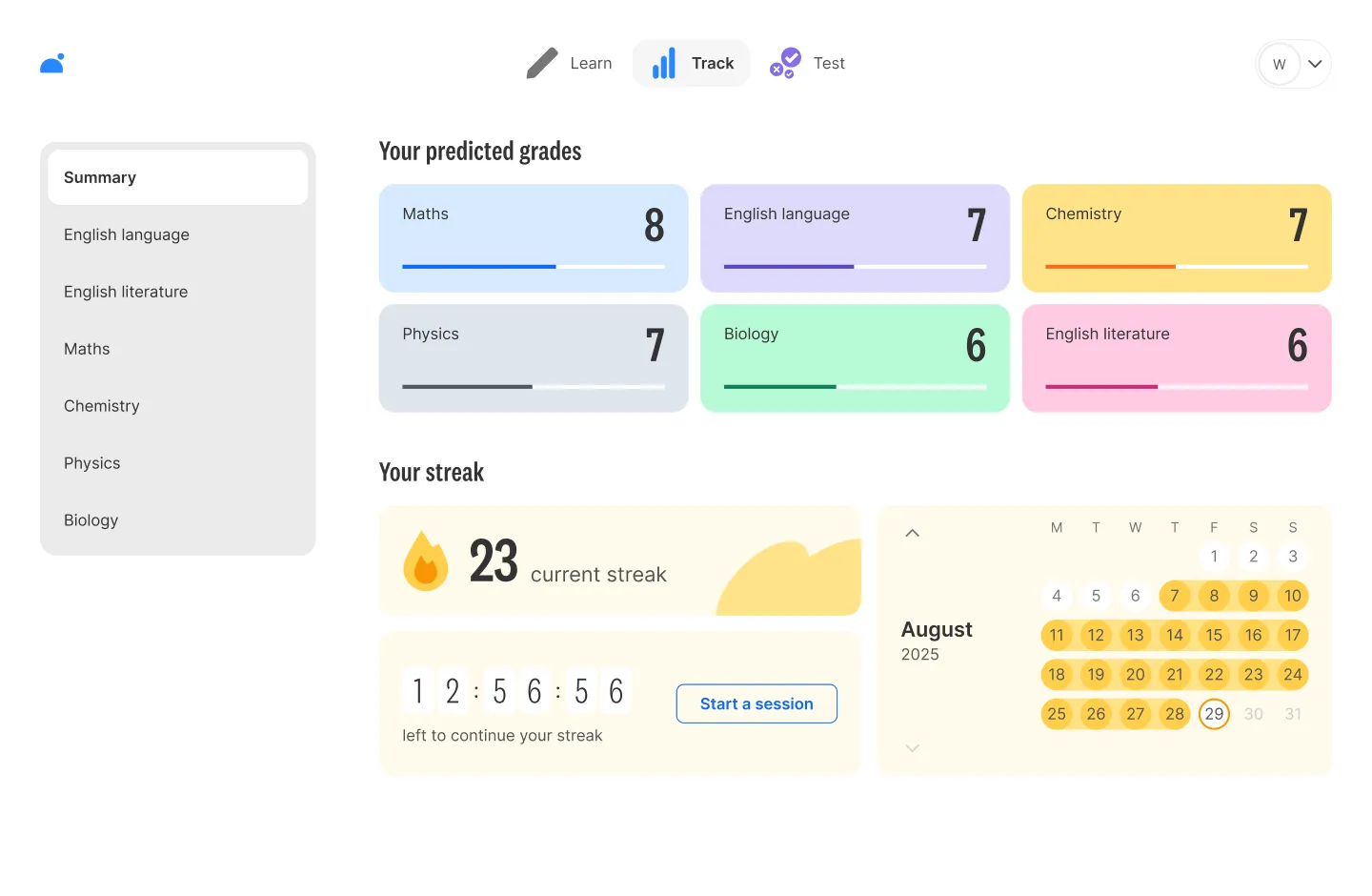
📈 Predicted GCSE grades and topic-by-topic tracking

Know where you stand and how to improve

Create your free account and start making real progress today.

👉 Let’s go

Contents